
Technology
Car model history: how to trace a nameplate year by year
A practical method for separating a brand, model, generation, model year, facelift, body style, and factory configuration.
Open guideOne question · one authoritative guide
Choose the question you are actually trying to answer. Each guide owns one search intent, explains the evidence boundary, and routes you into exact makes, models, and years.
36 focused guides
Start here
A reliable answer identifies the make, nameplate, market, model year, generation, configuration, and source. It does not turn a generation-wide fact into an exact-year claim or confuse a trim package with a separate model.
Read the research methodIdentify the car
Find the right production boundary before comparing years, configurations, redesigns, or manufacturers.
Technology
A practical method for separating a brand, model, generation, model year, facelift, body style, and factory configuration.
Open guideTechnology
A useful automotive history database separates model years, generations, markets, configurations, photographs, and sources instead of flattening them into one nameplate summary.
Open guideTechnology
Trace a car from launch through redesigns, facelifts, special editions, and retirement without confusing brand history with model-year evidence.
Open guideTechnology
Generations, platforms, facelifts, and model years describe different layers of a vehicle’s evolution. Here is how to read them correctly.
Open guideTechnology
A model timeline becomes useful when launches, model years, redesigns, facelifts, powertrains, regulations, and discontinuations are labeled as different events.
Open guideTechnology
Brands, manufacturers, parent companies, factories, and sales divisions are related but not interchangeable. Learn how to trace each one.
Open guideTechnology
Model year, build date, on-sale date, and production end are not the same. Use the right date when identifying when a car arrived or disappeared.
Open guideTechnology
A redesign, new generation, platform change, and facelift are not synonyms. This guide shows which evidence establishes each boundary.
Open guideTechnology
Compare vehicle generations using consistent markets, body styles, measurements, powertrains, safety equipment, and historical context.
Open guideTrace the technology
Separate invention, first production use, federal requirements, phase-ins, and fleet-wide adoption.
Technology
A technology can begin as a prototype, become a luxury option, receive a performance standard, and only later appear across most vehicles.
Open guideRegulation
The major safety milestones did not arrive together. This guide separates invention, regulation, phase-in and real-world fleet adoption.
Open guideTechnology
Airbags moved from experimental restraints to optional production equipment and then broad federal requirements, while designs continued to change.
Open guideTechnology
Anti-lock braking evolved from specialized mechanical ideas into electronic systems that became the sensing foundation for traction and stability control.
Open guideTechnology
Seat-belt history includes voluntary installations, federal vehicle standards, state use laws, three-point restraints, pretensioners, and reminder systems.
Open guideTechnology
Crash testing developed from manufacturer experiments into federal compliance programs and consumer ratings with different protocols and purposes.
Open guideTechnology
Automotive lighting evolved through brighter sources, new beam patterns, electronic control, and changing safety rules.
Open guideTechnology
Cruise control began by maintaining speed; radar and camera sensing later allowed vehicles to manage following distance and stop-and-go traffic.
Open guideTechnology
Rear cameras and proximity sensors followed different paths from optional convenience equipment to widespread driver-assistance tools.
Open guideTechnology
Lane technology progressed from departure warnings to steering assistance, but similar dashboard names can describe materially different capabilities.
Open guideTechnology
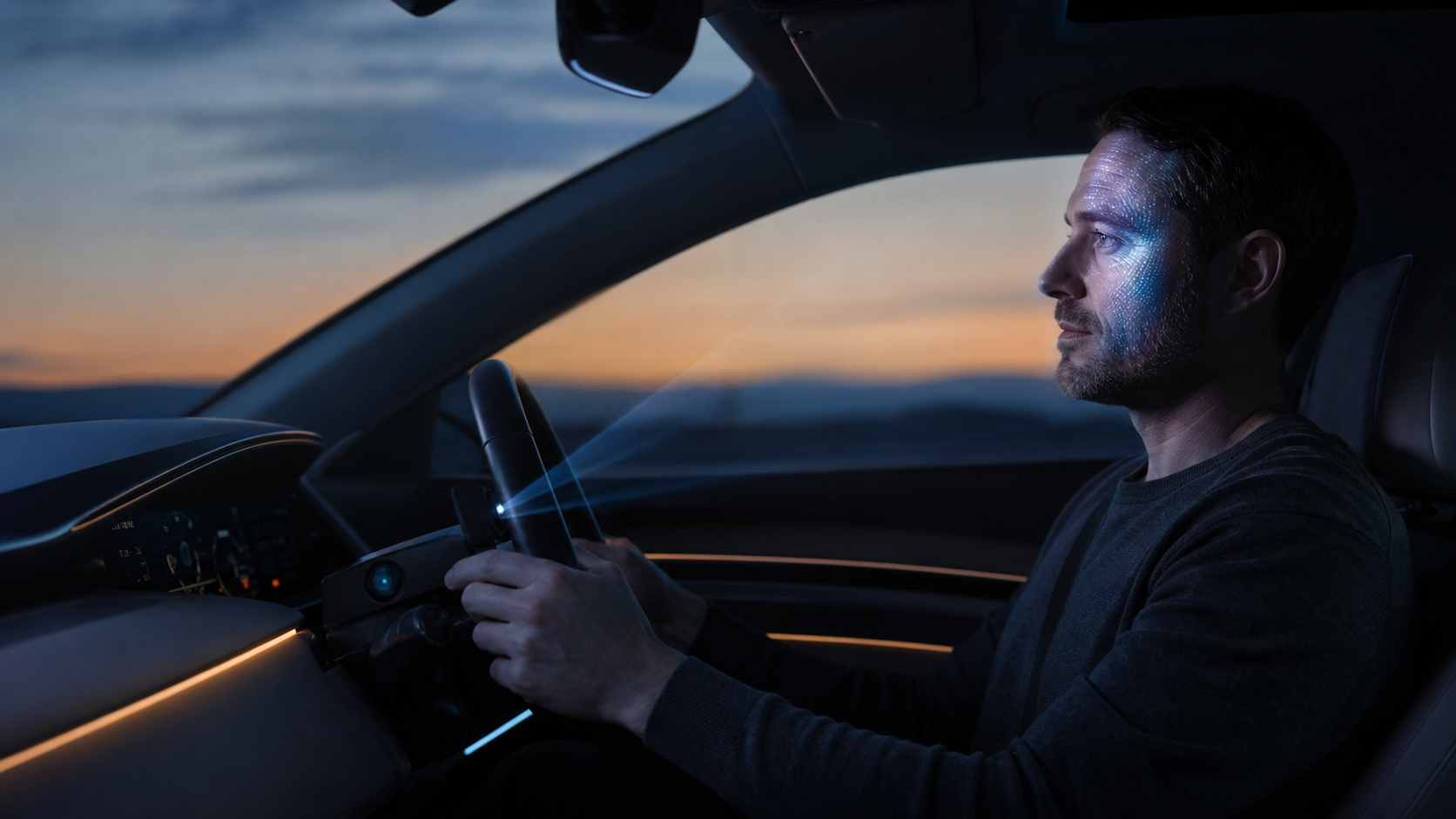
Driver monitoring developed from steering-input heuristics into camera-based gaze and head-position analysis, often as part of assistance systems.
Open guideUnderstand the machine
Follow the engineering changes behind electric and hybrid cars, transmissions, boost, drivetrains, controls, and body forms.
Technology
Electric cars competed with steam and gasoline at the industry’s beginning, declined as combustion scaled, and returned through battery and power-electronics advances.
Open guideTechnology
Hybrid concepts are old, but electronics, batteries, and control software made mass-production hybrids practical near the end of the twentieth century.
Open guideTechnology
Vehicle emissions control developed through crankcase ventilation, catalytic converters, unleaded fuel, electronic management, evaporative controls, and onboard diagnostics.
Open guideTechnology
Automatic transmissions evolved through fluid couplings, torque converters, planetary gears, lockup, overdrive, electronic control, CVTs, and dual-clutch alternatives.
Open guideTechnology
Turbocharging moved from aircraft and competition into diesel, performance, and eventually downsized mass-market gasoline engines.
Open guideTechnology
Driven-wheel technology progressed from rugged mechanical four-wheel drive into full-time road systems, electronically controlled couplings, and multi-motor EVs.
Open guideTechnology
In-car navigation moved from paper and dead-reckoning experiments to satellite positioning, digital maps, live traffic, and cloud-connected search.
Open guideTechnology
Car entertainment and information systems grew from standalone radios into networked interfaces controlling navigation, phones, climate, and vehicle settings.
Open guideTechnology
Vehicle keys evolved from mechanical locks to coded remotes, passive proximity systems, immobilizers, phone keys, and account-managed sharing.
Open guideTechnology
Body-style names evolved with coachbuilding, manufacturing, family use, regulation, and marketing—and the same label does not always mean the same shape.
Open guideProtect the owner
Understand what modern vehicles can collect and what to remove, revoke, or verify before a sale.
Technology
Connected vehicles can combine precise location, driving behavior, diagnostics, apps, accounts, and cabin sensors. The exact data path depends on the model and service.
Open guideTechnology
Check telematics, navigation, infotainment, paired phones, driver assistance, apps, digital keys, diagnostics, and insurance programs separately.
Open guidePrivacy
Modern cars can collect location, driving, phone, voice, camera, and biometric data. What they actually retain or transmit depends on the vehicle and enabled services.
Open guideTechnology
Navigation history, paired phones, garage access, apps, and account-linked services can remain behind unless the owner deliberately removes them.
Open guideRegulation
Congress ordered a safety rule, but that is not the same as a final nationwide mandate for driver-facing cameras. Here is what is actually on the books.
Open guideOwnership law
There is no single tint percentage that answers every U.S. installation. Federal equipment law and state vehicle-use laws regulate different actors and situations.
Open guide