
Connected-car privacy: what telematics can collect and share
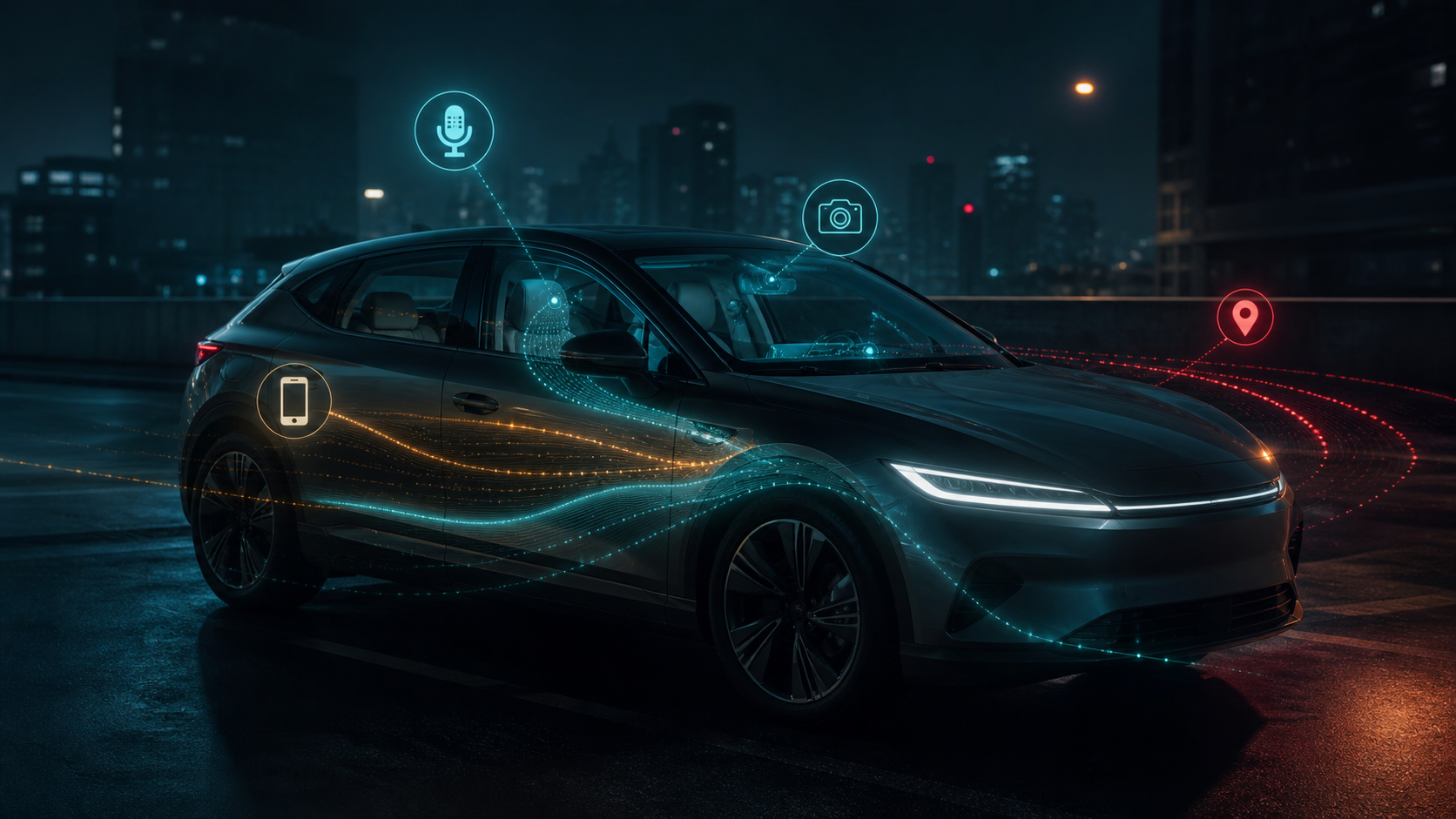
Connected vehicles can combine precise location, driving behavior, diagnostics, apps, accounts, and cabin sensors. The exact data path depends on the model and service.
Answer first
Connected-car privacy starts by separating collection, local processing, storage, transmission, sale, and retention; one dashboard toggle rarely controls every data stream.
Research map
The evidence path at a glance
Use these landmarks to orient the subject before opening the detailed analysis below. Each one represents a distinct historical boundary or verification step—not another name for the same event.
- Collect
Identify sensors and accounts
Separate vehicle hardware, phones, apps, insurance devices, and third-party services.
- Process
Ask where analysis occurs
Local processing, cloud processing, and sensor presence are different facts.
- Share
Trace recipients and purposes
Manufacturer, provider, insurer, fleet, and advertiser access should not be collapsed.
- Delete
Check retention and transfer
A dashboard reset may not revoke app access or erase off-vehicle records.
Vehicle telematics privacy follows every outside connection
A cellular module can transmit diagnostics, location, crash information, remote-command data and service status.
The manufacturer, app provider, insurer, fleet operator or third-party device may operate separate data flows.
Car data privacy includes cabin information
Paired phones can contribute contacts, messages and identifiers. Navigation, voice assistants and cameras can add destinations, commands and attention signals.
Processing may occur locally or remotely. A sensor’s presence alone does not establish what is retained or uploaded.
Consent and disclosure matter
The FTC has challenged connected-vehicle practices involving precise geolocation and driving behavior.
Read the current privacy notice, service terms and in-vehicle controls for the exact manufacturer and account.
Build a data-flow map before changing settings
For each feature, identify the sensor or source, purpose, local storage, transmission destination, recipient, retention period, and deletion control. Emergency calling, diagnostics, navigation, insurance scoring, fleet tracking, entertainment, and driver assistance can use overlapping data under different terms.
A privacy toggle may stop optional personalization while leaving safety, legal, warranty, or account operations active. Record what the notice actually says and avoid promising that disabling one menu ends all collection. If a manufacturer does not explain a path clearly, describe the uncertainty rather than inferring that no transmission occurs.
Sale and rental returns need two cleanups
Delete local profiles, destinations, contacts, messages, garage codes, Wi-Fi credentials, dashcam files, and digital keys from the vehicle. Then remove the vehicle from manufacturer, charging, insurance, fleet, roadside, and entertainment accounts and revoke other authorized users.
A factory reset is not proof that cloud-side records were deleted, and removing an app is not proof that the car forgot the account. Follow the manufacturer transfer process, preserve confirmation, and ask the buyer or rental company to verify that the former owner can no longer locate or command the vehicle.
Owners can reduce exposure
Disable optional analytics and driver scoring, remove unused accounts and review app permissions.
Before transfer, delete local profiles and request any available account-linked access or deletion through the manufacturer.
Evidence ledger
Primary sources
Historical and technical claims were checked against the sources below on August 26, 2026. The linked source controls.
- Federal Trade CommissionCars and consumer data
- Federal Trade CommissionFTC connected-vehicle data order