
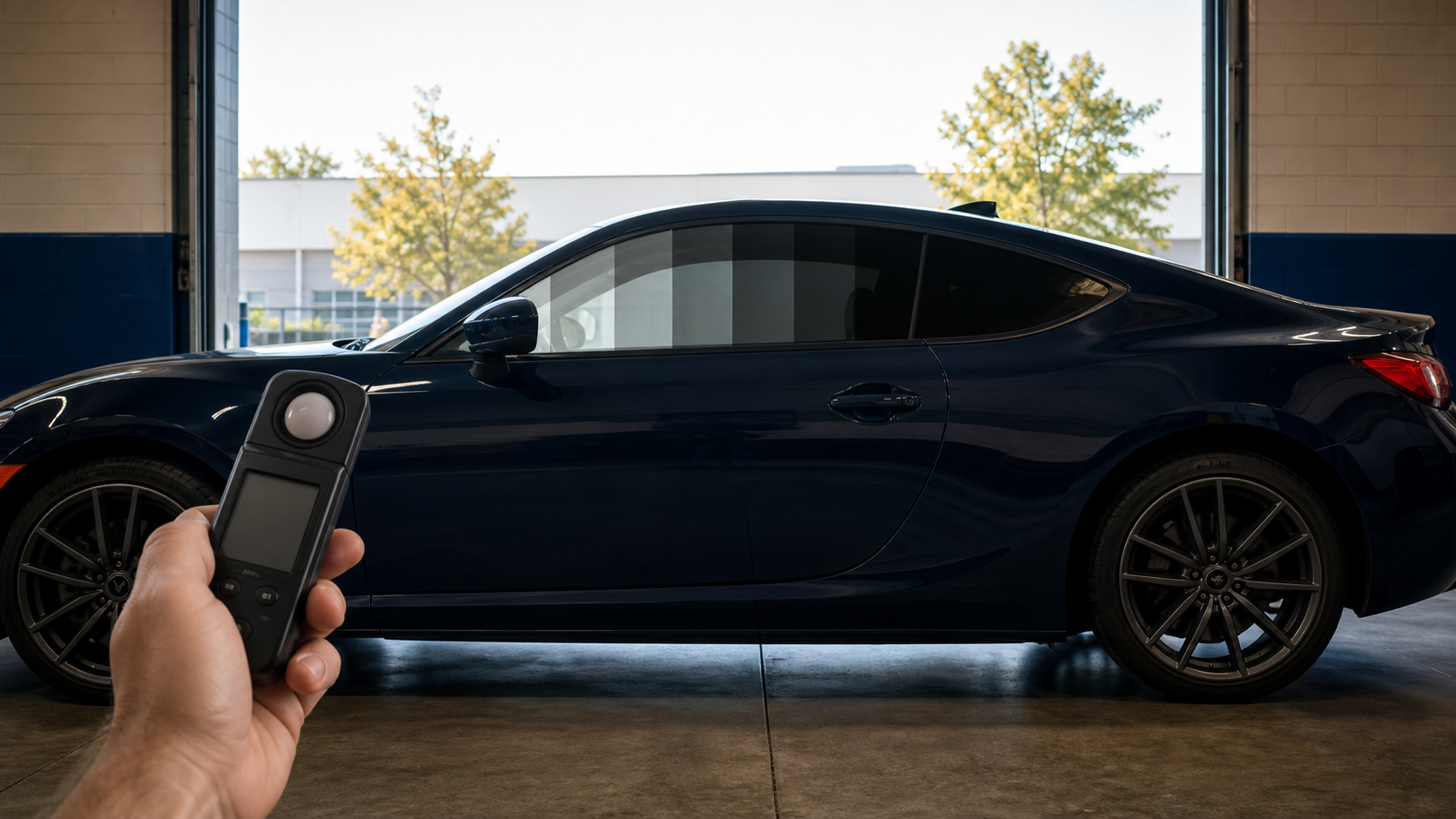
Window tint laws: federal rules vs. state limits
There is no single tint percentage that answers every U.S. installation. Federal equipment law and state vehicle-use laws regulate different actors and situations.
Answer first
Check the law where the vehicle is registered before ordering tint; federal glazing requirements alone do not tell an owner what is legal to drive.
The federal layer
Federal Motor Vehicle Safety Standard No. 205 governs glazing in new vehicles and vehicle equipment. NHTSA explains that glazing in areas requisite for driving visibility generally must provide at least 70 percent light transmittance. The rule also addresses the windshield shade-band area and the AS-1 marking.
Federal law also restricts manufacturers, dealers, distributors, and repair businesses from making compliant safety equipment inoperative. NHTSA has repeatedly explained how that restriction applies when a commercial business installs film on a used vehicle.
State window tint laws control use and enforcement
State window tint laws regulate vehicle registration and operation after the first retail sale, including owner-installed tint, inspection, reflectivity, side and rear windows, windshield bands, medical exceptions, certificates, and enforcement. Those requirements vary and can change.
That is why an online chart should be treated as a starting point, not the final answer. Confirm the current statute or motor-vehicle agency guidance for the registration state and make sure the installer measures the combined glass-and-film transmittance rather than relying only on the film's advertised number.
Before you buy or install film
Use this order of operations to avoid paying twice or failing inspection.
- Identify the vehicle class, registration state, and each window being tinted.
- Read the current state rule for visible-light transmission, reflectivity, colors, windshield limits, stickers, and medical exemptions.
- Measure the factory glass because existing tint changes the final combined result.
- Ask the installer to document the product and measured final transmittance.
- Re-check the destination state's rules before moving or registering the car elsewhere.
The film rating is not the finished-window rating
Visible-light transmission for the installed window reflects the combination of the original glazing and the added film. A product labeled with a nominal percentage does not guarantee that the completed window will measure at that number, and factory privacy glass can already reduce transmission before film is applied.
Ask the installer to meter the glass before and after installation with suitable equipment and record the measured result for each regulated window. Also verify reflectivity, restricted colors, windshield placement, certification labels, and any inspection rule; a transmission number alone may not establish compliance.
Exceptions and interstate travel need current state sources
Medical exemptions can require a physician statement, agency approval, a certificate carried in the vehicle, special markings, renewal, or limits on which windows qualify. An exemption from one state should not be assumed to control registration, inspection, or enforcement in another jurisdiction.
Use the current statute and motor-vehicle agency material for the registration state, then ask that agency or qualified local counsel about reciprocity and enforcement if the vehicle regularly travels elsewhere. Keep dated documentation because online summaries and installer charts can lag legislative or administrative changes.
Evidence ledger
Primary sources
Historical and technical claims were checked against the sources below on August 13, 2026. The linked source controls.