
History of keyless entry: remotes to phone keys
Vehicle keys evolved from mechanical locks to coded remotes, passive proximity systems, immobilizers, phone keys, and account-managed sharing.
Answer first
The history of keyless entry is also a security history: convenience increased while credentials moved from a cut key into radio, software, and cloud accounts.
Research map
The evidence path at a glance
Use these landmarks to orient the subject before opening the detailed analysis below. Each one represents a distinct historical boundary or verification step—not another name for the same event.
- Mechanical
Cut keys and cylinders
Physical key patterns controlled entry and ignition before electronic authorization.
- Remote
Radio lock and unlock
Coded transmitters added convenience while rolling codes addressed replay.
- Passive
Proximity entry and start
The vehicle detects an authorized fob without an inserted key.
- Digital
Phone keys and sharing
Account-managed access makes ownership transfer a digital security task.
Remote locking separated key from lock
Coded radio transmitters allowed drivers to lock and unlock a vehicle without inserting the mechanical key.
Rolling codes and other security measures responded to interception and replay risks.
Proximity made access passive
Passive systems detect an authorized fob near the vehicle and can permit entry and starting.
The emergency mechanical key, fob battery procedure and antenna layout remain important when electronics fail.
Immobilizers changed theft patterns
Electronic authorization can prevent engine operation even when a mechanical lock is defeated.
Relay attacks, programming-tool abuse and stolen credentials created different attack paths rather than eliminating theft.
Entry, starting, and immobilization are separate layers
A remote may unlock doors without authorizing engine operation, while a transponder can authorize starting without passive entry. Passive systems add proximity antennas and request switches, and phone keys can add Bluetooth, ultra-wideband, near-field communication, or cloud-managed credentials.
List each capability separately for the exact trim and market. That prevents a replacement shell, cut blade, radio remote, transponder, and digital credential from being treated as one interchangeable key when each may need a different part number, programming method, or security enrollment.
Replacement requires proof and a recovery plan
A lost-all-keys situation can require security credentials, vehicle access, immobilizer programming, module replacement, or manufacturer account recovery. Procedures vary by model year and jurisdiction, and publishing a generic bypass would undermine the security the system is designed to provide.
Owners should retain the key code or approved documentation, test the emergency blade, learn the dead-fob start location, and remove missing credentials when the manufacturer supports it. After purchase, inventory every recognized key and connected account rather than assuming the handed-over fobs are the complete access list. Confirm spare-key operation before an emergency and replace weak batteries with the specified type and orientation.
Digital keys require account hygiene
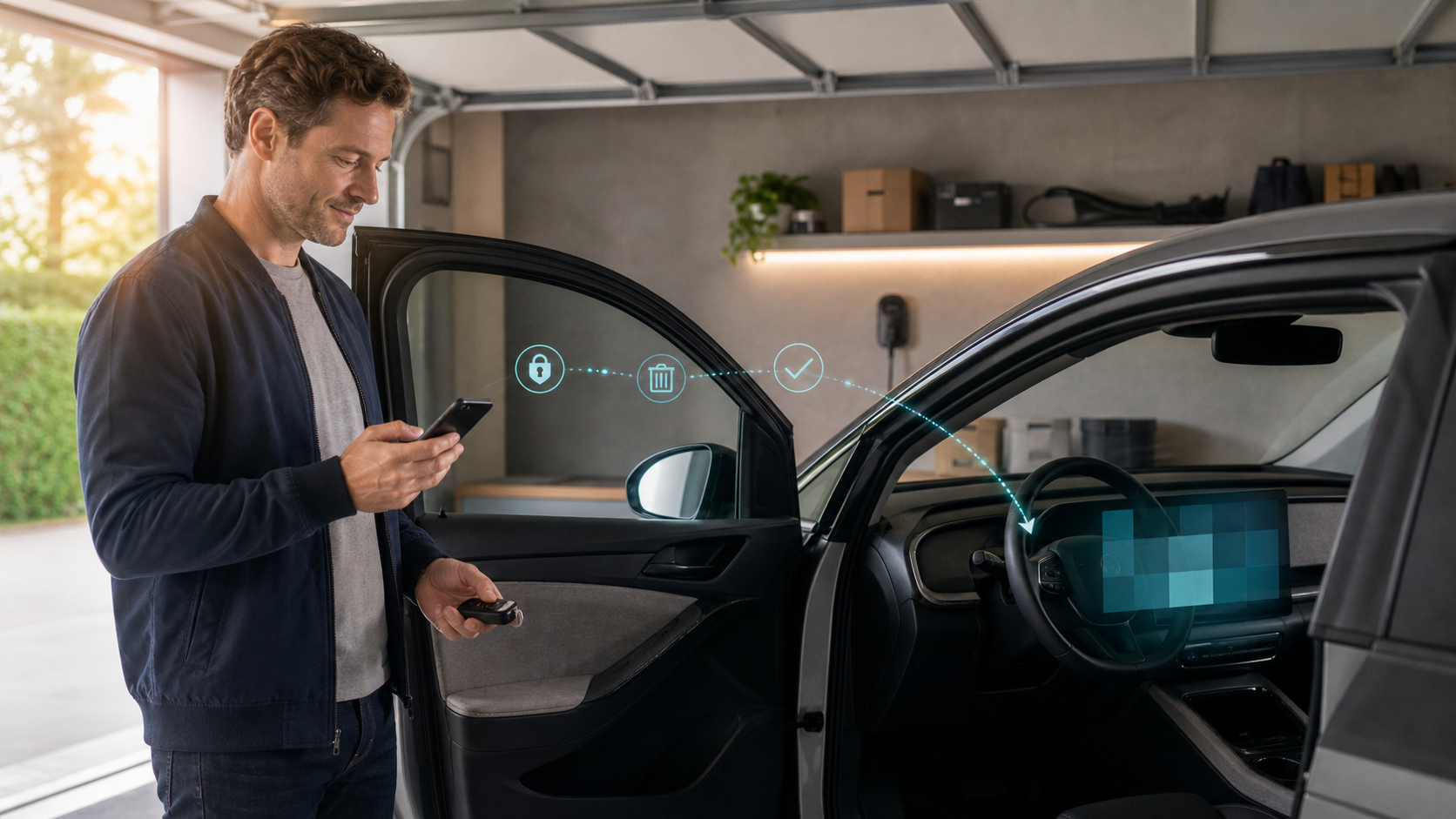
Phone-based keys and shared credentials can be revoked remotely, but ownership transfer must remove access from both vehicle and cloud account.
Follow the manufacturer procedure and verify that every former user, device and app session is gone. Keep a tested physical or offline recovery method available when the phone, account, or network is unavailable.
Evidence ledger
Primary sources
Historical and technical claims were checked against the sources below on August 26, 2026. The linked source controls.
- NHTSACybersecurity best practices for modern vehicles
- Federal Trade CommissionCars and consumer data