
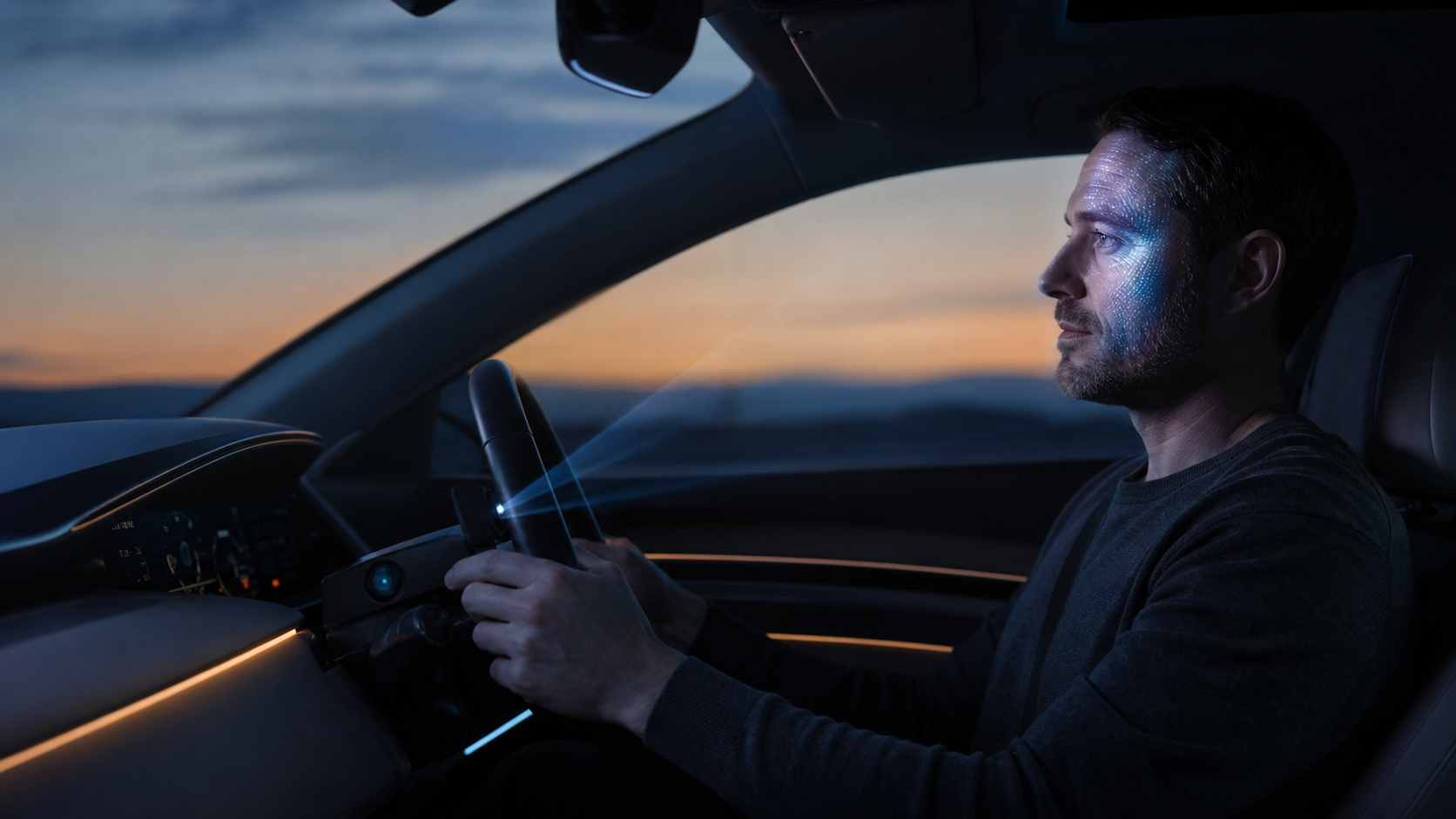
History of driver-monitoring systems: sensing attention
Driver monitoring developed from steering-input heuristics into camera-based gaze and head-position analysis, often as part of assistance systems.
Answer first
Driver-monitoring systems can estimate attention or impairment signals, but the presence of a camera does not prove continuous recording, cloud upload, or a universal federal mandate.
Research map
The evidence path at a glance
Use these landmarks to orient the subject before opening the detailed analysis below. Each one represents a distinct historical boundary or verification step—not another name for the same event.
- Indirect
Control-input monitoring
Early systems inferred attention from steering, time, or lane-position patterns.
- Direct
Driver-facing sensing
Cameras can estimate gaze, eyelid, or head position without proving intent.
- Assist
Linked escalation
Monitoring increasingly supports warnings and escalation in assistance systems.
- Privacy
Data handling
A camera's safety role does not establish whether images leave the car or are retained.
Early systems inferred behavior
Vehicles used steering corrections, lane position and time-based prompts to estimate fatigue or inattentiveness without looking directly at the driver.
These indirect signals can trigger warnings but cannot determine a driver’s condition with certainty.
Cabin cameras added direct cues
Infrared or visible-light cameras can estimate gaze direction, eyelid closure and head pose, including at night.
Implementation varies: some systems process locally, while retention and transmission depend on the vehicle and connected-service design.
Assistance increased the need
Hands-free assistance still needs a way to determine whether the driver is available to resume control.
A monitoring system is therefore often part of the operating boundary rather than a standalone surveillance feature.
Attention monitoring and impairment detection are not synonyms
A camera that estimates gaze, eyelid closure, or head pose may support an attention warning or a partial-automation takeover request. That does not establish that it can measure blood-alcohol concentration or reliably identify every form of impairment.
NHTSA's 2024 report said camera-based systems were becoming more common but few were used to detect visual distraction or drowsiness outside partial driving automation. It also said production alcohol-detection systems had not yet met all requirements directed by the infrastructure law and Safety Act. Objective testing must address false positives as well as missed detections because either failure can create a safety problem.
The 2026 federal record is still a development record
NHTSA's February 2026 report to Congress describes continuing research and rulemaking activity for advanced impaired-driving prevention technology. A congressional direction, research program, report, proposed rule, and final enforceable standard are different legal stages.
Owners should therefore check the exact vehicle privacy notice and manual for sensor purpose, processing location, storage, transmission, and deletion. A camera's presence proves none of those data-handling steps by itself.
Regulation must be described precisely
Congressional direction, agency research, proposals and final standards are different legal stages.
Check the current NHTSA record and manufacturer privacy notice before claiming that a camera is required or that its data leaves the vehicle.
Evidence ledger
Primary sources
Historical and technical claims were checked against the sources below on August 26, 2026. The linked source controls.