
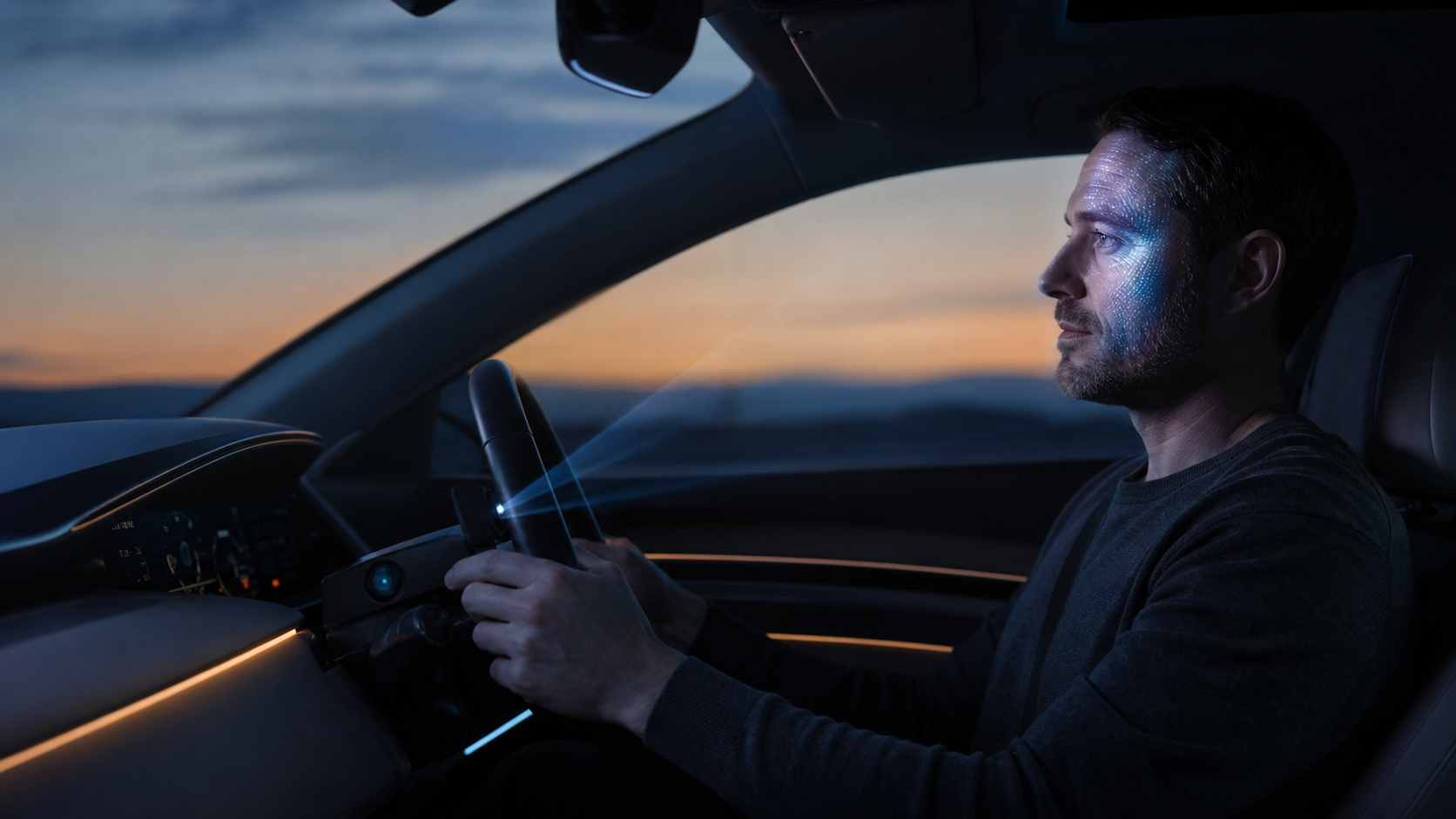
History of lane-keeping assist: warning, steering support, and limits
Lane technology progressed from departure warnings to steering assistance, but similar dashboard names can describe materially different capabilities.
Answer first
The history of lane-keeping assist is a progression from warning to limited steering support; it does not establish hands-free or autonomous driving.
Research map
The evidence path at a glance
Use these landmarks to orient the subject before opening the detailed analysis below. Each one represents a distinct historical boundary or verification step—not another name for the same event.
- Warning
Lane-departure alerts
Camera systems first warned when a vehicle crossed a detected marking.
- Assist
Corrective steering
Lane-keeping added limited steering input after departure or near an edge.
- Center
Continuous lane centering
Some systems provide ongoing support, often alongside adaptive cruise.
- Limit
Driver responsibility
Markings, weather, speed, sensor condition, and design define availability.
The first job was detecting lane departure
Forward cameras and image processing allowed vehicles to recognize visible lane markings and warn when the car drifted without a turn signal.
Warning-only systems do not steer. Their performance depends on marking quality, lighting, weather and camera visibility.
Steering support added a control layer
Lane-keeping assist can apply a steering correction near a boundary, while lane centering attempts to maintain a path more continuously.
Those functions may coexist under one package name but have different activation conditions and driver-monitoring requirements.
Warning, keeping, and centering are three functions
NHTSA defines lane-departure warning as an alert that takes no avoidance action. Lane-keeping assistance can gently steer or use braking to return a drifting vehicle, while lane-centering assistance continuously applies steering to remain near the middle of the detected lane.
Those distinctions matter more than the package name. A car can have warning without steering, boundary intervention without continuous centering, or centering that operates only when adaptive cruise is also active.
Consumer testing does not turn assistance into automation
NHTSA's updated NCAP protocol evaluates lane-departure warning and lane-keeping performance under defined line types, departure directions, and lateral velocities. A passing laboratory assessment demonstrates performance in those conditions; it does not promise operation on every real road.
NHTSA classifies lane keeping by itself as Level 1 assistance and says the driver remains fully responsible. Even a system combining steering with speed control at Level 2 still requires the driver to monitor the environment.
Road context remains difficult
Construction zones, merges, faded paint, sharp curves and snow can defeat or confuse lane sensing.
A system may disengage silently or with a warning. The driver remains responsible unless a clearly defined automated-driving system says otherwise.
Compare exact model years
Sensor hardware, software and steering behavior can change during a generation.
Use the owner manual for operating limits and the service procedure for camera replacement or calibration after glass and alignment work. Tire size, ride height, steering repairs, and altered alignment can also affect the vehicle path the camera-based system expects.
Evidence ledger
Primary sources
Historical and technical claims were checked against the sources below on August 26, 2026. The linked source controls.