
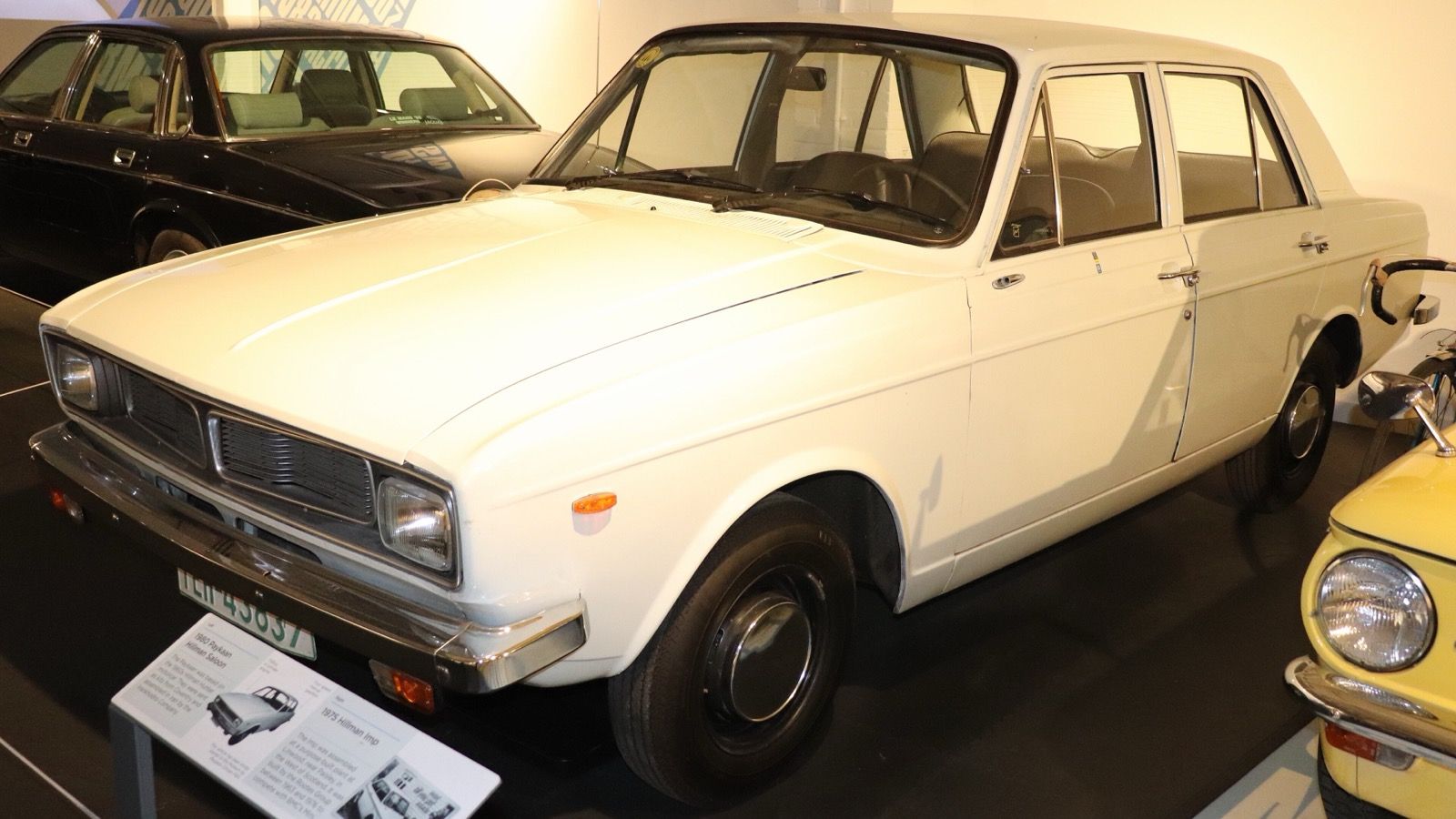
Paykan Sedan History
The 4-door saloon at the heart of Iran's automotive story — over 2.2 million built across 38 uninterrupted years of production.
Photo: “1980 Paykan (Hillman Hunter) 1.8.jpg” by Vauxford / Wikimedia Commons, licensed under CC BY-SA 4.0. Cropped to 16:9.
History
The Paykan sedan was born from a 1966 licensing deal between the Rootes Group and Iran National — the Tehran company founded by brothers Ahmad and Mahmoud Khayami in 1962. Rootes granted Iran National the right to produce the Rootes Arrow (sold in Britain as the Hillman Hunter), and on 13 May 1967 the first Paykan rolled off an assembly line in Tehran at an initial rate of 6,000 units per year. The name 'Paykan' is Persian for 'arrow,' a direct nod to the British Arrow platform on which it was built.
Early cars were assembled from complete knock-down (CKD) kits imported from the UK; by the mid-1970s Iran National had progressed to full-scale domestic manufacturing of the body and chassis, with engine production following under a Peugeot licence after PSA acquired Chrysler Europe's assets in 1978 and thereby inherited the Hunter tooling rights. The original 1725 cc Rootes inline-four was eventually joined by a 1598 cc unit sourced from the Hillman Avenger and later by a 1796 cc PSA XM eight-valve engine. By 1977 annual output had reached approximately 100,000 units, and the Paykan had become Iran's de-facto people's car.
In 1977, British designer Roy Axe drew up a comprehensive facelift for the Paykan incorporating body panels and interior components from the Chrysler Alpine, delivering a more contemporary front and rear end. The prototypes reached Iran for evaluation, but the 1979 Islamic Revolution halted the project before the updated body could enter production; the company — now renamed Iran Khodro — instead continued building the original 1967 shell with incremental mechanical updates well into the 2000s. The Iranian government ultimately offered Iran Khodro a substantial cash incentive to end saloon production by 2005, citing the car's high fuel consumption and emissions; the final saloon was built on 15 May 2005, with total production across 38 years recorded at 2,295,095 units. Iran Khodro subsequently sold the saloon production line to the Khartoum Transport Company in Sudan.
Generations
First generation · Original Hunter-based body
Photo: “1980 Paykan (Hillman Hunter) 1.8.jpg” by Vauxford / Wikimedia Commons, licensed under CC BY-SA 4.0. Cropped to 16:9.
A single unbroken body generation: the original 1967 Rootes Arrow shell, updated mechanically but never structurally replaced, built continuously until the final car in May 2005.
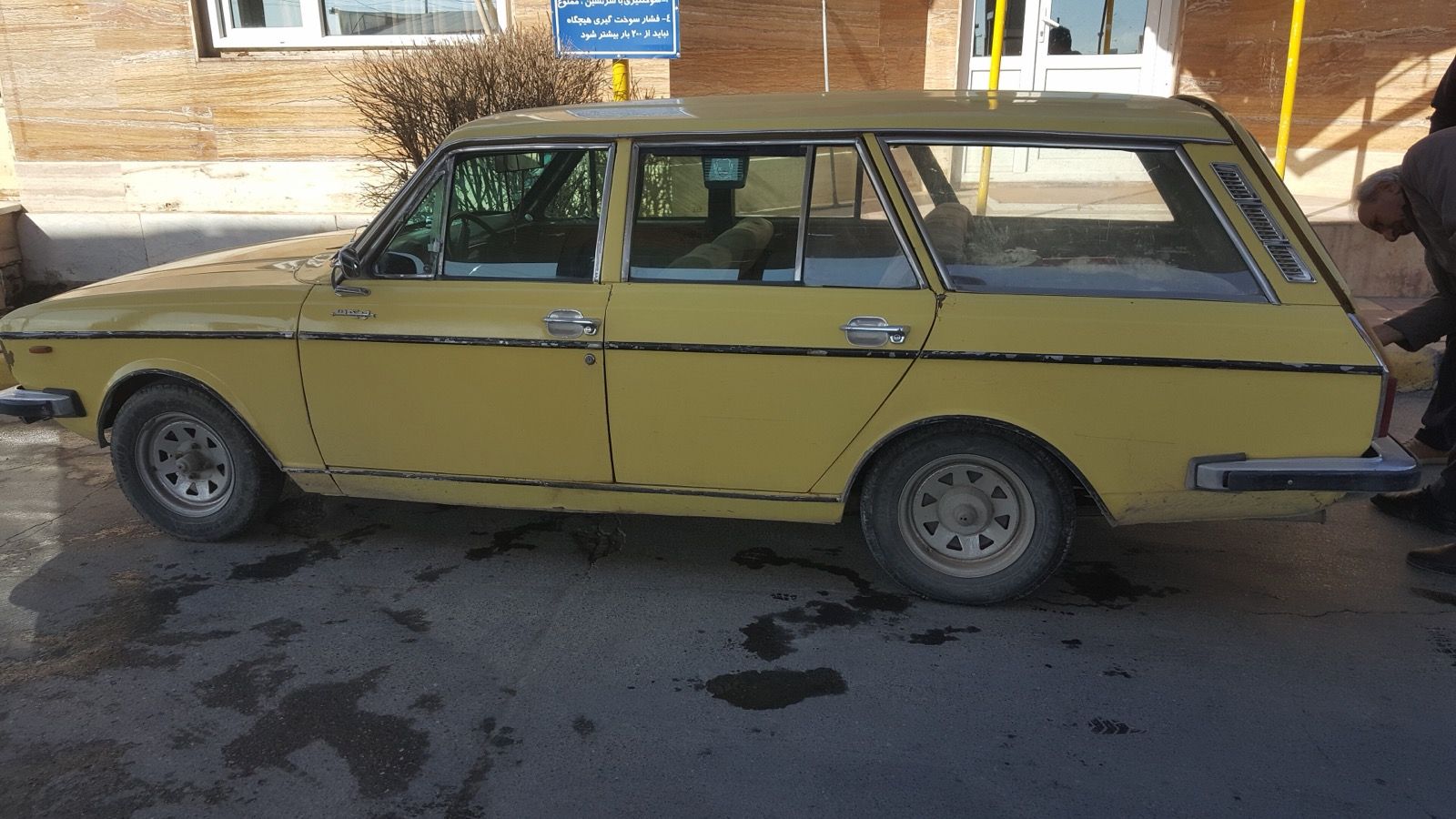
1980 Photo: “پیکان استیشن ۱۹۸۰ - ازنا.jpg” by Hamid Soufi / Wikimedia Commons, licensed under CC BY-SA 4.0
Body styles
- Sedan
- Station wagon
Notable special editions & performance variants
Paykan 1725 / De Luxe / GT
The original launch trim hierarchy: base 1725, De Luxe, and a GT variant — mirroring the Hillman Hunter's UK range.
Paykan Automatic
Automatic-transmission variant introduced in 1970 — one of six versions (De Luxe, Standard, GT, Pickup, Taxi, Automatic) offered by the early 1970s — aimed at urban buyers wanting a more relaxed commuter; its exact discontinuation year is not documented in secondary sources.
Related models
Collect the nameplate
Find a scale model of the Paykan Sedan
Search Amazon across available years, colors, and scales. Exact releases vary, so confirm the listing before ordering.