
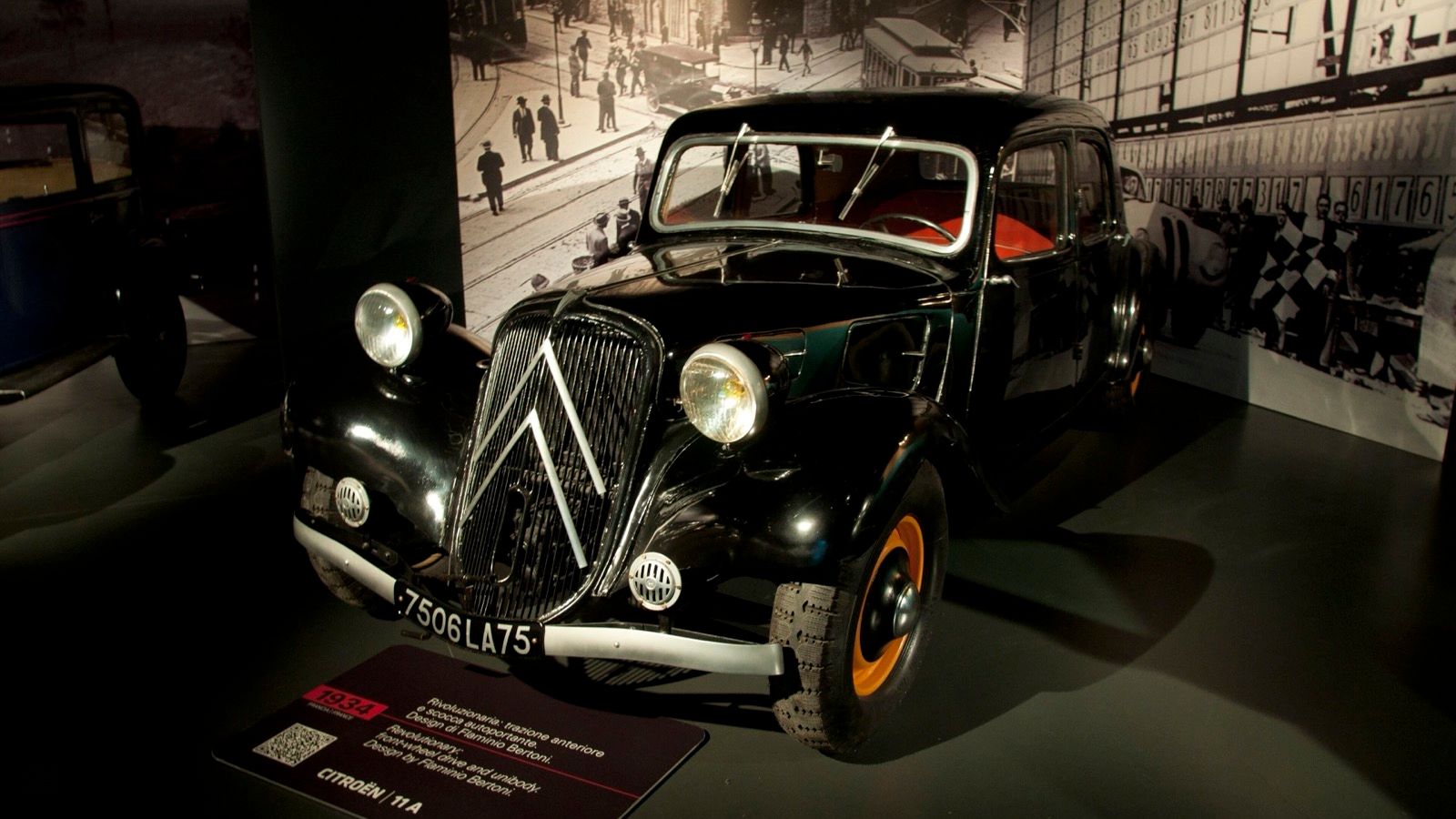
Citroën Traction Avant History
The world's first mass-produced front-wheel-drive car with unibody construction — a 1934 engineering revolution that defined the modern automobile.
Photo: “1934 Citroen 11 HP (Traction Avant) Museo Nazionale dell'Automobile Torino 01” by Rahil Rupawala / Wikimedia Commons, licensed under CC BY 2.0. Cropped to 16:9.
History
The Citroën Traction Avant — French for 'front-wheel drive' — entered volume production on 19 April 1934, immediately establishing itself as the world's first mass-produced car combining a unitary body, front-wheel drive, and four-wheel independent suspension. Designed by André Lefèbvre and styled by Flaminio Bertoni, it used around 100 patents and was so far ahead of its time that it nearly bankrupted Citroën in its first year; Michelin had to acquire the company to see the project through.
Over its 23-year run the Traction Avant was produced as a four-door saloon, a long-wheelbase Familiale (six or seven seats), a Commerciale estate/wagon, and a rare cabriolet. The flagship six-cylinder '15-Six' variant added a hydropneumatic rear suspension unit in 1954 — the first time that technology appeared on a Citroën, presaging the DS. Approximately 760,000 were built across plants in France, Belgium, the UK, and Germany.
Production ended in July 1957, directly after the Citroën DS — the Traction Avant's even more radical successor — went on sale. The car's influence was profound: its layout of a transverse front engine driving the front wheels through a unitary bodyshell is the architecture used by nearly every European small car made since.
Generations
Early series (7 / 11) · Type 7 / Type 11
Photo: “1934 Citroen 11 HP (Traction Avant) Museo Nazionale dell'Automobile Torino 01” by Rahil Rupawala / Wikimedia Commons, licensed under CC BY 2.0. Cropped to 16:9.
The original four-cylinder cars, from the debut Type 7A to the refined 11B; production interrupted by WWII occupation of France.
1934 Photo: “1934 Citroen 11 HP (Traction Avant) Museo Nazionale dell'Automobile Torino 01” by Rahil Rupawala / Wikimedia Commons, licensed under CC BY 2.0. Cropped to 16:9.
Post-war series (11 / 15) · Type 11 / Type 15
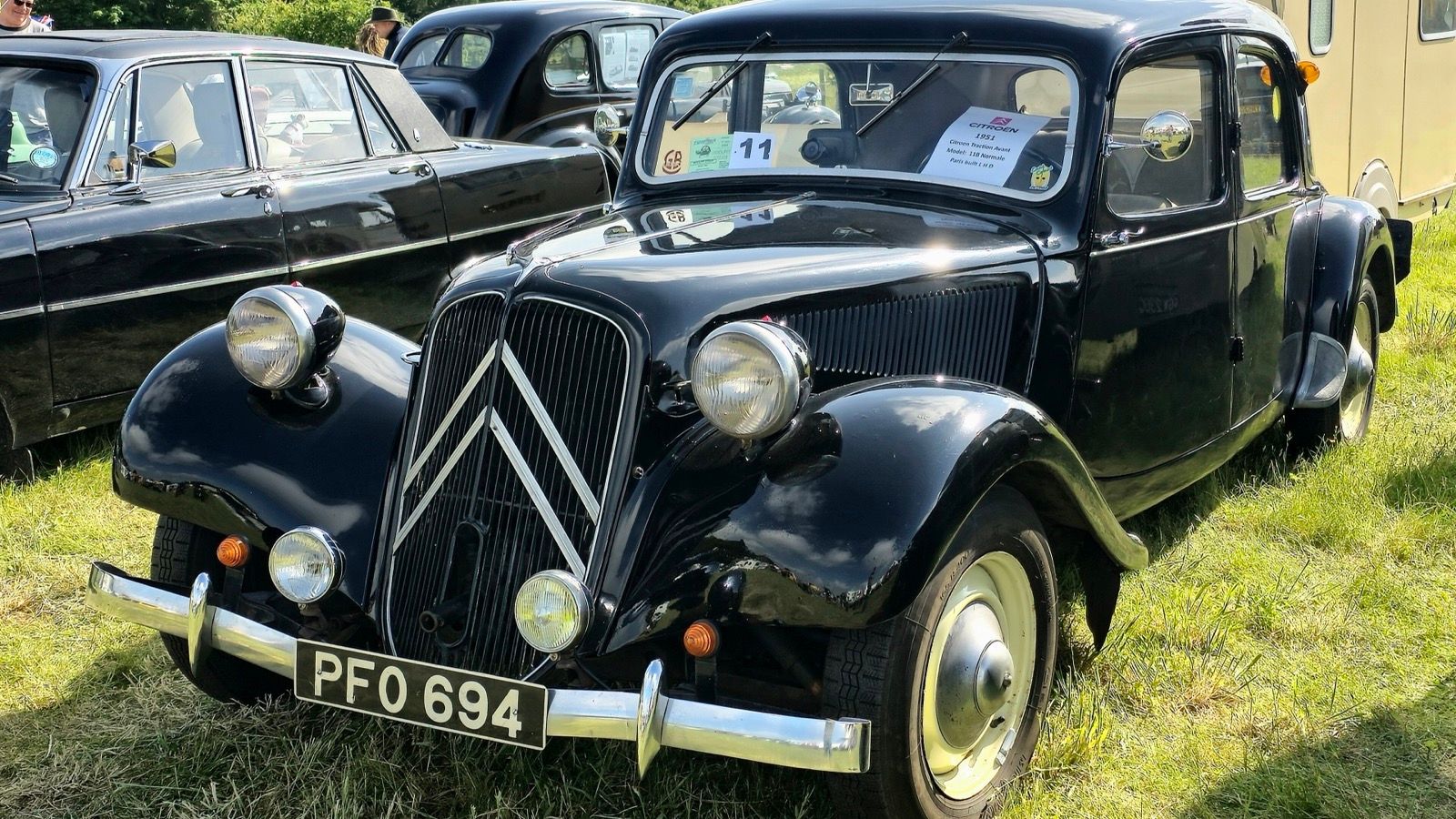
Photo: “1951 Citroën Traction Avant” by Calreyn88 / Wikimedia Commons, licensed under CC BY-SA 4.0. Cropped to 16:9.
Post-war production resumed; the six-cylinder 15-Six gained a hydropneumatic rear sphere in 1954, foreshadowing the DS suspension.
1951 Photo: “1951 Citroën Traction Avant” by Calreyn88 / Wikimedia Commons, licensed under CC BY-SA 4.0. Cropped to 16:9.
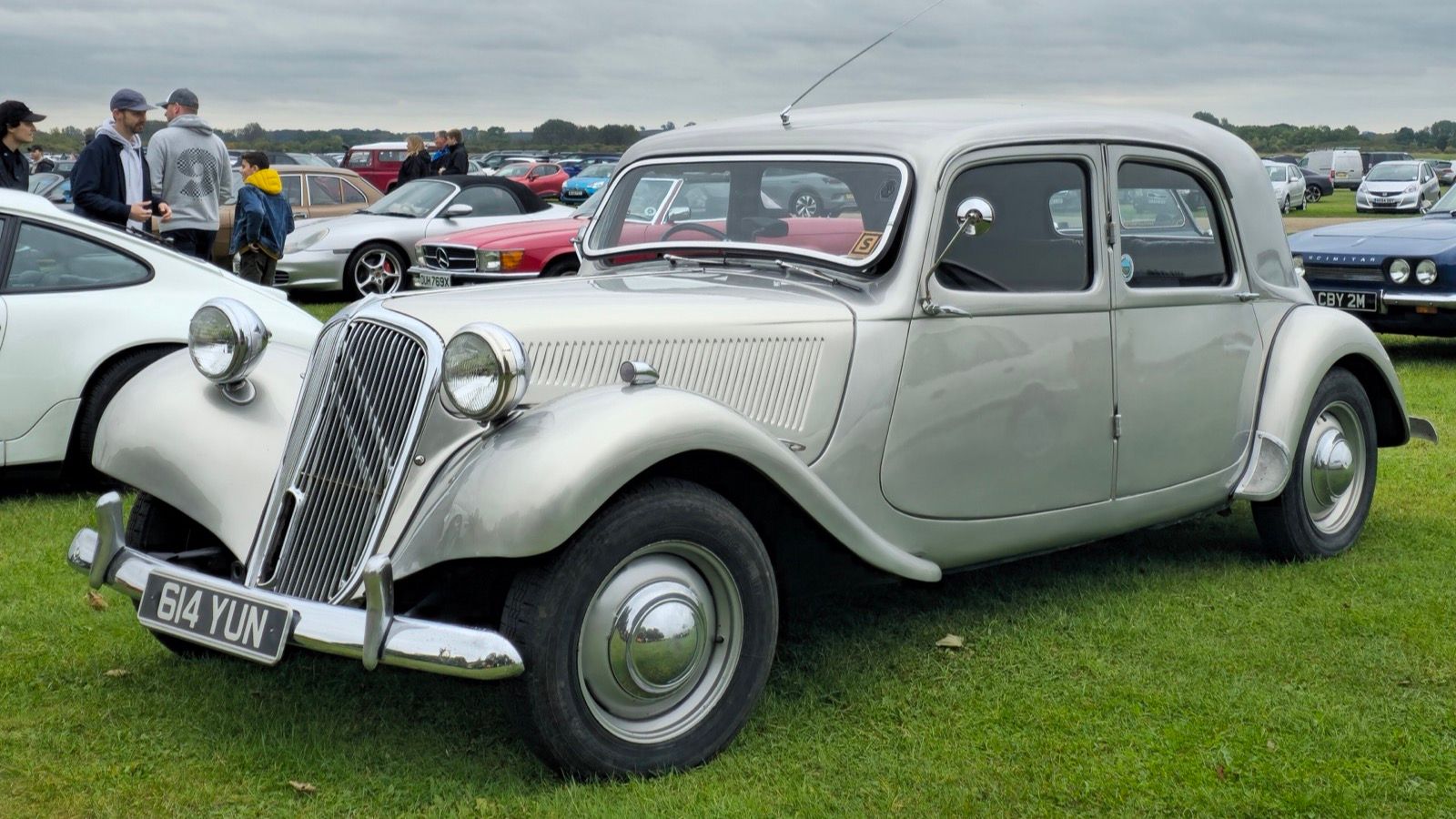
1953 Photo: “1953 Citroen Traction Avant 1” by Calreyn88 / Wikimedia Commons, licensed under CC BY-SA 4.0. Cropped to 16:9.
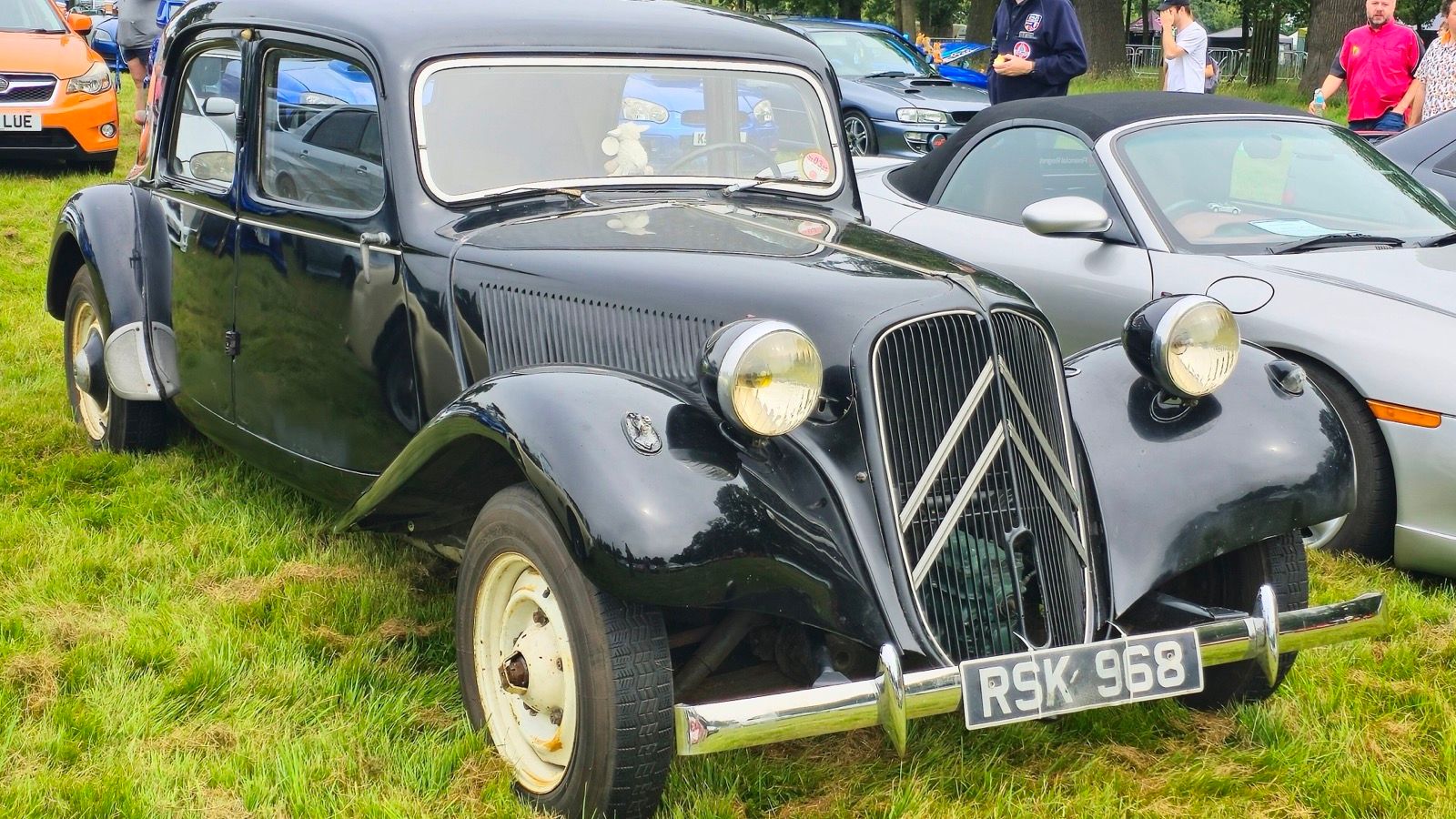
1956 Photo: “1956 Citroen Traction Avant” by Calreyn88 / Wikimedia Commons, licensed under CC BY-SA 4.0. Cropped to 16:9.
Body styles
- Sedan
- Wagon (Commerciale/Familiale)
- Cabriolet
Related models
Collect the nameplate
Find a scale model of the Citroën Traction Avant
Search Amazon across available years, colors, and scales. Exact releases vary, so confirm the listing before ordering.