
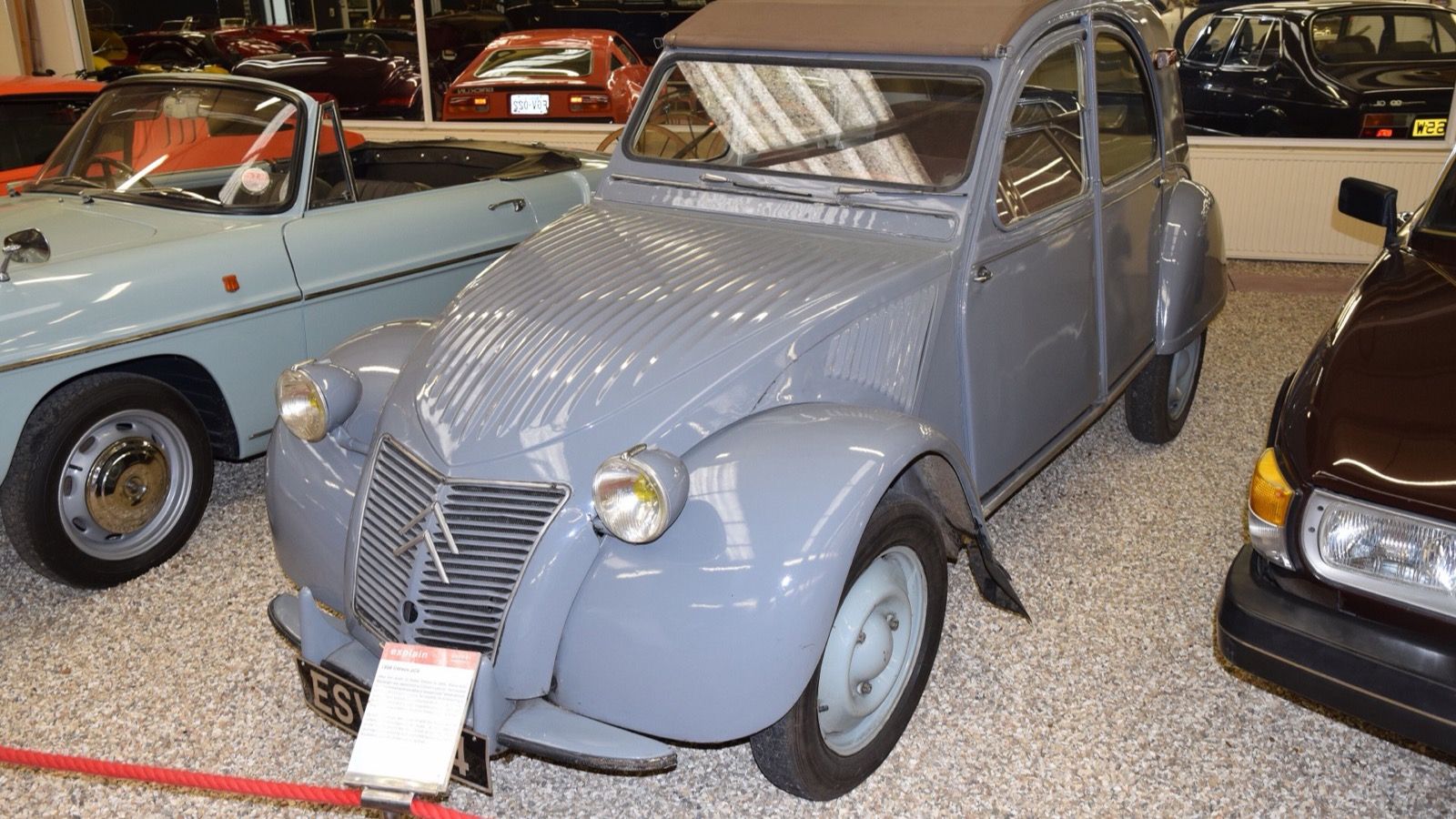
Citroën 2CV History
Citroën's people's car — an ultra-frugal air-cooled two-cylinder that mobilised postwar France and sold over nine million in 42 years.
Photo: “1958 Citroen 2CV (35289066995)” by Hugh Llewelyn from Keynsham, UK / Wikimedia Commons, licensed under CC BY-SA 2.0. Cropped to 16:9.
History
Conceived by Citroën vice-president Pierre Boulanger in the late 1930s to motorise France's rural population, the 2CV (deux chevaux — two tax horsepower) was unveiled at the 1948 Paris Salon de l'Automobile. It was strictly minimal: an air-cooled flat-twin engine of just 375 cc at launch, interconnected front-and-rear suspension for ride comfort on rough farm tracks, roll-back canvas roof, and corrugated steel bodywork for lightness. The project had been kept secret throughout the German occupation.
Production ramped quickly and the 2CV became the backbone of French motoring through the 1950s and 1960s. A commercial variant, the Fourgonnette van, gave it a second life as a delivery vehicle, and over the decades engine displacement crept up to 435 cc and then 602 cc. A cabriolet (the Méhari's spiritual predecessor) and the sporty Charleston special editions kept the model culturally relevant through the 1980s.
The last 2CV rolled off the assembly line in Mangualde, Portugal, on 27 July 1990 — the French factory had closed in 1988. Total production across 42 years reached over nine million, making the 2CV one of the most successful European cars of the twentieth century.
Generations
A-series (375 / 425 cc) · 2CV A
Photo: “1958 Citroen 2CV (35289066995)” by Hugh Llewelyn from Keynsham, UK / Wikimedia Commons, licensed under CC BY-SA 2.0. Cropped to 16:9.
Original flat-twin 2CV; grew from 375 cc to 425 cc, with a single headlight and corrugated panels.
1958 Photo: “1958 Citroen 2CV (35289066995)” by Hugh Llewelyn from Keynsham, UK / Wikimedia Commons, licensed under CC BY-SA 2.0. Cropped to 16:9.
AZ / AZAM / AZU series (425 / 602 cc) · 2CV AZ / AZAM
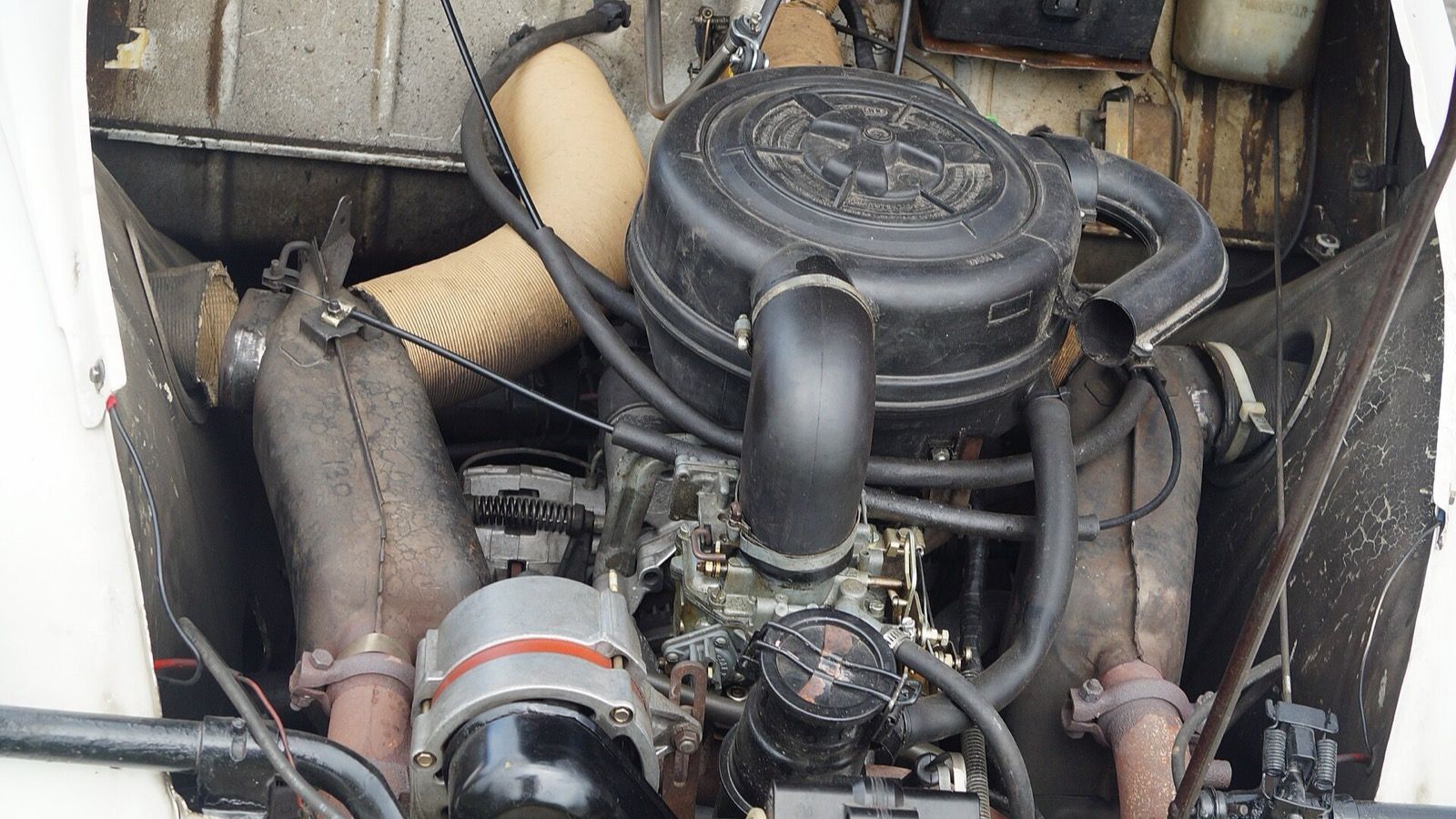
Photo: “1985 Citroen 2CV6 Special (20242651719)” by Greg Gjerdingen from Willmar, USA / Wikimedia Commons, licensed under CC BY 2.0. Cropped to 16:9.
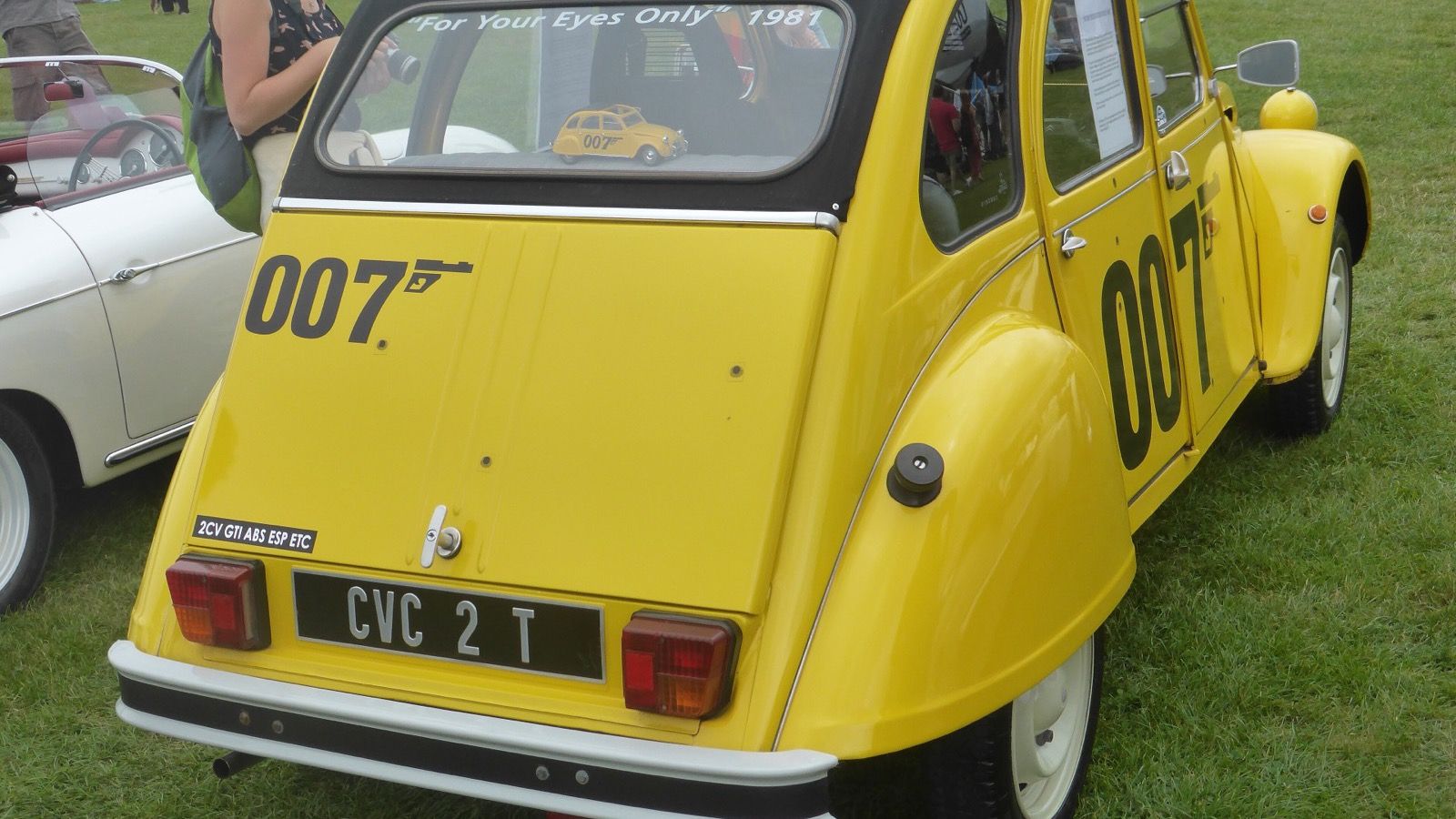
Expanded engine options (602 cc from 1970), twin headlights, improved specification; sold through to the final 1990 Portuguese production.
1985 Photo: “1985 Citroen 2CV6 Special (20242651719)” by Greg Gjerdingen from Willmar, USA / Wikimedia Commons, licensed under CC BY 2.0. Cropped to 16:9.
1987 Photo: “Citroën 2CV (1987) (35802873480)” by Andrew Bone from Weymouth, England / Wikimedia Commons, licensed under CC BY 2.0. Cropped to 16:9.
Body styles
- Hatchback
- Van (2CV Fourgonnette)
- Cabriolet
Notable special editions & performance variants
Charleston
Two-tone Art Deco-inspired special edition; enormously popular and kept in production throughout the 2CV's final decade.
Dolly
Another two-tone special edition in the vein of the Charleston, sold in the 2CV's final years.
Related models
Collect the nameplate
Find a scale model of the Citroën 2CV
Search Amazon across available years, colors, and scales. Exact releases vary, so confirm the listing before ordering.