
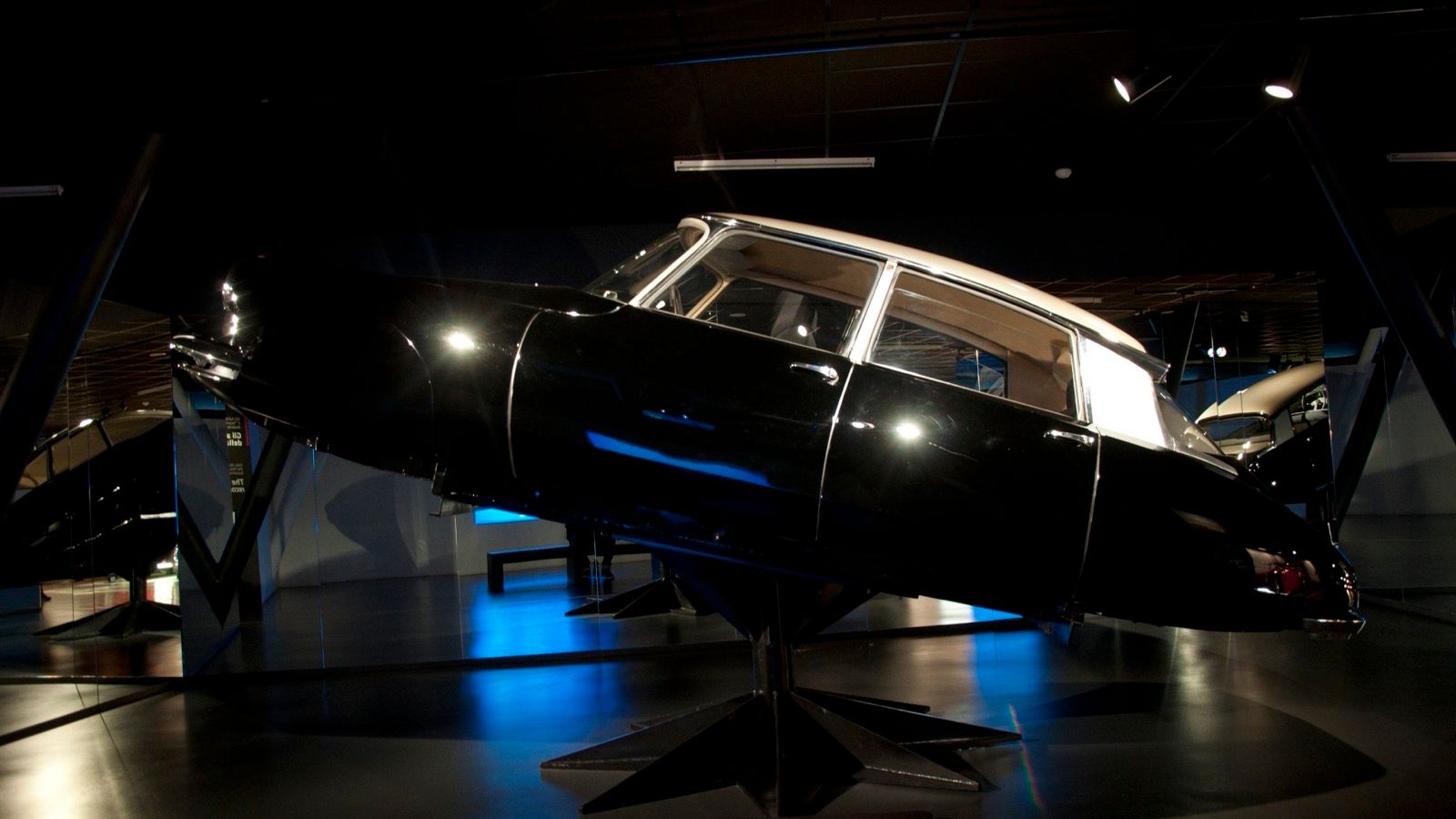
Citroën DS History
The 'Goddess' — a 1955 Paris Motor Show sensation that pioneered hydropneumatic self-levelling suspension, disc brakes, and swivelling headlights, and remains one of the most influential cars ever made.
Photo: “1955 Citroën DS 19 Museo Nazionale dell'automobile Torino” by Rahil Rupawala / Wikimedia Commons, licensed under CC BY 2.0. Cropped to 16:9.
History
Unveiled at the 1955 Paris Motor Show after 18 years of secret development, the DS 19 is one of the most dramatic debuts in automotive history: in the first 15 minutes of the show, 743 firm orders were placed; by the end of the 10-day event, Citroën had taken 80,000 deposits. The DS broke entirely with automotive convention — the self-levelling hydropneumatic suspension (developed by Paul Magès), semi-automatic gearbox, power steering, power brakes, and single-spoke steering wheel presented a vision of motoring from another decade. Designer Flaminio Bertoni's aerodynamic body, with its blended nose and near-tailfinless rear, amplified the futuristic effect.
Over 20 years and three series, the DS matured from the original DS 19 through DS 20, DS 21, and DS 23 variants with progressively larger engines. The convertible Décapotable (cabriolet), converted by coachbuilder Henri Chapron, became the presidential car of choice for Charles de Gaulle — and famously shielded him from an assassination attempt in 1962, when the hydropneumatic suspension kept the shot-tyre car driveable long enough to escape. The estate Break and the lower-specification ID variant completed the range.
Approximately 1.455 million DS and ID cars were built before production ended on 24 April 1975. The DS won multiple major rally victories, earned a reputation as the most comfortable long-distance car available anywhere, and was voted the most beautiful car of all time in a 1999 survey of European motoring journalists — a title it still regularly reclaims in retrospective polls.
Generations
Series 1 (DS 19) · DS 19
Photo: “1955 Citroën DS 19 Museo Nazionale dell'automobile Torino” by Rahil Rupawala / Wikimedia Commons, licensed under CC BY 2.0. Cropped to 16:9.
Original 'Goddess': 1,911 cc four-cylinder, hydropneumatic suspension, single-spoke wheel — the debut configuration.
1955 Photo: “1955 Citroën DS 19 Museo Nazionale dell'automobile Torino” by Rahil Rupawala / Wikimedia Commons, licensed under CC BY 2.0. Cropped to 16:9.
Series 2 (DS 19 / 20 / 21) · DS 19 / DS 20 / DS 21
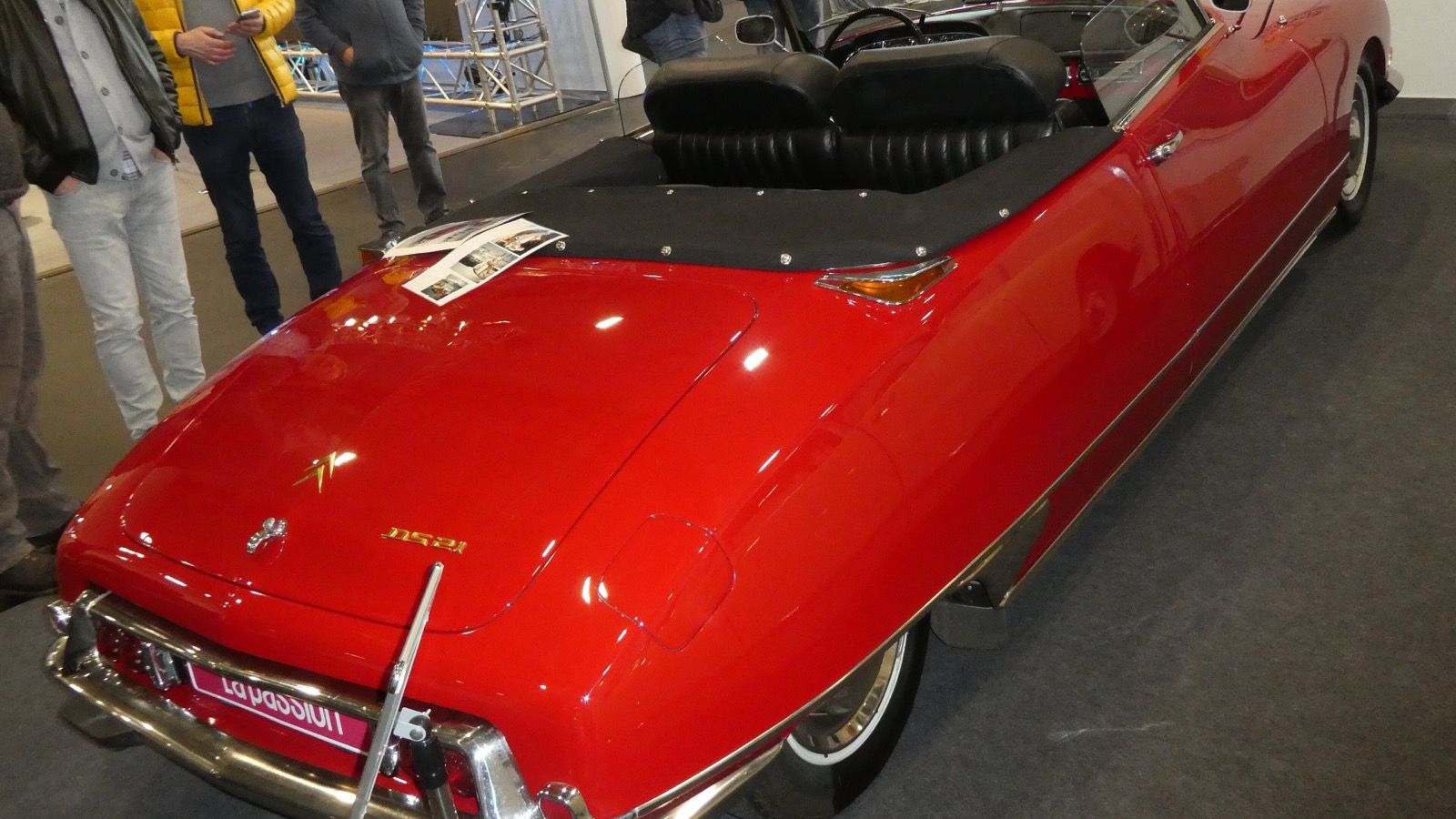
Photo: “Citroën DS21 Cabriolet (1967) (49490869138)” by Andrew Bone from Weymouth, England / Wikimedia Commons, licensed under CC BY 2.0. Cropped to 16:9.
Mid-life refinement with improved cabin, DS 20 and DS 21 engine options, and swivelling front headlights added in 1967.
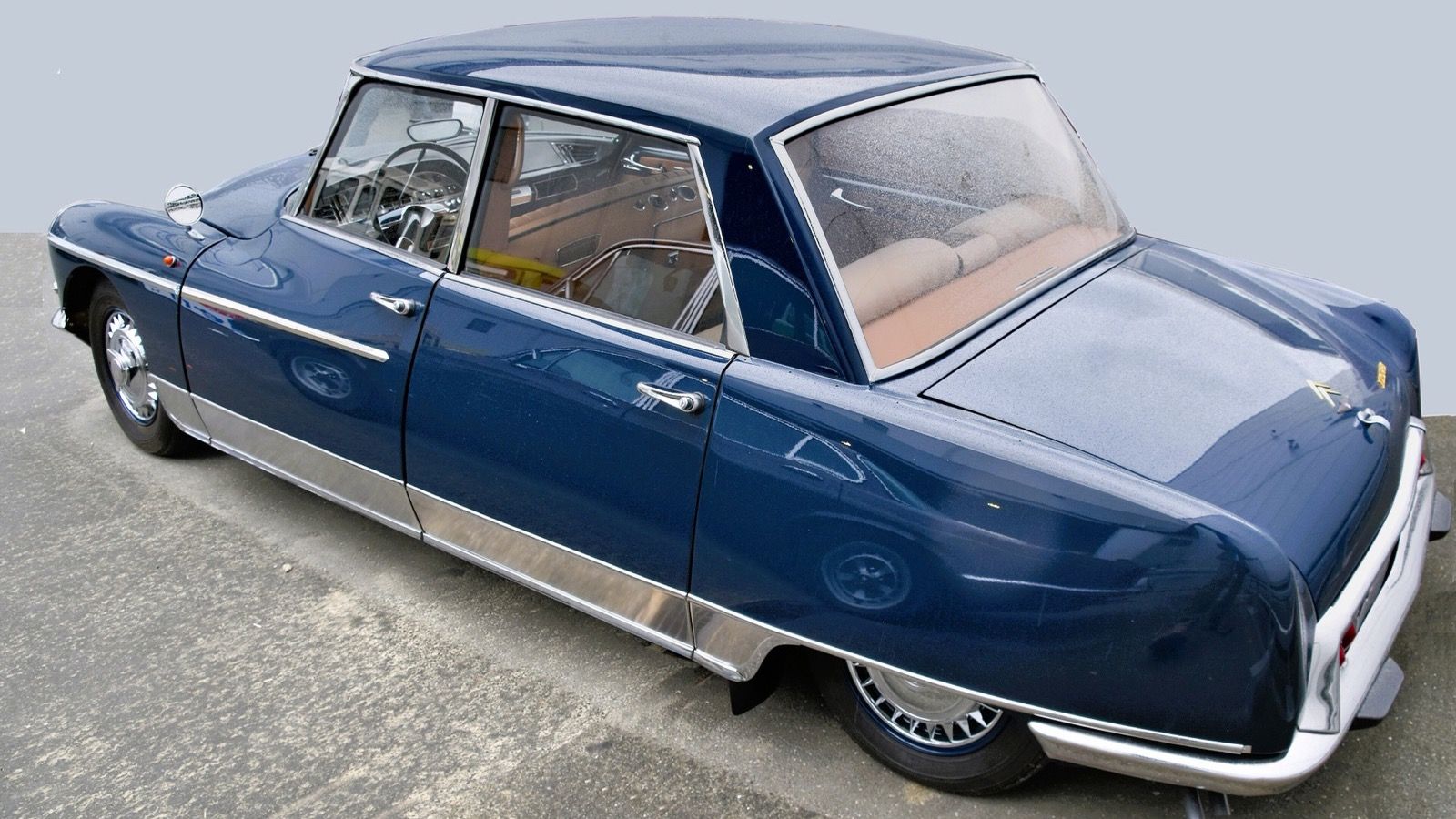
1966 Photo: “Citroën DS 21 Majesty (1966) (52859846661 bearb Sp 1)” by Charles from Port Chester, New York / Wikimedia Commons, licensed under CC BY 2.0. Cropped to 16:9.
1967 Photo: “Citroën DS21 Cabriolet (1967) (49490869138)” by Andrew Bone from Weymouth, England / Wikimedia Commons, licensed under CC BY 2.0. Cropped to 16:9.
Series 3 (DS 20 / 21 / 23) · DS 20 / DS 21 / DS 23
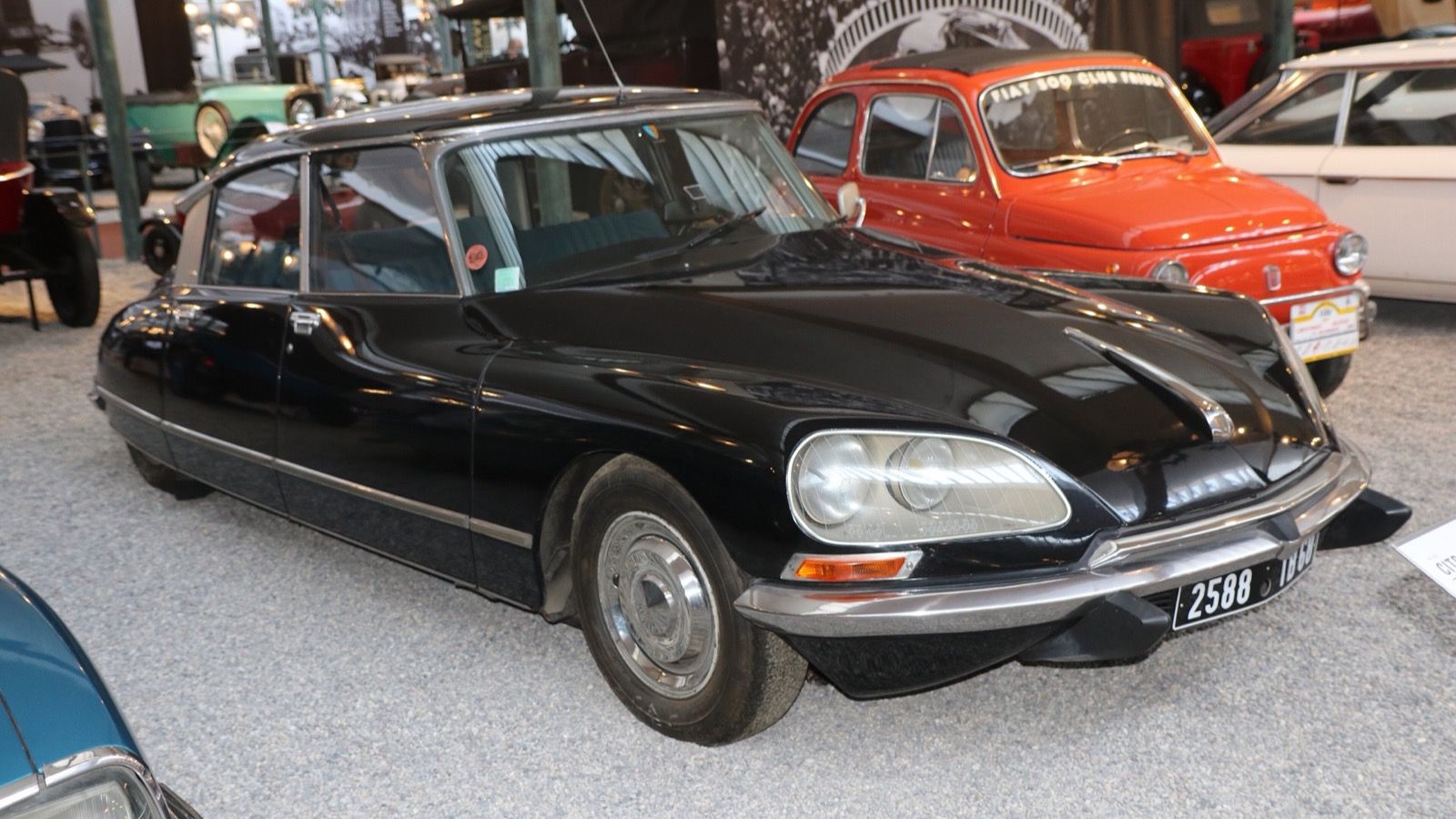
Photo: “Citroën "DS 23" - 1975” by Loudumo / Wikimedia Commons, licensed under CC BY-SA 4.0. Cropped to 16:9.
Final series: revised nose with quad headlights (markets permitting), up to 2,347 cc DS 23 — production ended 24 April 1975.
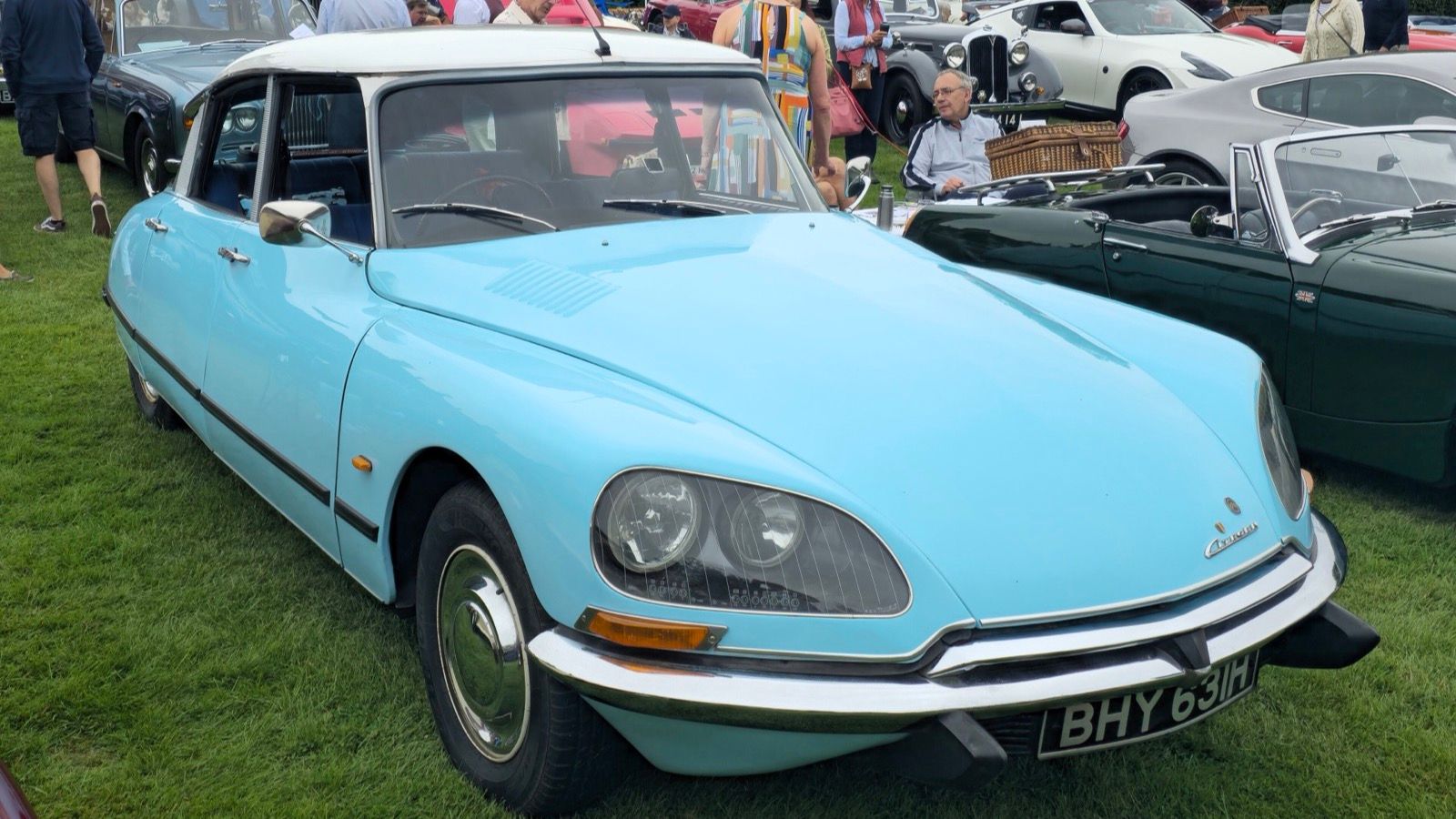
1970 Photo: “1970 Citroen DS 21 1” by Calreyn88 / Wikimedia Commons, licensed under CC BY-SA 4.0. Cropped to 16:9.
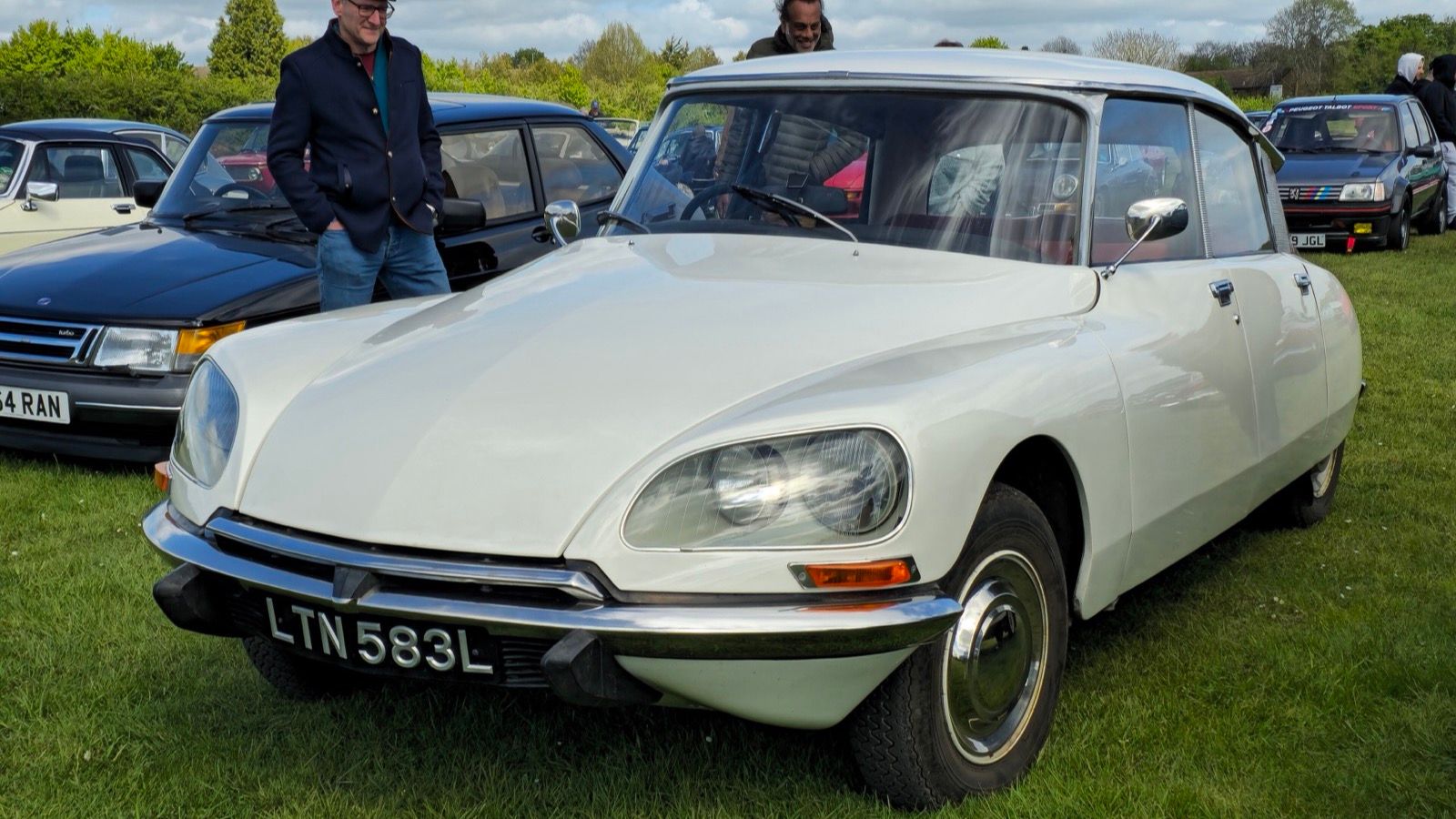
1972 Photo: “1972 Citroën DS” by Calreyn88 / Wikimedia Commons, licensed under CC BY-SA 4.0. Cropped to 16:9.
1975 Photo: “Citroën "DS 23" - 1975” by Loudumo / Wikimedia Commons, licensed under CC BY-SA 4.0. Cropped to 16:9.
Body styles
- Sedan (saloon)
- Estate (Break)
- Cabriolet (convertible)
Notable special editions & performance variants
DS Décapotable (Chapron convertible)
A four-seat cabriolet conversion by coachbuilder Henri Chapron; favoured by heads of state including Charles de Gaulle. Produced in very limited numbers.
DS Break (estate)
Factory-produced estate/wagon version of the DS, offering the same hydropneumatic ride with load-carrying practicality.
Related models
Collect the nameplate
Find a scale model of the Citroën DS
Search Amazon across available years, colors, and scales. Exact releases vary, so confirm the listing before ordering.