
Land Rover Defender History
Catalog record
Photography for this nameplate has not yet cleared the archive’s licensing and identity checks. The researched text below remains available while the page stays out of search and advertising inventory.
History
The vehicle now known as the Defender began in 1983 as the Land Rover One Ten (a 110-inch wheelbase), joined in 1984 by the shorter Ninety. It replaced the leaf-sprung Series with coil-spring suspension and permanent four-wheel drive, modernising the utility Land Rover while keeping its body-on-frame, aluminium-panelled toughness.
It was officially renamed 'Defender' in late 1990 (for the 1991 model year), because Land Rover had introduced the Discovery in 1989 and the original model now needed a name to distinguish it. Sold as the Defender 90, 110, and long 130, in soft-top, hard-top, station-wagon, and pickup forms, it became a beloved — if increasingly antiquated — off-road legend before classic production ended on 29 January 2016, unable to meet modern crash and emissions rules.
After a four-year gap, an all-new Defender (chassis code L663) was revealed in 2019 and reached customers for the 2020 model year. Built on an aluminium monocoque rather than a traditional ladder frame, and offered in 90, 110, and 130 body lengths, it reinvented the nameplate as a refined, electronically capable modern SUV while nodding to the original's silhouette.
Generations
Ninety / One-Ten → Defender · Classic Defender (Ninety/One-Ten)
The coil-sprung body-on-frame original — launched as the One Ten (1983) and Ninety (1984), renamed Defender in 1990, built until January 2016.
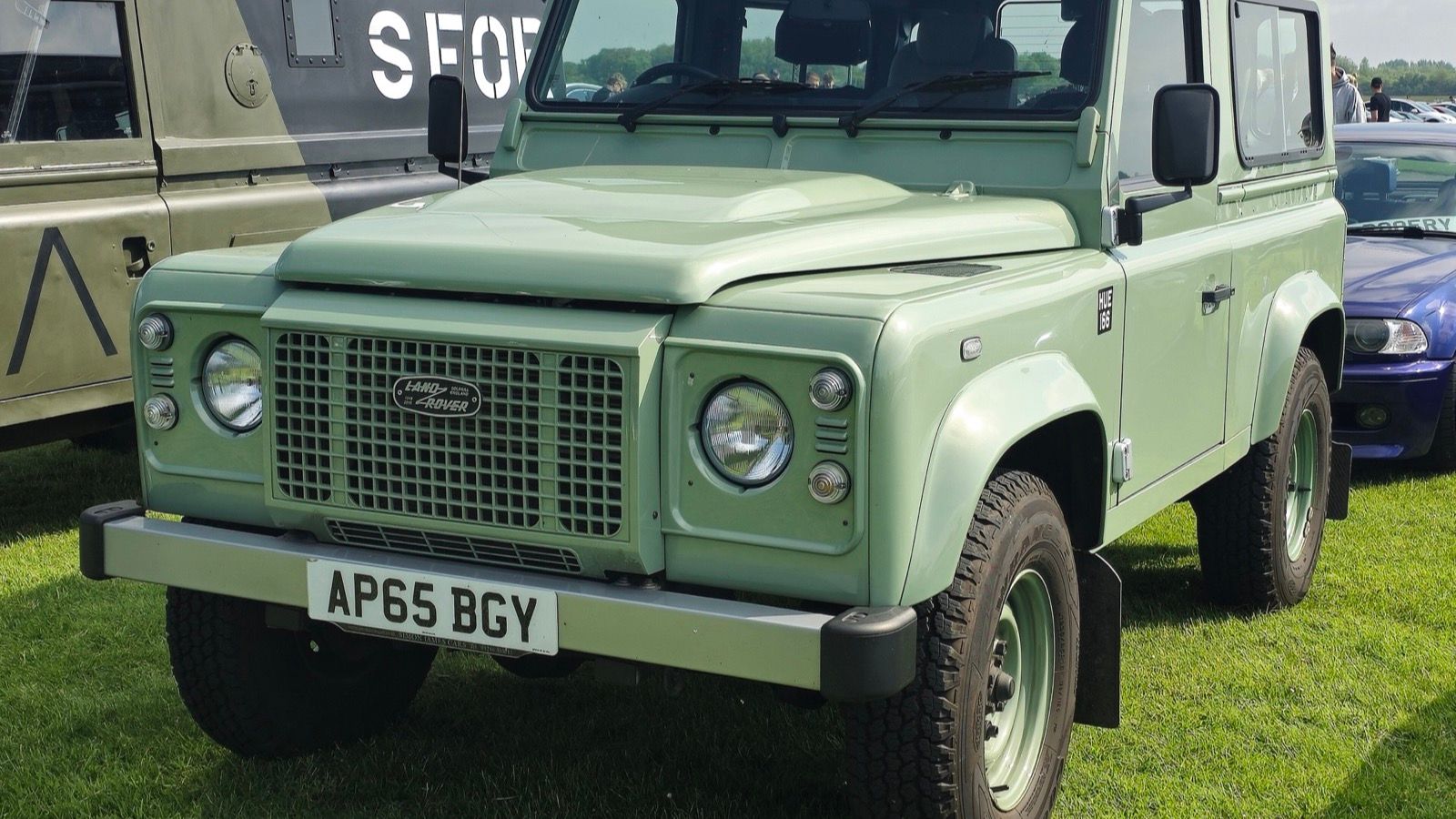
2015 Photo: “2015 Land Rover Defender Heritage TD” by Calreyn88 / Wikimedia Commons, licensed under CC BY-SA 4.0. Cropped to 16:9.
L663 · New Defender (L663)
The all-new aluminium-monocoque reboot (revealed 2019, on sale for 2020) in 90, 110, and 130 lengths — a modern, refined take on the off-road icon.
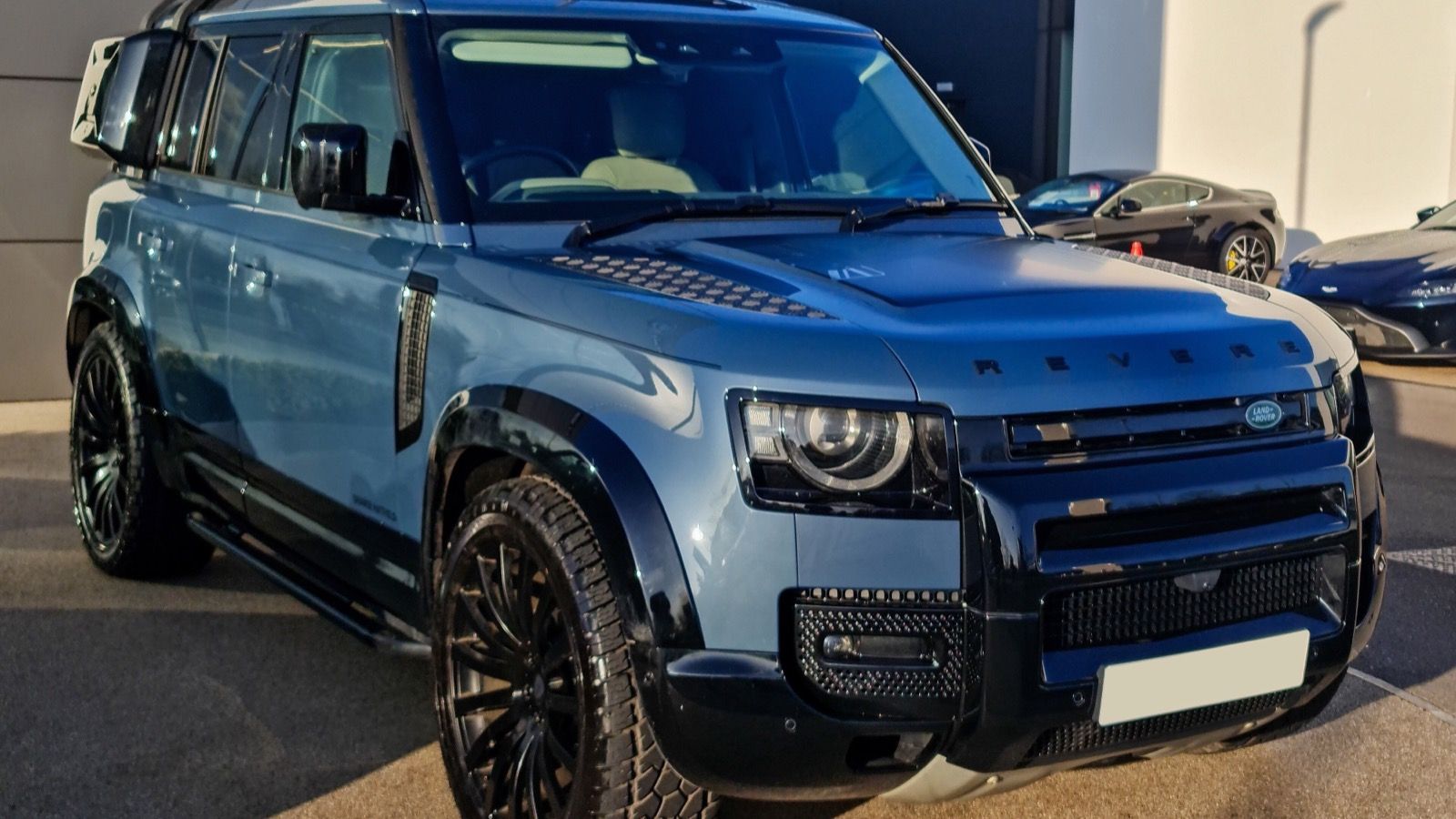
2020 Photo: “2020 Land Rover Defender HSE Diesel Automatic Revere 2.0” by Liam Walker / Wikimedia Commons, licensed under CC BY-SA 4.0. Cropped to 16:9.
Body styles
- 3-door SUV
- 5-door SUV
- Pickup
- Soft-top
Related models
Collect the nameplate
Find a scale model of the Land Rover Defender
Search Amazon across available years, colors, and scales. Exact releases vary, so confirm the listing before ordering.