
Lamborghini Miura History
Catalog record
Photography for this nameplate has not yet cleared the archive’s licensing and identity checks. The researched text below remains available while the page stays out of search and advertising inventory.
History
The Miura's origins were almost clandestine: engineers Giampaolo Dallara, Paolo Stanzani, and Bob Wallace developed the bare P400 chassis on their own time in 1965, hoping to persuade a sceptical Ferruccio Lamborghini to build it. When the rolling chassis was shown at the 1965 Turin Motor Show it generated such excitement that Ferruccio agreed — and Bertone's Marcello Gandini clothed it in one of the most beautiful bodies of the decade. The complete car debuted at Geneva in 1966 to universal acclaim.
The transverse mid-engine layout — with the gearbox and engine sharing the same oil sump — established what would become the universal template for performance sports cars. The 3.9-litre quad-cam V12 produced 350 hp in its original P400 form, rising to 370 hp in the P400 S (1969–1971) and 385 hp in the final P400 SV (1971–1973). The SV also gained wider rear fenders, separate engine and gearbox lubrication, and the elimination of the iconic 'eyelashes' around the headlamps.
Total production reached approximately 753 examples across all variants: 265 P400, 338 P400 S, and 150 P400 SV, with a handful of specials. The Miura is widely cited as the world's first true supercar.
Generations
P400
Original 350 hp transverse V12 mid-engine car. 265 built.
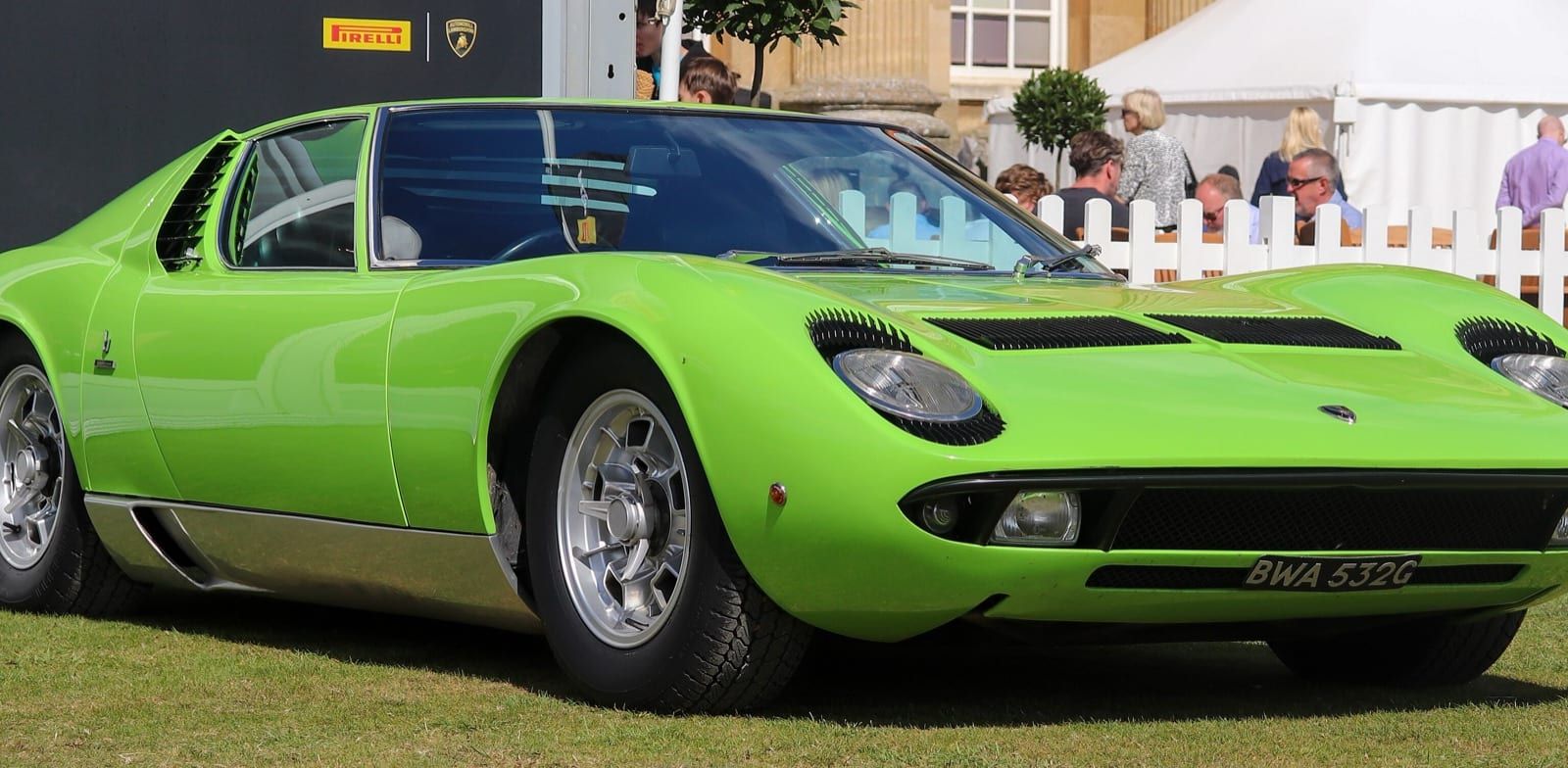
1968 Photo: “1968 Lamborghini Miura P400 S 3.9” by Vauxford / Wikimedia Commons, licensed under CC BY-SA 4.0. Cropped.
P400 S
Revised brakes, suspension, and 370 hp; ~338 built.
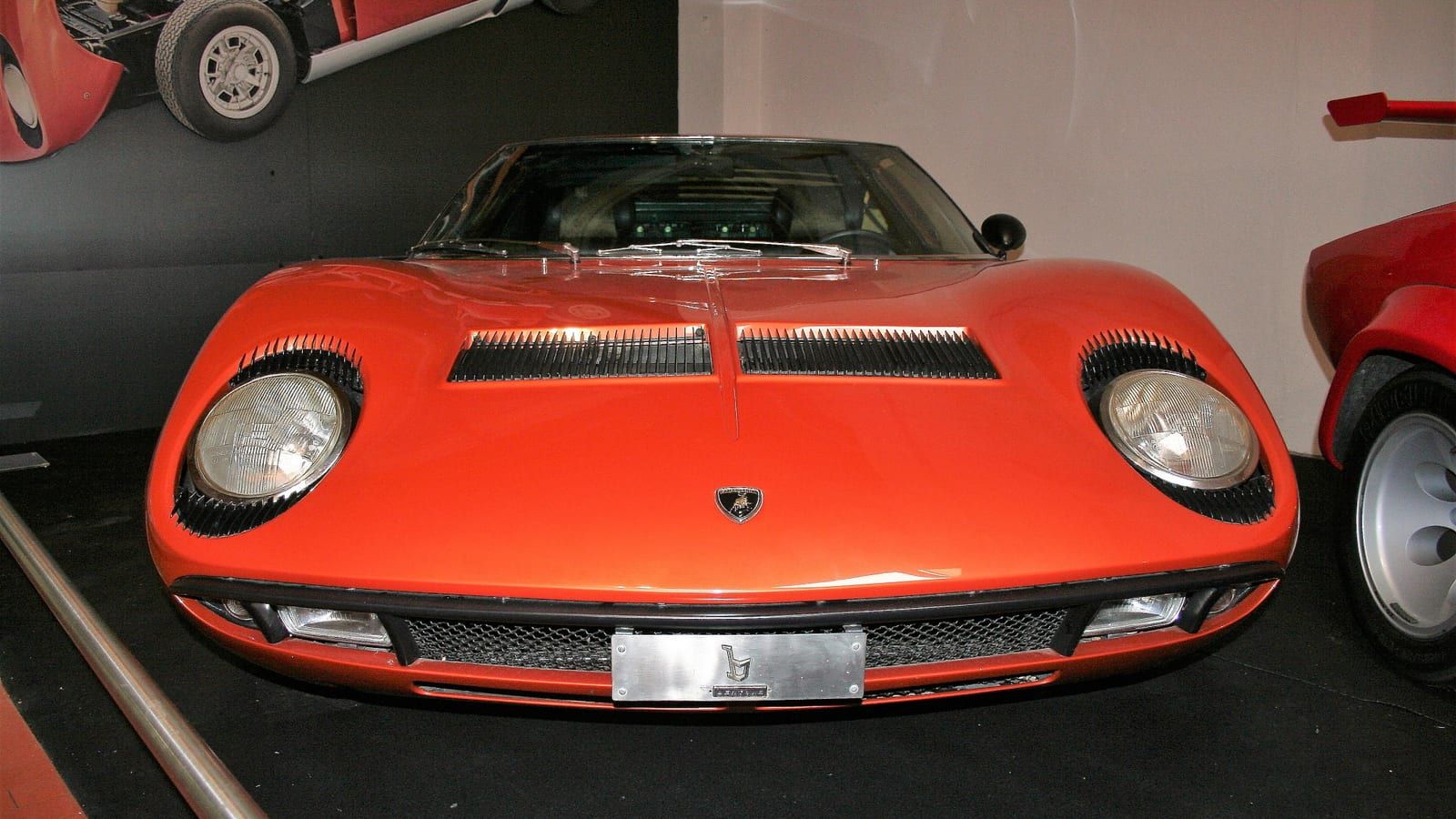
1970 Photo: “1970 Miura P400 S sn4425 frontale Bertone coll” by Andrea Volpato from pv Novara, Italia / Wikimedia Commons, licensed under CC BY-SA 2.0. Cropped to 16:9.
P400 SV
Definitive Miura — 385 hp, wider rear track, separate engine/gearbox lubrication; 150 built.
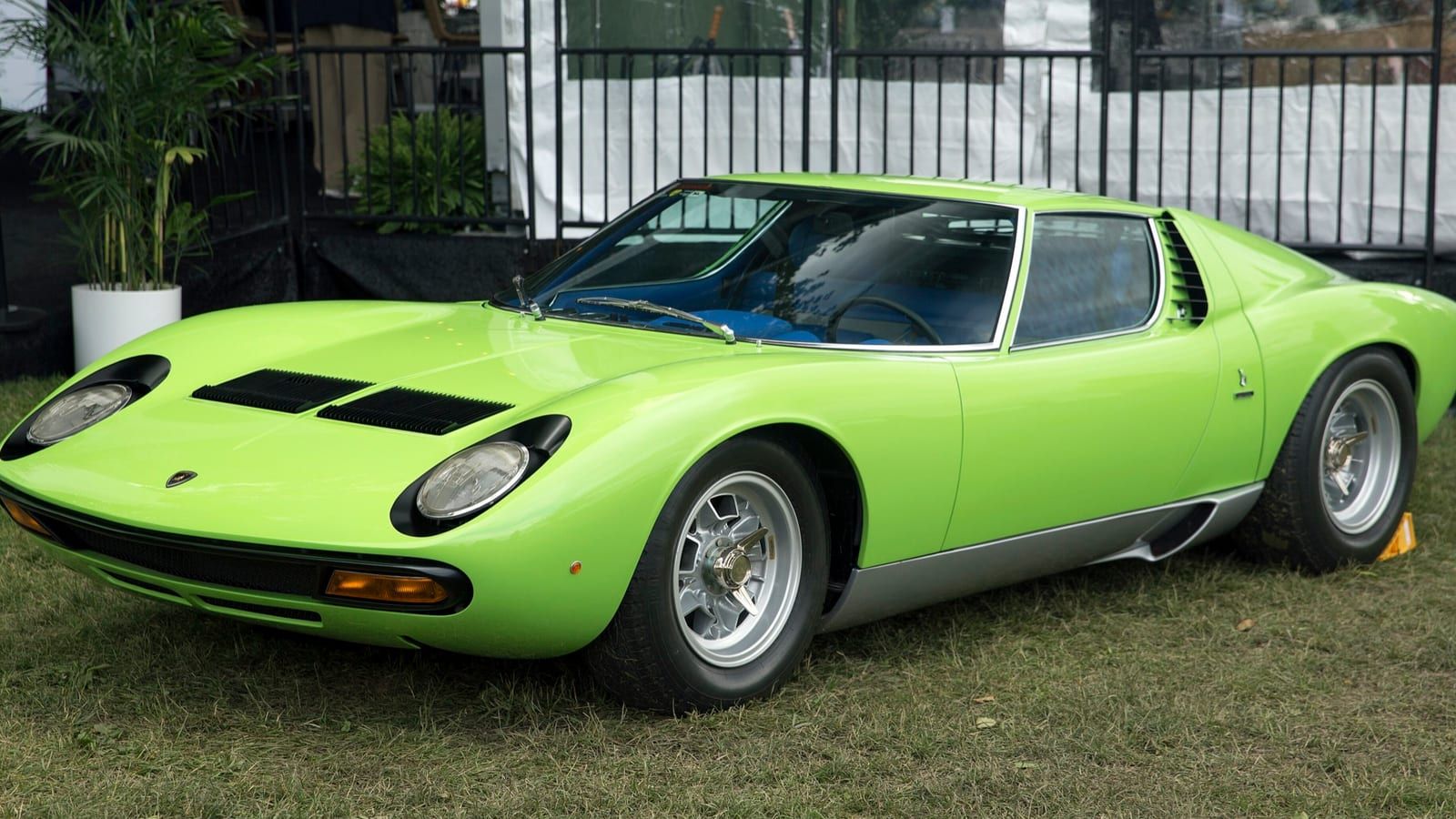
1972 Photo: “1972 Lamborghini Miura P400 SV in Verde Chiaro, front left” by Mr.choppers / Wikimedia Commons, licensed under CC BY-SA 4.0. Cropped to 16:9.
Body styles
- Coupe
Related models
Collect the nameplate
Find a scale model of the Lamborghini Miura
Search Amazon across available years, colors, and scales. Exact releases vary, so confirm the listing before ordering.