
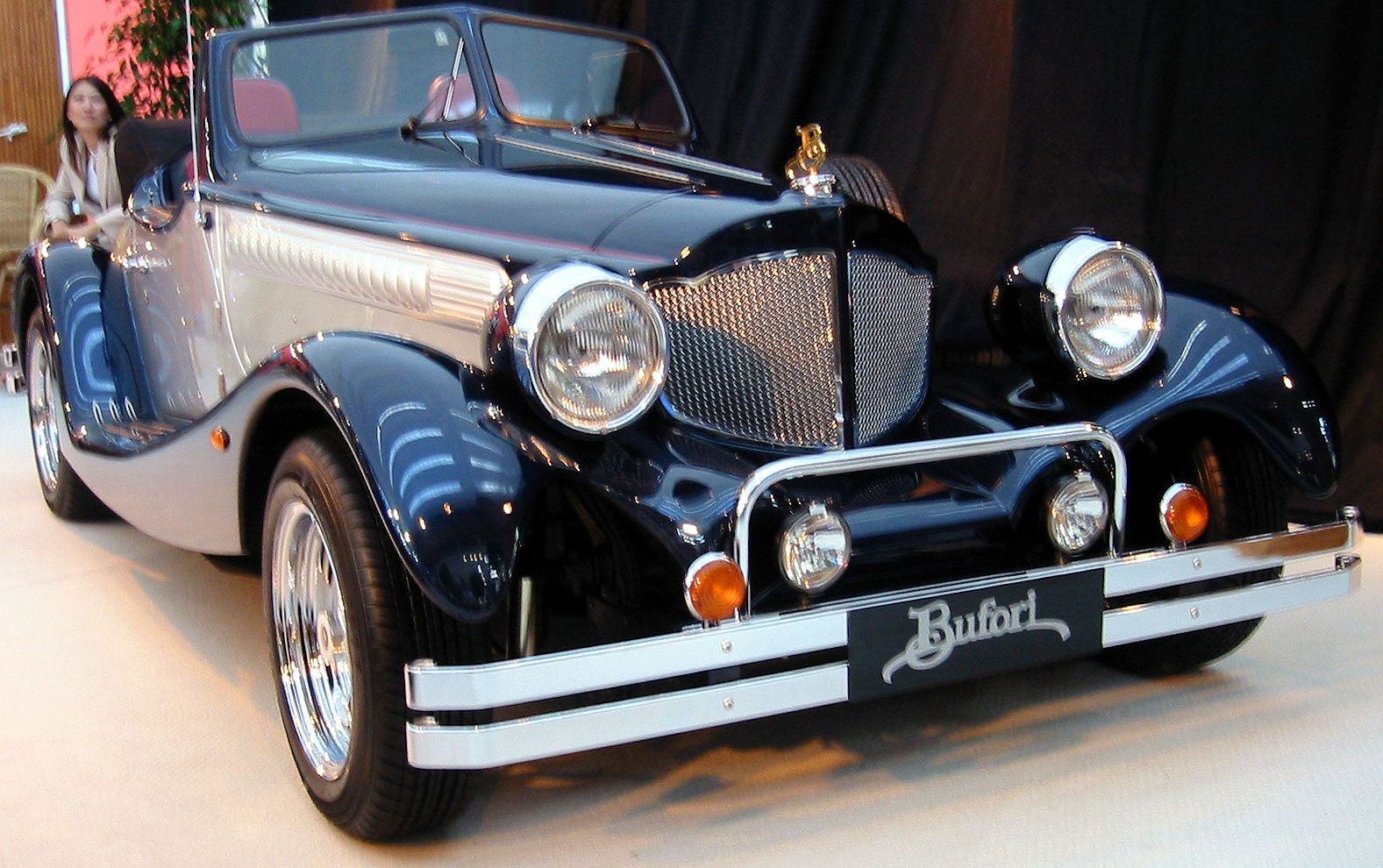
Bufori MK II History
Bufori's longest-running classic roadster — an eleven-year production run that established the brand commercially and funded the move to Malaysia.
Photo: “Bufori MK II” by LSDSL / Wikimedia Commons, licensed under CC BY-SA 3.0
History
The MK II Roadster replaced the MK I in 1992 and became Bufori's first genuinely commercial product. It used a rear-mounted Subaru flat-four (1.8–2.2 litres), switching from the Volkswagen engine, and the body was now constructed from a carbon-fibre and Kevlar composite — a technique the company patented and has used on every model since.
The cabin gained proper leather upholstery and a range of bespoke trim options, and buyers could specify an optional hardtop to convert the roadster into a more weather-tight coupe. Series 1 and Series 2 variants existed over the eleven-year run; the Series 2 carried minor refinements and additional customisation choices.
The MK II's sales success funded the company's biggest strategic move: relocating all manufacturing from Merrylands, Sydney to a purpose-built factory in Kepong, Kuala Lumpur in 1998. Three examples were selected for permanent display at Malaysia's National Automotive Museum in 2003, the same year production ended. The MK II had laid the foundations for Bufori as a Malaysian luxury marque.
Generations
MK II Series 1 · Series 1
Photo: “Bufori MK II” by LSDSL / Wikimedia Commons, licensed under CC BY-SA 3.0
Original MK II: 1.8-litre Subaru flat-four, carbon-Kevlar body, leather interior, optional hardtop.
MK II Series 2 · Series 2
Refined version with the larger 2.2-litre Subaru flat-four and additional customisation options; built at the new Kepong, KL factory from 1998.
Body styles
- Roadster
- Coupe (with optional hardtop)
Related models
Collect the nameplate
Find a scale model of the Bufori MK II
Search Amazon across available years, colors, and scales. Exact releases vary, so confirm the listing before ordering.