
Ashok Leyland Comet History
The truck that built Ashok Leyland — a rugged cabover that dominated Indian haulage for three decades and sold 1,000 units in its very first year.
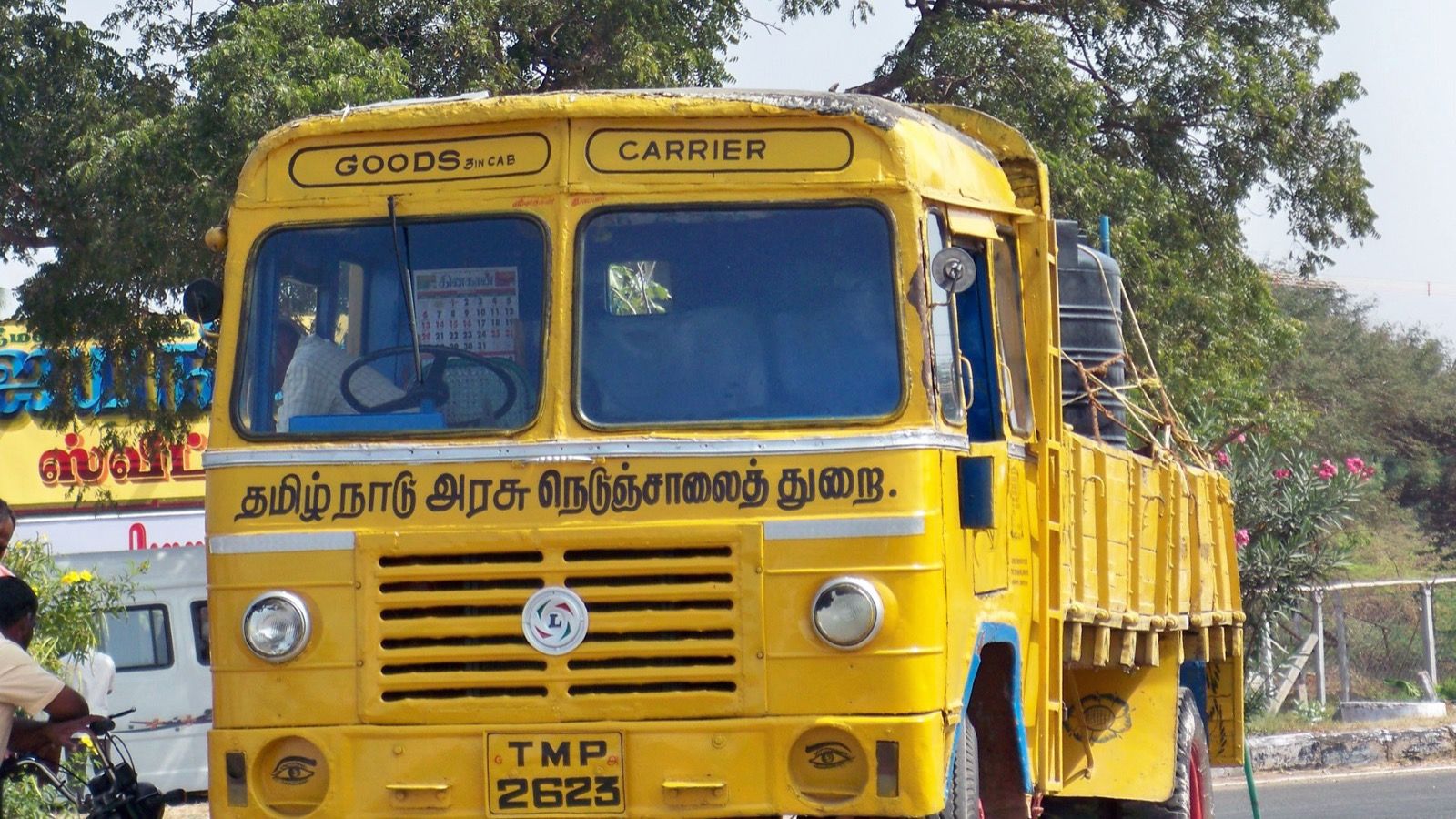
Photo: “Ashok Leyland Generation - II Comet (1977)” by Ask27 / Wikimedia Commons, licensed under CC BY-SA 3.0. Cropped to 16:9.
History
In 1954 the Indian government granted Ashok Motors a licence to manufacture 1,000 Leyland Comet cabover trucks per year — the move that transformed a small Austin-car assembler into a commercial-vehicle powerhouse. The Comet sold out its entire first-year allotment of 1,000 units with just 252 employees on the payroll, cementing the company's direction for decades to come.
Ashok Motors renamed itself Ashok Leyland in 1955 after British Leyland took a 40-percent stake, and the Comet became the backbone of Indian road freight through the 1960s and 1970s. Its reputation for reliability and fuel efficiency made it the preferred choice for state transport undertakings and private fleet operators alike.
Production of the Comet range continued into the late 1980s, by which time it had been succeeded by more modern nameplates — the Tusker and the Taurus — that Ashok Leyland introduced as fully indigenised successors. The Comet's three-decade run established the template for Indian heavy haulage.
Generations
British Leyland-derived Comet · Comet (Leyland-licensed)
Direct Leyland-licence build; cabover layout; 1,000-unit-per-year government-approved quota at launch.
Indigenised Comet · Comet (localised)
Photo: “Ashok Leyland Generation - II Comet (1977)” by Ask27 / Wikimedia Commons, licensed under CC BY-SA 3.0. Cropped to 16:9.
Post-collaboration era: increasing local content following the end of the British Leyland technical agreement in 1975.
1977 Photo: “Ashok Leyland Generation - II Comet (1977)” by Ask27 / Wikimedia Commons, licensed under CC BY-SA 3.0. Cropped to 16:9.
Related models
Collect the nameplate
Find a scale model of the Ashok Leyland Comet
Search Amazon across available years, colors, and scales. Exact releases vary, so confirm the listing before ordering.