
Tata Motors Nano History
The world's least expensive production car at launch — Ratan Tata's ₹1-lakh people's car, conceived to move Indian families off motorcycles.
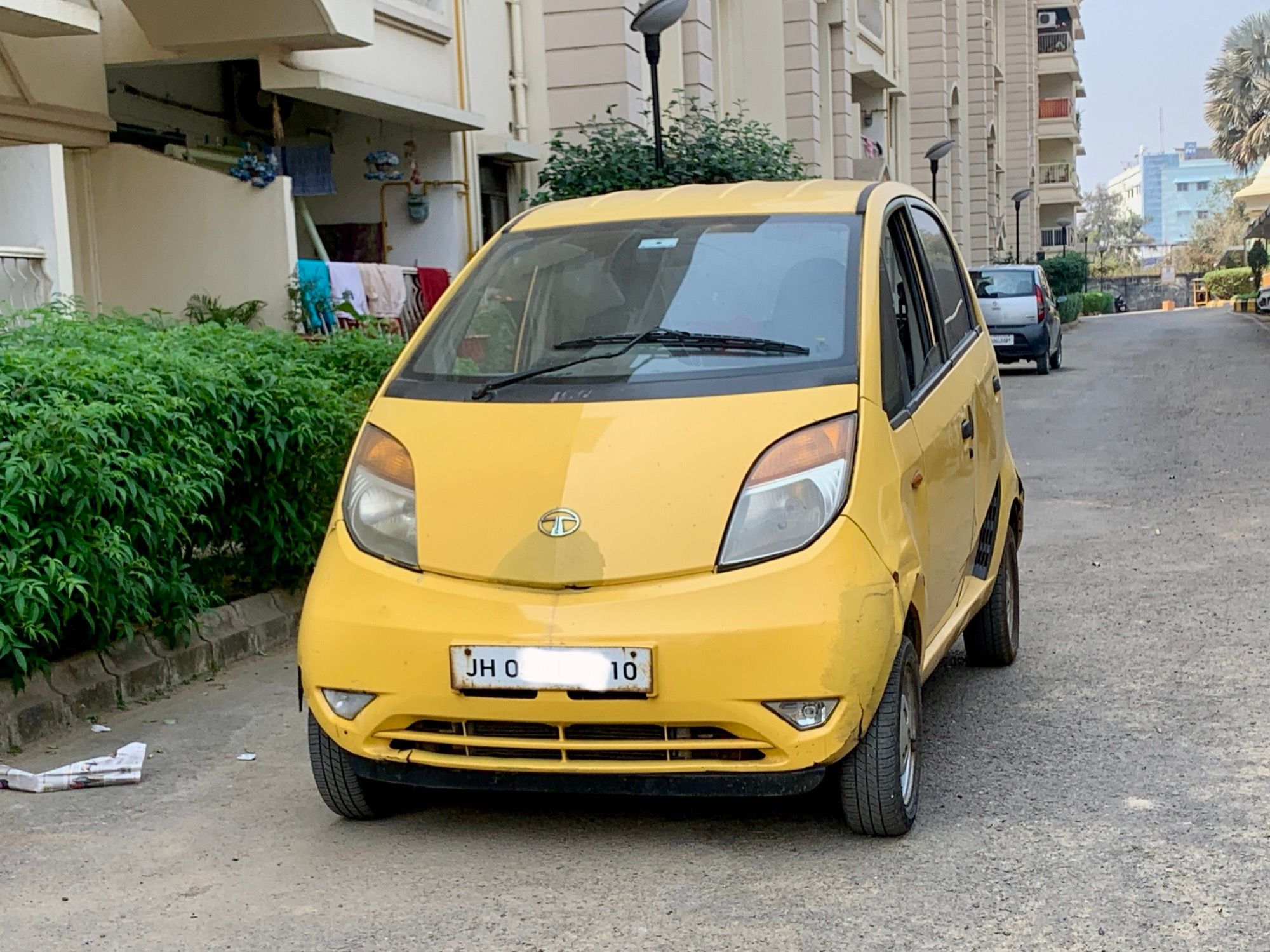
Photo: “Tata Nano LX in Jamshedpur, East Singhbhum, Jharkhand, India (Ank Kumar, Infosys Limited) 01.jpg” by Ank Kumar / Wikimedia Commons, licensed under CC BY-SA 4.0
History
Announced on January 10, 2008 with a headline launch price of ₹100,000 (approximately US$2,500), the Tata Nano was Ratan Tata's vision of an affordable four-wheel alternative to the overloaded two-wheelers common on Indian roads. Its unveiling at the Delhi Auto Expo captured global attention as 'the world's cheapest car.'
Achieving the price point required radical engineering: a rear-mounted 623 cc two-cylinder engine, minimal sound deadening, and highly optimised manufacturing. However, only the very first customers paid the full ₹1-lakh price; taxes and features pushed the real cost higher, and early quality concerns — including high-profile fire incidents — damaged consumer confidence.
A facelifted GenX Nano with a five-door hatchback option and optional features (electric power steering, air conditioning) arrived in 2015, but sales continued to fall. Production effectively ceased in June 2018, when just one unit was assembled in a month. The Nano stands as one of automotive history's most ambitious and instructive experiments in radical affordability.
Generations
First generation · Nano
Photo: “Tata Nano LX in Jamshedpur, East Singhbhum, Jharkhand, India (Ank Kumar, Infosys Limited) 01.jpg” by Ank Kumar / Wikimedia Commons, licensed under CC BY-SA 4.0
The original ₹1-lakh microcar with rear-mounted 623 cc twin; four-door saloon form.
GenX · GenX Nano
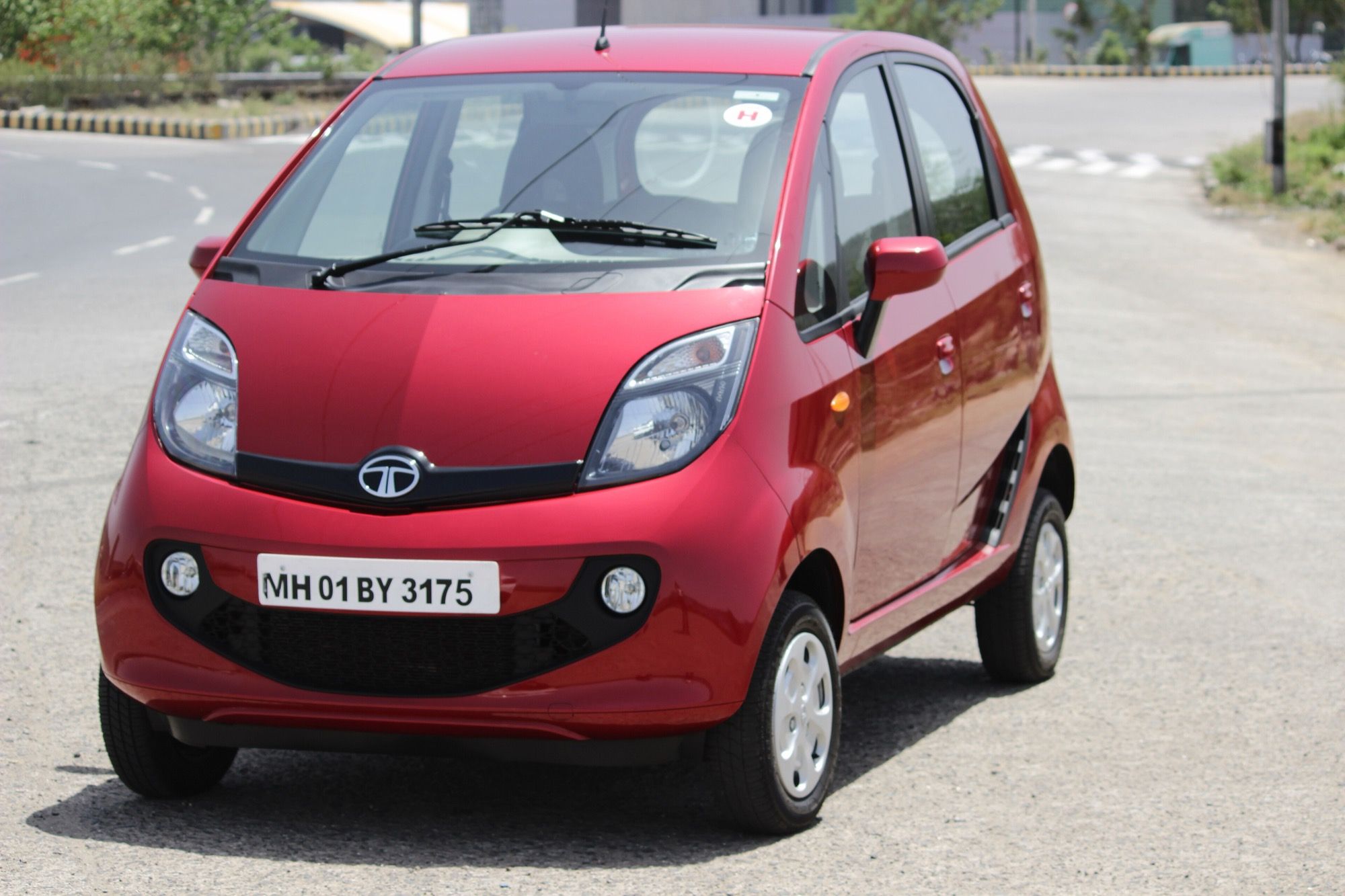
Photo: “Tata Nano - GenX 01.JPG” by Alexander Gounder / Wikimedia Commons — CC0 1.0
Facelifted with five-door option, optional power steering and air conditioning; sold in very low volumes.
Body styles
- Hatchback
Related models
Collect the nameplate
Find a scale model of the Tata Motors Nano
Search Amazon across available years, colors, and scales. Exact releases vary, so confirm the listing before ordering.