
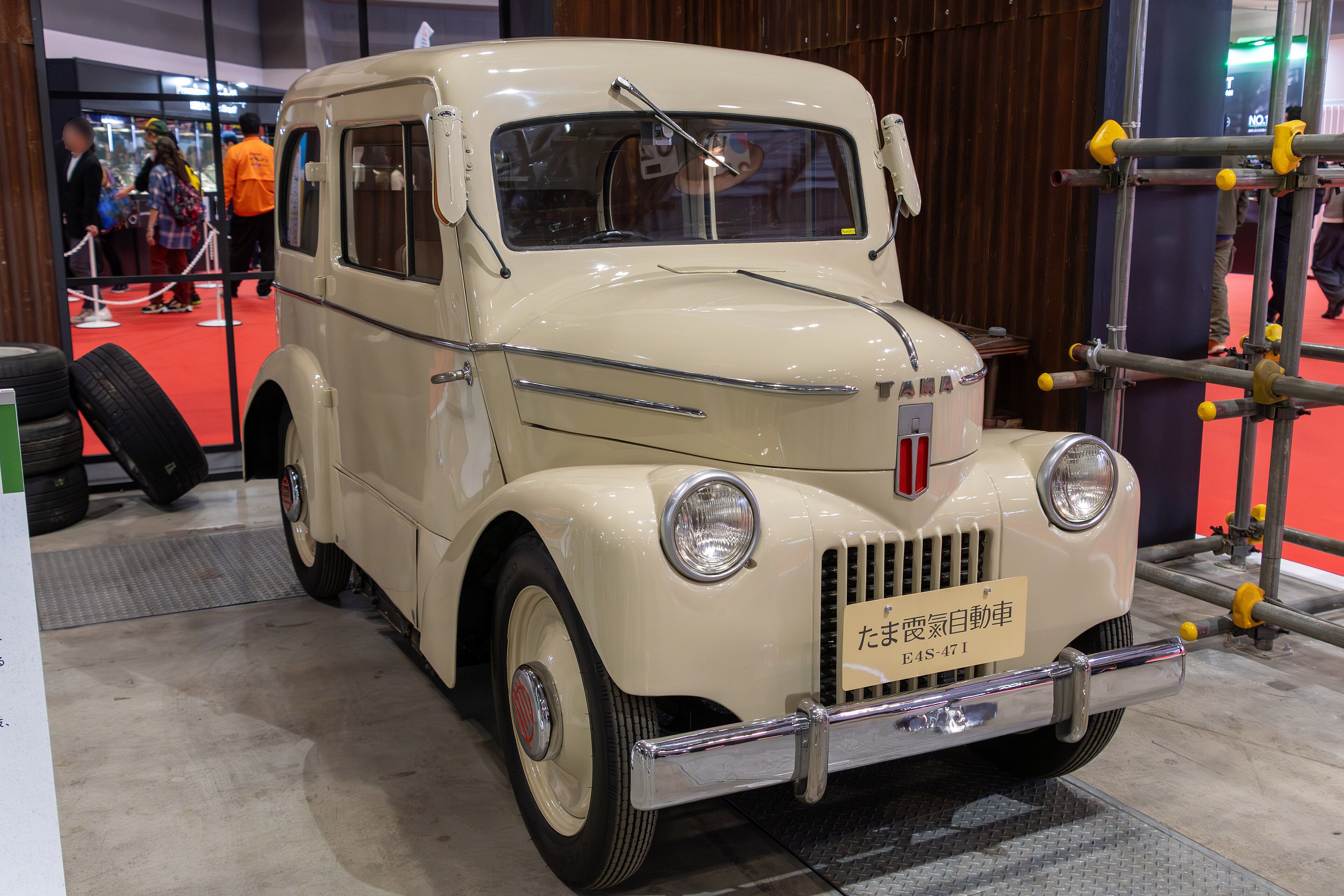
Tama E4S-47 History
Tama's inaugural four-seat electric sedan — Japan's first notable production EV, capable of 65 km per charge at a top speed of 35 km/h.
Photo: “Tama Electric Vehicle E4S-47 I at the Japan Mobility Show 2025.jpg” by SuFlyer / Wikimedia Commons — CC0 1.0
History
The E4S-47 (model code: E = electric, 4S = 4-seater sedan, 47 = year, I = initial type) debuted in 1947, developed by Tokyo Electro Automobile Co., Ltd. — a company formed by around 200 former Tachikawa Aircraft engineers after Allied occupation forces shuttered Japanese aircraft production. The brand name 'Tama' derives from the Tama area west of Tokyo where the factory was located.
Post-war Japan faced an acute oil shortage while electricity was in surplus — few homes had appliances and industry was rebuilding. That energy equation made battery-electric vehicles commercially viable almost overnight. The E4S-47 carried two lead-acid battery compartments built into the cabin floor, each fitted with rollers so a depleted pack could be exchanged for a freshly charged one in minutes, enabling it to operate effectively as a taxi.
Specifications were modest but credible for the era: a 36 V DC series-wound Hitachi motor producing approximately 4.5 hp (3.3 kW), driven through a two-speed gearbox to the rear wheels, yielding a top speed of 35 km/h and an officially stated 65 km cruising range. At the Ministry of Commerce and Industry's inaugural electric-vehicle performance test in March 1948, the Tama achieved a 96 km driving range and topped the field, winning first place among competing EV designs.
Generations
Original type · E4S-47-I
Photo: “Tama Electric Vehicle E4S-47 I at the Japan Mobility Show 2025.jpg” by SuFlyer / Wikimedia Commons — CC0 1.0
Two-door, four-seat all-electric sedan with slide-out floor-mounted battery packs; 65 km range, 35 km/h top speed; replaced by the restyled Junior for 1948.
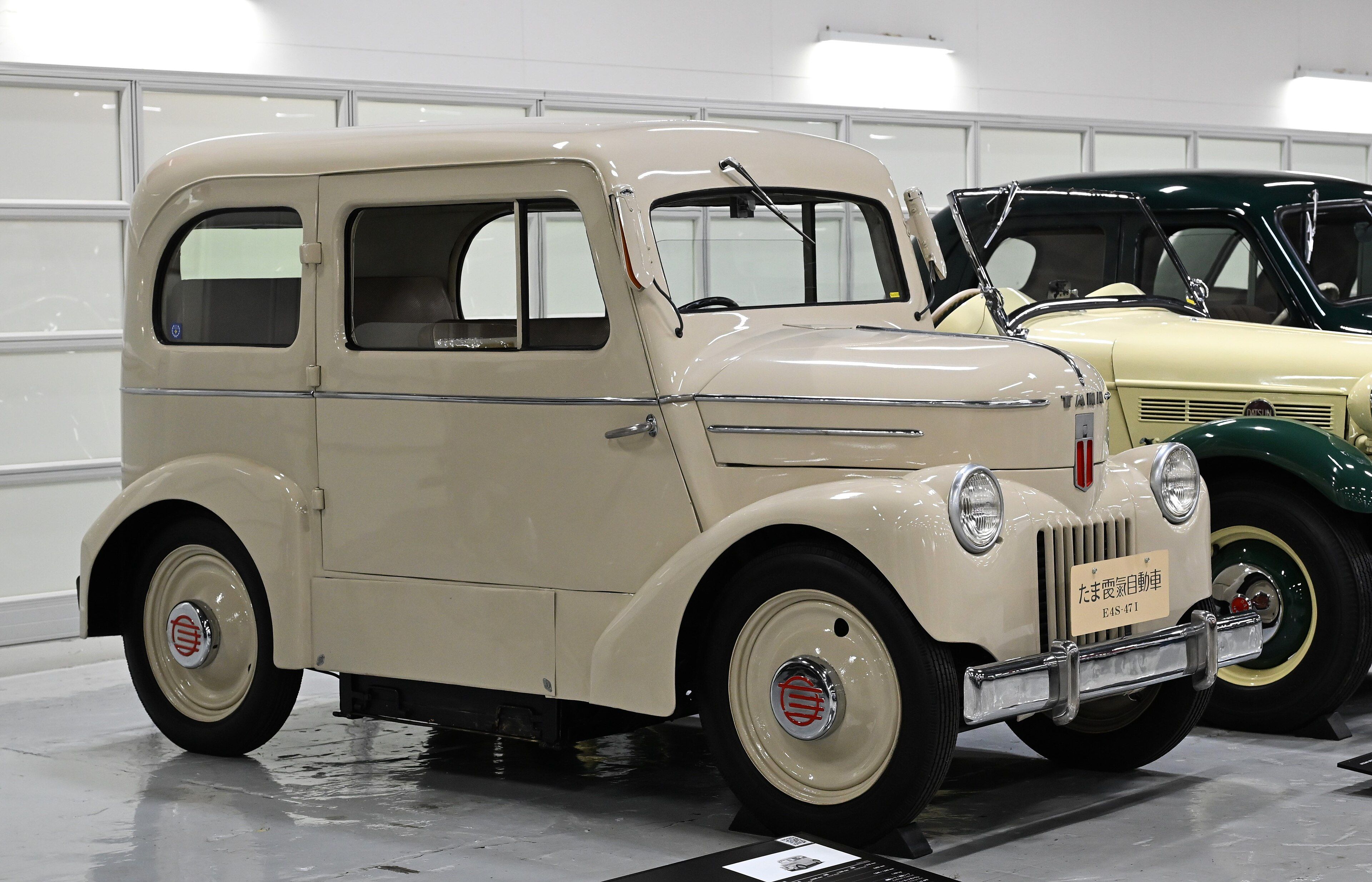
1947 Photo: “1947 Tama.jpg” by TTTNIS / Wikimedia Commons — CC0 1.0
Body styles
- Sedan
Related models
Collect the nameplate
Find a scale model of the Tama E4S-47
Search Amazon across available years, colors, and scales. Exact releases vary, so confirm the listing before ordering.