
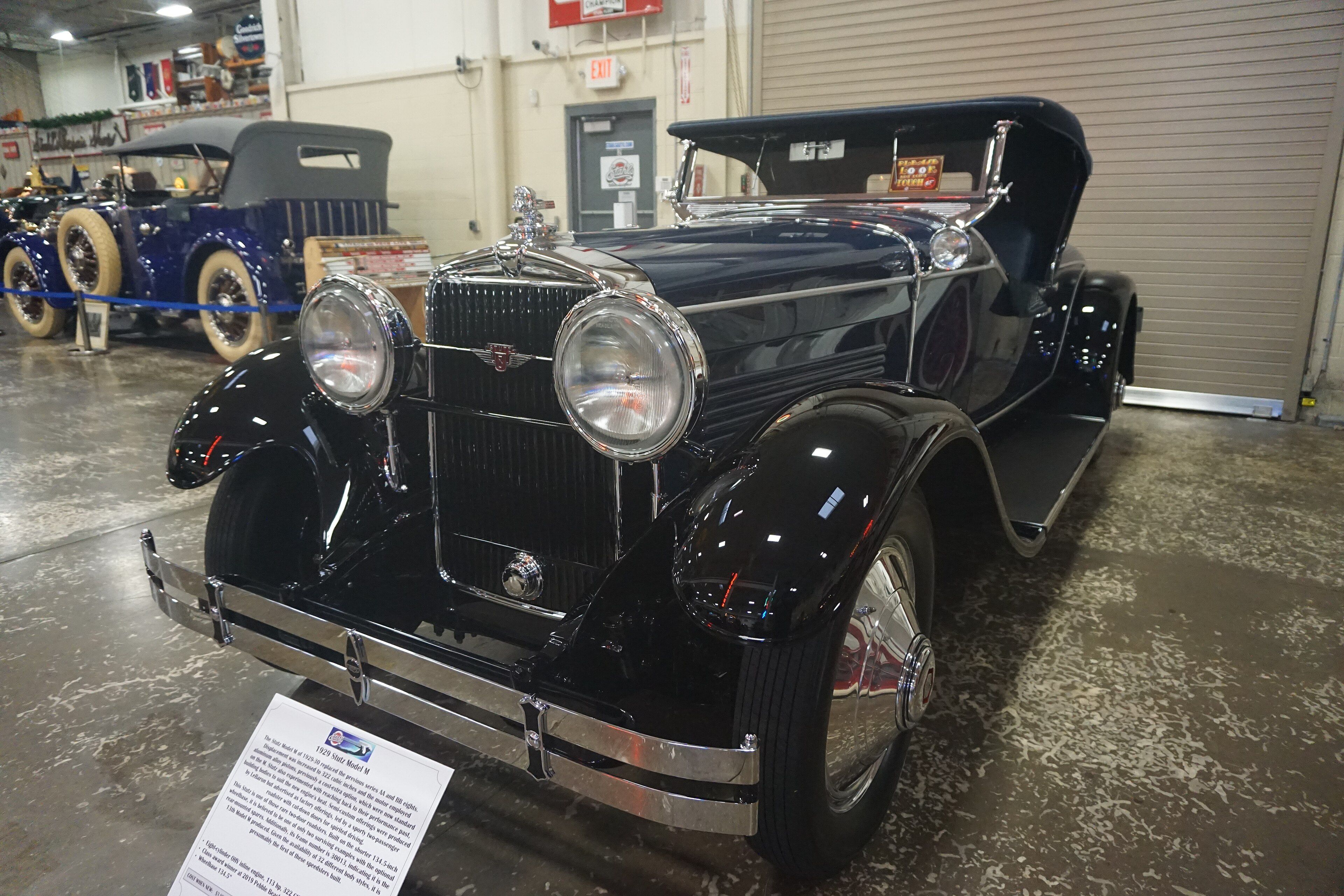
Stutz Vertical Eight History
Stutz's straight-eight 'Safety Stutz' line — the platform behind the SV-16, the twin-cam DV-32, and a famous 2nd-place finish at Le Mans 1928.
Photo: “Stahls Automotive Collection December 2021 102 (1929 Stutz Model M)” by Michael Barera / Wikimedia Commons, licensed under CC BY-SA 4.0
History
Under engineer Frederick Moskovics, Stutz reinvented itself in 1926 with a new single-overhead-cam straight-eight engine (287 cu in, 92 hp, with twin-ignition) and a low-slung safety-focused chassis. The car was marketed as the 'Safety Stutz' for innovations novel on any American production car: shatterproof windshield glass, a double-drop worm-drive frame that lowered the center of gravity, narrow windshield pillars for visibility, and reinforced running boards for side-impact protection.
A 4.9-liter Vertical Eight entered at Le Mans 1928 by French coachbuilder Charles Weymann finished second overall — losing only to a Bentley despite dropping top gear 90 minutes from the flag — the best Le Mans result by an American car until Ford's 1966 victory.
The line evolved through several engine designations, culminating in the SV-16 (single-cam, 16-valve) and the DV-32 (dual-overhead-cam, 32-valve, 156 hp) offered together in the early 1930s. The DV-32 was among the most advanced production engines in the world, but arrived just as the Depression gutted the luxury market. Stutz filed for bankruptcy in 1937 and was liquidated in 1939. The letter-series designations followed roughly the AA/BB models of 1926–1928, the M/MA/MB senior line of 1929, and then the SV-16 (1930–1935) and DV-32 (1931–1935); the series overlapped in production, so individual variant boundaries blur, but the broad 1926–1935 span is well established.
Generations
First generation · Model AA / 'Safety Stutz'
Photo: “Stahls Automotive Collection December 2021 102 (1929 Stutz Model M)” by Michael Barera / Wikimedia Commons, licensed under CC BY-SA 4.0
The original SOHC Vertical Eight on the low-slung worm-drive chassis; 287–298 cu in, twin-ignition, American speed and safety benchmark of the late 1920s.
1929 Photo: “Stahls Automotive Collection December 2021 102 (1929 Stutz Model M)” by Michael Barera / Wikimedia Commons, licensed under CC BY-SA 4.0
Second generation · SV-16 / DV-32
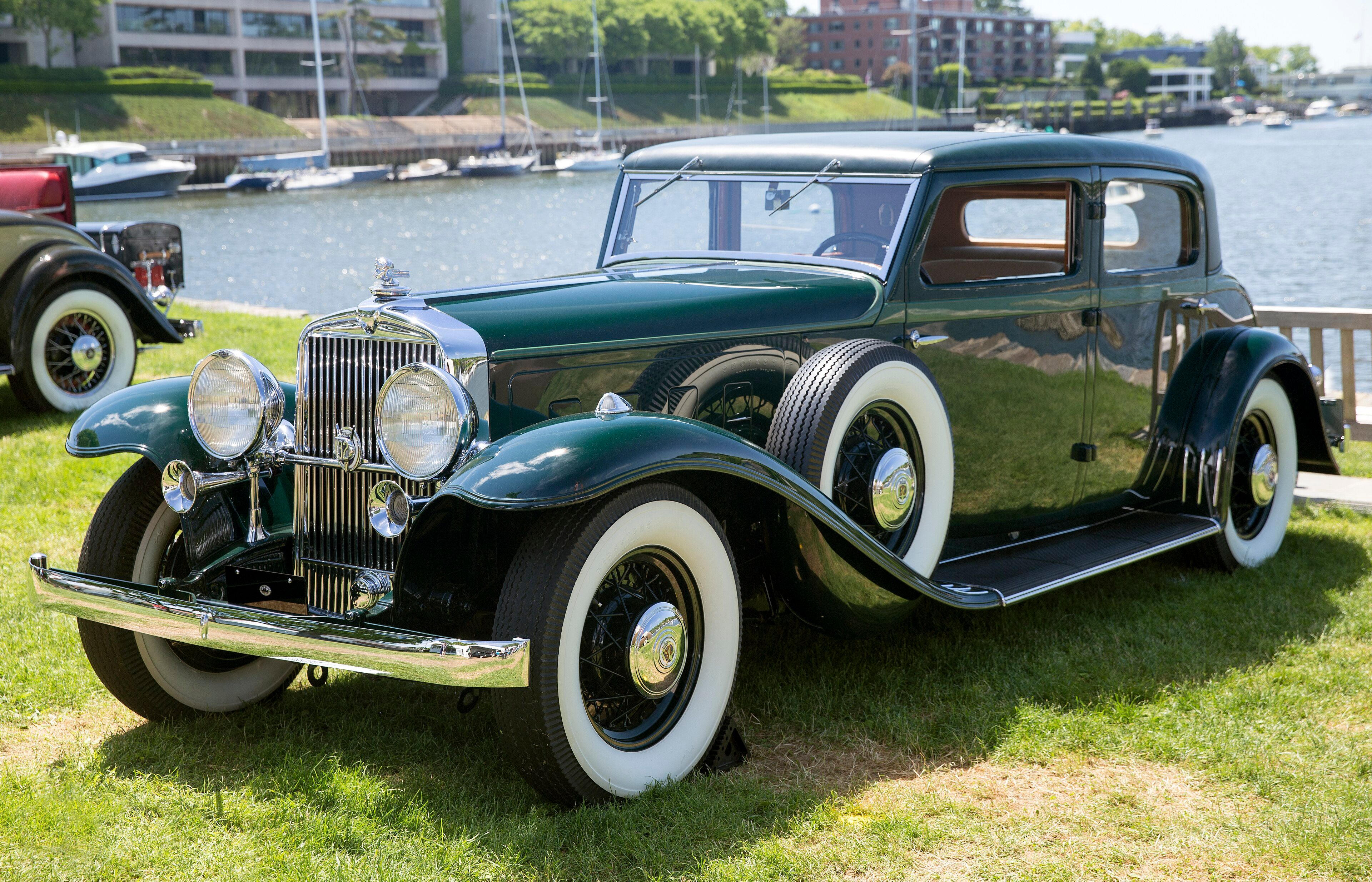
Photo: “1933 Stutz DV-32 Monte Carlo, front left (Greenwich 2022)” by Mr.choppers / Wikimedia Commons, licensed under CC BY-SA 3.0
The Depression-era luxury apex: SV-16 (16-valve SOHC) and DV-32 (32-valve DOHC, 156 hp) on the same chassis; financially fatal timing.
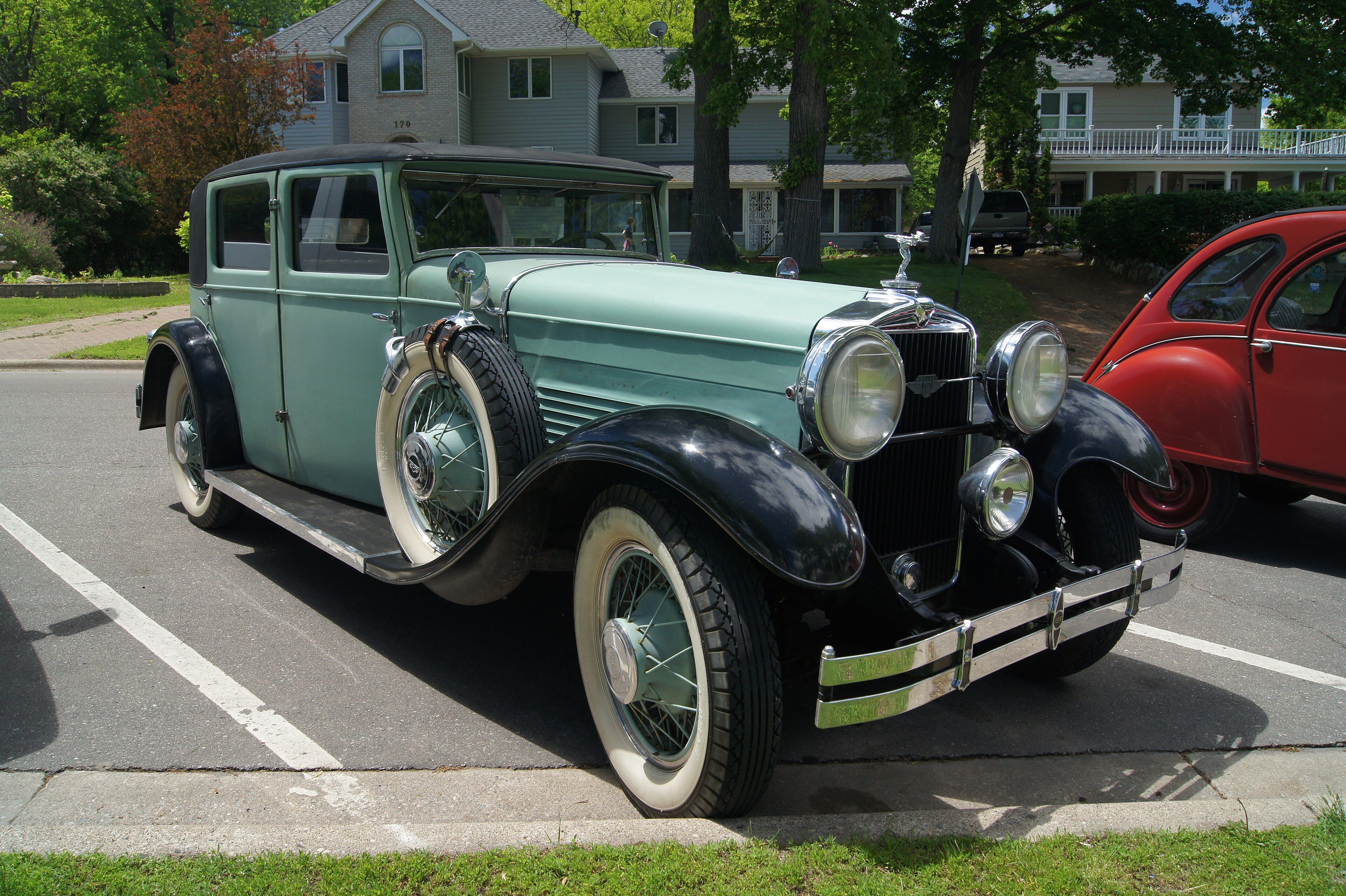
1930 Photo: “1930 Stutz 8 (8942493547)” by Greg Gjerdingen from Willmar, USA / Wikimedia Commons, licensed under CC BY 2.0
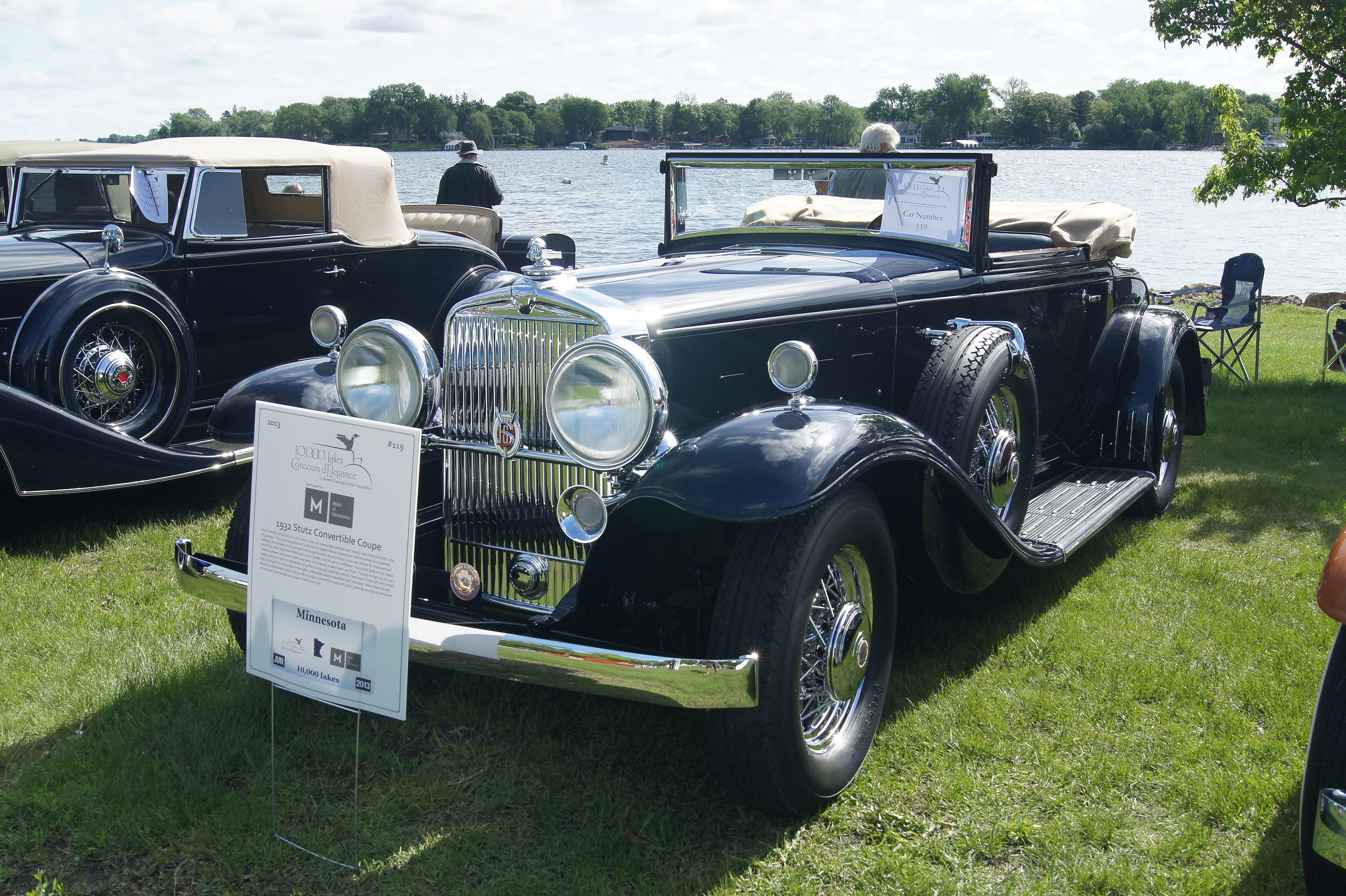
1932 Photo: “1932 Stutz Convertible Coupe SV-16 (8941435712)” by Greg Gjerdingen from Willmar, USA / Wikimedia Commons, licensed under CC BY 2.0
1933 Photo: “1933 Stutz DV-32 Monte Carlo, front left (Greenwich 2022)” by Mr.choppers / Wikimedia Commons, licensed under CC BY-SA 3.0
Body styles
- Sedan
- Coupe
- Roadster
- Speedster
Notable special editions & performance variants
DV-32 Super Bearcat
Short-wheelbase, two-seat open speedster on the DV-32 chassis, factory-guaranteed to exceed 100 mph — among the fastest American production cars of the 1930s.
Related models
Collect the nameplate
Find a scale model of the Stutz Vertical Eight
Search Amazon across available years, colors, and scales. Exact releases vary, so confirm the listing before ordering.