
Stoewer Sedina History
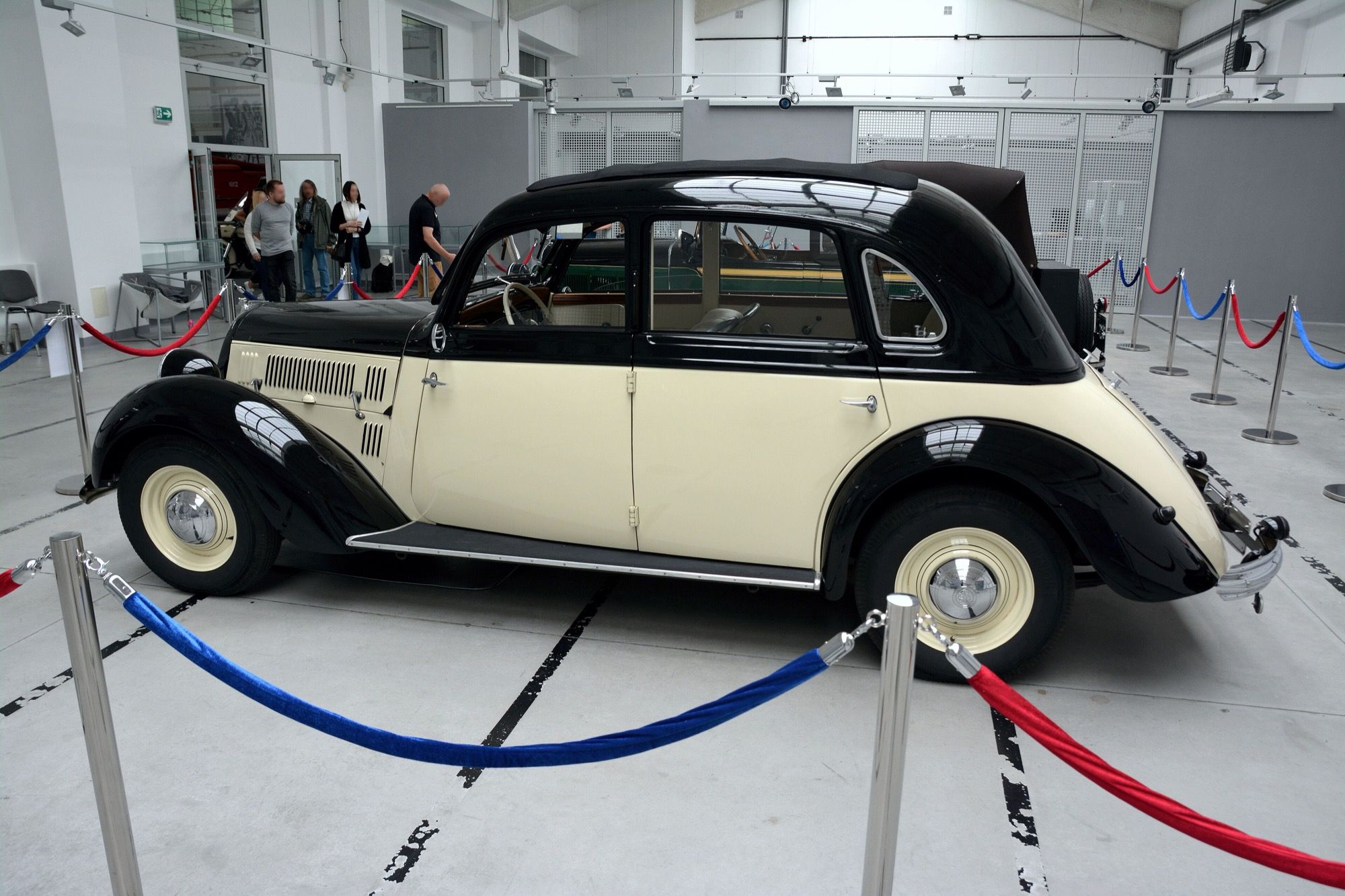
Stoewer's final civilian saloon — a 2.4-litre four-cylinder rear-drive car named for Stettin, with 924 built.
Photo: “Stoewer Sedina (2).jpg” by Kapitel / Wikimedia Commons, licensed under CC BY-SA 4.0
History
Launched in 1937 and produced through 1940, the Sedina was named after 'Sedina', a feminine personification of the city of Stettin (modern Szczecin). It used a 2,406 cc four-cylinder overhead-valve engine producing 55 PS (40 kW), a six-speed transmission, and rear-wheel drive — a return to more conventional layout after the front-drive experiments of the early 1930s.
The Sedina was offered as a four-door sedan, a four-door Pullman-type sedan, and a two-door convertible. It shared most of its body structure and components with its six-cylinder stablemate, the Arkona, to reduce tooling costs. Total production reached 924 units by 1940, after which the factory shifted entirely to military work.
Generations
First and only generation · Sedina
Photo: “Stoewer Sedina (2).jpg” by Kapitel / Wikimedia Commons, licensed under CC BY-SA 4.0
2.4-litre OHV four-cylinder rear-drive saloon sharing its body with the six-cylinder Arkona; 924 built before civilian production ceased.
Body styles
- 4-door Sedan
- 4-door Pullman Sedan
- 2-door Convertible
Related models
Collect the nameplate
Find a scale model of the Stoewer Sedina
Search Amazon across available years, colors, and scales. Exact releases vary, so confirm the listing before ordering.