
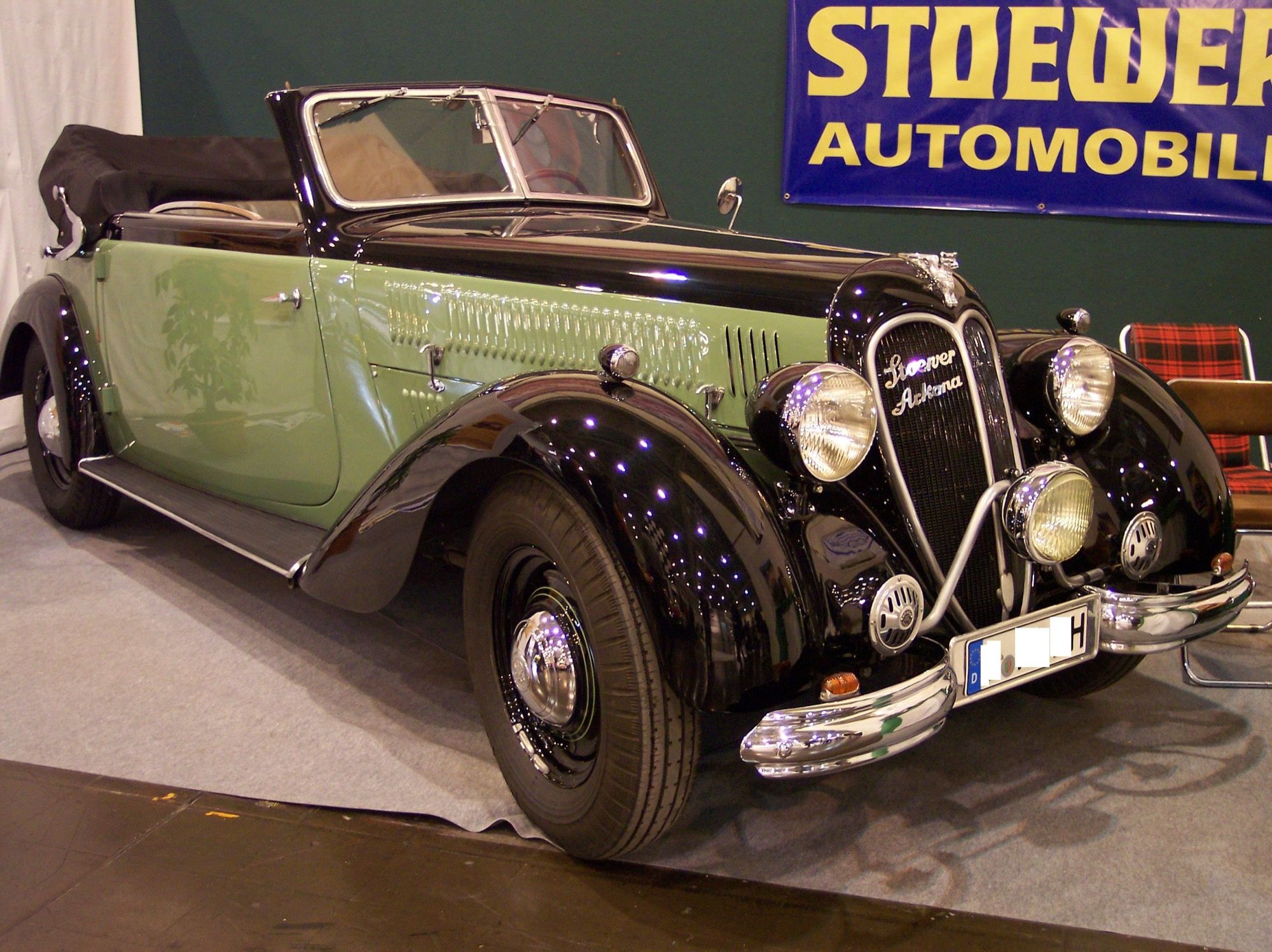
Stoewer Arkona History
Stoewer's final and largest civilian car — a 3.6-litre six-cylinder named for Cape Arkona, capable of 140 km/h, with 201 built.
Photo: “Stoewer Arkona Cabriolet 1939 vr bicolor TCE.jpg” by Stahlkocher / Wikimedia Commons, licensed under CC BY-SA 3.0
History
The Arkona took its name from Cape Arkona on the island of Rügen, and its hood ornament featured the griffin from Stettin's coat of arms. Produced alongside the Sedina from 1937 to 1940, the Arkona shared the same body architecture but used a 3.6-litre inline six-cylinder overhead-valve engine producing 80 PS — the same basic block as the Sedina's four, with two additional cylinders.
Available in short (4,900 mm) and long (5,100 mm) body lengths, the Arkona was offered in an unusually wide range of configurations: four-door sedan, two-door convertible, two-door roadster, open touring, and long-wheelbase limousine. Top speed of the short car reached 140 km/h (87 mph). Only 201 units were completed before civilian production ceased in 1940.
Generations
First and only generation · Arkona
Photo: “Stoewer Arkona Cabriolet 1939 vr bicolor TCE.jpg” by Stahlkocher / Wikimedia Commons, licensed under CC BY-SA 3.0
3.6-litre inline-six flagship on the shared Sedina body; offered in short and long lengths and capable of 140 km/h, with only 201 built.
1939 Photo: “Stoewer Arkona Cabriolet 1939 vr bicolor TCE.jpg” by Stahlkocher / Wikimedia Commons, licensed under CC BY-SA 3.0
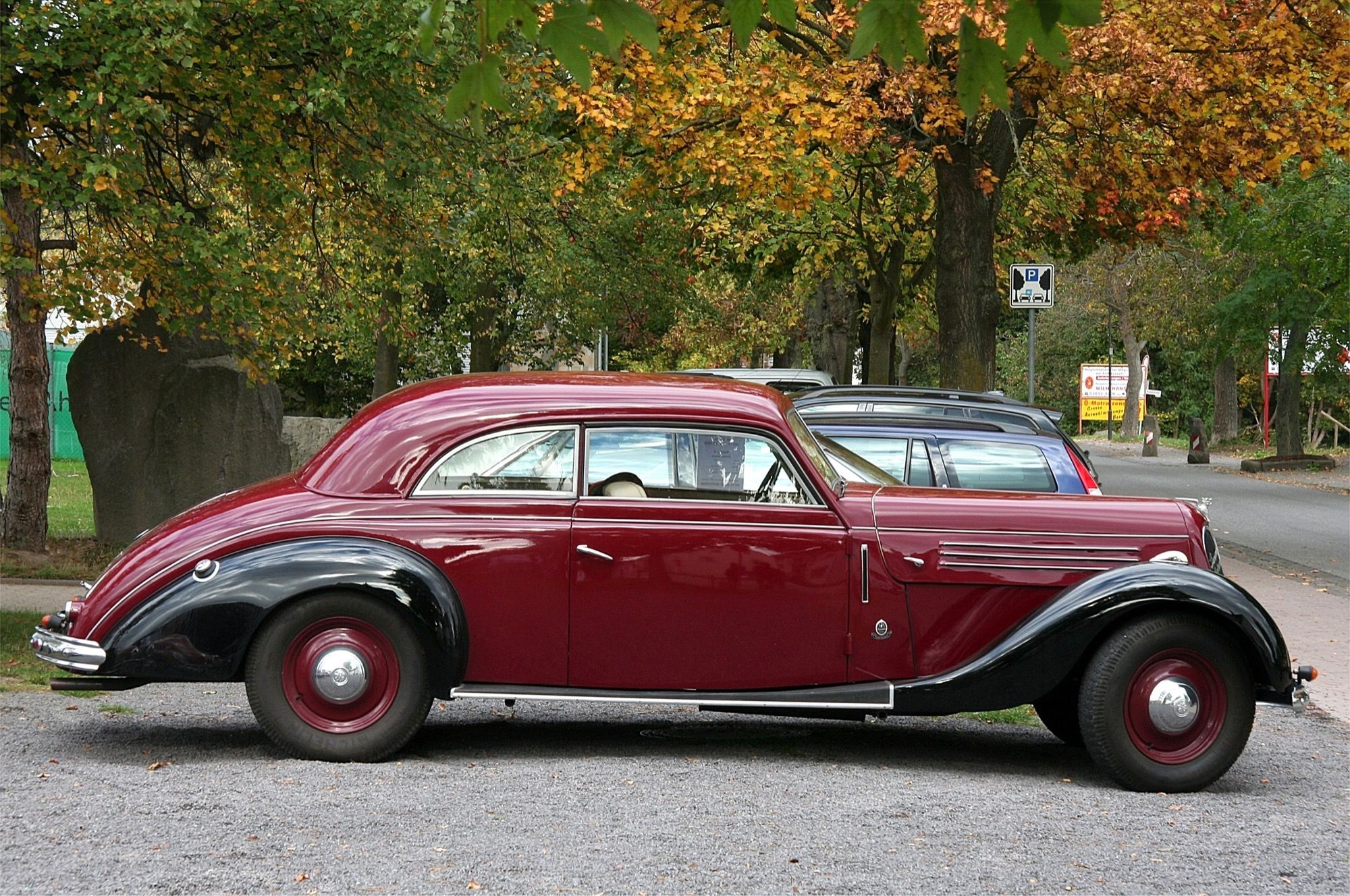
1940 Photo: “Stoewer Arkona, Bj. 1940 (1) 2009-10-13.JPG” by Spurzem - Lothar Spurzem / Wikimedia Commons, licensed under CC BY-SA 2.0 de
Body styles
- 4-door Sedan
- 2-door Convertible
- 2-door Roadster
- Touring
- Limousine
Related models
Collect the nameplate
Find a scale model of the Stoewer Arkona
Search Amazon across available years, colors, and scales. Exact releases vary, so confirm the listing before ordering.