
Pagani Huayra History
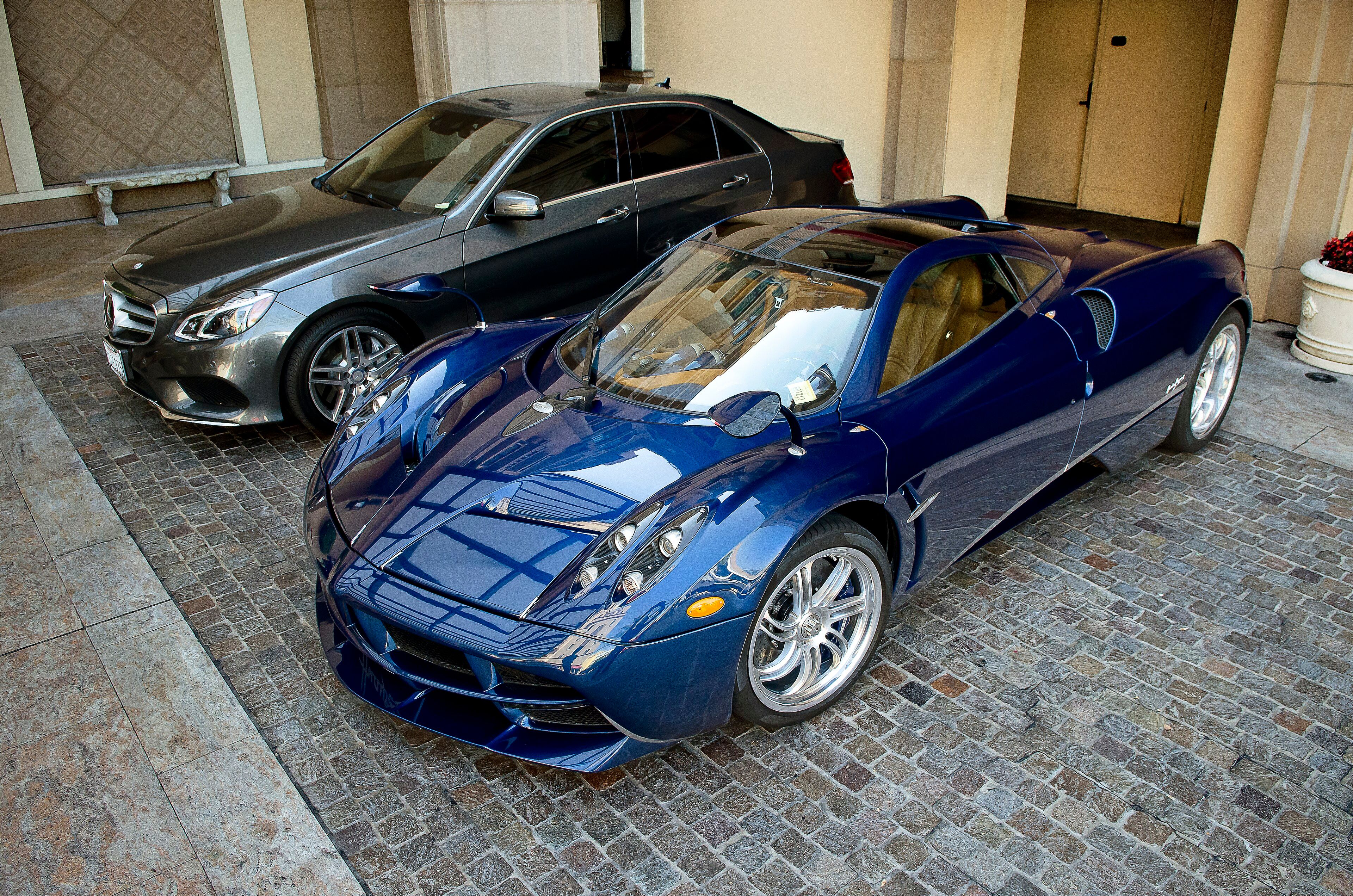
Pagani's second model — a twin-turbocharged, AMG V12-powered hypercar revealed in 2011, spanning 100 base coupés and a cascade of variants including the Roadster BC, R, and Codalunga.
Photo: “Blue Pagani Huayra (14108818869).jpg” by Axion23 / Wikimedia Commons, licensed under CC BY 2.0
History
Pagani announced the Huayra in January 2011 and showed it at that year's Geneva Motor Show. Named after Huayra-tata, a Quechua wind deity, the car paired a 6.0-litre twin-turbocharged Mercedes-AMG M158 V12 producing 740 PS with a seven-speed automated manual gearbox. Four active aerodynamic flaps — one at each corner — adjusted independently to manage downforce under braking and cornering, replacing the fixed wings of the Zonda era. The base coupe run was capped at 100 units; all were sold out by 2015.
Where the Zonda had been refined through engine enlargements, the Huayra's evolution took the form of increasingly focused sub-variants. The Huayra BC (2017, named for Benny Caiola — Pagani's first customer and a close friend who died in 2010) trimmed weight and raised power to 789 PS in 29 examples. The Huayra Roadster (2017, 100 units) followed, and then the Roadster BC (2019, 40 units, 800 PS), arguably the most radical open-top car the company had produced. The track-only Huayra R (2021, 30 units) deployed a naturally aspirated 850 PS V12 — a deliberate step back from forced induction for the pure driving sensation.
Later bespoke commissions underlined Pagani's position as a manufacturer of wearable art: the Huayra Imola (2019, 5 units) and its Imola Roadster (2023, 8 units) were named for the Italian circuit; the Codalunga (2022, 5 units) revived the long-tail Berlinetta body form of 1960s Le Mans racers. The Huayra R Evo Roadster, revealed in 2025, continues the lineage even as the Utopia establishes the next chapter.
Generations
Single generation (2011–present, evolving variants) · Huayra
Photo: “Blue Pagani Huayra (14108818869).jpg” by Axion23 / Wikimedia Commons, licensed under CC BY 2.0
Twin-turbocharged Mercedes-AMG V12 with four active aerodynamic flaps; a 100-unit base coupé followed by an expanding stream of focused sub-variants — BC, Roadster, R, Imola and Codalunga.
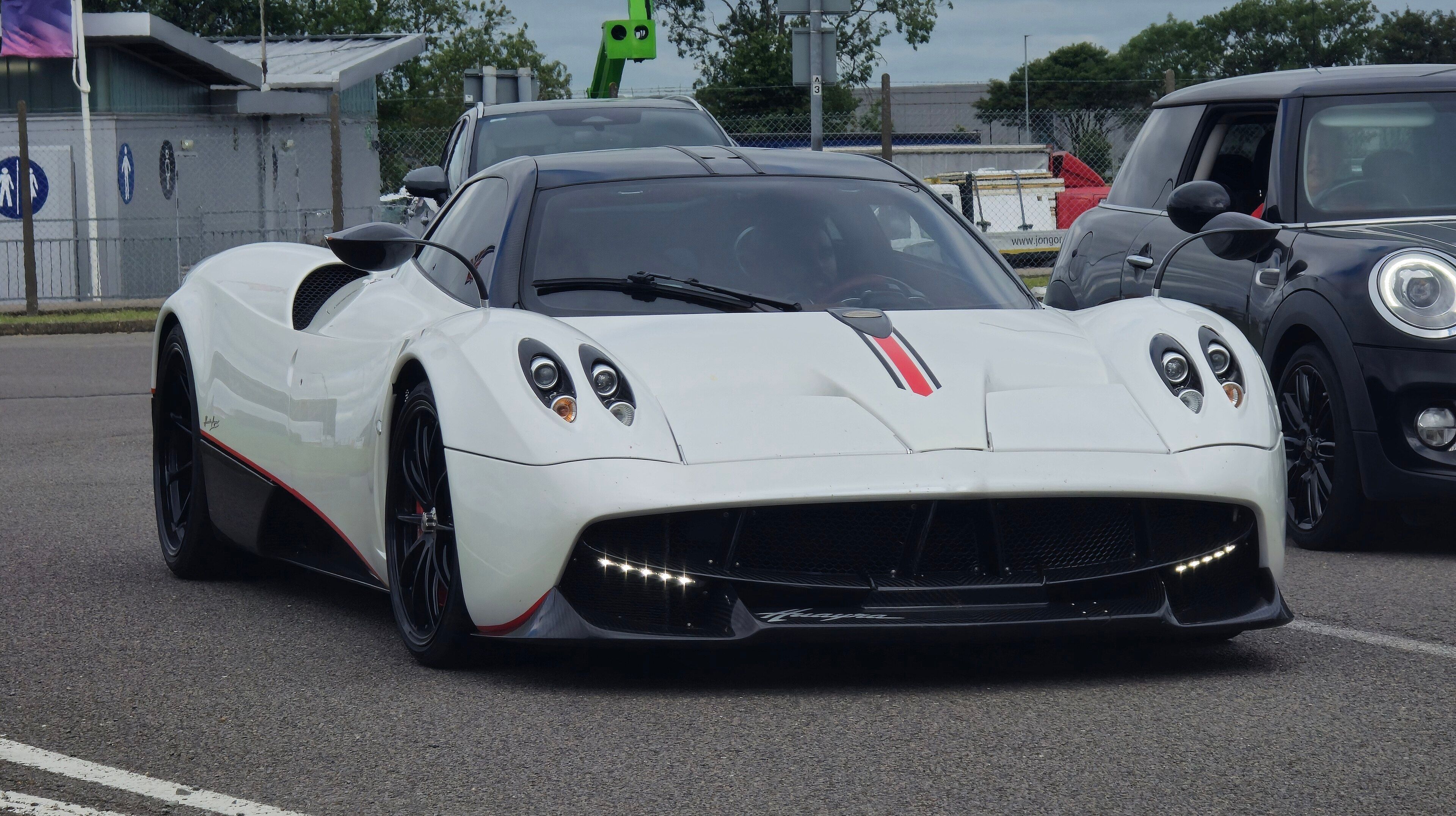
2013 Photo: “2013 Pagani Huayra VEdizione.jpg” by Calreyn88 / Wikimedia Commons, licensed under CC BY-SA 4.0
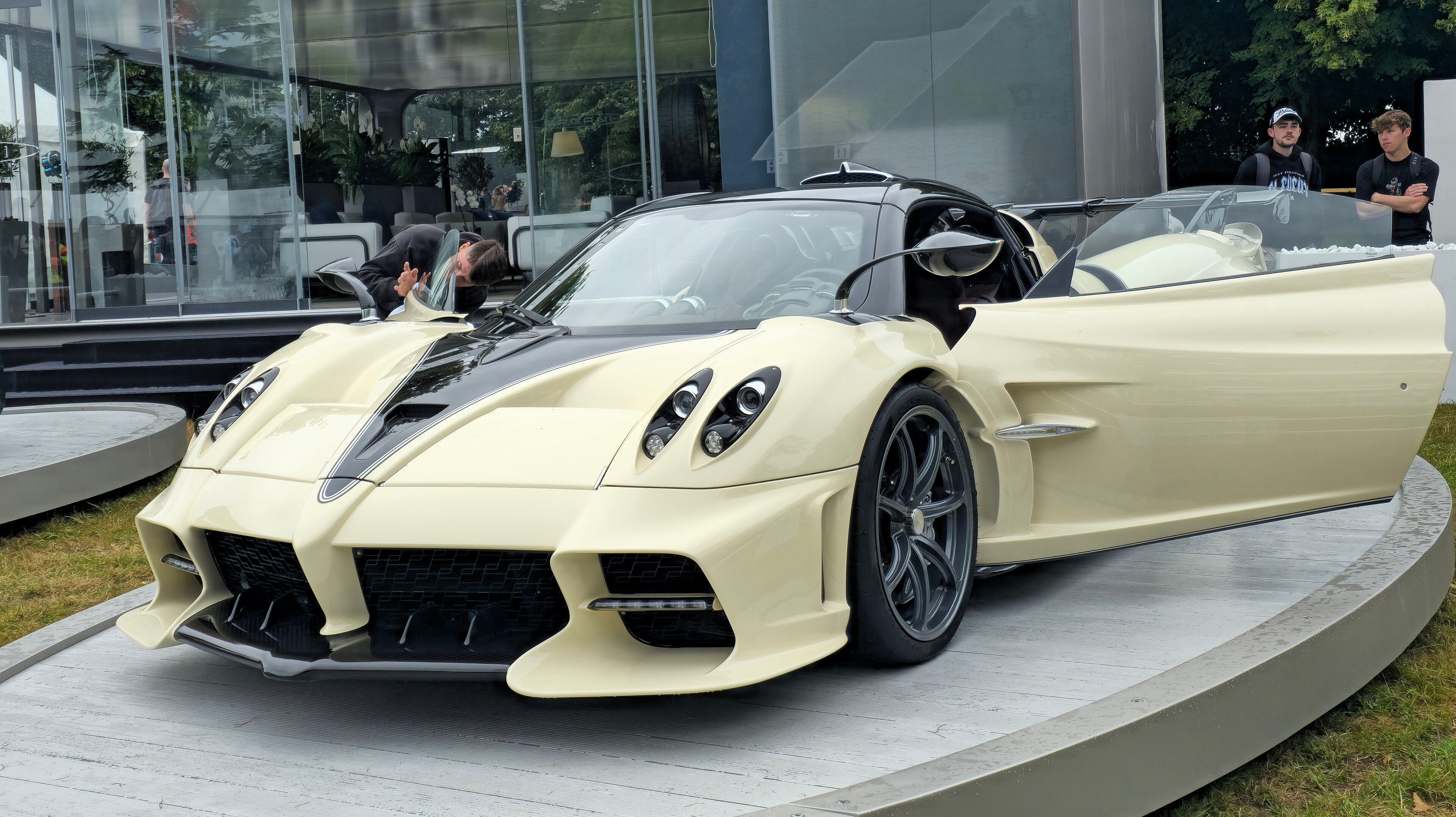
2024 Photo: “2024 Pagani Huayra Imola.jpg” by Calreyn88 / Wikimedia Commons, licensed under CC BY-SA 4.0
Body styles
- Coupe
- Roadster
- Track car (Huayra R)
Notable special editions & performance variants
Huayra BC
29 units; 789 PS, named for Pagani's first customer Benny Caiola.
Huayra Roadster
100-unit open-top version; 764 PS twin-turbo V12.
Huayra Roadster BC
40 units; 800 PS, paired-exhaust layout, considered the most driver-focused open Pagani of the era.
Huayra Imola
5 units; track-biased coupé named for Autodromo Enzo e Dino Ferrari.
Huayra Tricolore
3 units; Italian Air Force tribute livery, following the Zonda Tricolore tradition.
Huayra R
30 units; track-only, naturally aspirated 850 PS V12 — a deliberate departure from the turbo architecture of the road cars.
Huayra Codalunga
5 units; long-tail Berlinetta body inspired by 1960s Le Mans GT cars.
Huayra Imola Roadster
8 units; open-top evolution of the Imola track concept.
Related models
Collect the nameplate
Find a scale model of the Pagani Huayra
Search Amazon across available years, colors, and scales. Exact releases vary, so confirm the listing before ordering.