
Magna Steyr Puch 500 History
Catalog record
Photography for this nameplate has not yet cleared the archive’s licensing and identity checks. The researched text below remains available while the page stays out of search and advertising inventory.
History
In 1954, Steyr-Daimler-Puch decided to re-enter the consumer car market after the Second World War. Because a clean-sheet design was too costly, it licensed the body-in-white of Fiat's new Nuova 500 — but built its own powertrain from scratch. The result was the Puch 500, launched in 1957: the Italian body shell clothed a Graz-made chassis, suspension, and a unique 493 cc horizontally opposed twin-cylinder engine that produced 16 hp and ran notably more smoothly than Fiat's own vertical-twin unit.
Around 60,000 examples were built between 1957 and 1975. The range expanded to include the more powerful Puch 650 (1962), and eventually the sportier 650 TR and 650 TR II rally-homologation derivatives, which competed successfully in European rallying. When dwindling demand made continued development uneconomic, production ended in 1975. The Puch 500 remains the last automobile built and badged by an Austrian manufacturer under its own name in meaningful volume.
Generations
Puch 500 / 500D / 500DL · Original 493 cc series
39,045 units of the original flat-twin Puch 500, 500D, and 500DL built on the Fiat 500 body.
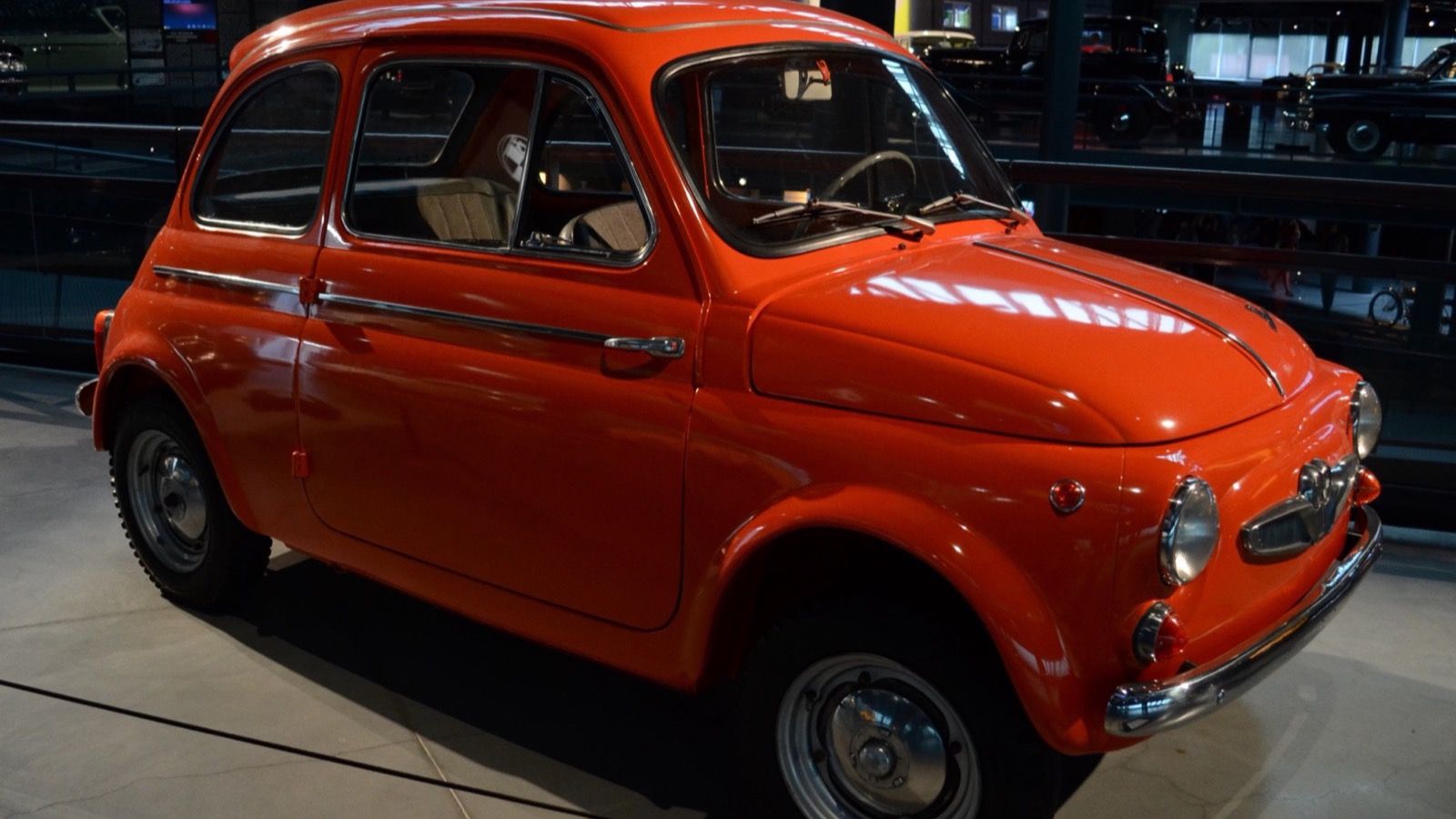
1962 Photo: “Puch 500 D (1962).jpg” by Milhouse35 / Wikimedia Commons, licensed under CC BY-SA 4.0. Cropped to 16:9.
Puch 650 / 650 TR · Larger-engined and rally series
The enlarged 650 cc engine family, culminating in the TR and TR II rally variants; production ended 1975.
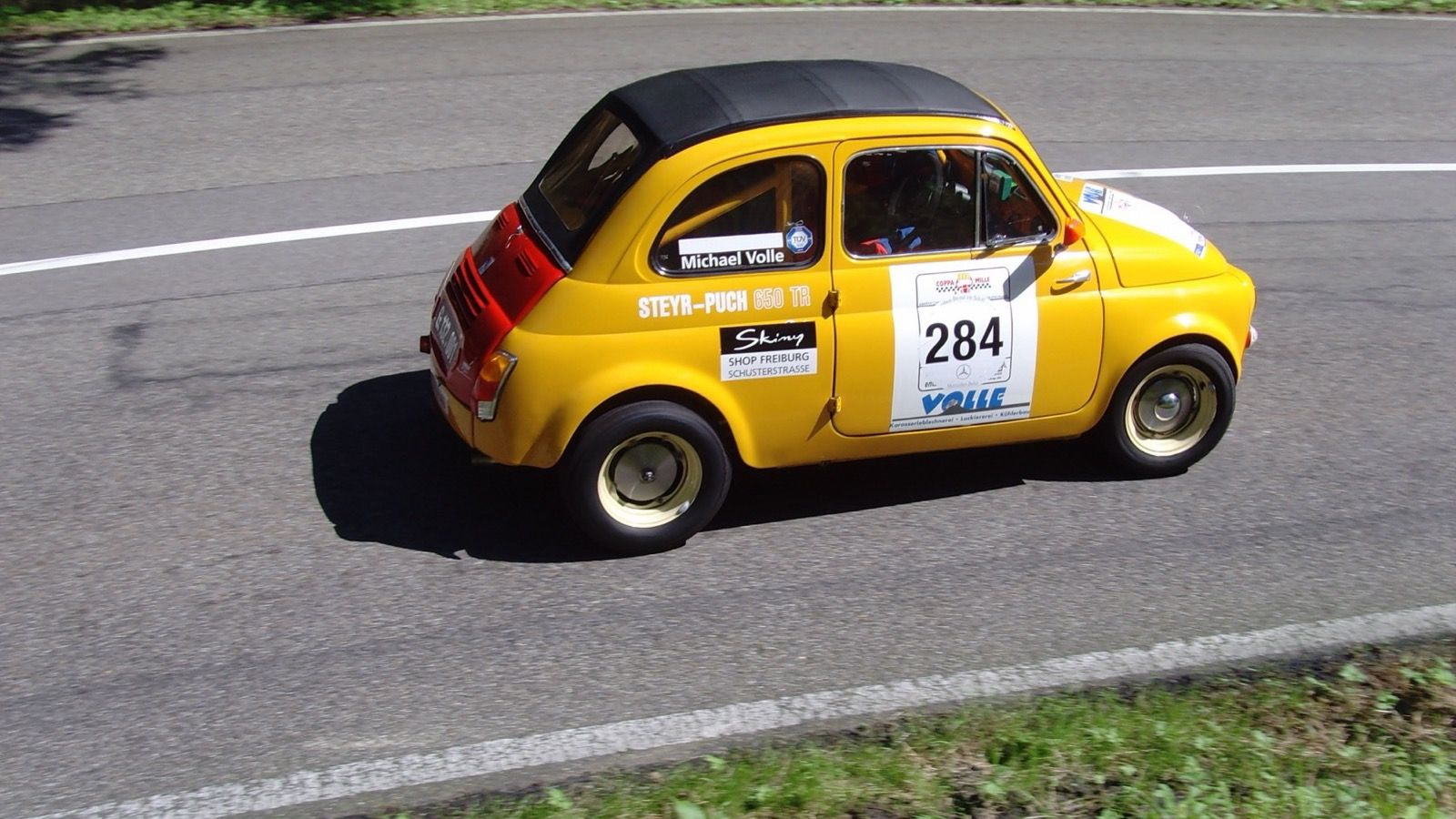
1964 Photo: “Steyr-Puch 650 TR II, 1964.jpg” by Klaus Nahr / Wikimedia Commons, licensed under CC BY-SA 2.0. Cropped to 16:9.
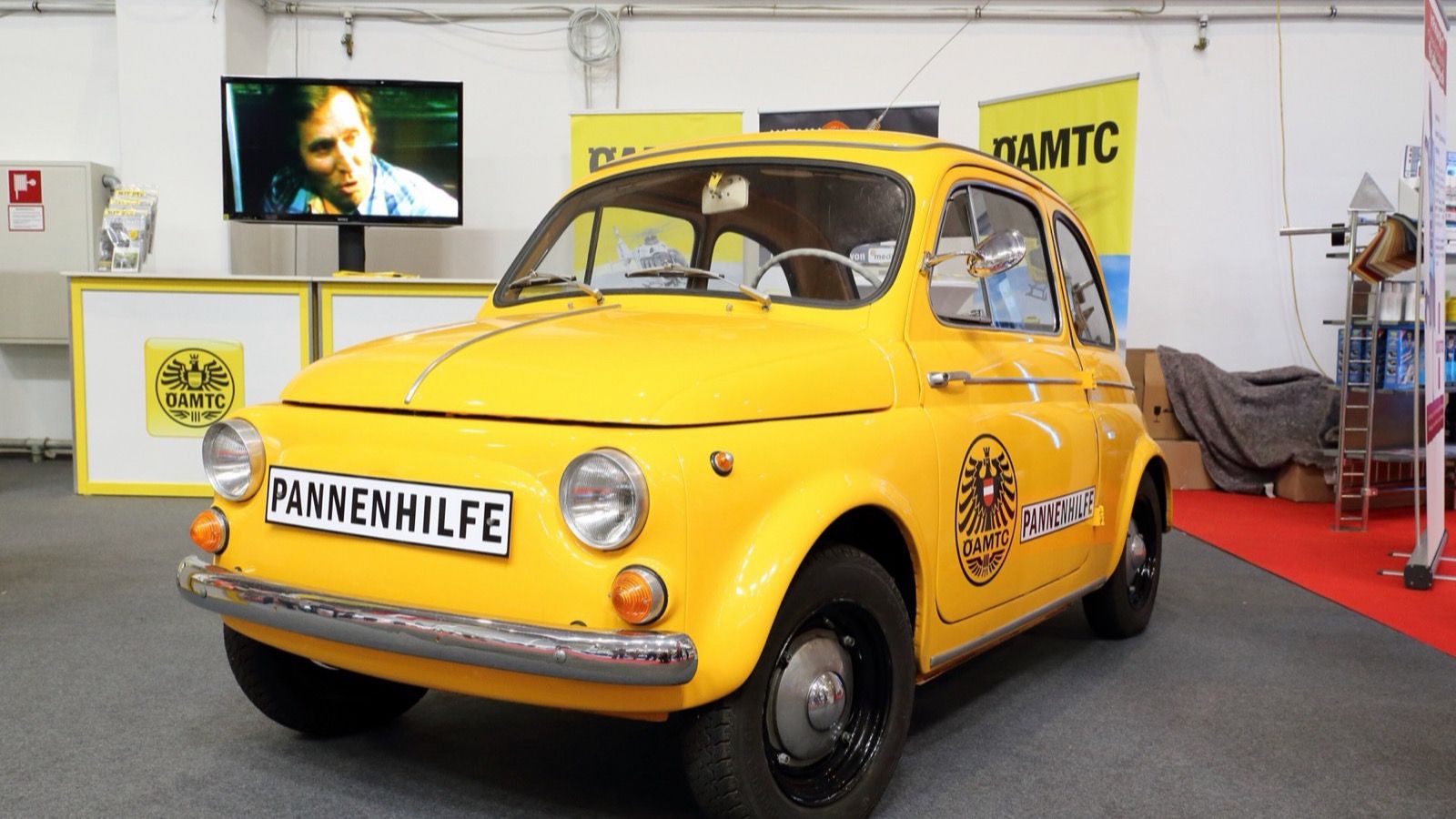
1965 Photo: “Puch 500, Bj. 1965 (ÖAMTC, Pannenhilfe).JPG” by C.Stadler/Bwag / Wikimedia Commons, licensed under CC BY-SA 4.0. Cropped to 16:9.
Body styles
- 2-door saloon
- 2-door cabriolet
Notable special editions & performance variants
Puch 650 TR / TR II
Rally-homologated derivatives with a boosted engine and firmer suspension, originally supplied to Austrian police and later sold publicly; successful in European rally competition.
Related models
Collect the nameplate
Find a scale model of the Magna Steyr Puch 500
Search Amazon across available years, colors, and scales. Exact releases vary, so confirm the listing before ordering.