
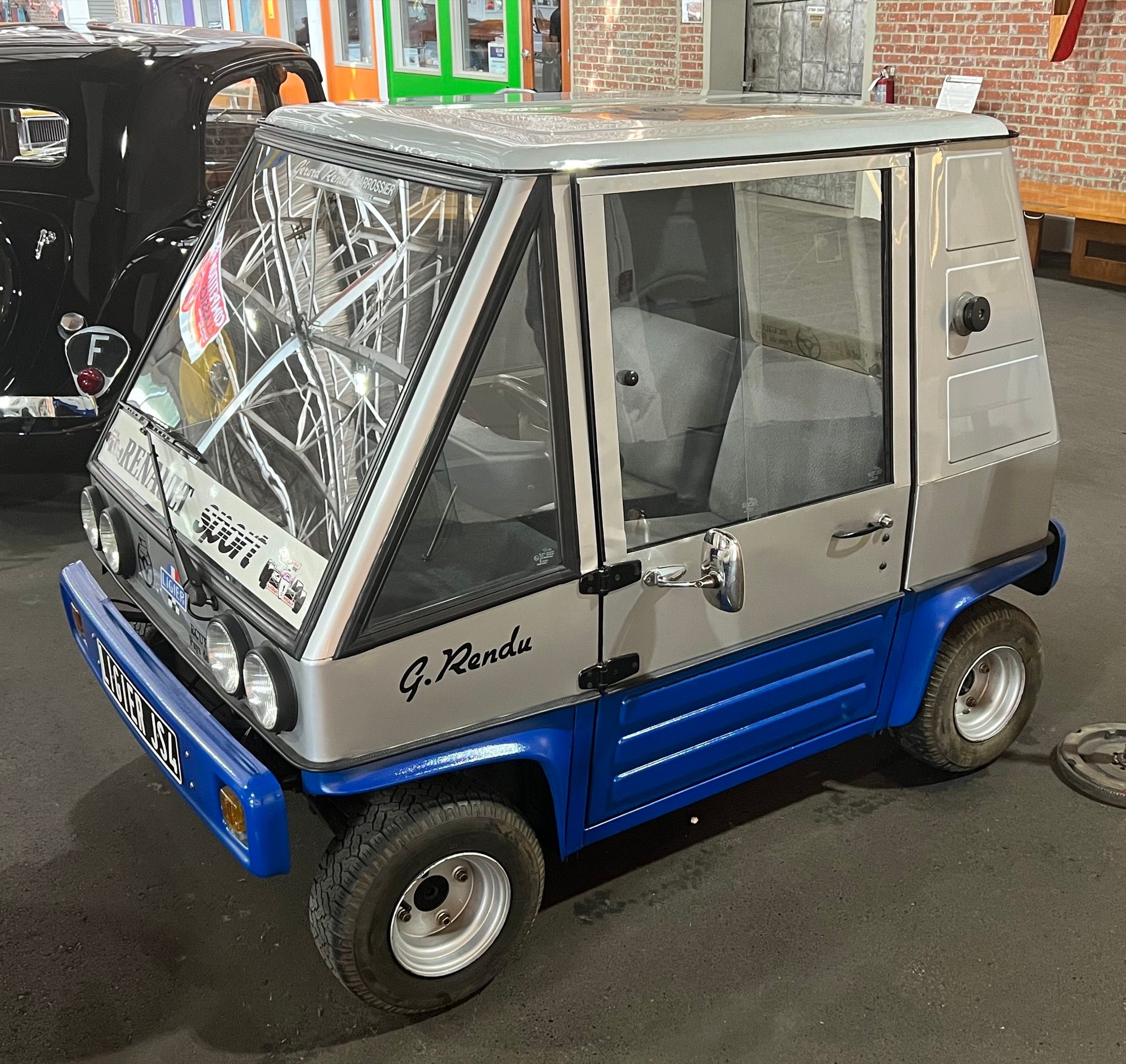
Ligier JS4 History
The 49 cc moped-powered quadricycle that launched Ligier's second life — France's best-selling license-free microcar in 1981 with nearly 7,000 units sold that year.
Photo: “1980 Ligier JS4 Lane Motor Museum.jpg” by TaurusEmerald / Wikimedia Commons, licensed under CC BY-SA 4.0
History
Launched on 25 July 1980, the JS4 was Ligier's radical pivot from exotic sports cars to the voiture sans permis market — tiny two-seaters that required no driving licence and could be operated by teenagers and elderly drivers alike. Power came from a 49 cc Motobécane two-stroke engine producing just 3.2 hp, limiting top speed to the legally mandated 45 km/h.
Despite its humble specification, the JS4 became France's best-selling microcar almost immediately, with around 6,941 sold in 1981 alone. The Formula 1 heritage of the Guy Ligier name gave the utilitarian little car a prestige that rivals could not match. The more expensive JS8 variant, launched in 1982, used a 125 cc engine producing 7.5 hp and required a basic A4 permit — offering more performance for buyers who held any licence at all.
The JS4 was replaced for 1984 by the restyled JS6, but the basic formula — a steel-bodied two-seater with a moped-class engine — defined Ligier's output for the following four decades and established the company as the dominant name in French voiturettes.
Generations
JS4 · Original moped car
Photo: “1980 Ligier JS4 Lane Motor Museum.jpg” by TaurusEmerald / Wikimedia Commons, licensed under CC BY-SA 4.0
49 cc Motobécane petrol two-stroke; no licence required.
1980 Photo: “1980 Ligier JS4 Lane Motor Museum.jpg” by TaurusEmerald / Wikimedia Commons, licensed under CC BY-SA 4.0
JS8 · Permit-class variant
125 cc BCB engine, 7.5 hp; required A4 permit; aimed at buyers wanting more performance.
Body styles
- Microcar
Related models
Collect the nameplate
Find a scale model of the Ligier JS4
Search Amazon across available years, colors, and scales. Exact releases vary, so confirm the listing before ordering.