
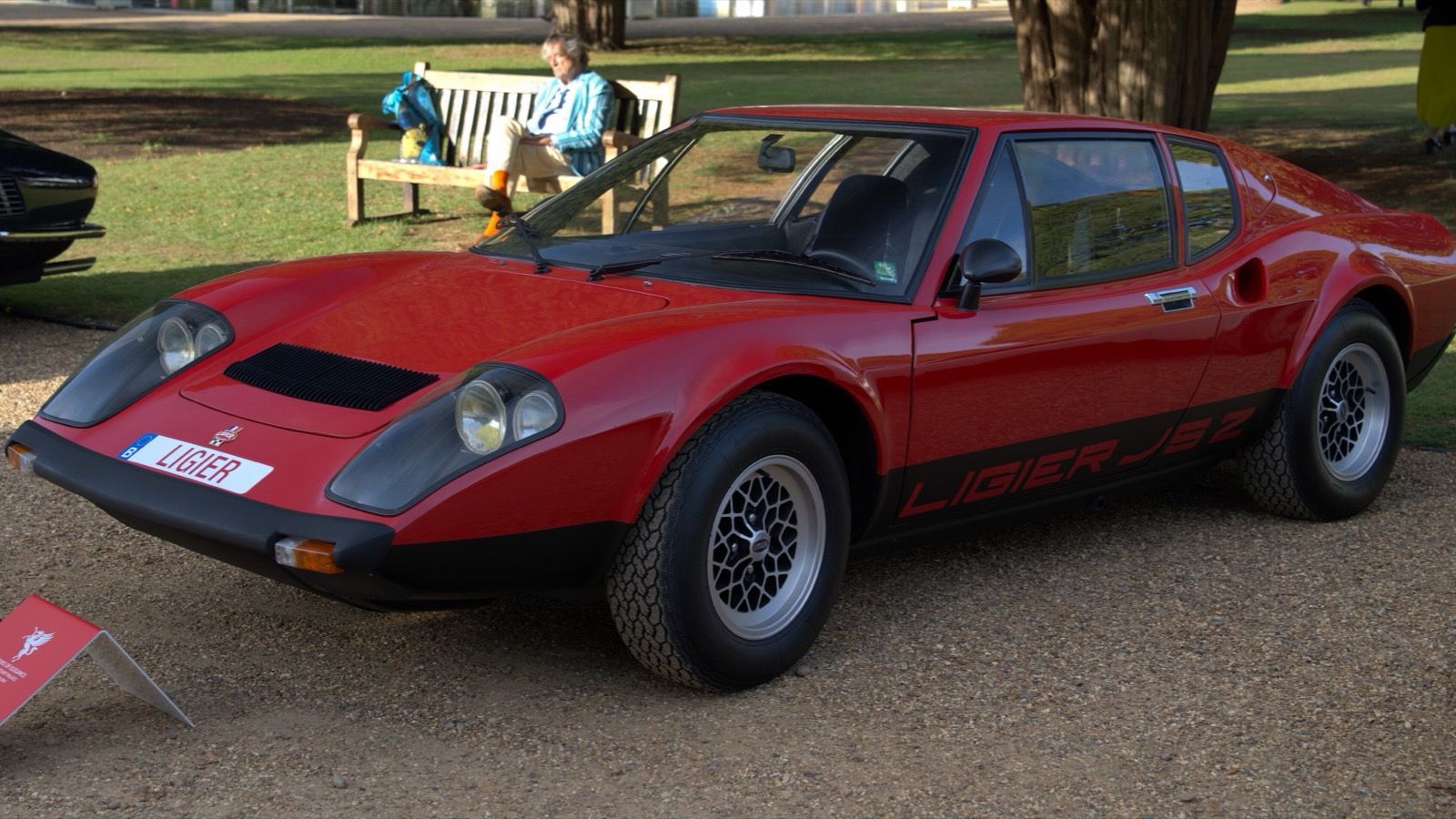
Ligier JS2 History
A mid-engined Maserati V6 grand tourer styled by Pietro Frua — Ligier's sole road-going sports car, produced in tiny numbers before the 1973 oil crisis killed demand.
Photo: “1973 Ligier JS2 HCC25.jpg” by MrWalkr / Wikimedia Commons, licensed under CC BY-SA 4.0. Cropped to 16:9.
History
Guy Ligier debuted the JS2 concept at the 1970 Paris Salon powered by a Ford V6, then switched to the twin-cam Maserati V6 shared with the Citroën SM for production. The initials 'JS' honoured Jo Schlesser, Ligier's close friend who had died in the 1968 French Grand Prix. First deliveries began in late 1972, built by hand at the factory in Abrest near Vichy.
The backbone-chassised coupé used a 2,675 cc Maserati unit producing around 170 hp; from February 1973 the larger 2,965 cc engine from the Maserati Merak raised output to approximately 195 hp. The body — designed by Pietro Frua — gave the JS2 dramatic low-slung proportions despite sitting on a relatively long 2,350 mm wheelbase.
The 1973 energy crisis gutted demand for thirsty supercars. Only around 149 road cars were completed across the full run (48 in 1972, 80 in 1973, with a handful of Series 2 cars in 1974–75), making the JS2 one of the rarest Franco-Italian machines of its era. Competition versions achieved a second-place finish at the 1975 Le Mans 24 Hours running a Cosworth DFV engine.
Generations
Series 1 · 2.7-litre Maserati V6
Original production spec with the 2,675 cc Maserati V6; first road cars delivered late 1972.
Series 2 · 3.0-litre Maserati V6
Photo: “1973 Ligier JS2 HCC25.jpg” by MrWalkr / Wikimedia Commons, licensed under CC BY-SA 4.0. Cropped to 16:9.
Enlarged 2,965 cc engine (shared with the Maserati Merak) from early 1973; final cars built through 1975.
1973 Photo: “1973 Ligier JS2 HCC25.jpg” by MrWalkr / Wikimedia Commons, licensed under CC BY-SA 4.0. Cropped to 16:9.
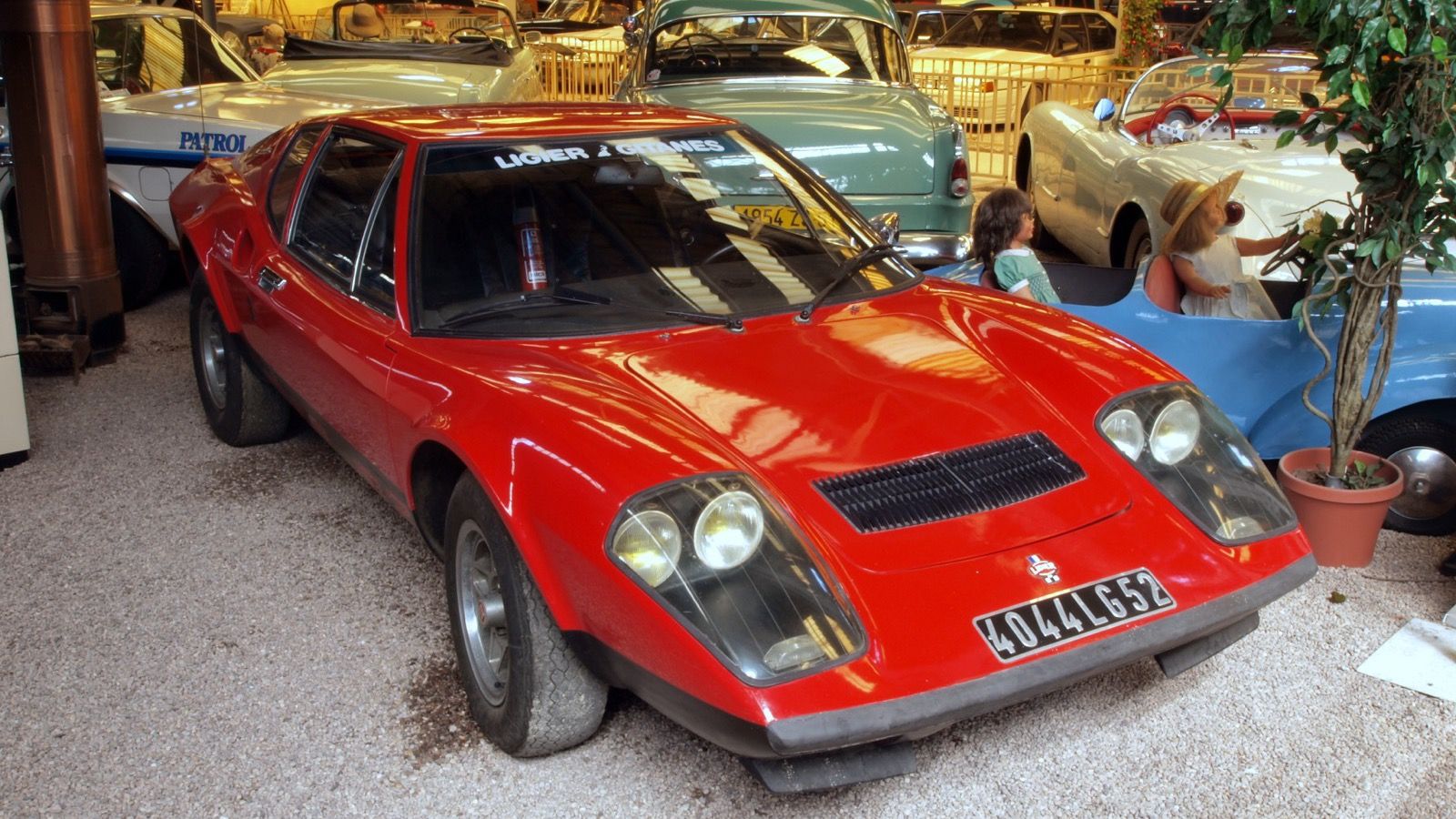
1974 Photo: “1974 Ligier JS2 pic1.JPG” by Alf van Beem / Wikimedia Commons — CC0 1.0. Cropped to 16:9.
Body styles
- Coupé
Related models
Collect the nameplate
Find a scale model of the Ligier JS2
Search Amazon across available years, colors, and scales. Exact releases vary, so confirm the listing before ordering.