
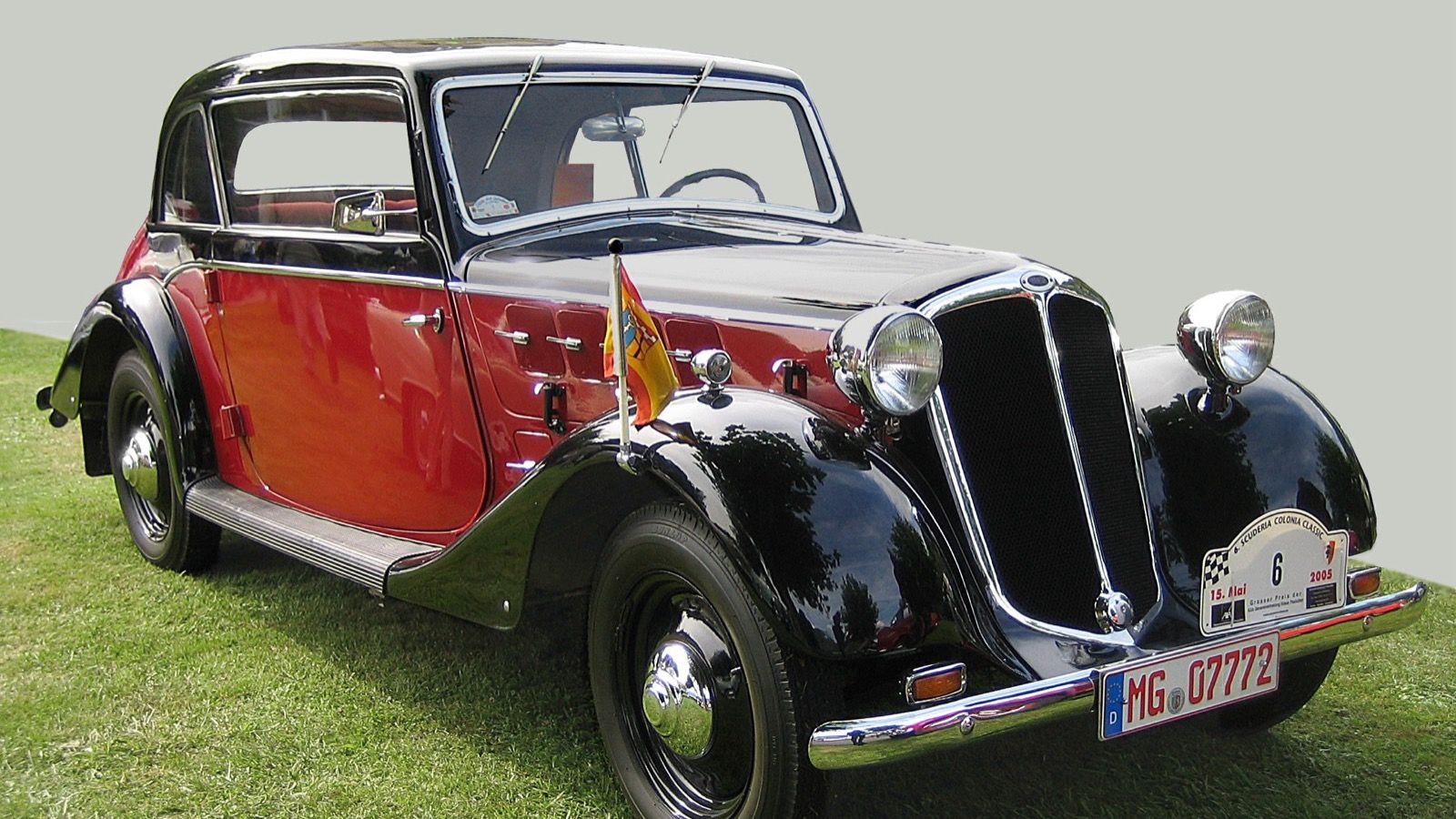
Hansa 1100 History
The Borgward group's breakthrough small car — an all-steel, independently sprung four-cylinder saloon that brought modern construction to the German compact segment.
Photo: “2005-08-27 Hansa 1100, Bj. 1937- Foto Spu.jpg” by Spurzem / Wikimedia Commons, licensed under CC BY-SA 2.0 de. Cropped to 16:9.
History
Debuting at the 1934 Berlin Motor Show, the Hansa 1100 was a genuine step forward: an all-steel body (two-door saloon or cabriolet) on a backbone chassis with outriggers, featuring independent front suspension at a time when many competitors still relied on beam axles. The 1,100 cc four-cylinder engine produced up to 28 PS in standard form; later specifications reached 56 PS in the most powerful variant.
The 1100 was the most commercially successful Hansa to date and established the Borgward group's engineering credibility among independent German manufacturers. It ran through July 1939, when a new six-cylinder 2300 model succeeded it under the Borgward name — marking the effective end of the Hansa brand on mainstream passenger cars.
Its direct influence was felt postwar: a modernised relative, the Goliath 1100, kept the basic engineering concept alive into the late 1950s under a different Borgward sub-brand.
Generations
First series · Hansa 1100 (backbone chassis)
Photo: “2005-08-27 Hansa 1100, Bj. 1937- Foto Spu.jpg” by Spurzem / Wikimedia Commons, licensed under CC BY-SA 2.0 de. Cropped to 16:9.
All-steel body on backbone chassis; independent front suspension; 1,100 cc four-cylinder; offered as two- and four-door saloon plus cabriolet.
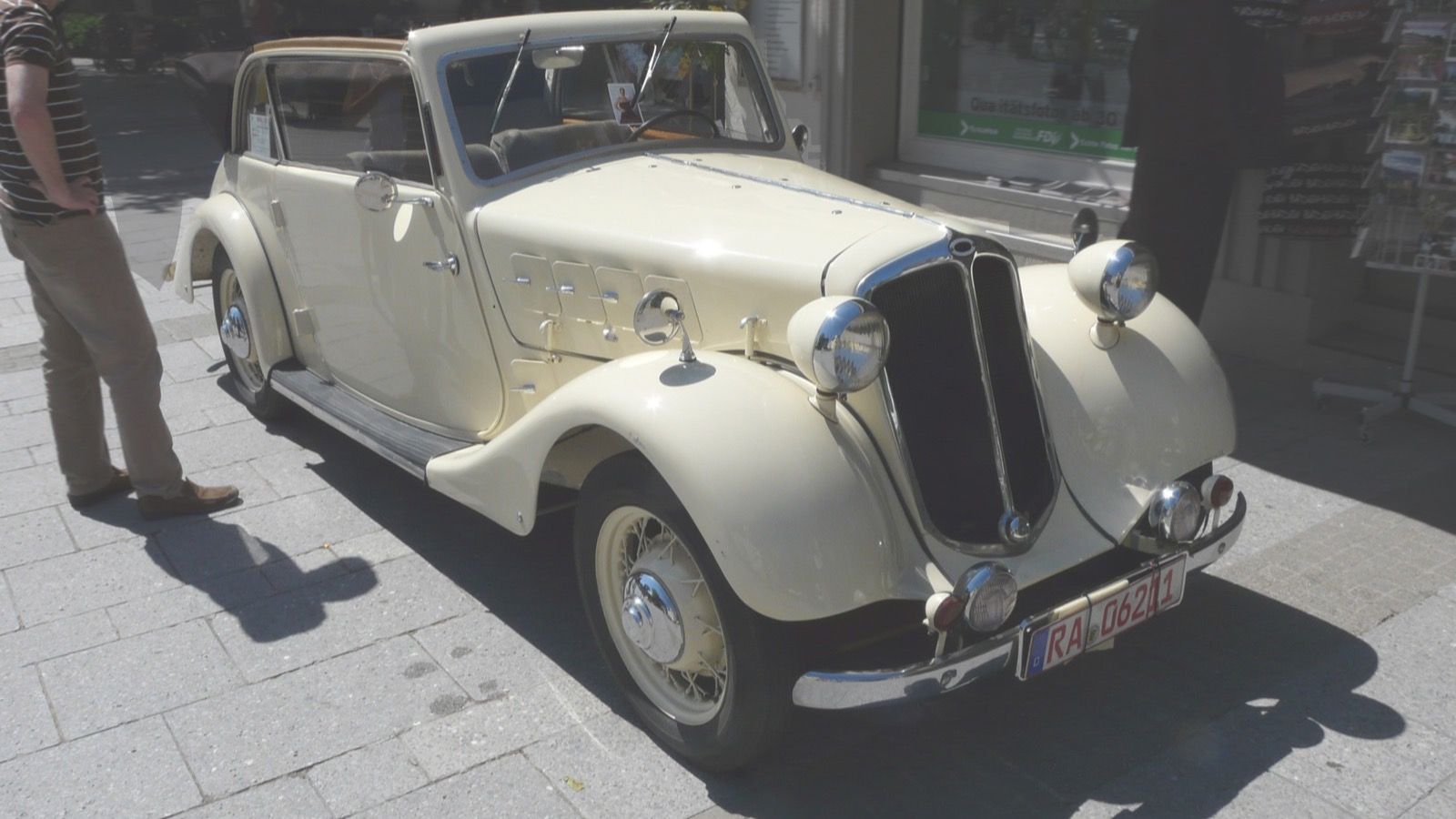
1937 Photo: “Hansa 1100 Cabrio 1937 01 (fcm).jpg” by Photograph: Frank C. Müller , Baden-Baden / Wikimedia Commons, licensed under CC BY-SA 4.0. Cropped to 16:9.
Body styles
- Saloon (2-door)
- Saloon (4-door)
- Cabriolet
Related models
Collect the nameplate
Find a scale model of the Hansa 1100
Search Amazon across available years, colors, and scales. Exact releases vary, so confirm the listing before ordering.