
Graham-Paige Graham Blue Streak History
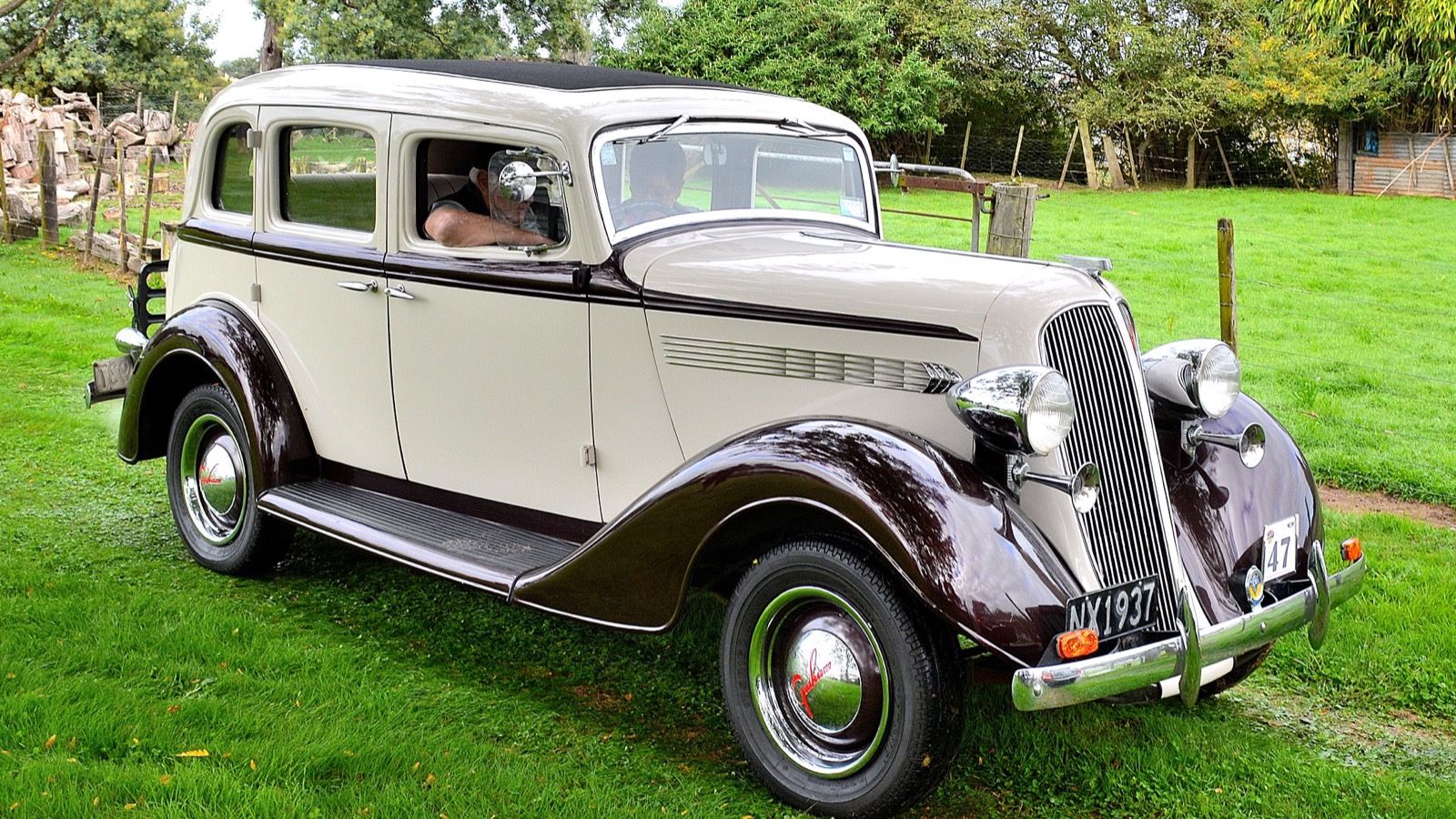
Amos Northup's streamlined 1932 design — skirted fenders, a raked grille and 'banjo' frame — widely cited as one of the most influential car shapes of the 1930s.
Photo: “1935 Graham Sedan.jpg” by GPS 56 / Wikimedia Commons, licensed under CC BY 2.0. Cropped to 16:9.
History
The 1932 Graham, styled by Amos Northup, took its 'Blue Streak' nickname from the name of its new straight-eight engine and quickly applied it to the whole car. Its skirted (enclosed) fenders, sloped grille, headlamps faired into the body and the 'banjo' frame that let the body sit lower were widely and quickly copied across the industry.
Graham promoted the car as having been developed with wind-tunnel testing, part of a broader aeronautics-inspired streamlining trend. The look proved so influential that the Blue Streak is routinely named among the most copied and important production-car designs of the decade.
The Blue Streak styling carried Graham's mainstream models from 1932 through 1935 and set up the supercharged eights that followed. Amos Northup, the designer behind it, also shaped Graham's later 'Spirit of Motion' cars before his death in 1937.
Generations
First generation · Blue Streak
Photo: “1935 Graham Sedan.jpg” by GPS 56 / Wikimedia Commons, licensed under CC BY 2.0. Cropped to 16:9.
Amos Northup's streamlined design — skirted fenders, a raked grille, faired-in headlamps and the 'banjo' frame — which carried Graham's mainstream models from 1932 through 1935.
1935 Photo: “1935 Graham Sedan.jpg” by GPS 56 / Wikimedia Commons, licensed under CC BY 2.0. Cropped to 16:9.
Body styles
- Sedan
- Coupe
- Convertible
Related models
Collect the nameplate
Find a scale model of the Graham-Paige Graham Blue Streak
Search Amazon across available years, colors, and scales. Exact releases vary, so confirm the listing before ordering.