
Geo Tracker History
Catalog record
Photography for this nameplate has not yet cleared the archive’s licensing and identity checks. The researched text below remains available while the page stays out of search and advertising inventory.
History
The Geo Tracker launched for the 1989 model year as a near-twin of the Suzuki Sidekick, built at the GM–Suzuki CAMI plant in Ingersoll, Ontario (with nearly all 1989 cars and some 1990 cars imported from Japan while CAMI came online). A compact body-on-frame off-roader powered by a 1.6-liter four-cylinder, it was offered with standard four-wheel drive as a convertible or removable-hardtop two-door. A two-wheel-drive base convertible joined the lineup for 1992.
The two-door hardtop was dropped after 1995, replaced by a four-door hardtop wagon for the 1996 model year, powered by an updated 96-hp 16-valve 1.6-liter engine. The four-door arrived well after Suzuki had begun selling four-door Sidekicks in the US in 1991. Across the 1990s SUV boom, the Tracker's low price and real off-road capability made it a solid seller.
The Tracker outlasted the Geo brand, continuing as the Chevrolet Tracker from 1998. A full redesign arrived for 1999 and the Chevrolet Tracker ran through the 2004 model year.
Generations
First generation · Suzuki Sidekick-based (CAMI)
Body-on-frame mini SUV; two-door convertible and hardtop (1989–1995); four-door hardtop added for 1996 with a 96-hp 16-valve engine.
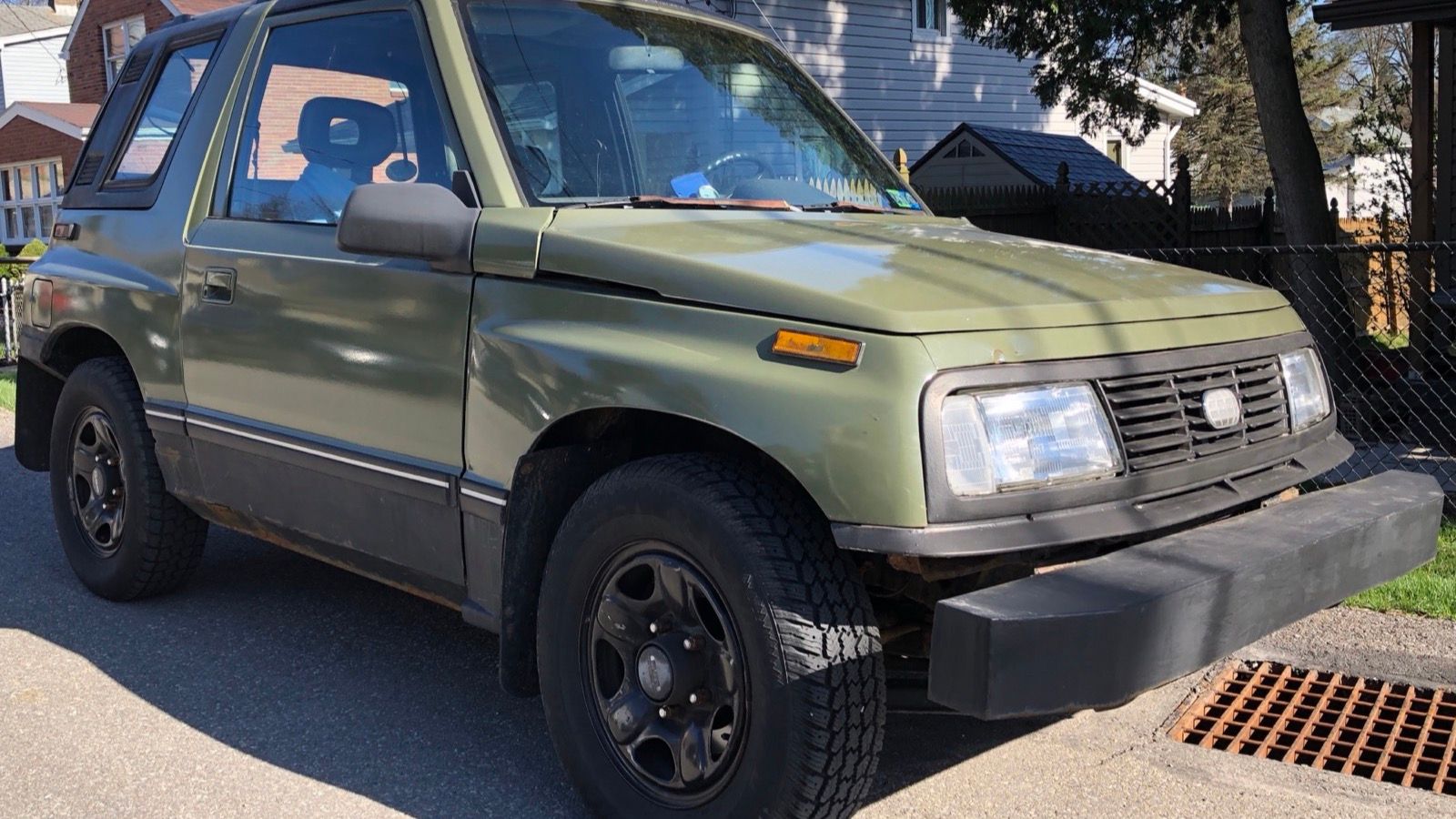
1992 Photo: “File:1992 Geo Tracker 4x4.jpg” by BlueCrabRedCrab / Wikimedia Commons — CC0 1.0. Cropped to 16:9.
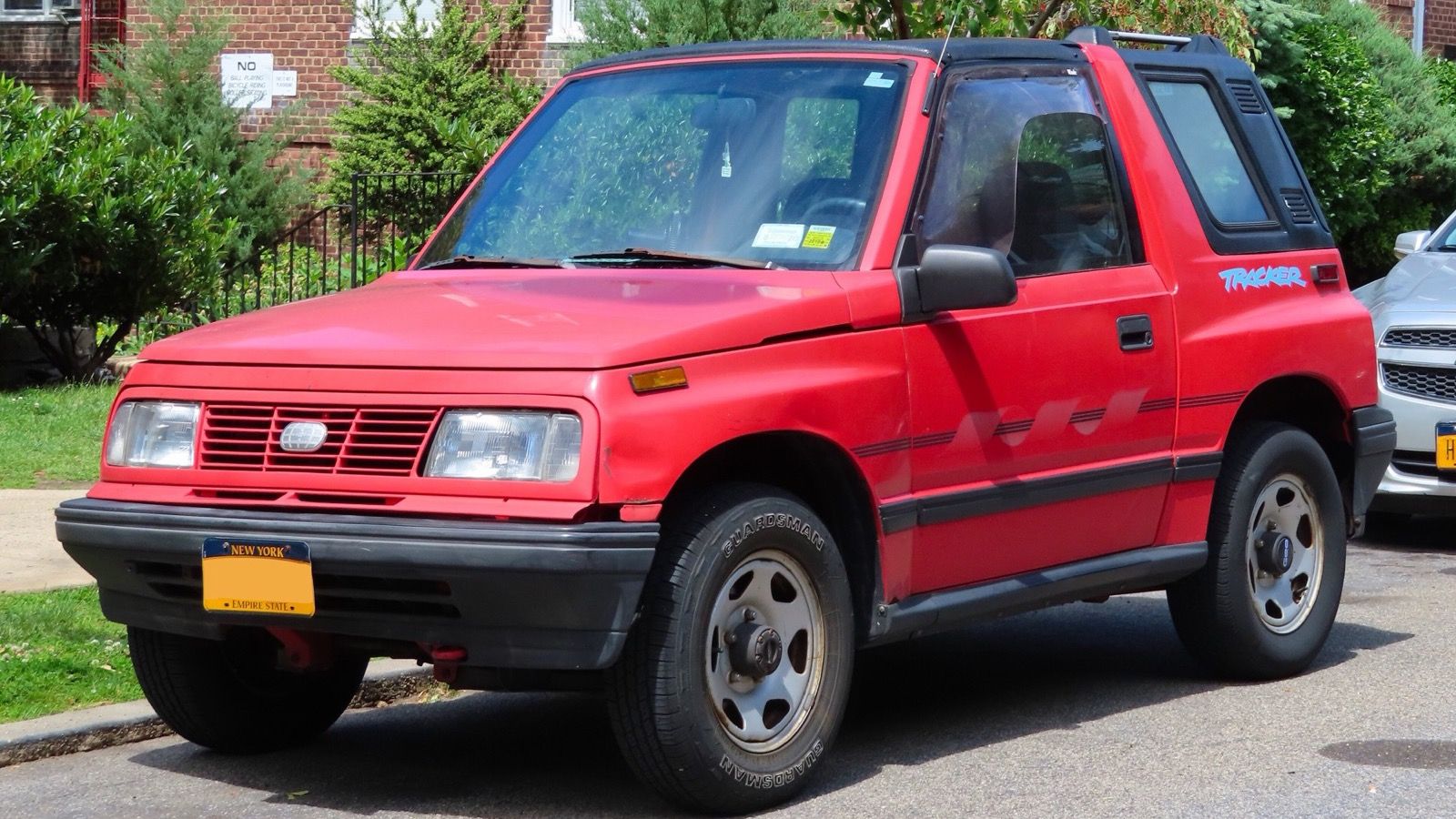
1994 Photo: “File:1994 Geo Tracker Convertible 2 Door 1.6L front 6.15.19.jpg” by Kevauto / Wikimedia Commons, licensed under CC BY-SA 4.0. Cropped to 16:9.
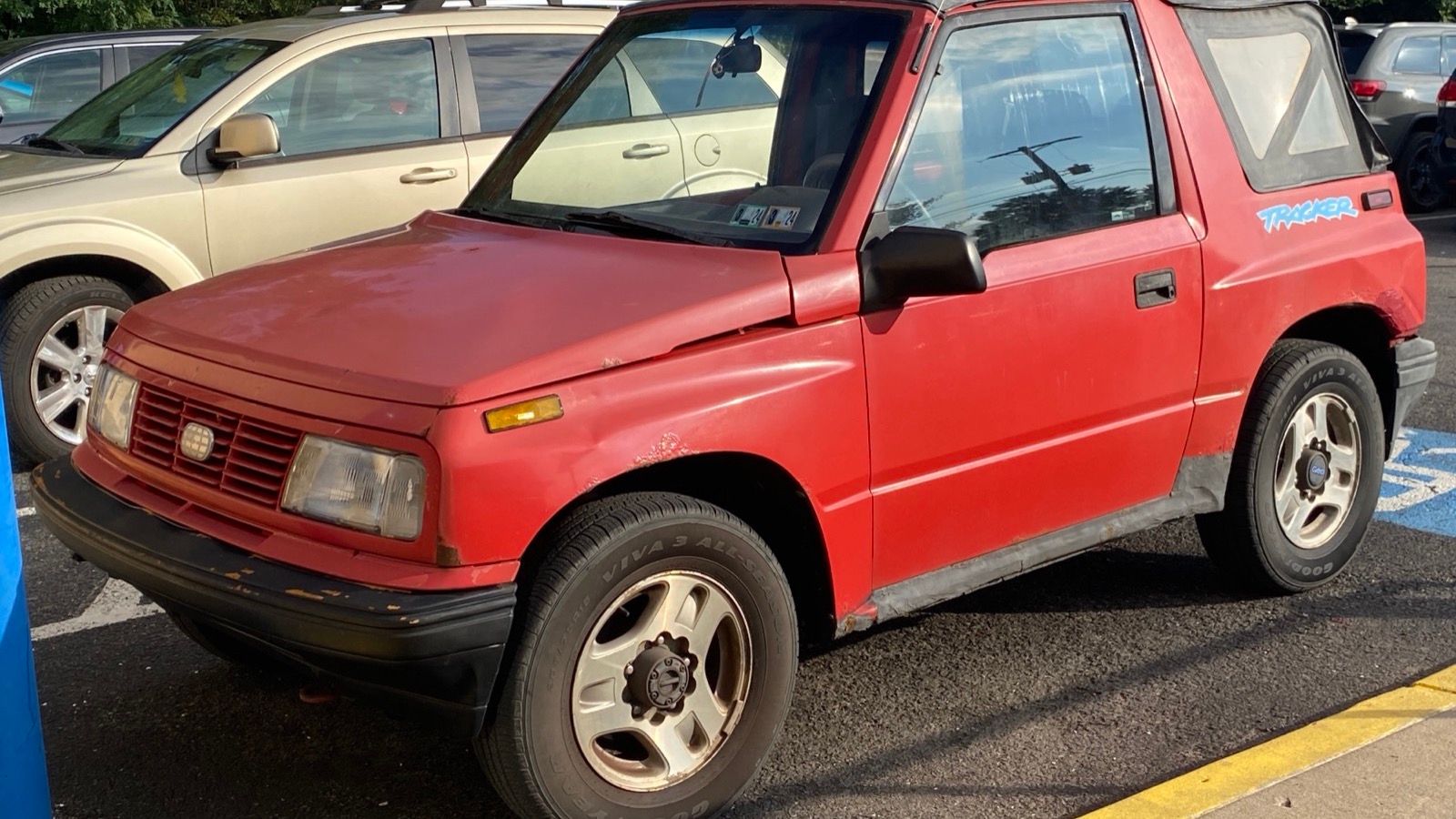
1995 Photo: “File:1995 Geo Tracker LSi in Bright Red, front left, 08-25-2023.jpg” by Cutlass / Wikimedia Commons — CC0 1.0. Cropped to 16:9.
Body styles
- 2-door convertible (soft-top)
- 2-door hardtop
- 4-door hardtop
Related models
Collect the nameplate
Find a scale model of the Geo Tracker
Search Amazon across available years, colors, and scales. Exact releases vary, so confirm the listing before ordering.