
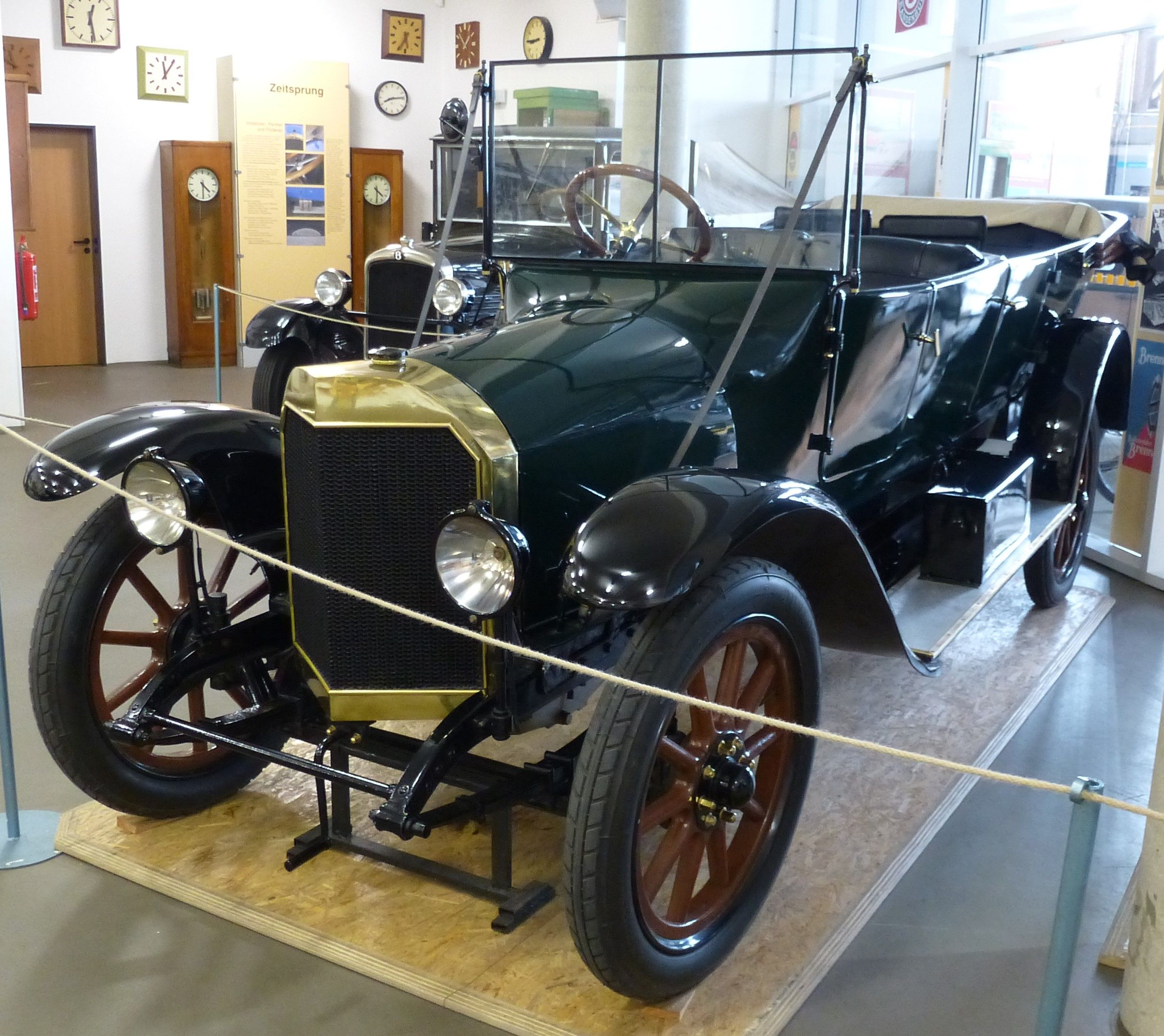
Brennabor Typ P History
The model that made Brennabor Germany's largest carmaker — a 2.1-litre four-cylinder tourer that sold 100 units a day at its peak in the early 1920s.
Photo: “Brennabor Typ P 1920 (1)” by Buch-t / Wikimedia Commons, licensed under CC BY-SA 3.0 de
History
Presented in 1919 as Brennabor's first post-World War I automobile, the Typ P was aimed at Germany's upper middle class and entered volume production in 1921. Its 2,091 cc four-cylinder side-valve engine produced 24 hp at 2,400 rpm, channelled through an asbestos-lined clutch and a four-speed gearbox whose lever sat in an unusual outside position directly to the right of the driver. The chassis was a conventional U-profile pressed-steel unit with rigid axles and semi-elliptical leaf springs.
Two body variants were offered from the outset: the P6, a six-seater open tourer, and the sportier P11, a four-seater open body. Production surged rapidly — at its peak the Typ P was leaving the Brandenburg factory at a rate of 100 units per day for the domestic market alone, carrying Brennabor to the top of the German sales charts for several years in the early 1920s. By 1927 combined output of the Typ P and its successor had reached approximately 10,000 units.
A successor, the Typ PW, arrived in 1925 with the same 2.1-litre engine tuned to 32 hp at 2,600 rpm, the gear lever relocated to a central floor-mounted position, and a new four-door sedan body (the P15) added to the lineup. The PW represented the natural evolution of the formula that had made Brennabor Germany's leading automaker, though the company was already slipping to second place behind Opel by 1927–28 as rivals moved to cheaper small cars.
Generations
Typ P · Original 8/24 PS
Photo: “Brennabor Typ P 1920 (1)” by Buch-t / Wikimedia Commons, licensed under CC BY-SA 3.0 de
24 hp, 2.1-litre four-cylinder; external gear lever; open P6 (6-seat) and P11 (4-seat) bodies; carried Brennabor to the top of German car sales.
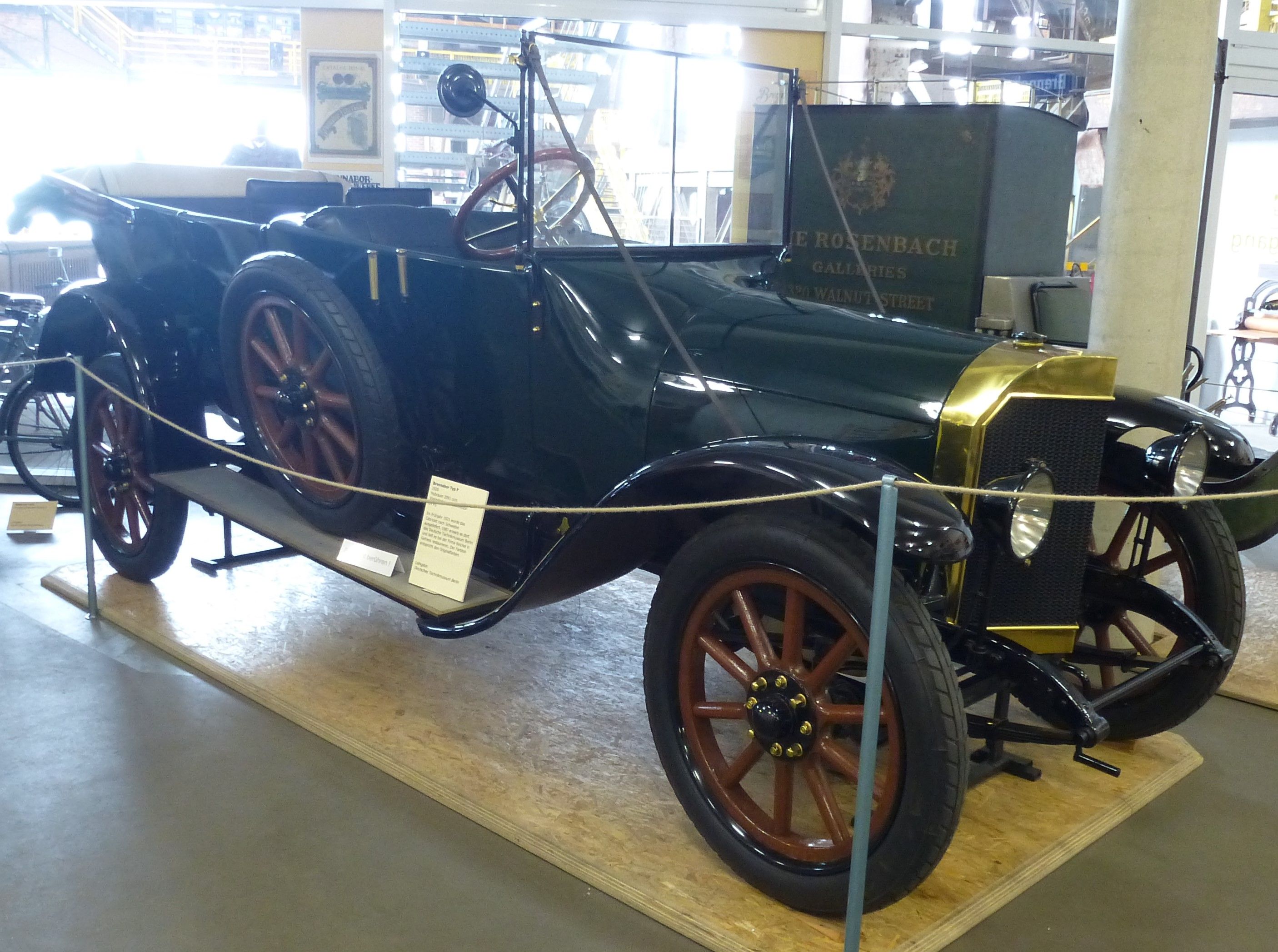
1920 Photo: “Brennabor Typ P 1920 (4)” by Buch-t / Wikimedia Commons, licensed under CC BY-SA 3.0 de
Typ PW · Revised 32 PS
32 hp at 2,600 rpm; central floor-mounted gear lever; added four-door sedan (P15) body; final evolution of the Typ P formula.
Body styles
- Touring (open, 6-seat)
- Roadster (open, 4-seat)
- Sedan
Related models
Collect the nameplate
Find a scale model of the Brennabor Typ P
Search Amazon across available years, colors, and scales. Exact releases vary, so confirm the listing before ordering.