
Adler Trumpf History
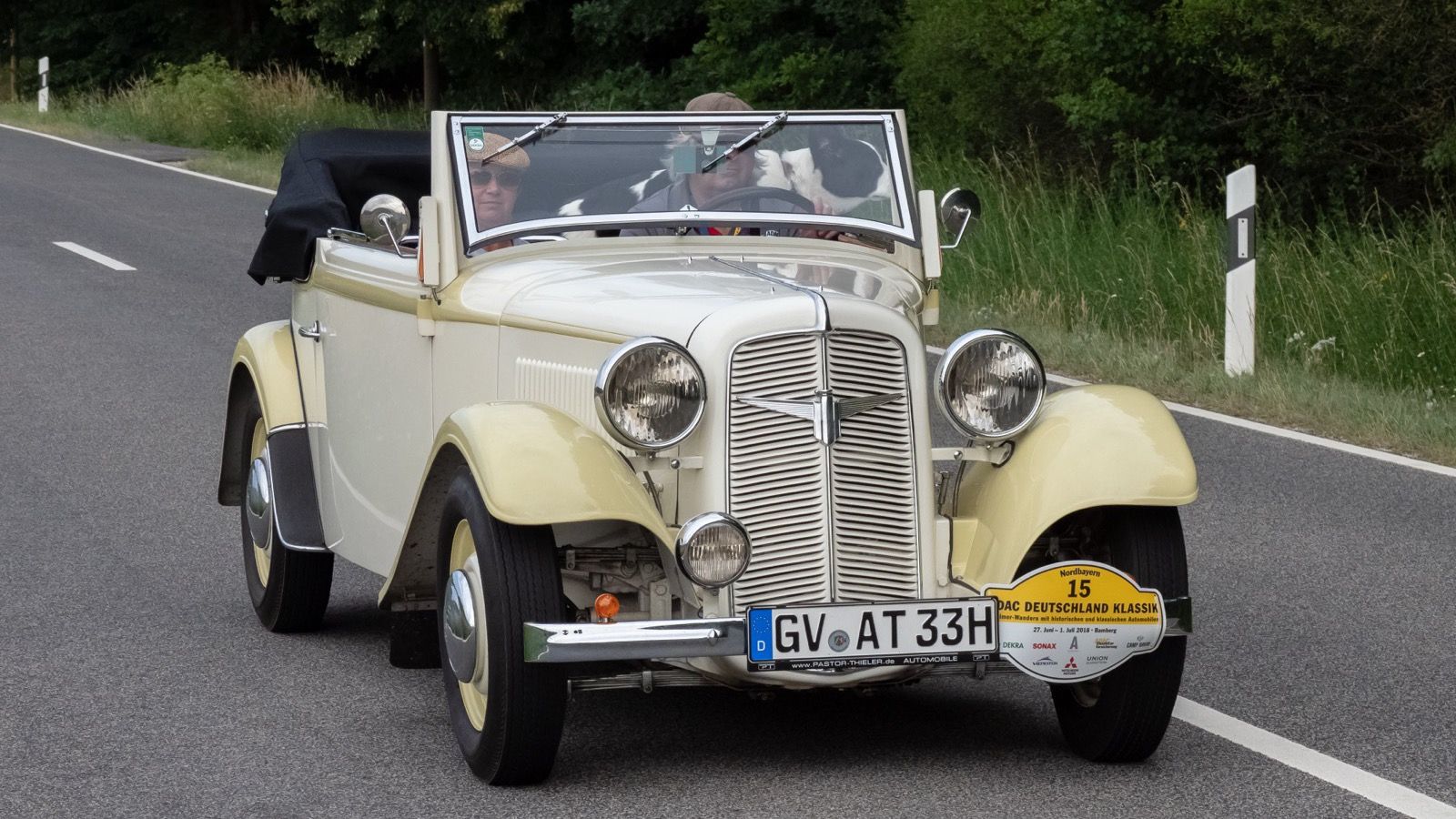
Adler's innovative front-wheel-drive compact of the 1930s — a Le Mans finisher with Paul Jaray streamlined coachwork.
Photo: “Adler Trumpf 1,5 Liter AV Cabriolet (W 188 I) ADAC Deutschland Klassik 2018 6280246” by Ermell / Wikimedia Commons, licensed under CC BY-SA 4.0. Cropped to 16:9.
History
The Trumpf debuted in 1932 as one of Germany's first series-production front-wheel-drive cars, designed by Hans-Gustav Rohr. It combined a four-cylinder engine (1,504–1,645 cc, 32–47 PS), all-round independent suspension, and front-wheel drive in a package that put Adler ahead of most German rivals in chassis modernity.
Aerodynamicist Paul Jaray — the same engineer who pioneered teardrop-body theory — styled the Rennlimousine (racing saloon) variant, giving it a wind-cheating streamlined body. In the 1937 24 Hours of Le Mans, factory-entered Adler Super Trumpf Rennlimousines finished sixth and ninth overall, a remarkable result for cars in the 1.5-litre class against far larger machinery.
Road-going Trumpfs were offered as saloons and cabriolets throughout the 1930s. The range was produced until 1938, after which Adler consolidated its front-wheel-drive effort in the more affordable Trumpf Junior.
Generations
First series · Trumpf 1.5 AV
Photo: “Adler Trumpf 1,5 Liter AV Cabriolet (W 188 I) ADAC Deutschland Klassik 2018 6280246” by Ermell / Wikimedia Commons, licensed under CC BY-SA 4.0. Cropped to 16:9.
Original FWD Trumpf with 1,504 cc four-cylinder (32–33 PS); laid the technical groundwork for the streamlined racing variants.
Second series · Trumpf 1.7 / Sport
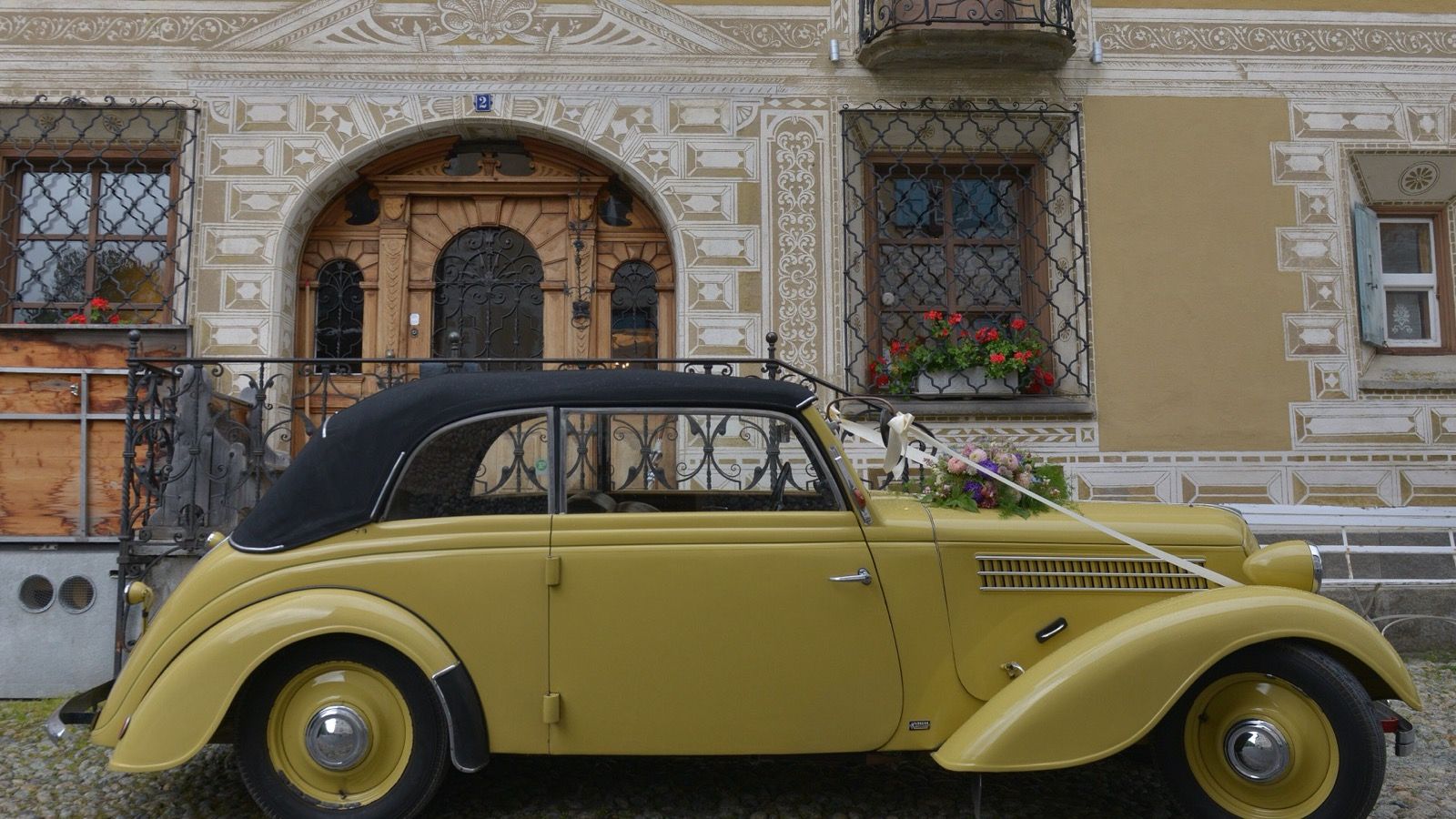
Photo: “Adler Trumpf 1.7 EV” by Lrdriver / Wikimedia Commons, licensed under CC BY-SA 4.0. Cropped to 16:9.
Enlarged 1,645 cc Sport (47 PS) and standard 1.7-litre variants; the Super Trumpf Rennlimousine Le Mans cars were built on this platform.
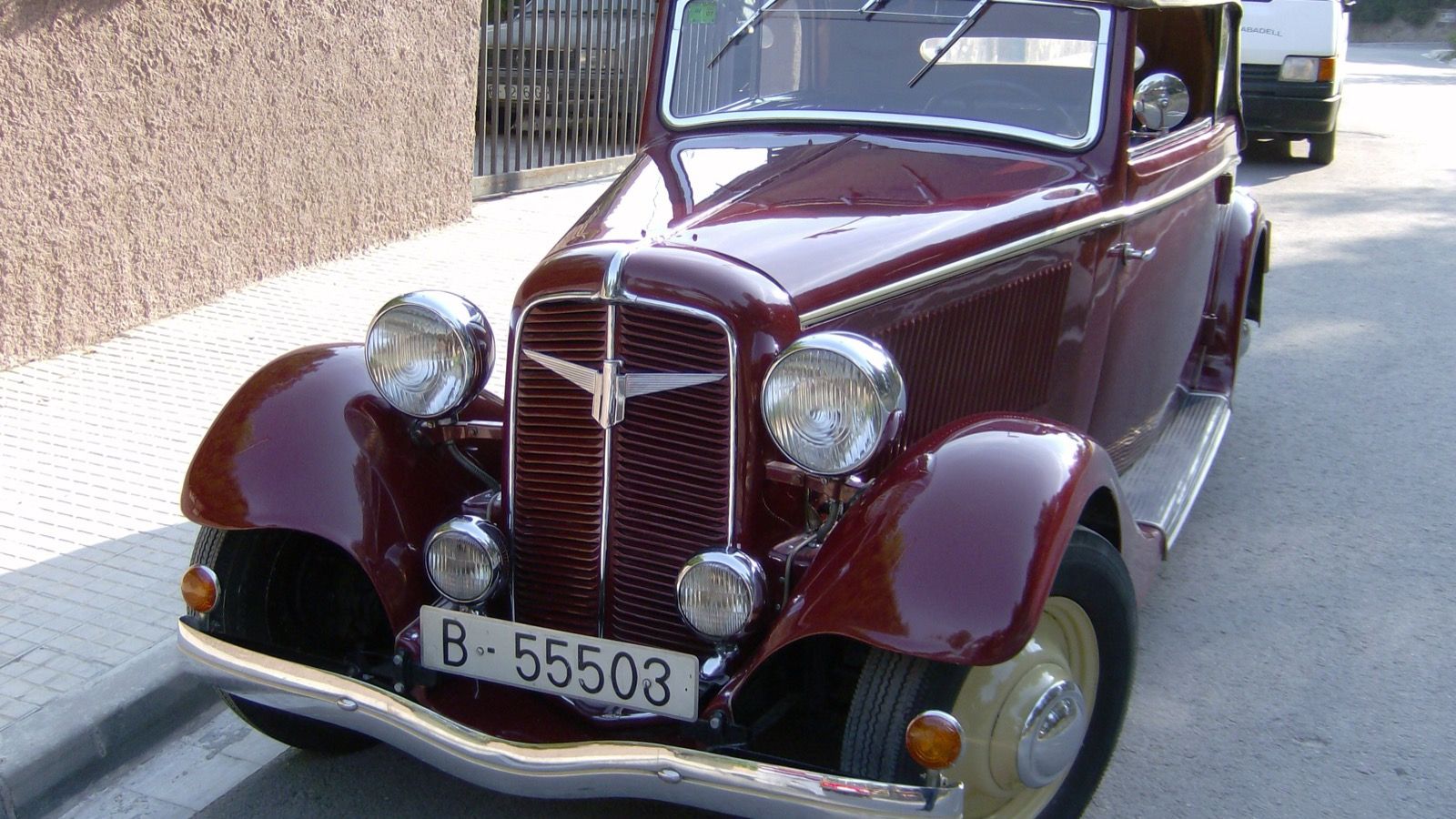
1934 Photo: “Adler Trumpf 1.7 Liter Karman 1934” by Sam torres at English Wikipedia / Wikimedia Commons, licensed under CC BY-SA 3.0. Cropped to 16:9.
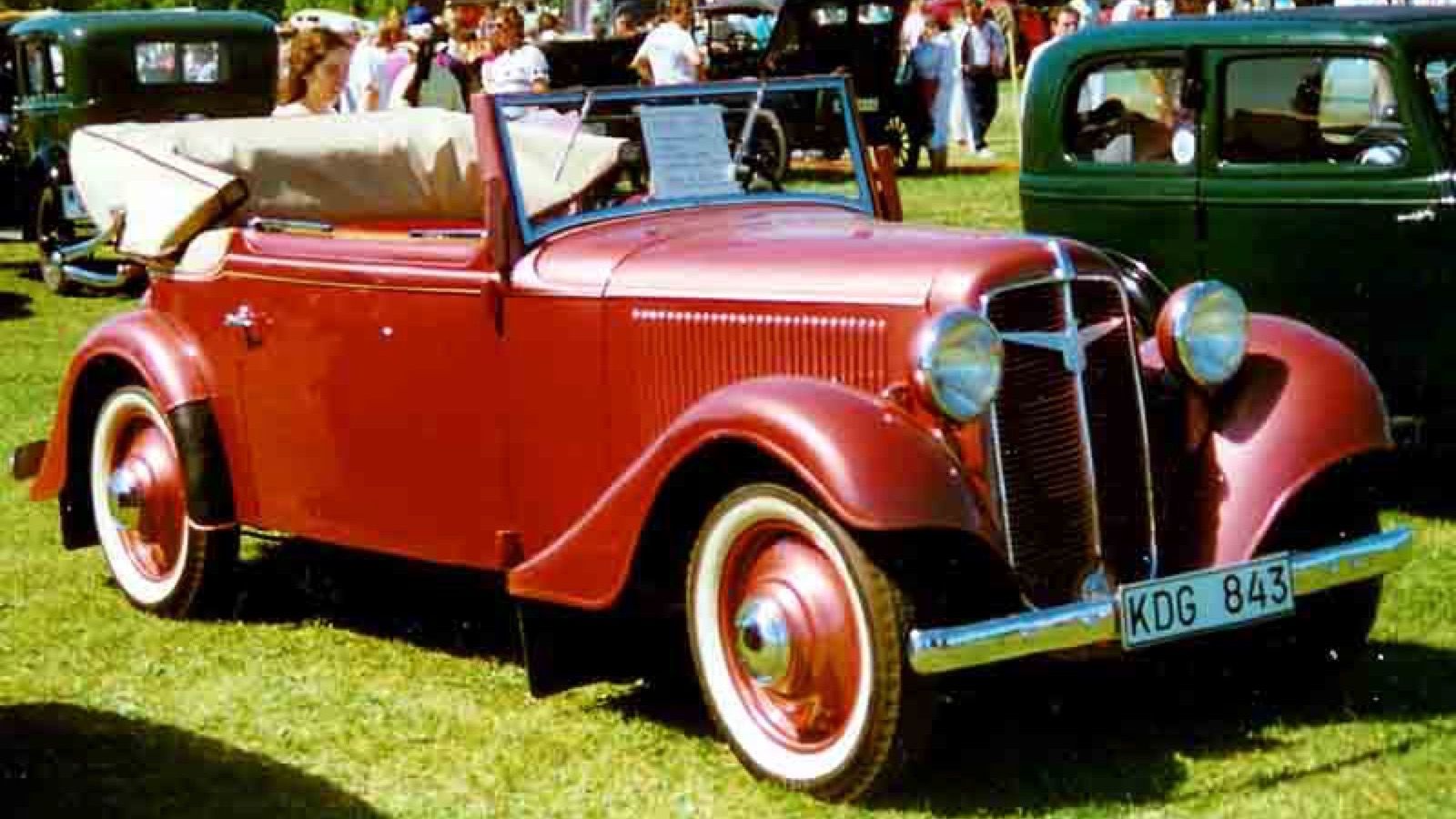
1935 Photo: “Adler Trumpf Cabriolet 1935” by Lars-Göran Lindgren Sweden / Wikimedia Commons, licensed under CC BY-SA 3.0. Cropped to 16:9.
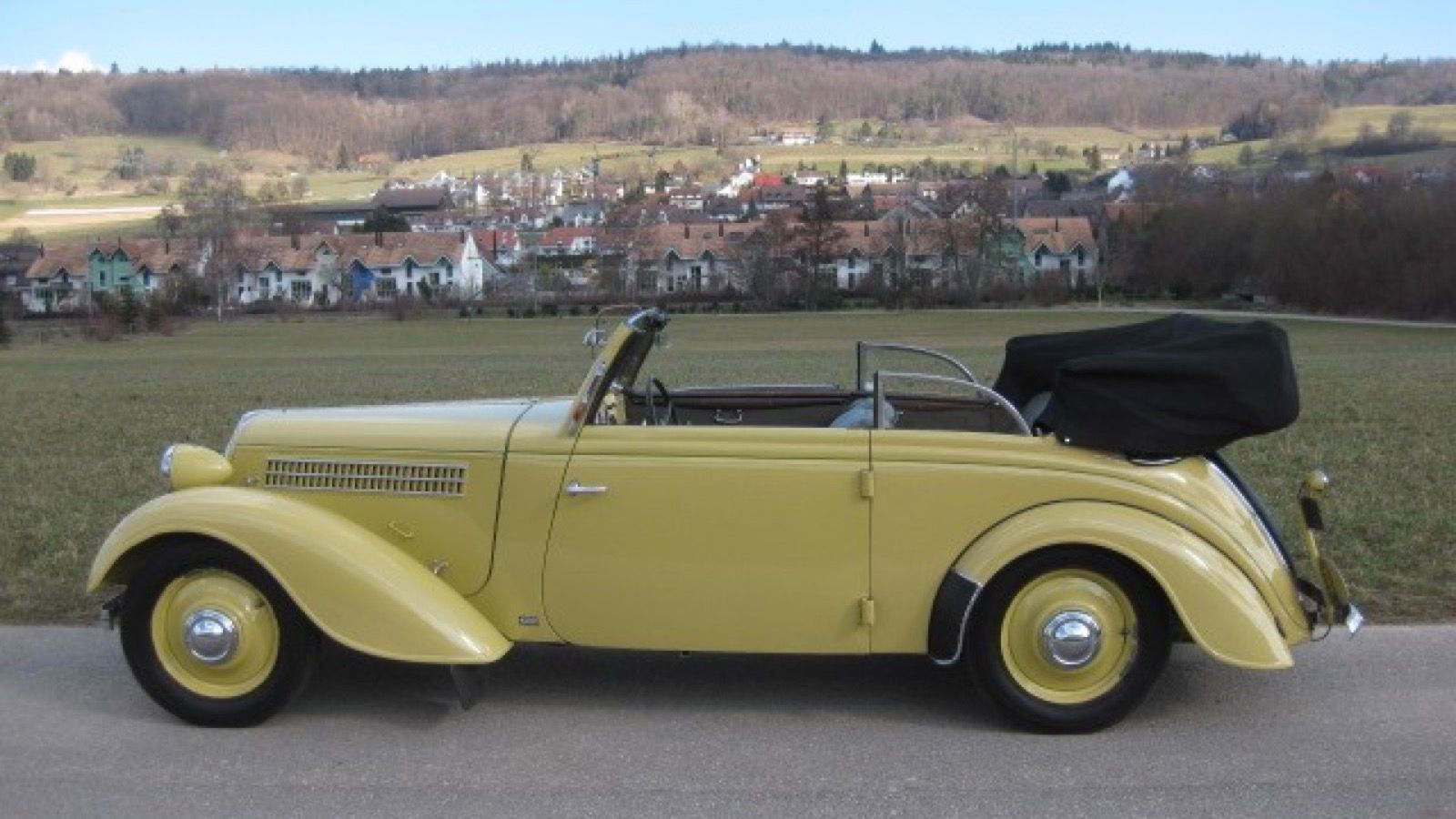
1937 Photo: “Adler Trumpf 1.7 EV Karmann 1937” by Lrdriver / Wikimedia Commons — Public domain. Cropped to 16:9.
Body styles
- Saloon
- Cabriolet
- Sports coupe (Rennlimousine)
Notable special editions & performance variants
Super Trumpf Rennlimousine
Factory-built streamlined racing saloon with Paul Jaray bodywork; three cars entered the 1937 Le Mans, finishing 6th and 9th overall.
Related models
Collect the nameplate
Find a scale model of the Adler Trumpf
Search Amazon across available years, colors, and scales. Exact releases vary, so confirm the listing before ordering.