
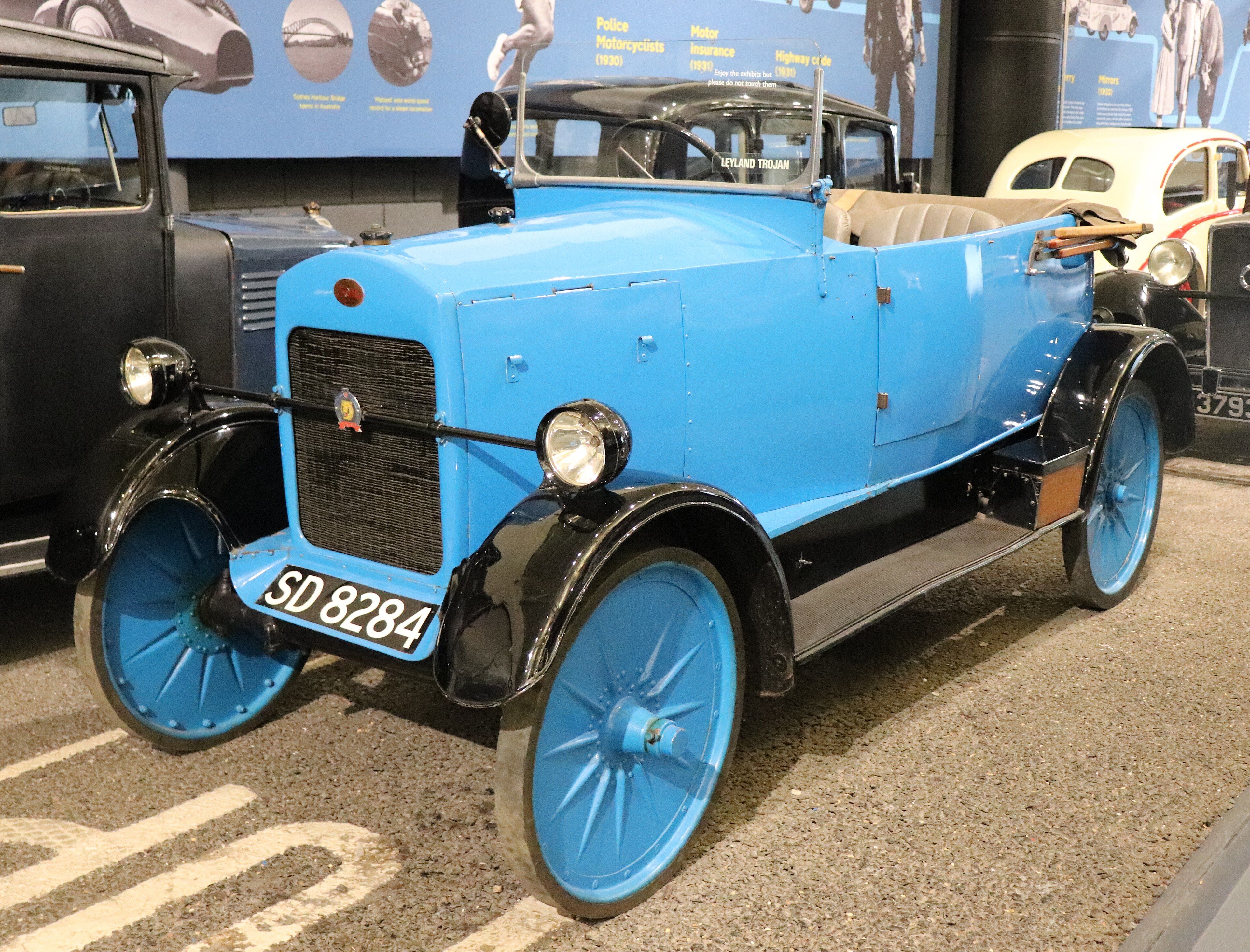
Trojan Utility Car History
Trojan's founding model — a radically simple two-stroke economy car with only seven moving parts, built first by Leyland at Kingston upon Thames (1922–1928) then at Croydon until 1937.
Photo: “1924 Leyland Trojan Tourer 1.5 Front.jpg” by Vauxford / Wikimedia Commons, licensed under CC BY-SA 4.0
History
Leslie Hayward Hounsfield began designing a maximally simple car around 1910, completed a prototype in 1913, and incorporated Trojan Ltd in 1914 — though the First World War diverted the firm to precision gauges and production tools. Commercial production of the Utility Car finally began in 1920 with a small initial series, and the fully developed model was exhibited at the 1922 London Motor Show.
The Utility Car's layout was unlike anything else on British roads: a punt-shaped steel tray served as both chassis and undertray, housing a 1,488 cc four-cylinder two-stroke engine with paired cylinders sharing combustion chambers — giving the whole powerplant just seven moving parts. Drive went to the rear wheels via a single epicyclic gear and chain, and the original cars ran on solid rubber tyres (pneumatic tyres were available as an option from 1923). Top speed was around 38 mph. Hounsfield's contract with Leyland Motors to use a former aircraft factory at Kingston upon Thames produced approximately 11,000 cars and 6,700 vans in the nearly seven years the agreement ran.
After Leyland wound up the arrangement in 1928 Trojan moved production back to Croydon. The price, which had started at £230 in 1922, had already fallen to £125 by 1925 — on a par with the Ford Model T. Brooke Bond placed a large fleet order for delivery vans, giving the Trojan its most visible public role. Car production limped on at Croydon in small numbers alongside commercial vehicles; the last Utility Car was delivered in 1937.
Generations
Leyland-built series · Kingston (Leyland) production
Photo: “1924 Leyland Trojan Tourer 1.5 Front.jpg” by Vauxford / Wikimedia Commons, licensed under CC BY-SA 4.0
Built under contract at Leyland's Kingston upon Thames plant; approximately 11,000 cars and 6,700 vans produced in under seven years.
1924 Photo: “1924 Leyland Trojan Tourer 1.5 Front.jpg” by Vauxford / Wikimedia Commons, licensed under CC BY-SA 4.0
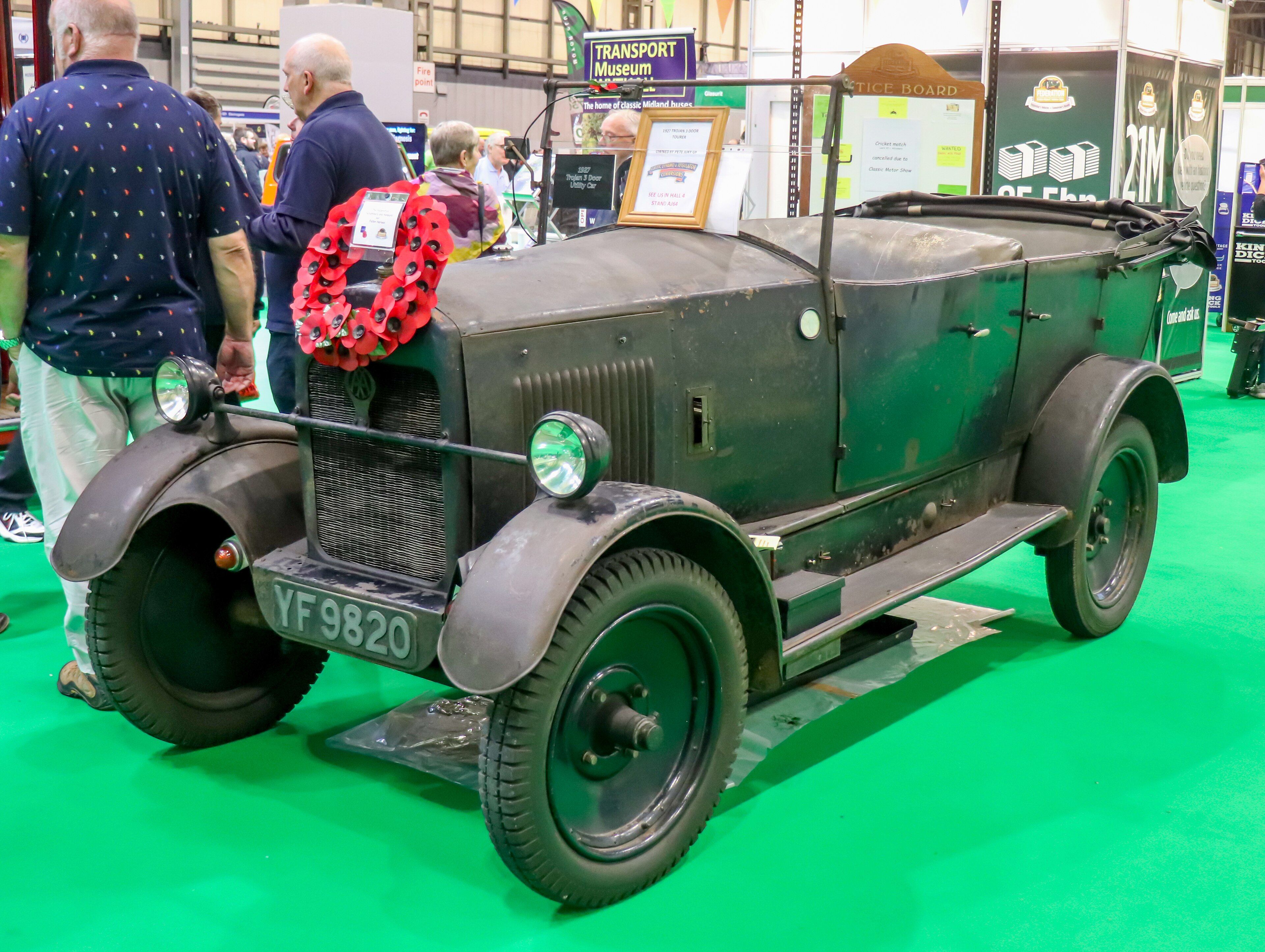
1927 Photo: “1927 Trojan 3 Door Tourer 1.5 Front.jpg” by Vauxford / Wikimedia Commons, licensed under CC BY-SA 4.0
Croydon series · Croydon production
Production returned to Croydon after the Leyland agreement ended; small-volume output continued alongside van manufacture until 1937.
Body styles
- Tourer
- Saloon
- Van
Related models
Collect the nameplate
Find a scale model of the Trojan Utility Car
Search Amazon across available years, colors, and scales. Exact releases vary, so confirm the listing before ordering.