
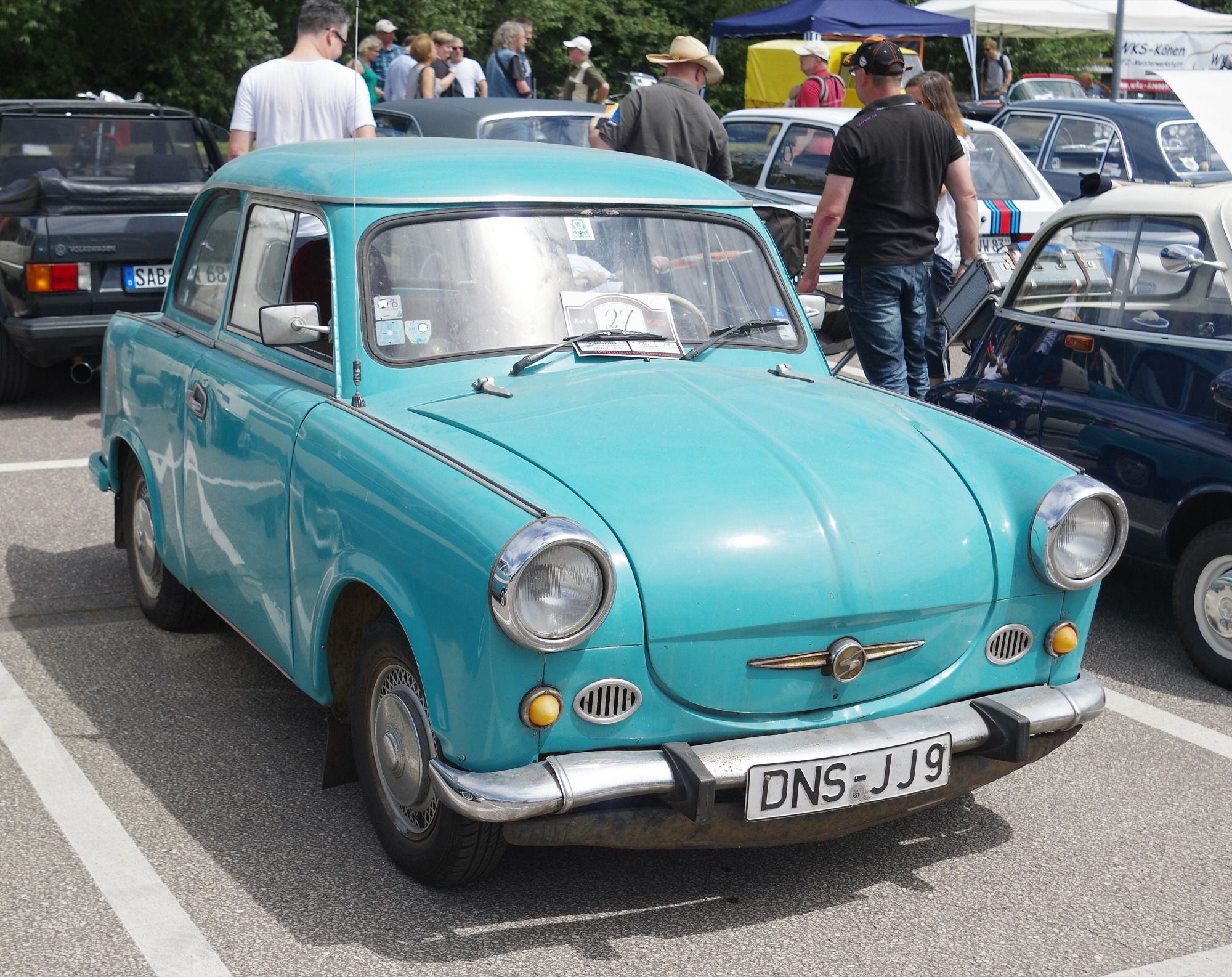
Trabant P50 (Trabant 500) History
The original Trabant — a 499 cc two-stroke subcompact, 131,495 built from 1957 to 1962.
Photo: “Trabant 500 BW 2016-07-17 14-19-29.jpg” by Berthold Werner / Wikimedia Commons, licensed under CC BY-SA 3.0
History
The Trabant P50 — sold as the Trabant 500 — was the founding model of East Germany's national car, with the first pre-series unit leaving VEB Sachsenring Automobilwerke Zwickau on November 7, 1957, and full series production beginning in August 1958. Its development had been mandated in 1954 by East German authorities who wanted an affordable, lightweight people's car for the newly industrializing GDR.
The P50 used a 499 cc two-stroke two-cylinder engine producing 17 PS, mounted transversely — a technically advanced layout for its era — driving the front wheels. Its body panels were made from Duroplast, a hard composite of phenol resin and Soviet-supplied cotton fiber waste that was lighter than steel and did not rust, though it could not be recycled. The car was available as a two-door saloon, a three-door Universal estate, and a panel van.
By 1960 the engine was upgraded to produce 20 PS with a fully synchronized gearbox, and in 1962 the displacement was increased to 594 cc (23 PS) to create the transitional P60/600. Total P50 production reached 131,495 units across its five-year run.
Generations
P50 original (499 cc) · P50
Photo: “Trabant 500 BW 2016-07-17 14-19-29.jpg” by Berthold Werner / Wikimedia Commons, licensed under CC BY-SA 3.0
The founding 499 cc, 17 PS model; pre-series cars from November 1957, full production from August 1958.
P50/2 (improved, 20 PS) · P50/2
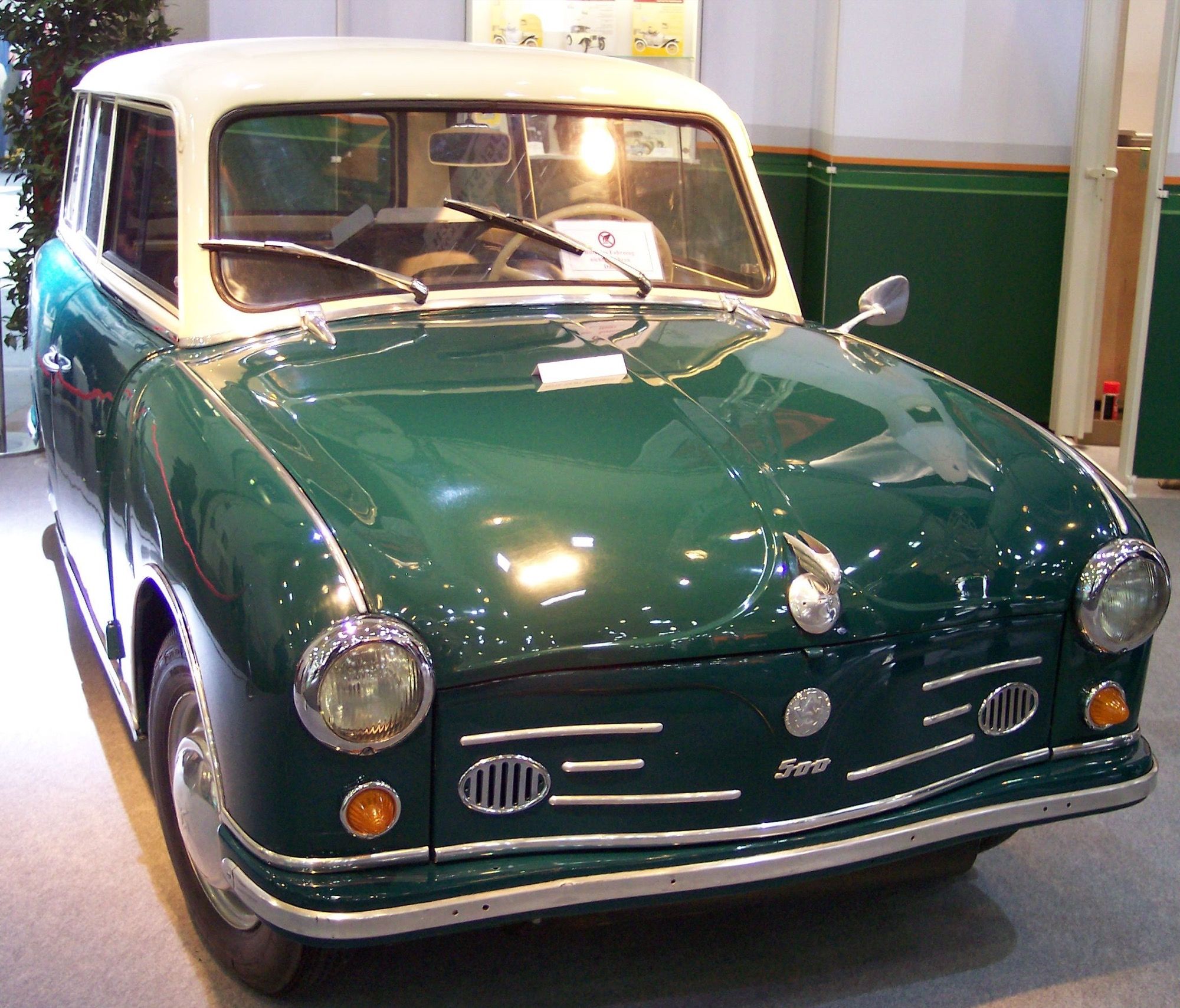
Photo: “Trabant P50 Kombi vr bicolor TCE.jpg” by Stahlkocher / Wikimedia Commons, licensed under CC BY-SA 3.0
20 PS upgrade with a fully synchronized gearbox before the 594 cc P60 engine arrived.
Body styles
- 2-door saloon
- 3-door estate (Universal)
- 3-door panel van
Related models
Collect the nameplate
Find a scale model of the Trabant P50 (Trabant 500)
Search Amazon across available years, colors, and scales. Exact releases vary, so confirm the listing before ordering.