
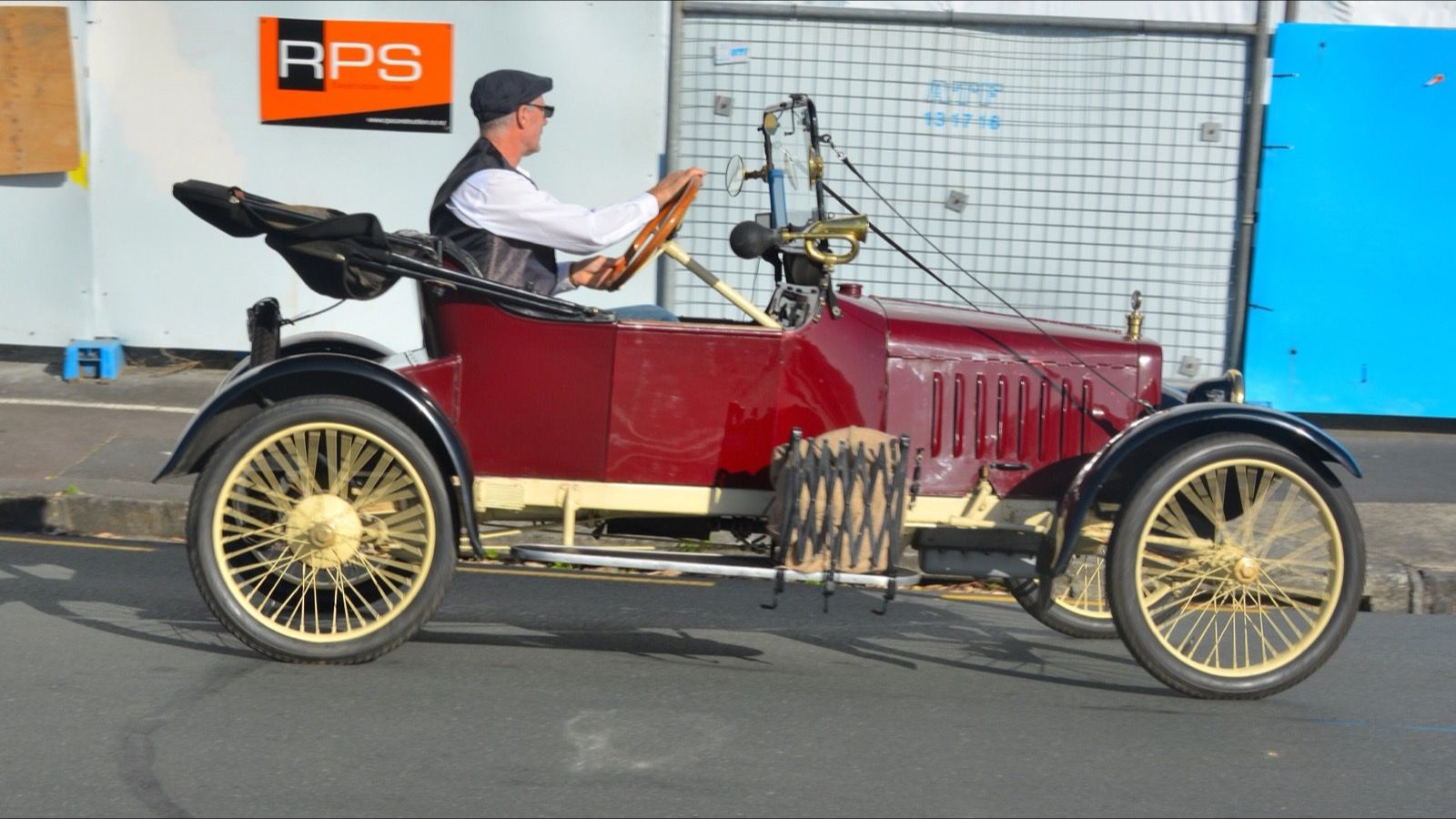
Saxon Four History
Saxon's debut $395 two-seat four-cylinder runabout — a budget rival to the Ford Model T that launched the company and anchored its peak production years.
Photo: “1914 Saxon (32644975322).jpg” by GPS 56 from New Zealand / Wikimedia Commons, licensed under CC BY 2.0. Cropped to 16:9.
History
The car that launched Saxon was a light, low-priced two-seat runabout introduced in 1913 at $395, aimed squarely at the cheap-volume market the Ford Model T had created. Its four-cylinder engine was sourced from Ferro (later Continental), driving through a two-speed transmission; later variants gained a three-speed gearbox and electric lighting as buyer expectations rose. The little car earned a reputation for outclimbing a Model T on hills and reportedly returning better than 35 miles per gallon in endurance trials.
Saxon leaned hard on stunts to sell the runabout's durability: the car was among the first to cross the Lincoln Highway in its early years, and suffragists used Saxons to promote women's voting rights during the mid-1910s campaigns. Early variants (Model A) were built in the old Demotcar factory and offered in right- or left-hand drive with a delivery-car option. Later 'Model B' iterations introduced curved door tops, a taller body, and enlarged trunks. Total four-cylinder production from 1914 through 1918 reached approximately 35,588 units, making it the foundation on which Saxon's peak years were built.
By 1919 the four-cylinder runabout's era was ending, superseded by the larger Saxon Duplex in 1920. Survivors — fewer than 150 total Saxon automobiles of all types remain today — are predominantly small roadster examples; examples reside in the Henry Ford Museum and the Seal Cove Auto Museum.
Generations
First generation · Model A — original runabout
Photo: “1914 Saxon (32644975322).jpg” by GPS 56 from New Zealand / Wikimedia Commons, licensed under CC BY 2.0. Cropped to 16:9.
Two-seat runabout with Ferro four-cylinder and 2-speed transmission, built in the Demotcar factory; $395 at launch.
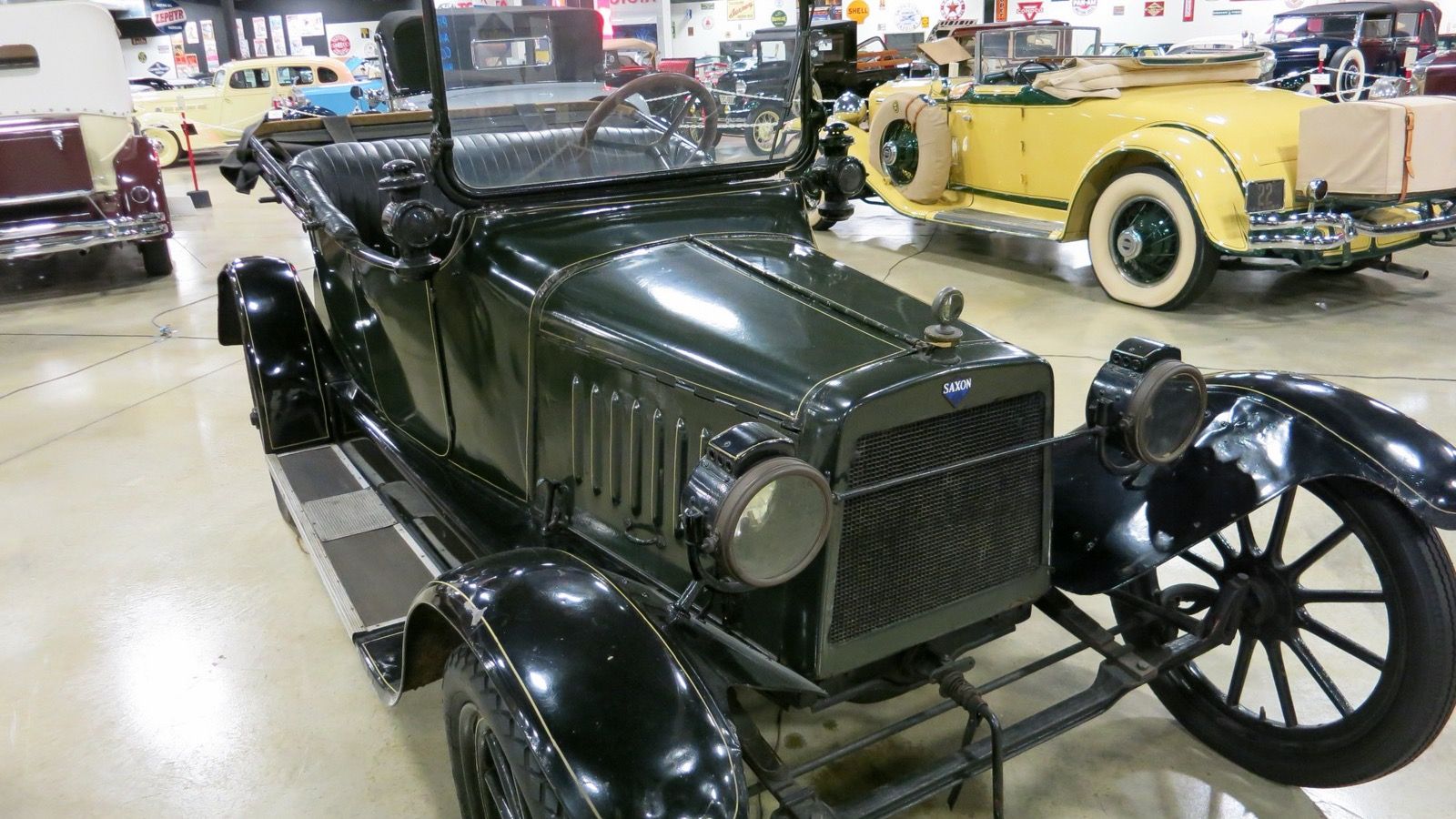
1914 Photo: “1914 Saxon.jpg” by CapCase / Wikimedia Commons, licensed under CC BY 2.0. Cropped to 16:9.
Second generation · Model B — improved four-cylinder
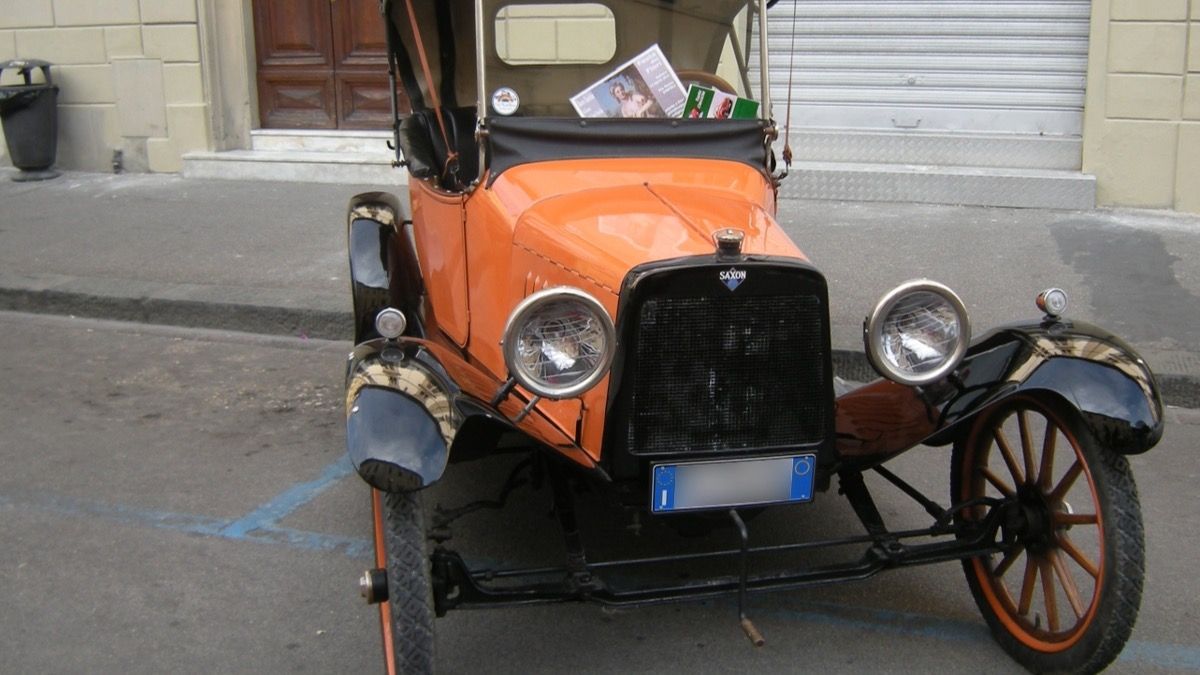
Photo: “Saxon Runabout arancione.jpg” by Carnby / Wikimedia Commons, licensed under CC BY-SA 4.0. Cropped to 16:9.
Revised body with curved door tops, 3-speed gearbox, and electric lighting added; the production-peak car of 1916–1917.
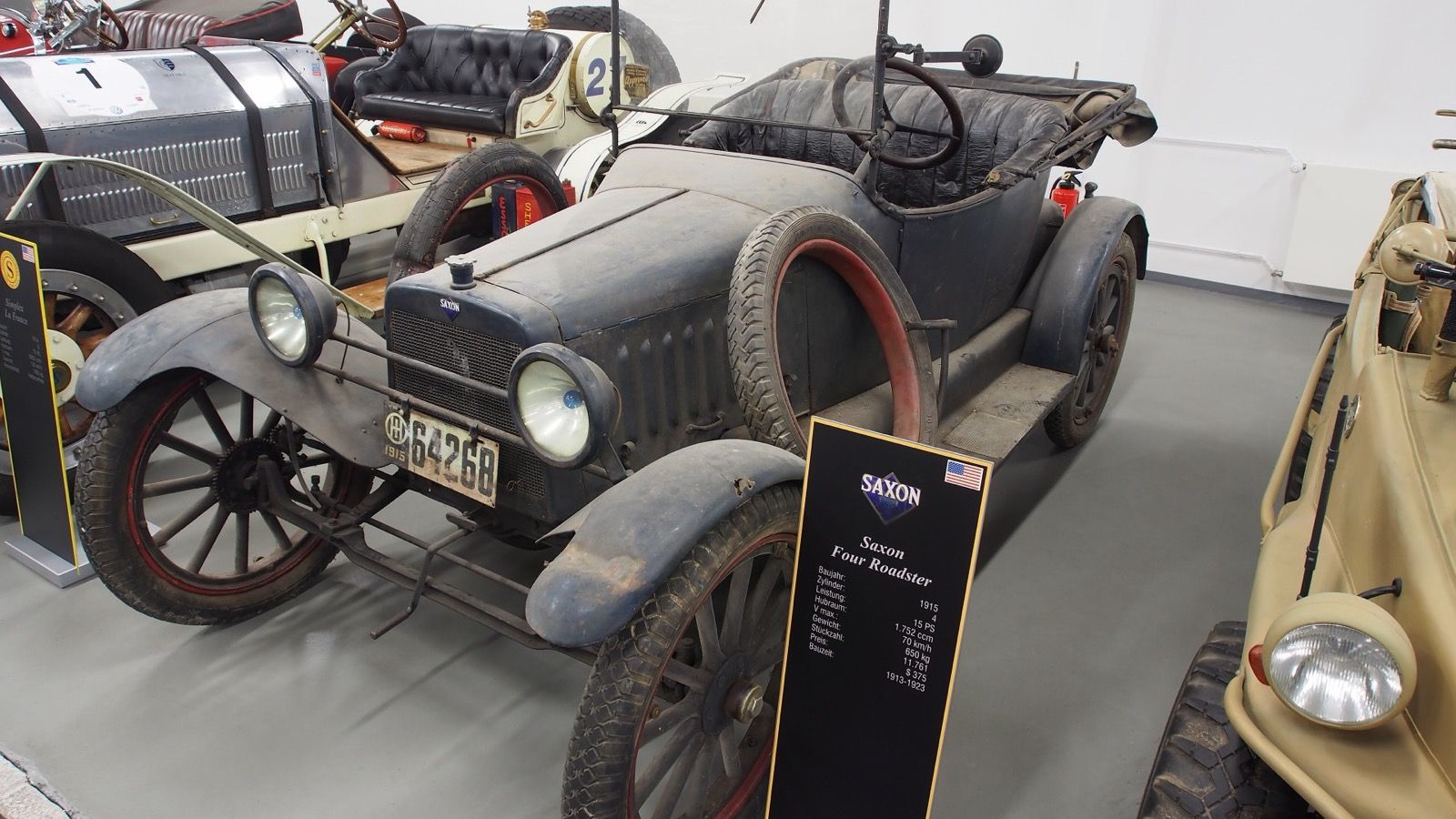
1915 Photo: “1915 Saxon Roadster 4 Zylinder 15PS 1752ccm 70kmh pic1.JPG” by Alf van Beem / Wikimedia Commons — Public domain. Cropped to 16:9.
Body styles
- Roadster (2-seat runabout)
- Delivery car
Related models
Collect the nameplate
Find a scale model of the Saxon Four
Search Amazon across available years, colors, and scales. Exact releases vary, so confirm the listing before ordering.