
AC Cobra History
The legendary Ford-V8 roadster — AC's Ace chassis fitted with American V8 muscle for Carroll Shelby from 1962, now produced as a continuation series.
Photo: “1962 Shelby Cobra MK I” by Calreyn88 / Wikimedia Commons, licensed under CC BY-SA 4.0. Cropped to 16:9.
History
The AC Cobra was born when Carroll Shelby, searching for a chassis for his American V8, proposed to AC's Charles Hurlock in 1961 that he fit a Ford small-block into the Ace. AC shipped rolling chassis and bodies from Thames Ditton to Shelby American in Los Angeles, which installed the engines and sold the cars. The first car, chassis CSX2000, was completed at Thames Ditton in January 1962 — within eight hours Shelby's team had dropped a Ford 260-cubic-inch (4.3-litre) V8 into it. The first 75 Mark I cars used the 260; subsequent production switched to the larger 289-cubic-inch (4.7-litre) Windsor V8.
The Mark II (from late 1963) refined the formula with rack-and-pinion steering while keeping the transverse-leaf suspension of the Ace-derived chassis; approximately 528 Mk IIs were built. For 1965 AC and Shelby introduced the dramatically different Mark III 427: a wider body, a coil-spring suspension, and Ford's fearsome 7.0-litre (427 cubic inch) 'side-oiler' FE big-block V8 producing around 425 bhp, alongside some 428-engined cars. Approximately 306 Mk III Cobras were built.
The Cobra won the FIA GT Manufacturers' Championship for the United States in 1965 and set the template for raw performance roadsters for generations. Total first-generation production (all marks, 1962–1968) is generally accepted at approximately 998 cars — nearly all hand-built. AC continued building Cobra-type cars for Europe under the '289 Sports' name into the late 1960s, and under a succession of owners has produced Cobra continuations ever since, making it one of the most enduringly produced and most replicated shapes in automotive history.
Generations
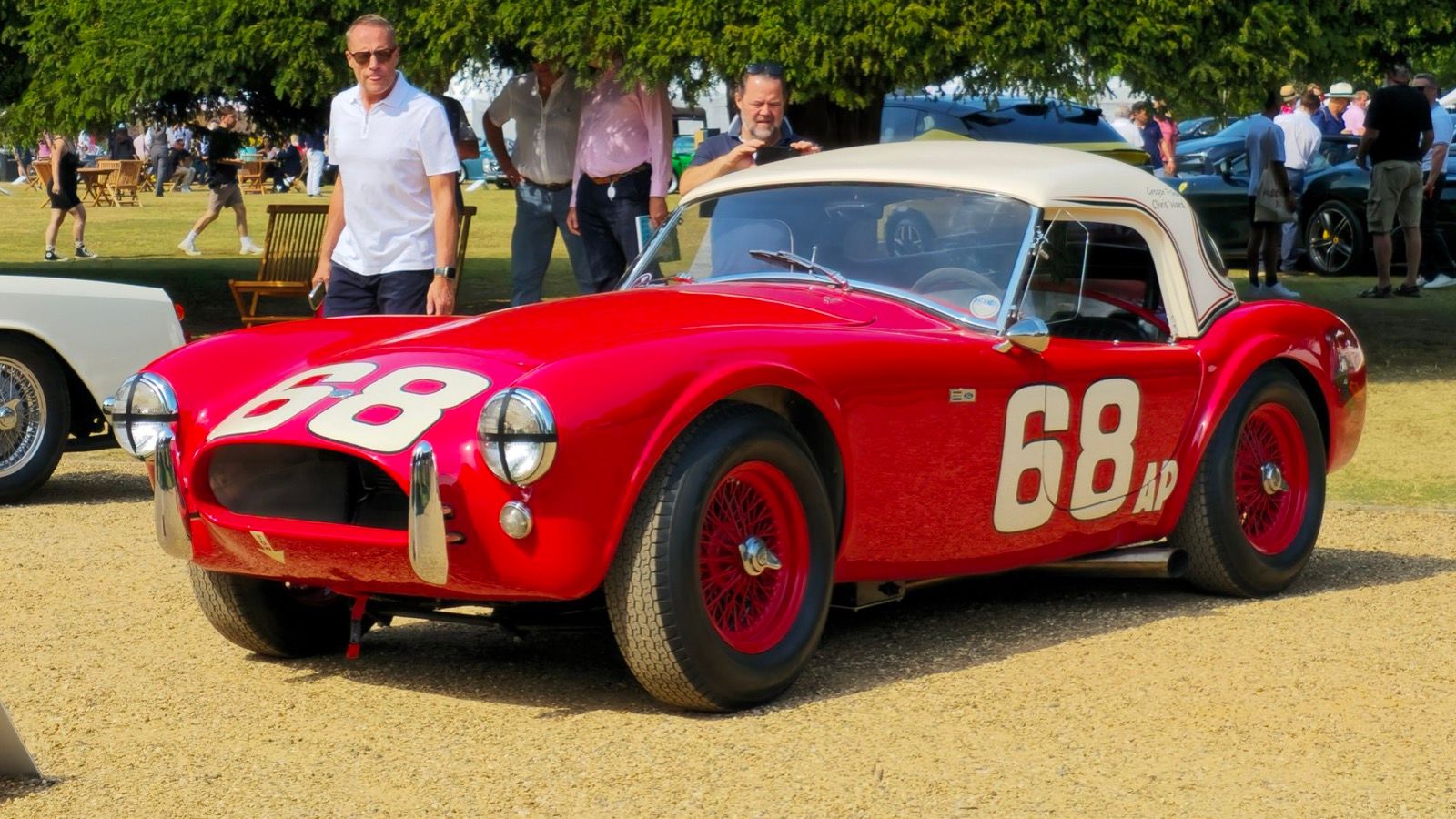
Mark I · 260 / early 289
Photo: “1962 Shelby Cobra MK I” by Calreyn88 / Wikimedia Commons, licensed under CC BY-SA 4.0. Cropped to 16:9.
Original Shelby cars on the Ace-derived chassis; first 75 used the 260 cu in Ford V8, remainder the 289; transverse-leaf suspension.
Mark II · 289 rack-and-pinion
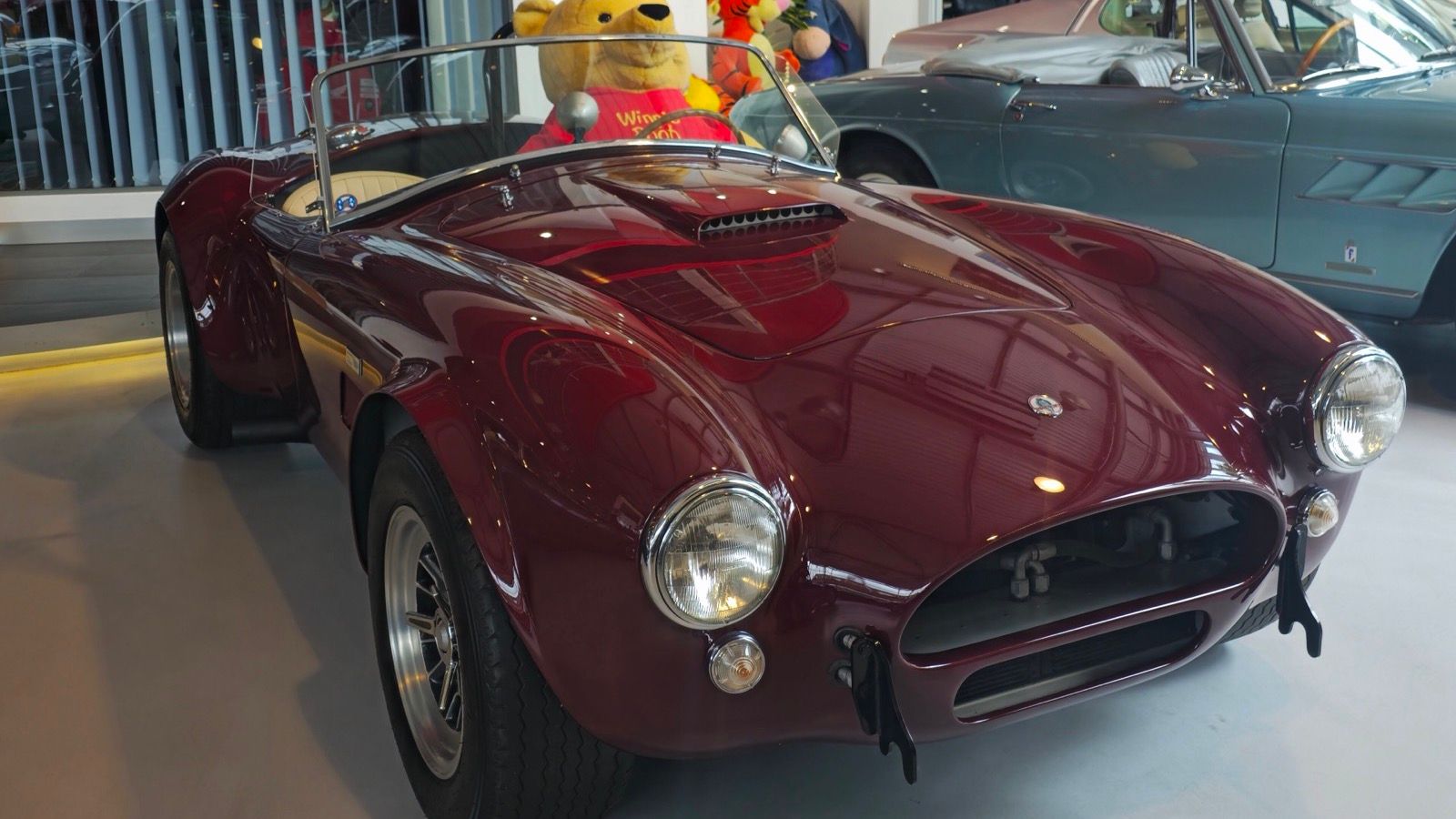
Photo: “1964 AC Cobra 289” by Calreyn88 / Wikimedia Commons, licensed under CC BY-SA 4.0. Cropped to 16:9.
Refined 289 production cars with rack-and-pinion steering; approximately 528 built — the most numerous of the original three marks.
Mark III · 427 big-block
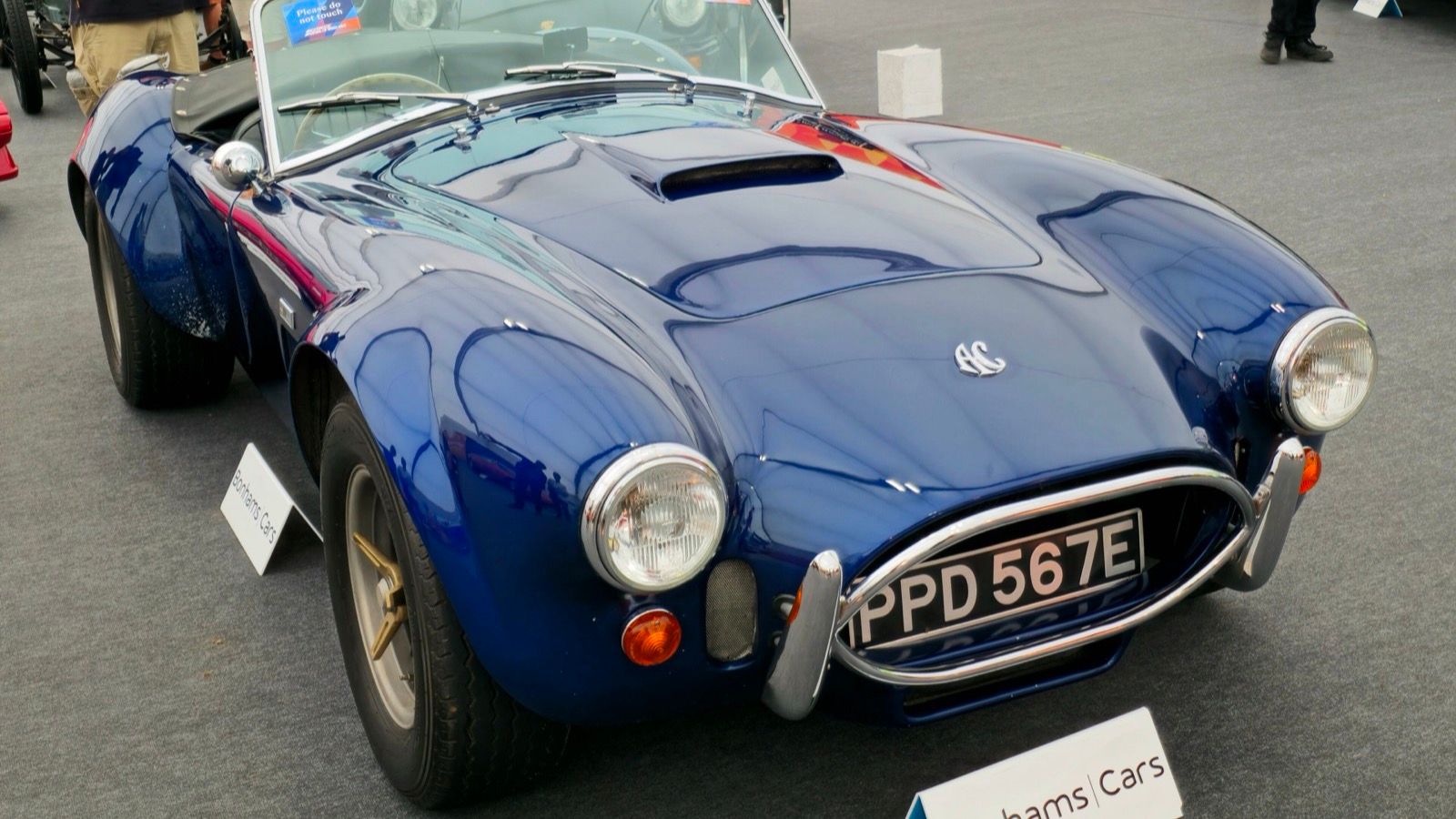
Photo: “1967 AC Cobra” by Calreyn88 / Wikimedia Commons — CC0 1.0. Cropped to 16:9.
Wider body, coil-spring suspension, and Ford's 7.0-litre (427) FE side-oiler V8 (~425 bhp); approximately 306 built including 428-engined variants.
Body styles
- Roadster
Notable special editions & performance variants
Shelby Daytona Coupé
A fastback closed-body aerodynamic derivative designed by Pete Brock; six were built and the type won the 1965 FIA GT Manufacturers' Championship.
289 Sports
AC's own European-market continuation of the small-block Cobra after the main Shelby American collaboration wound down.
Cobra Mk IV (Autokraft)
Factory-sanctioned continuation built by Brian Angliss at Brooklands using a Ford 5.0-litre V8; approximately 480 built across all versions.
Related models
Collect the nameplate
Find a scale model of the AC Cobra
Search Amazon across available years, colors, and scales. Exact releases vary, so confirm the listing before ordering.