
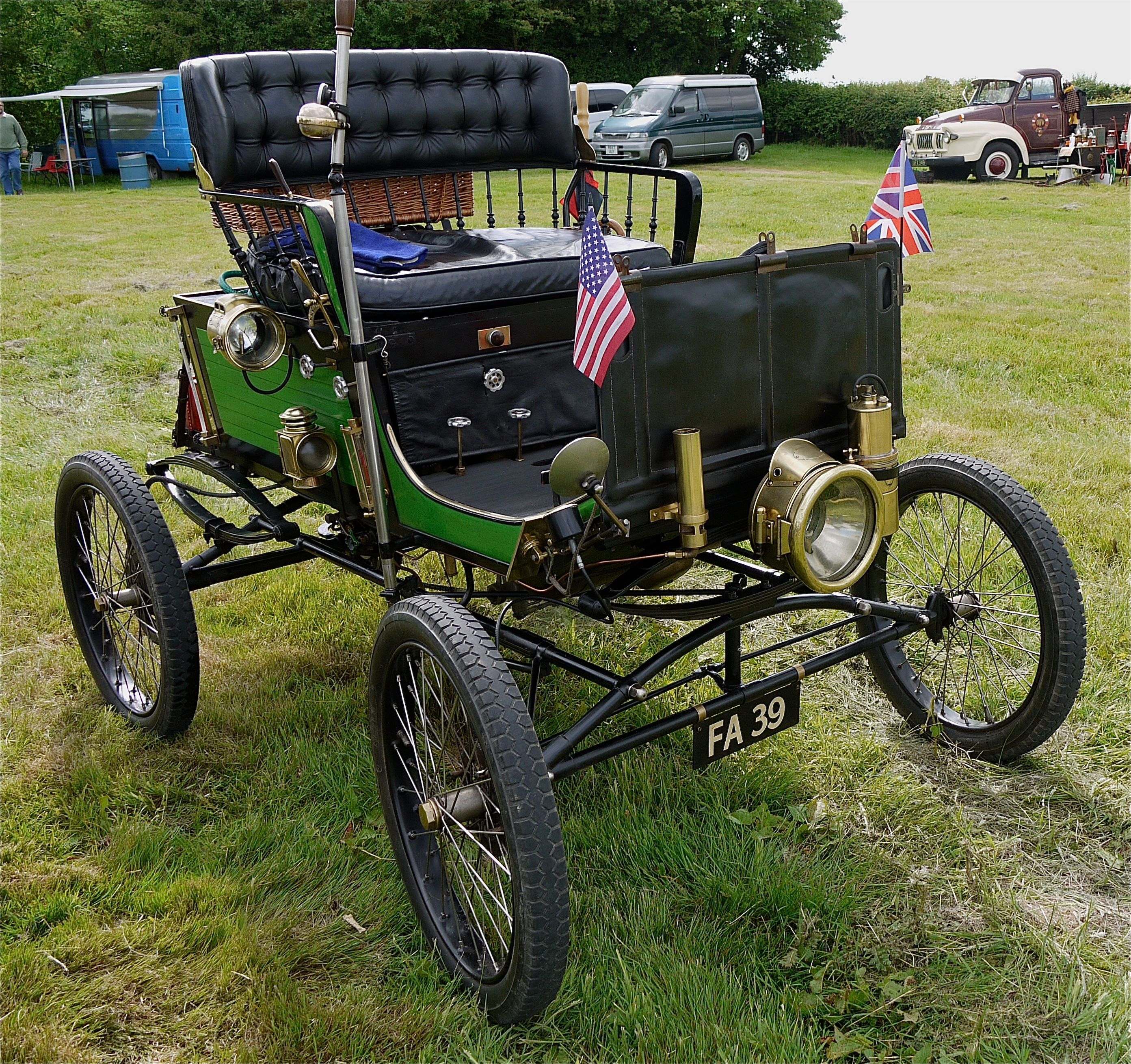
Locomobile Steam Runabout History
Locomobile's original product — a light, inexpensive Stanley-licensed steam runabout, over 4,000 built before the brand abandoned steam for gasoline.
Photo: “Locomobile Steam Car 1900 - Flickr - mick - Lumix.jpg” by Mick from Northamptonshire, England / Wikimedia Commons, licensed under CC BY 2.0
History
When John Brisben Walker and Amzi Lorenzo Barber incorporated the Locomobile Company of America in 1899, they did so by buying the Stanley brothers' steam-car business for $250,000. The product they inherited was a light, tiller-steered steam runabout with a vertical twin-cylinder engine under the seat — initially offered in a single inexpensive body style at around $600.
Built first in Watertown, Massachusetts and from 1900 in Bridgeport, Connecticut, the little steamers sold strongly for the era: more than 4,000 were produced between 1899 and 1902, briefly making Locomobile one of the highest-volume American carmakers. By 1901 the catalog had expanded to several body styles priced from roughly $600 to $1,400.
The cars were charming but flawed — slow to raise steam, prone to kerosene-burner fires, and limited to about 20 miles per small water tank. The Stanley brothers bought their original designs back and returned to steam-car building themselves, while Locomobile concluded its future lay elsewhere and switched entirely to gasoline-powered cars by 1904.
Generations
Steam Runabout (1899–1903) · Steam Runabout
Photo: “Locomobile Steam Car 1900 - Flickr - mick - Lumix.jpg” by Mick from Northamptonshire, England / Wikimedia Commons, licensed under CC BY 2.0
Light, tiller-steered Stanley-licensed steam runabout with a vertical twin-cylinder engine under the seat — the cheap car that launched Locomobile.
1900 Photo: “Locomobile Steam Car 1900 - Flickr - mick - Lumix.jpg” by Mick from Northamptonshire, England / Wikimedia Commons, licensed under CC BY 2.0
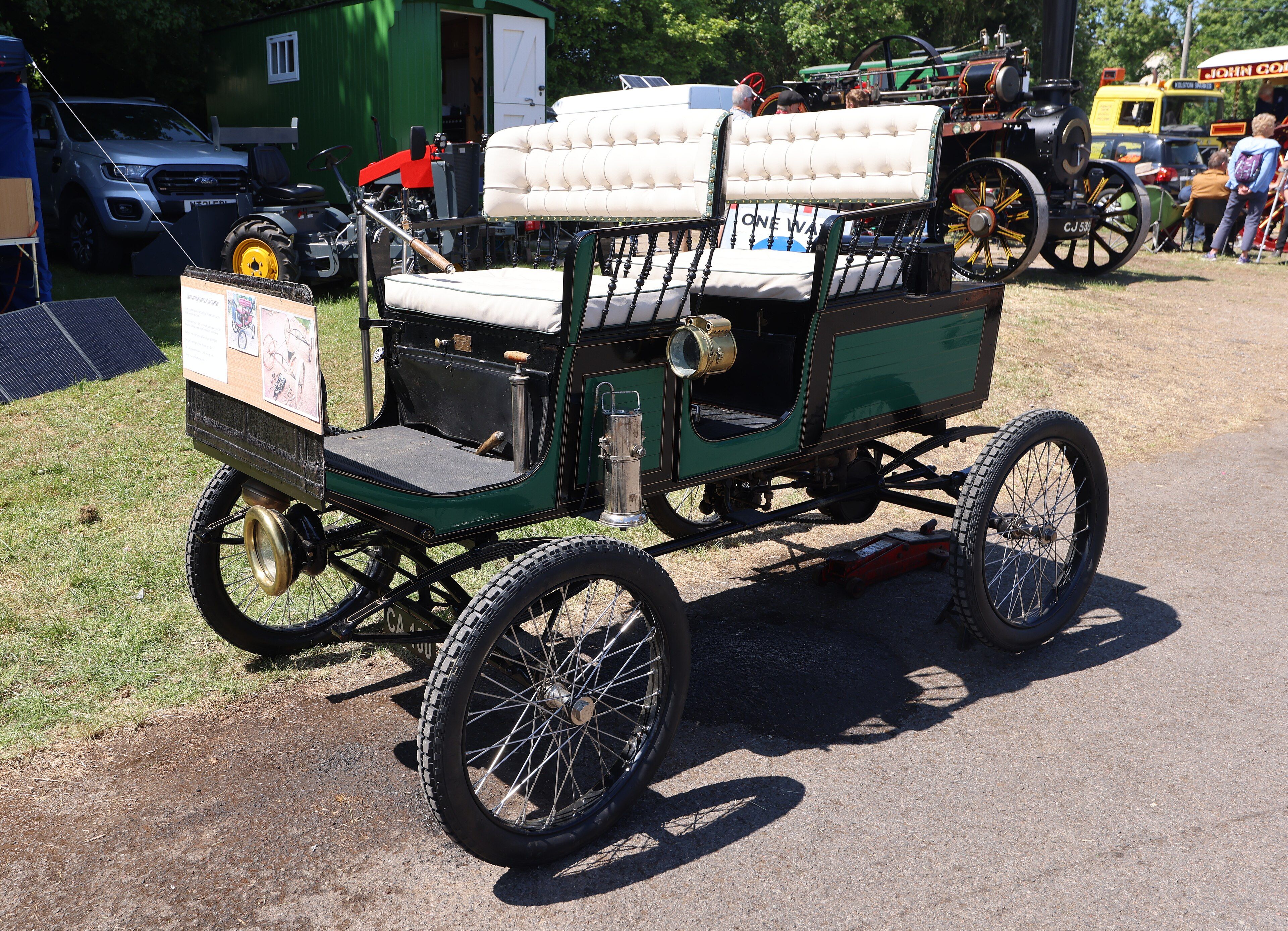
1902 Photo: “Locomobile LococSurrey 1902.JPG” by Geni / Wikimedia Commons, licensed under CC BY-SA 4.0
Related models
Collect the nameplate
Find a scale model of the Locomobile Steam Runabout
Search Amazon across available years, colors, and scales. Exact releases vary, so confirm the listing before ordering.