
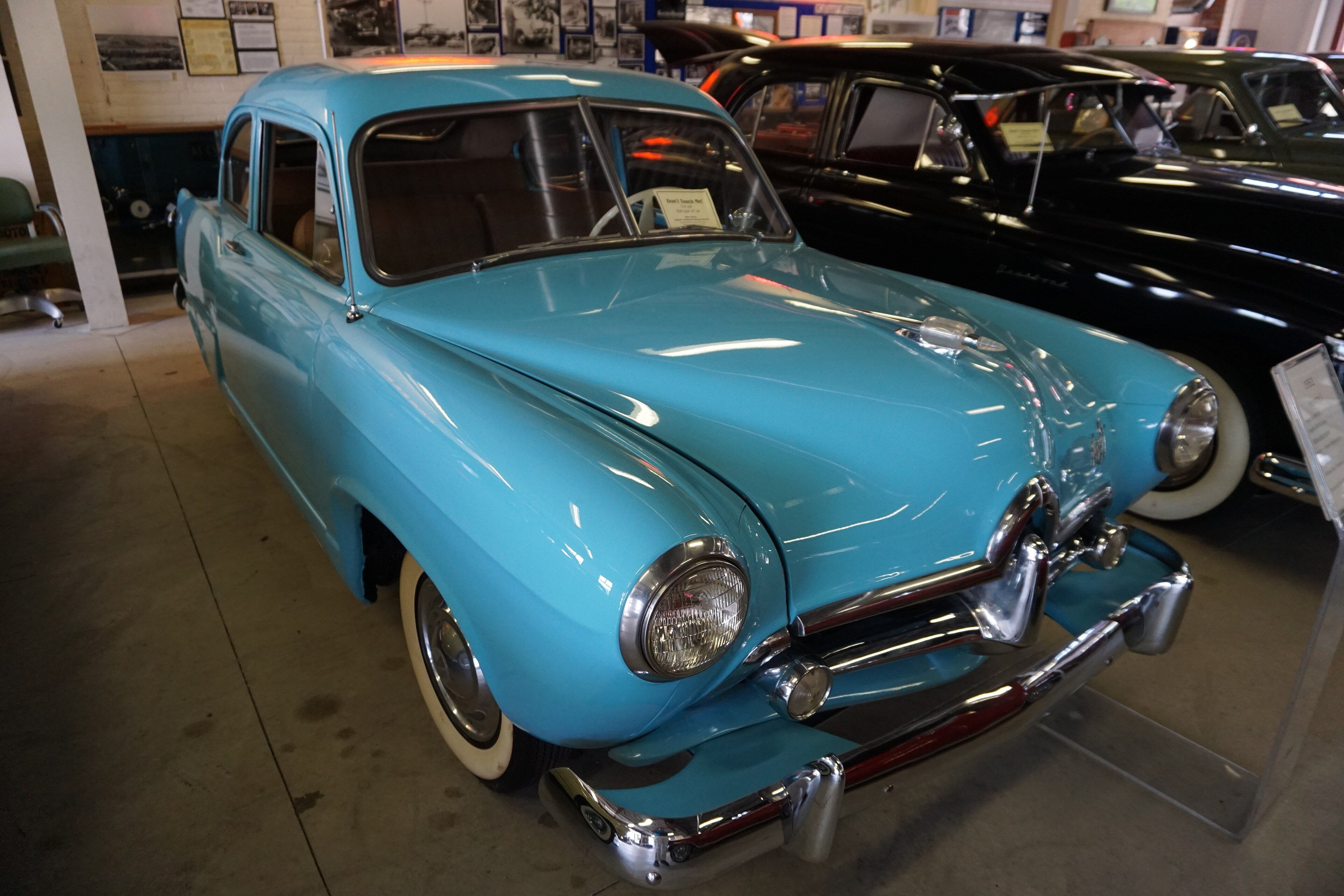
Henry J History
Kaiser-Frazer's stripped-down two-door compact sedan (1950–1954) — powered by Willys four- and six-cylinder engines and priced around $1,300 to reach first-time new-car buyers.
Photo: “Ypsilanti Automotive Heritage Museum May 2015 088 (1951 Henry J).jpg” by Michael Barera / Wikimedia Commons, licensed under CC BY-SA 4.0
History
The Henry J was conceived by industrialist Henry J. Kaiser as an economy compact in the spirit of Ford's Model T — a genuinely affordable new car aimed at buyers who could only afford used vehicles. Kaiser-Frazer secured a $44 million loan from the Reconstruction Finance Corporation to finance its development. Six-cylinder production began at the company's Willow Run, Michigan factory in July 1950, with four-cylinder cars following shortly after Labor Day; the public debut was September 28, 1950. The car was awarded Motor Trend's Most Important New Car award for 1951.
To reach its target price of around $1,300 (including federal excise tax), Kaiser stripped the Henry J aggressively. The earliest models notoriously lacked a trunk lid — luggage was loaded over the folding rear seat — and the cheapest version omitted the glovebox door and even interior door pulls. Power came from Willys-Overland-sourced engines: a 134.2 cu in (2.2 L) four-cylinder producing approximately 68 hp, or a 161 cu in (2.6 L) L-head six producing approximately 80 hp. The four-cylinder unit was interchangeable with the engine used in the CJ-3A Jeep. On a 100-inch wheelbase, the car weighed around 2,341 lbs and achieved notably strong fuel economy for the era.
Sales peaked in the 1951 model year at approximately 80,000 units, representing about 1.35% of the U.S. market, then declined every year thereafter. For 1952 Kaiser restyled the Henry J with a full-width grille and taillights integrated into rear fender fins, renaming the line Corsair (four-cylinder) and Corsair DeLuxe (six-cylinder). That year also saw the Vagabond, a better-equipped trim variant, and the launch of the Sears Allstate — a rebadged Henry J with a unique two-bar grille designed by Alex Tremulis (formerly of Tucker) sold exclusively through Sears, Roebuck and Co. Allstate sold only 1,566 units in 1952 and 797 in 1953 before Sears discontinued it. By the 1954 model year, Henry J sales had collapsed to just 1,123 — largely leftover 1953-production cars titled as 1954s. After Kaiser's acquisition of Willys-Overland in 1953 and the division's renaming to Willys Motors, the Henry J was dropped entirely. It is remembered today as a well-intentioned people's car that misjudged a postwar American market hungry for comfort and size.
Generations
First generation · Standard / DeLuxe
Photo: “Ypsilanti Automotive Heritage Museum May 2015 088 (1951 Henry J).jpg” by Michael Barera / Wikimedia Commons, licensed under CC BY-SA 4.0
Launch cars introduced September 28, 1950: bare-bones Standard (four-cylinder) and DeLuxe (six-cylinder) 2-door sedans; the 1951 model year was the production high point at roughly 80,000 units.
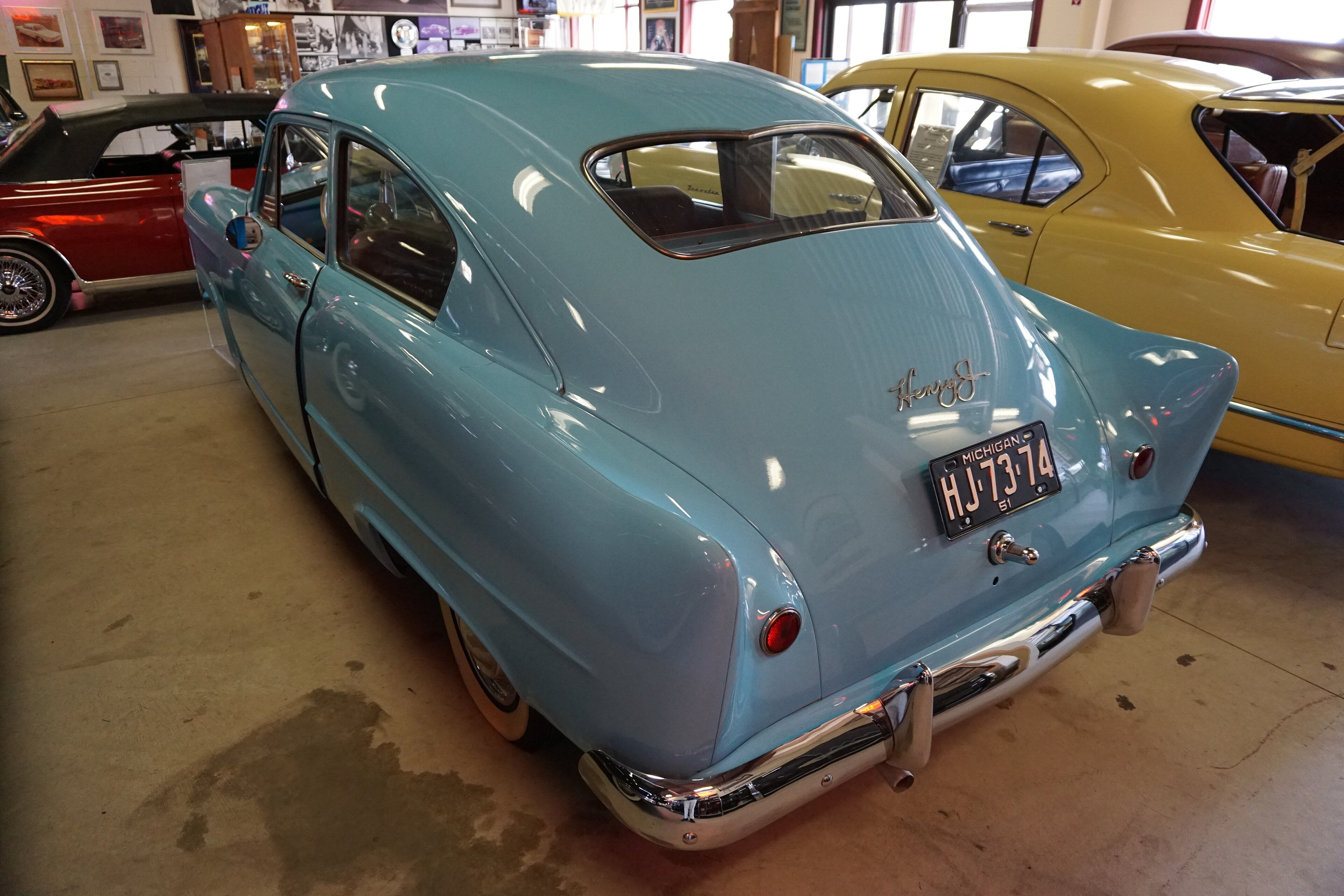
1951 Photo: “Ypsilanti Automotive Heritage Museum May 2015 090 (1951 Henry J).jpg” by Michael Barera / Wikimedia Commons, licensed under CC BY-SA 4.0
Second generation · Corsair / Corsair DeLuxe
Restyled and renamed for 1952 with a full-width grille and integrated fin taillights; quality somewhat improved but prices rose and sales fell sharply through the final 1954 model year.
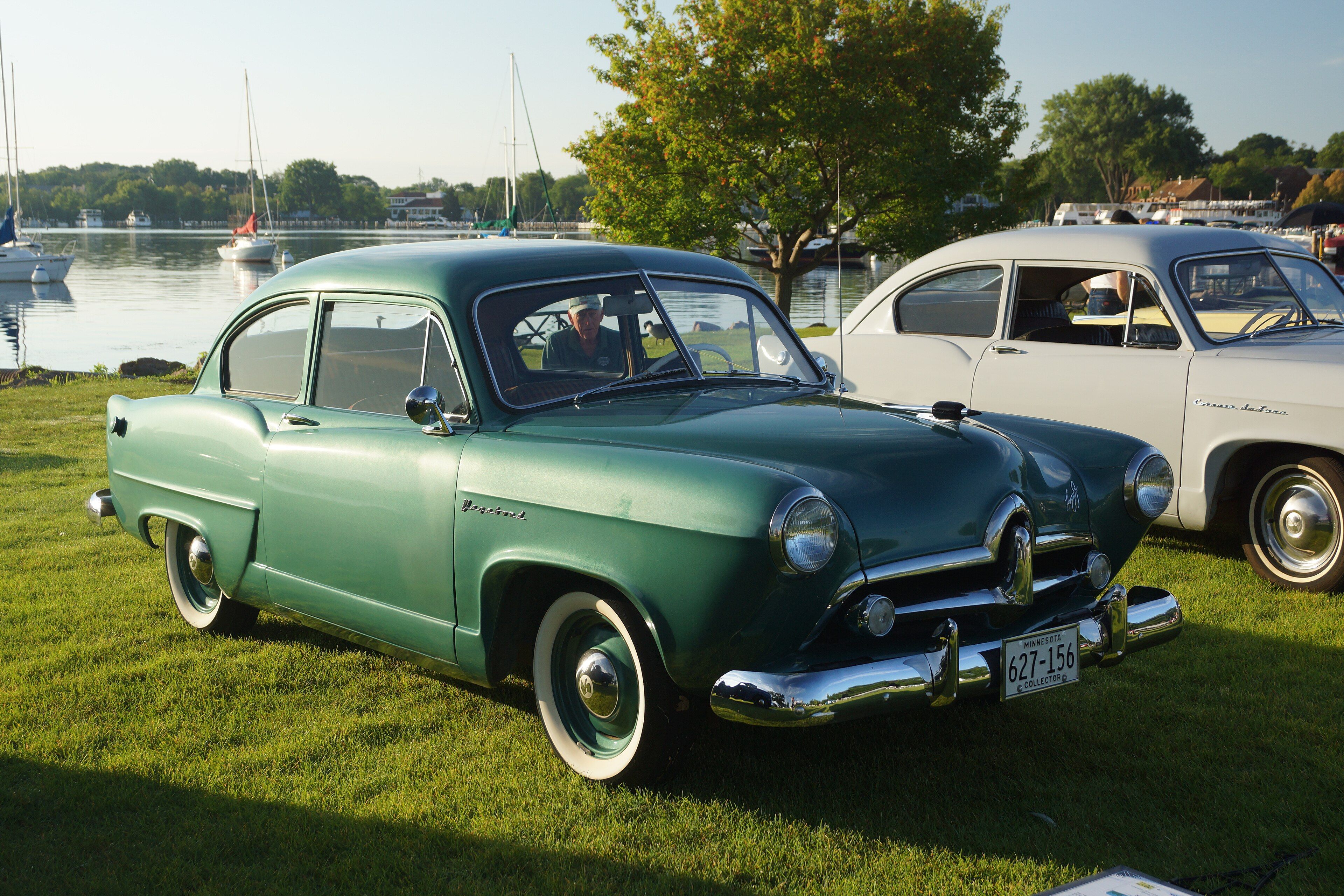
1952 Photo: “1952 Henry J Vagabond (35905034390).jpg” by Greg Gjerdingen from Willmar, USA / Wikimedia Commons, licensed under CC BY 2.0
Body styles
- 2-door sedan
Notable special editions & performance variants
Vagabond
A better-equipped 1952 variant with upgraded interior trim and a continental spare tire; approximately 7,017 were sold.
Allstate (Sears)
A Henry J rebadged for exclusive sale through Sears, Roebuck and Co., featuring a unique two-bar grille and jet-style hood ornament designed by ex-Tucker stylist Alex Tremulis; only 2,363 total were sold across both model years.
Related models
Collect the nameplate
Find a scale model of the Henry J
Search Amazon across available years, colors, and scales. Exact releases vary, so confirm the listing before ordering.