
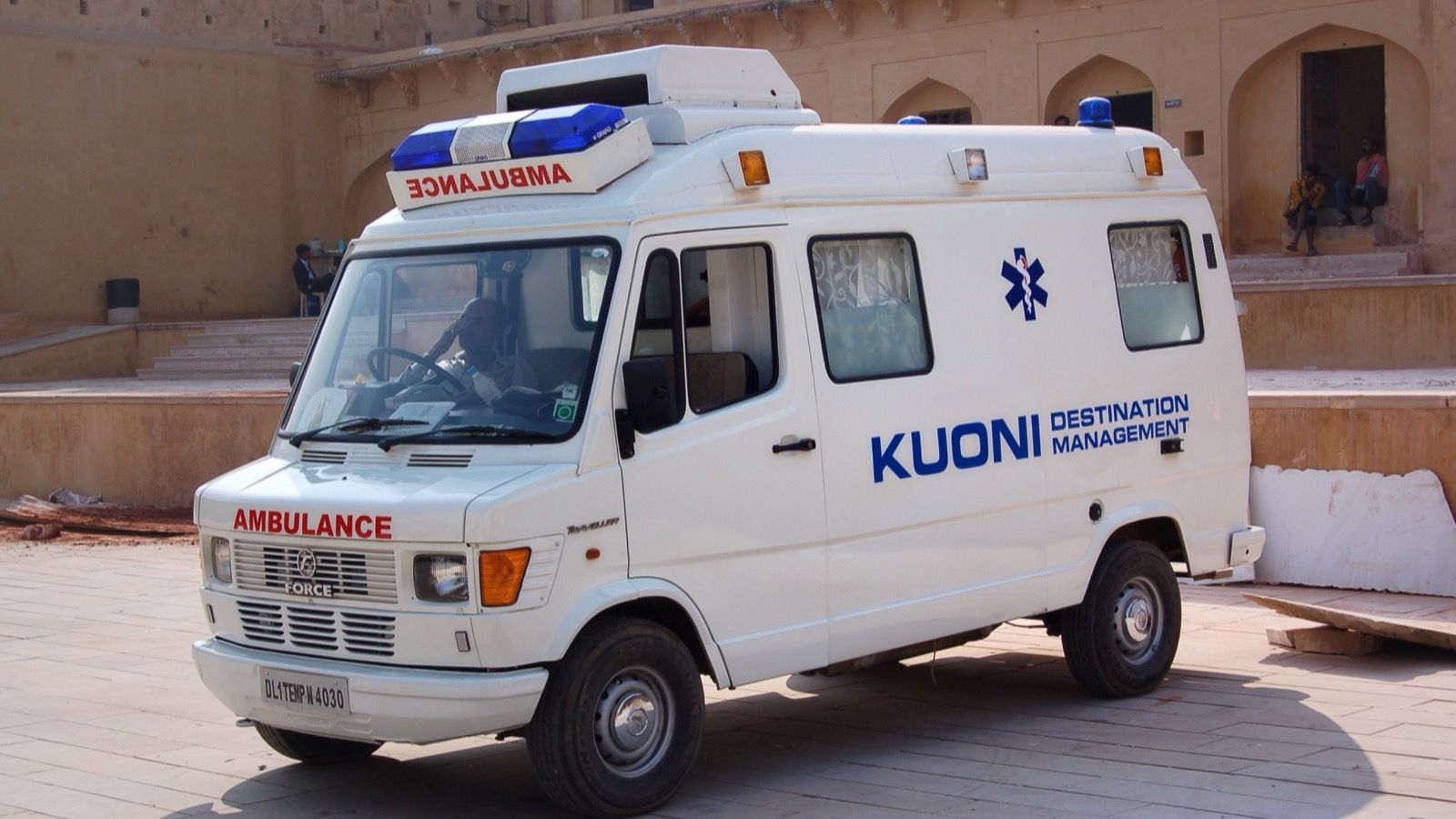
Force Motors Traveller History
India's dominant light-commercial passenger van — launched in 1987 at the Pithampur plant and commanding over 65% of its segment for decades.
Photo: “Force Traveller Kuoni ambulance, 2008” by Bahnfrend / Wikimedia Commons, licensed under CC BY-SA 3.0. Cropped to 16:9.
History
The Traveller traces its roots to 1987 when Force Motors (then Bajaj Tempo) inaugurated a dedicated plant at Pithampur, Madhya Pradesh, designed and built to Daimler-Benz specifications for the Tempo Traveller. The plant reflected the company's long-standing technology relationship with Mercedes — Force had been importing and assembling Mercedes diesel engines since 1997, and the van was engineered with that drivetrain expertise in mind.
Sold for years as the Tempo Traveller, the line was rebranded Force Traveller in 2005 when the company adopted its current name. A major platform update arrived in 2012 with a wider monocoque body, improving passenger space and ride quality while retaining the rugged ladder-frame underpinnings that had made the original popular in India's varied road conditions.
Available across multiple wheelbases (3,050 mm, 3,350 mm, and 4,020 mm) in configurations ranging from 9 to 25 seats, the Traveller has served as a school bus, ambulance, staff shuttle, and intercity transport across India. Its segment dominance of over 65% has made it the most recognised product in Force Motors' lineup.
Generations
First generation (Tempo Traveller) · Tempo Traveller
Original ladder-frame van built at Pithampur to Daimler-Benz specs; sold under the Bajaj Tempo banner.
Second generation (Force Traveller) · Force Traveller
Photo: “Force Traveller Kuoni ambulance, 2008” by Bahnfrend / Wikimedia Commons, licensed under CC BY-SA 3.0. Cropped to 16:9.
Rebranded alongside the 2005 corporate rename; same platform, updated badging and incremental spec improvements.
Third generation (monocoque) · Traveller (monocoque)
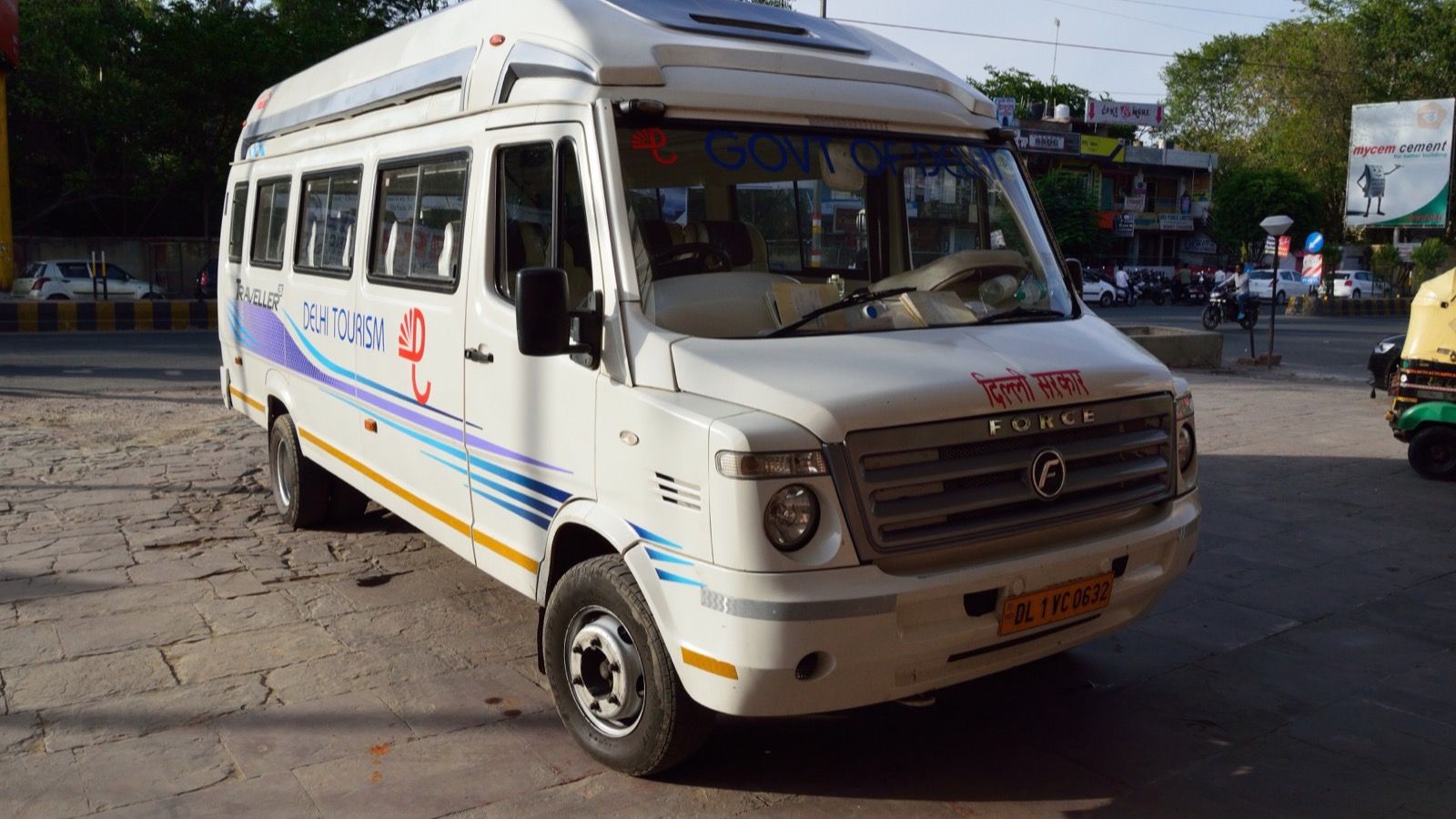
Photo: “Force Motors - Traveller 26 - Agra 2014-05-14 4222” by Biswarup Ganguly / Wikimedia Commons, licensed under CC BY 3.0. Cropped to 16:9.
Wider monocoque body launched in 2012; improved interior space and crash behaviour; BS VI-compliant variants current.
Body styles
- Minibus
- Van
- School bus
- Ambulance
- Staff bus
Related models
Collect the nameplate
Find a scale model of the Force Motors Traveller
Search Amazon across available years, colors, and scales. Exact releases vary, so confirm the listing before ordering.