
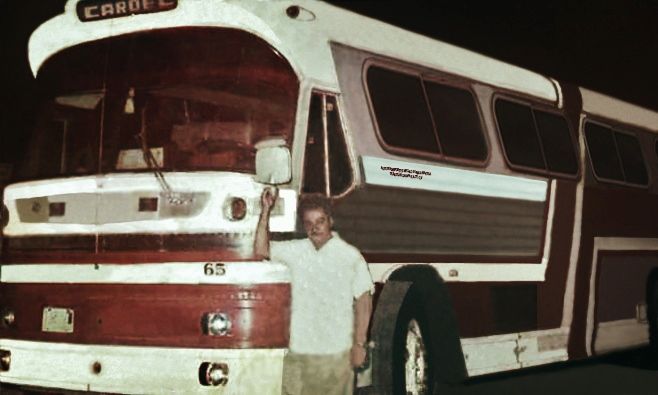
DINA 311 / Olímpico History
Mexico's most famous intercity coach — a licensed Flxible body built from 1961 to 1987, renamed Olímpico for the 1968 Mexico City Olympics.
Photo: “TEZIUTECO OLIMPICO.jpg FINAL - copia.jpg” by IVAN ARQ. 80 / Wikimedia Commons, licensed under CC BY-SA 4.0
History
In 1961, DINA entered a licensing agreement with American bus maker Flxible, gaining the rights to produce two of its designs in Mexico: the Flxible Hi-Level, marketed in Mexico as the DINA 311 (nicknamed 'El Jorobado' — 'the Hunchback' for its raised rear deck), and the Flxliner, which became the Olympic Dina.
The Flxliner-derived model was officially renamed the DINA Olímpico in 1968 to honor the Mexico City Olympic Games. When Flxible exited the intercity-bus market in 1969, DINA purchased the manufacturing tooling outright and continued producing the Olímpico through 1987 — a production run of roughly 26 years that made it one of the longest-lived single bus designs anywhere. The Olímpico used a 'Torsilastic' suspension and was powered by GM 8V71 or Cummins NT/NH engines with a Spicer manual transmission.
Surviving Olímpico coaches became a fixture of Mexico's long-distance bus network well into the 1990s, operated by carriers such as Omnibus de Mexico, and the model is now a prized collector's piece among transit historians.
Generations
First generation · DINA 311 / Hunchback
Flxible-licensed Hi-Level body built under the DINA 311 name; the raised rear roofline earned the 'Jorobado' nickname.
Second generation · Olímpico
Photo: “TEZIUTECO OLIMPICO.jpg FINAL - copia.jpg” by IVAN ARQ. 80 / Wikimedia Commons, licensed under CC BY-SA 4.0
Renamed Olímpico for the 1968 Mexico City Olympics; DINA purchased Flxible's tooling outright in 1969 and built this generation through 1987.
Body styles
- Intercity coach
Related models
Collect the nameplate
Find a scale model of the DINA 311 / Olímpico
Search Amazon across available years, colors, and scales. Exact releases vary, so confirm the listing before ordering.