
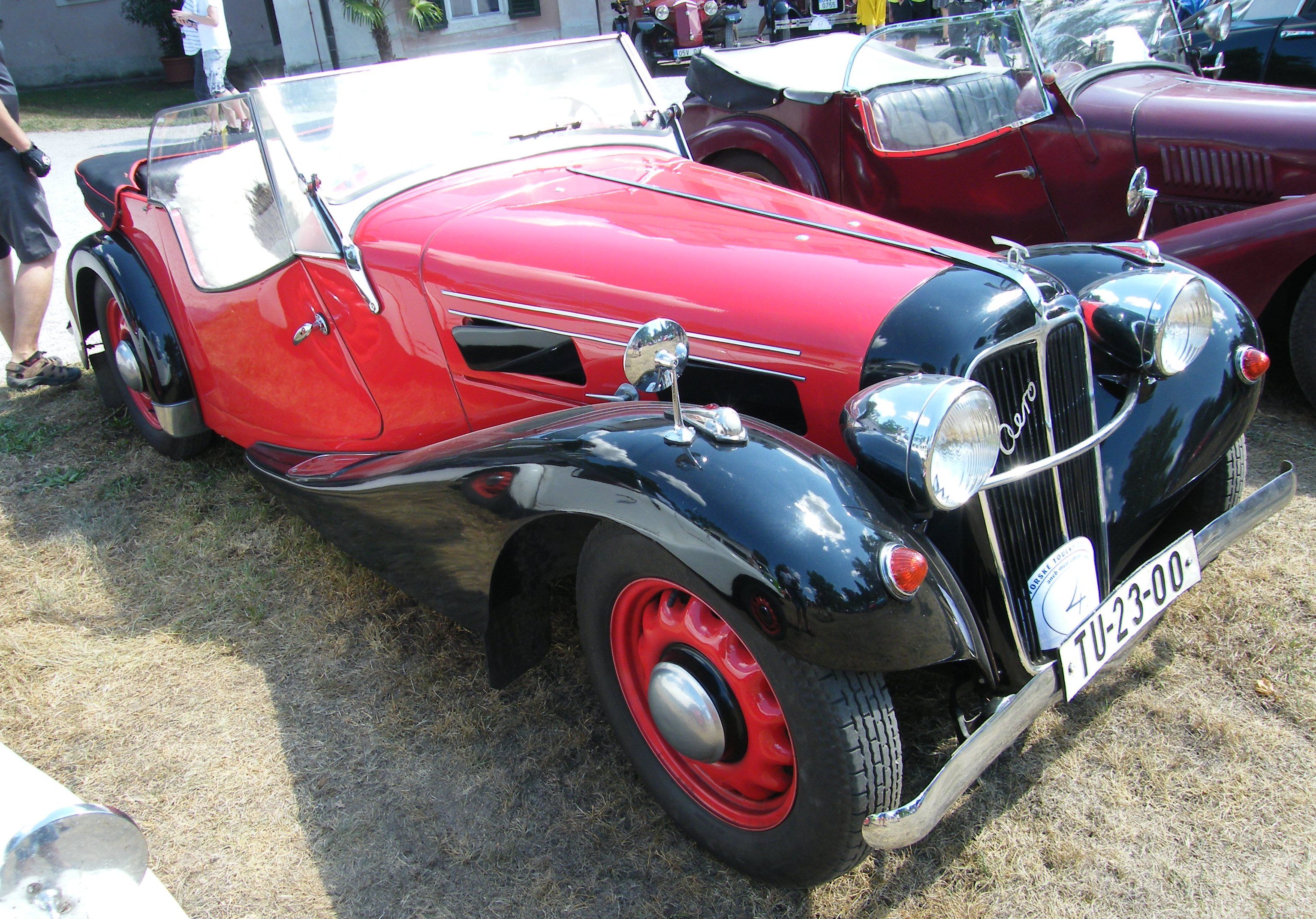
Aero Type 30 History
Aero's most successful model — front-wheel drive, all-independent suspension, 998 cc twin two-stroke; over 8,000 built including a post-war run.
Photo: “Aero 30 red” by Addvisor / Wikimedia Commons, licensed under CC BY-SA 4.0
History
Launched in 1934, the Type 30 was a landmark in the Aero story and among the more technically advanced small cars of 1930s Czechoslovakia. It adopted front-wheel drive and fully independent suspension across all four corners — features still rare on economy cars of the era — driven by a 998 cc twin-cylinder two-stroke engine developing 26 bhp and capable of 105 km/h (65 mph).
The model proved immediately popular and was offered in multiple coachwork styles including roadster, cabriolet, coupé, and closed sedan forms. A third place in class on the 1934 Monte Carlo Rally helped establish its reputation, and Aero cars won numerous domestic and regional competitive events with well-known Czech drivers at the wheel.
Wartime halted mainstream production in 1940 after 7,780 units (some sources cite 8,280 when minor variants are included), but the Type 30 was briefly revived post-war with a revised radiator design. Approximately 500 additional cars were produced between 1945 and 1947 — some exported to France and Belgium — before Czechoslovakia's nationalisation of its motor industry ended the marque entirely.
Generations
Pre-war production · Type 30 (1934–1940)
Photo: “Aero 30 red” by Addvisor / Wikimedia Commons, licensed under CC BY-SA 4.0
Original FWD, all-independent-suspension run; approximately 7,780 built across roadster, cabriolet, coupé, and sedan body styles.
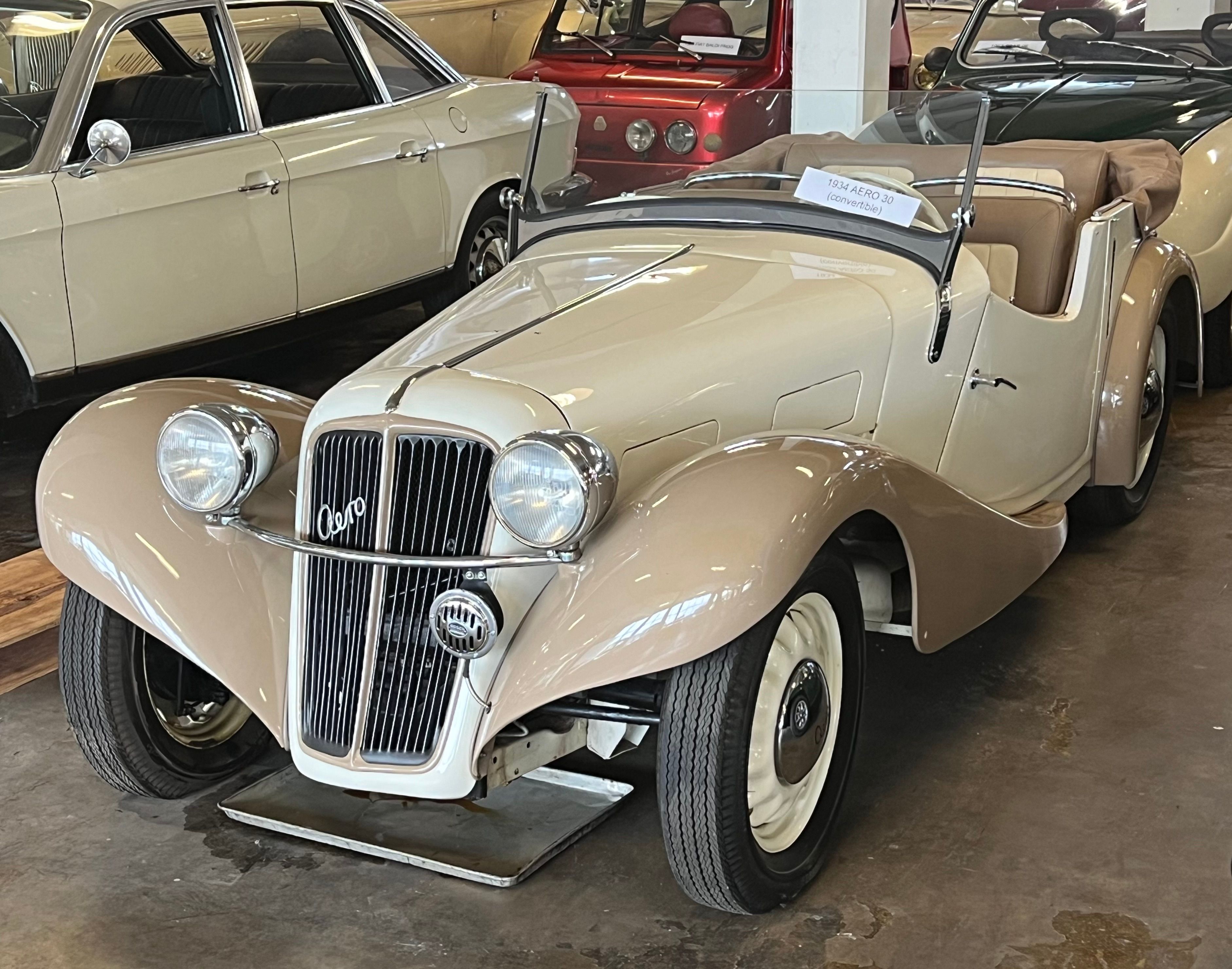
1934 Photo: “1934 Aero 30 Lane Motor Museum” by TaurusEmerald / Wikimedia Commons, licensed under CC BY-SA 4.0
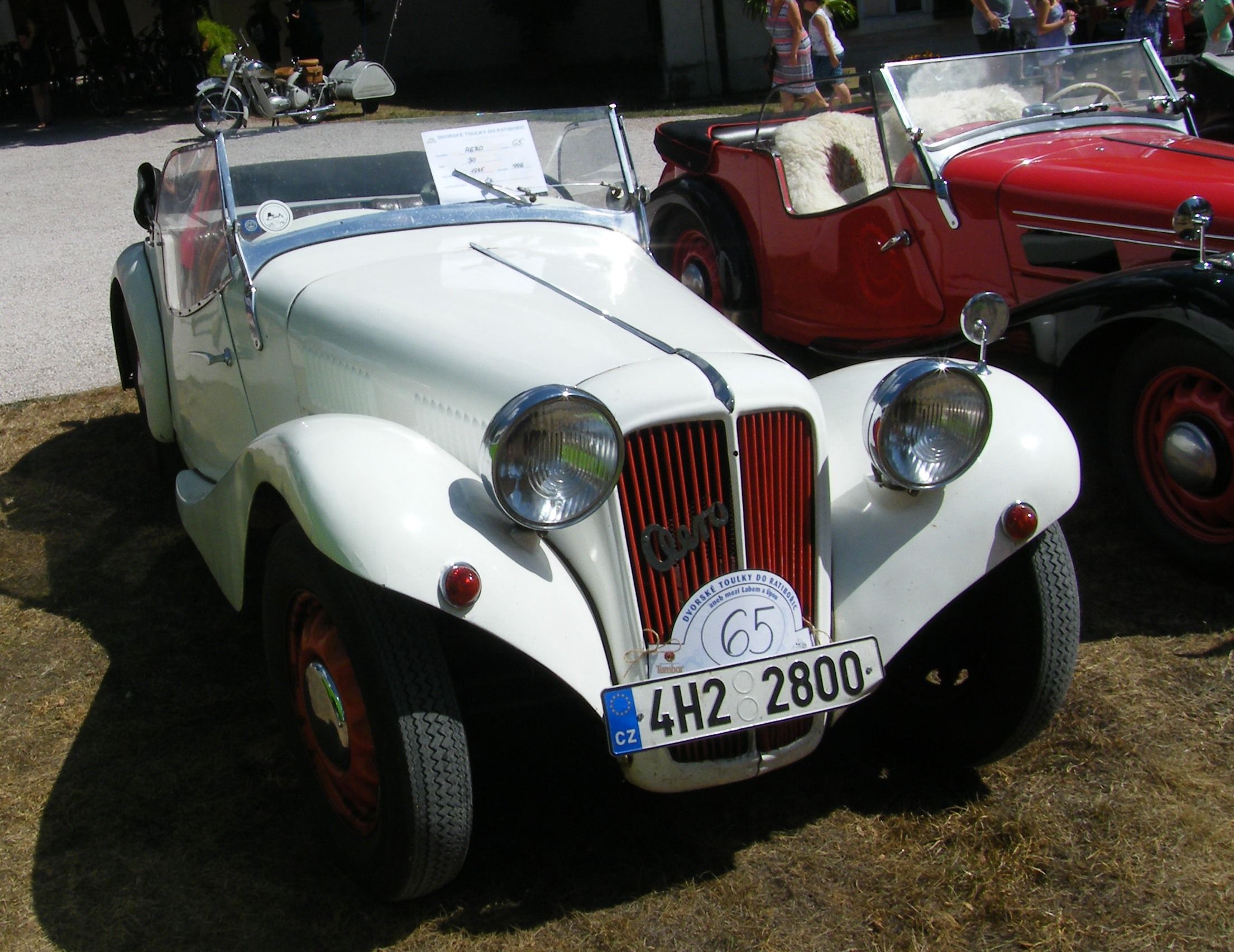
1935 Photo: “Aero 30 (1935)” by Addvisor / Wikimedia Commons, licensed under CC BY-SA 4.0
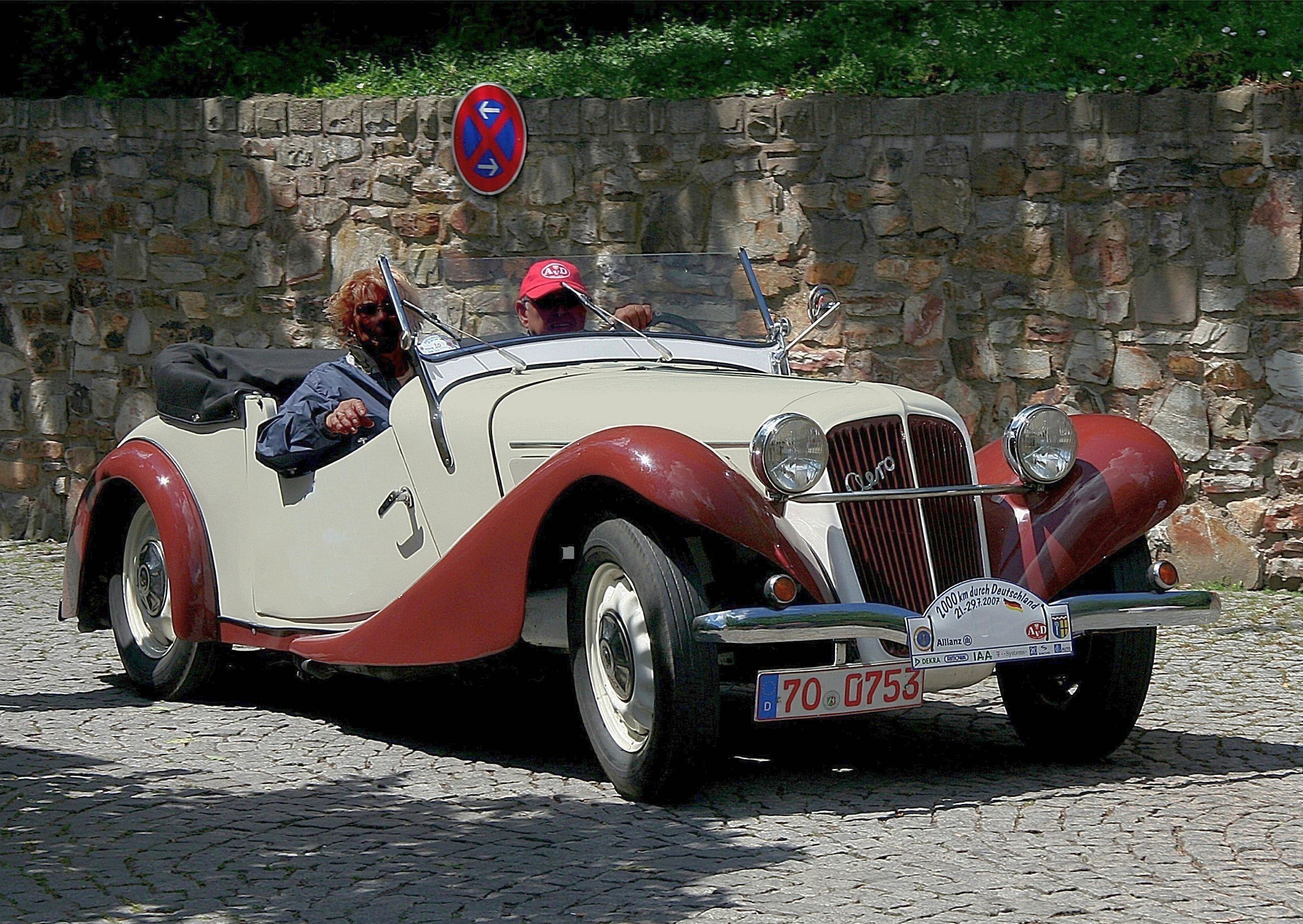
1936 Photo: “Aero 30 Roadster, Bj. 1936, 992 cm³, 30 PS” by Lothar Spurzem / Wikimedia Commons, licensed under CC BY-SA 2.0 de
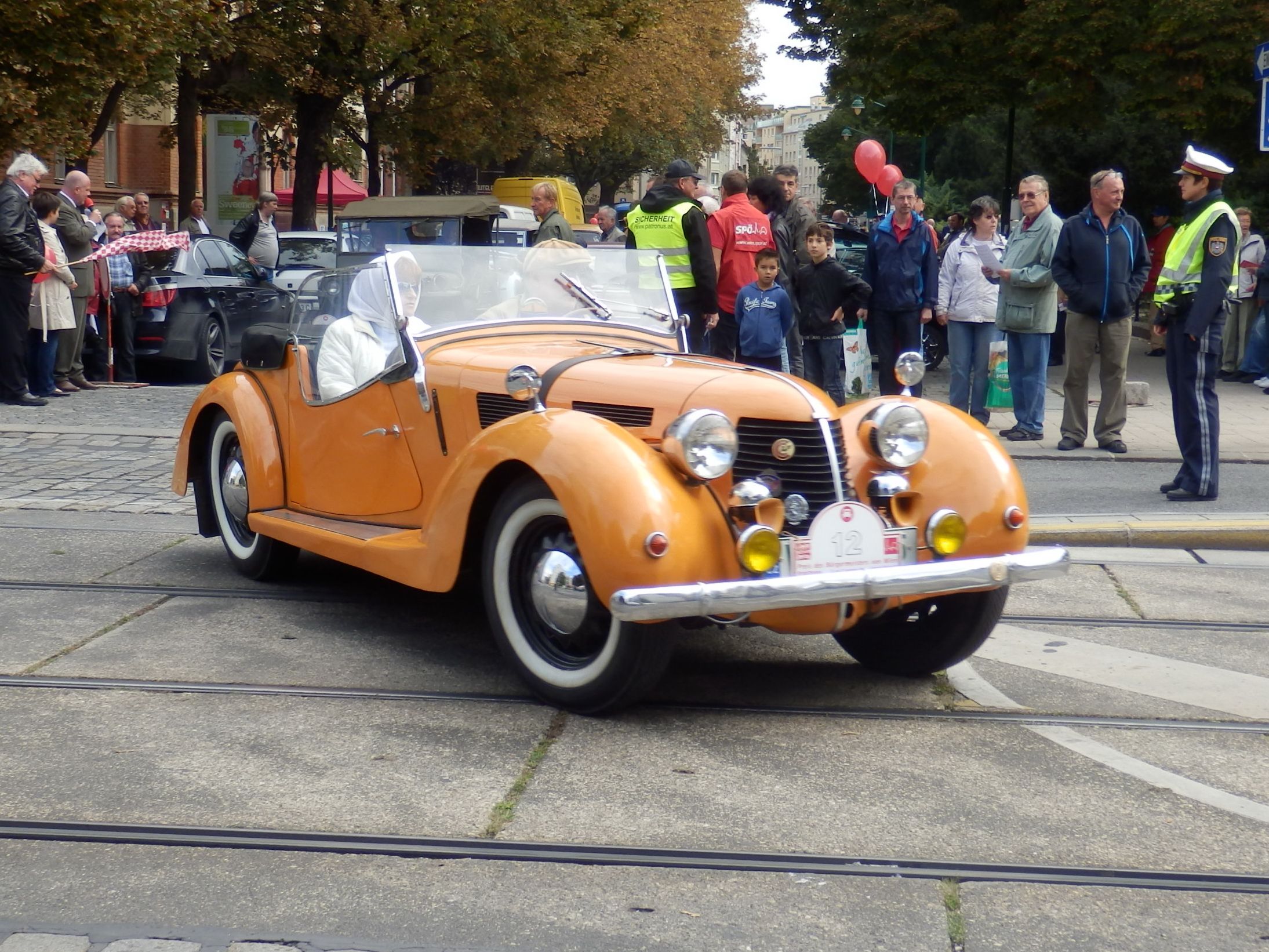
1939 Photo: “Aero 30 "Sodomka" 1939 (10169203523)” by René / Wikimedia Commons, licensed under CC BY 2.0
Post-war continuation · Type 30 (revised radiator)
Approximately 500 post-war cars with a revised radiator design; exported to France and Belgium before nationalisation ended production.
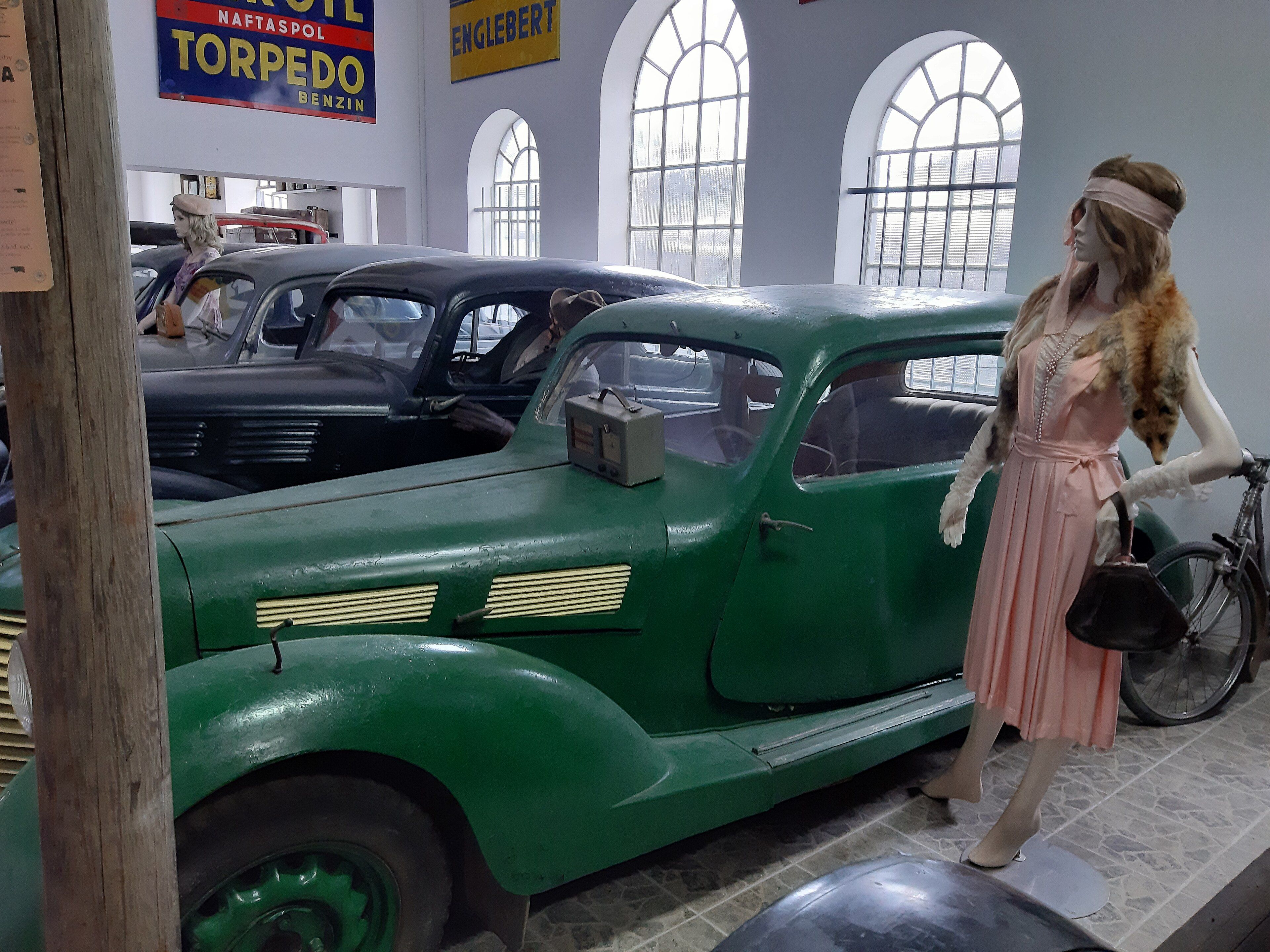
1947 Photo: “Aero 30 (1947) left” by Addvisor / Wikimedia Commons, licensed under CC BY-SA 4.0
Body styles
- Roadster
- Cabriolet
- Sedan
- Coupé
Related models
Collect the nameplate
Find a scale model of the Aero Type 30
Search Amazon across available years, colors, and scales. Exact releases vary, so confirm the listing before ordering.