
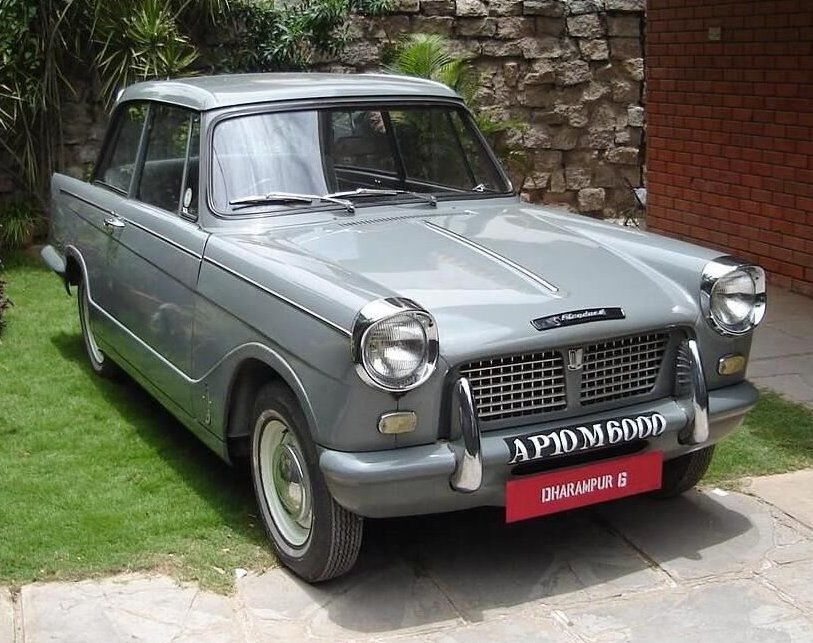
Standard Motors (India) Standard Herald History
India's adaptation of the Triumph Herald — three Mark variants with rising local content, including a unique four-door body developed in Madras.
Photo: “Standard Herald.jpg” by eskaycee / Wikimedia Commons, licensed under CC BY-SA 2.0
History
In 1961 Standard Motor Products of India began assembling the Triumph Herald as the Standard Herald, initially dependent on British-sourced parts. By 1965, engines, gearboxes, and axles were being manufactured locally, marking a significant step toward indigenization.
The Mark II (1966) adopted Vitesse-inspired front styling, while the Mark III (1968–1971) broke entirely from the British two-door body: engineers in Madras developed a unique four-door configuration to compete with the Hindustan Ambassador, achieving a top speed of around 109–112 km/h. A small run of estate variants called the 'Companion', with fibreglass roofs, was built in 1969–1970.
The Herald line was phased out after 1971 when Standard parted ways with Triumph. Its platform and 948 cc engine directly underpinned the successor Gazel, giving the Madras factory continuity as it transitioned to fully Indian-designed bodywork.
Generations
Mark I
Photo: “Standard Herald.jpg” by eskaycee / Wikimedia Commons, licensed under CC BY-SA 2.0
British Triumph Herald assembled in Madras; largely imported parts in early years, engine/gearbox/axle localized by 1965.
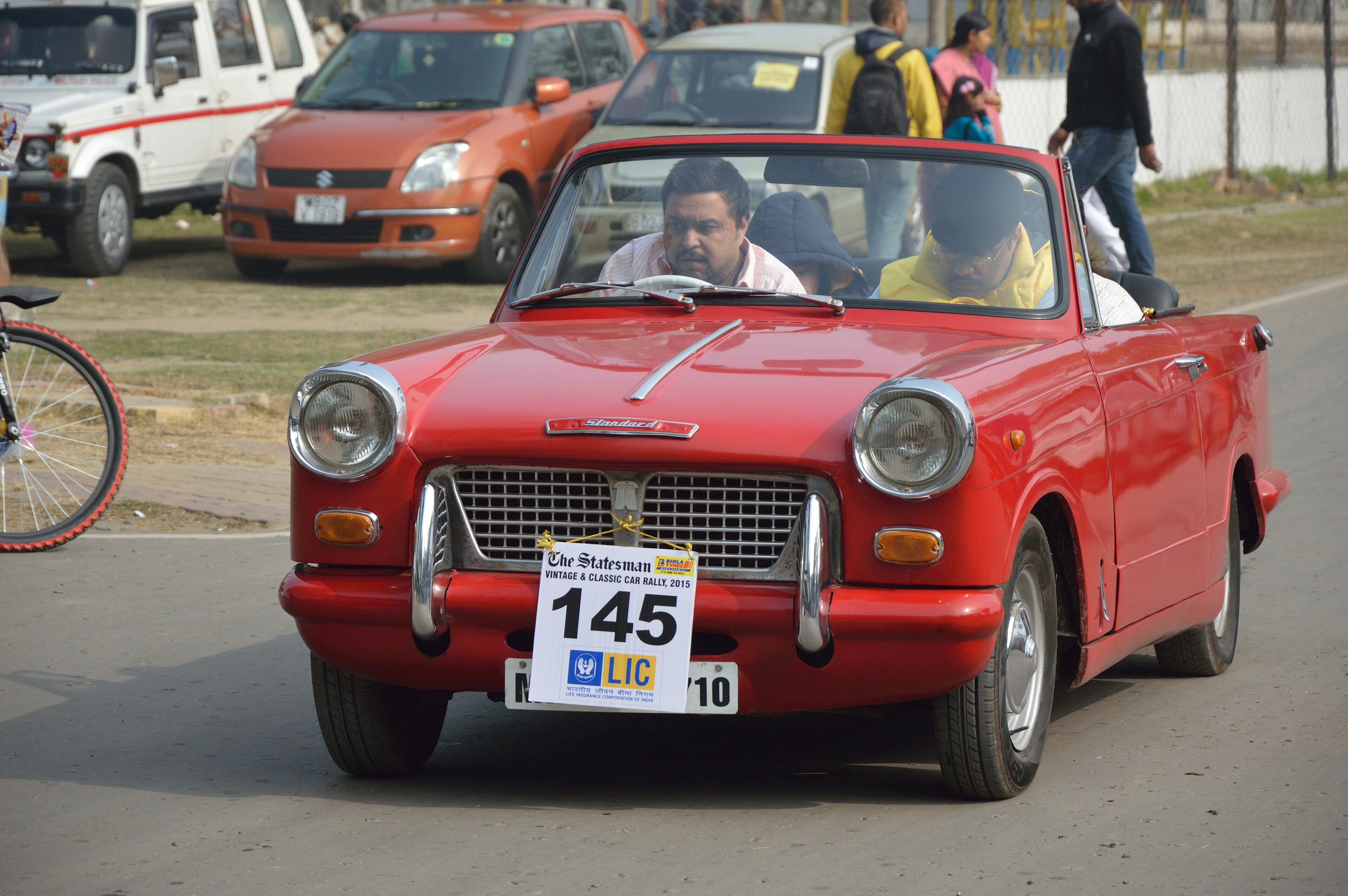
1963 Photo: “Standard - Herald - 1963 - 2344 cc - 4 cyl - Kolkata 2015-01-11 4164.JPG” by Biswarup Ganguly / Wikimedia Commons, licensed under CC BY 3.0
Mark II
Vitesse-inspired front styling grafted onto the Herald body; mechanical specification otherwise unchanged.
Mark III
Unique four-door body engineered in Madras; top speed ~110 km/h; small 'Companion' estate variant (1969–1970) with fibreglass roof.
Body styles
- Sedan
- Estate (Companion)
Related models
Collect the nameplate
Find a scale model of the Standard Motors (India) Standard Herald
Search Amazon across available years, colors, and scales. Exact releases vary, so confirm the listing before ordering.