
Saab 96 History
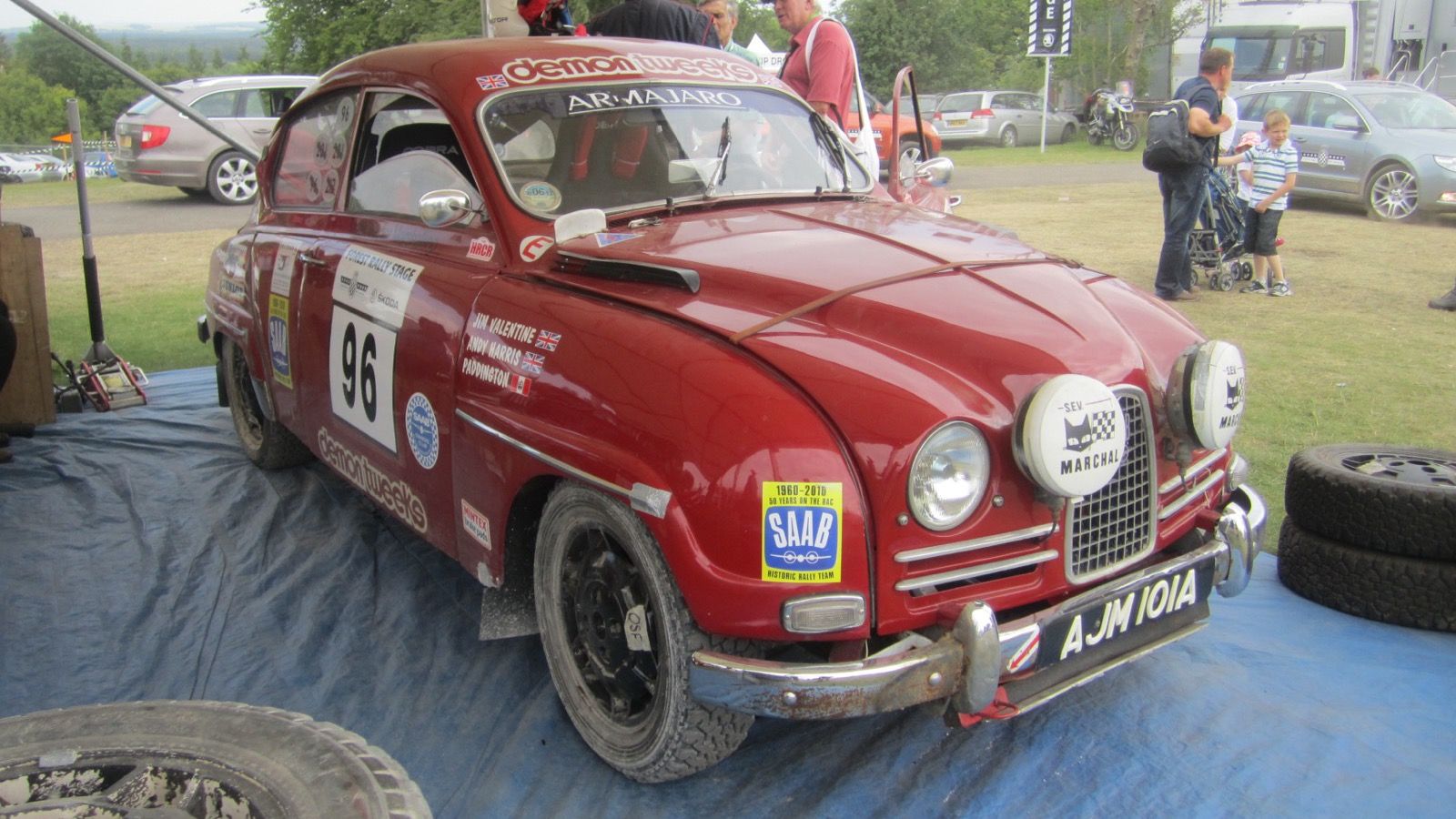
Saab's best-known classic — a 20-year production run that won the Monte Carlo Rally back-to-back in 1962 and 1963 under Erik Carlsson.
Photo: “Saab 96 1962.jpg” by Sicnag / Wikimedia Commons, licensed under CC BY 2.0. Cropped to 16:9.
History
Introduced in 1960 as a evolution of the 93, the Saab 96 retained the distinctive three-door fastback body and front-wheel-drive layout but gained a larger 841 cc two-stroke engine. The car quickly proved its mettle in international rallying: Swedish driver Erik Carlsson ('Mr. Saab') won the Monte Carlo Rally outright in 1962 and 1963, putting Saab on the global motorsport map and cementing the 96's reputation for tenacity and traction.
The two-stroke engine, while punchy and light, required oil to be mixed with the petrol. Saab addressed the longer-term limitation in 1967 by fitting the 1,498 cc Ford Taunus V4 engine — a four-stroke unit that retained front-wheel drive but offered cleaner running and more torque. This V4 96 remained in production until 1980, giving the model a remarkable 20-year life span. Nearly 550,000 Saab 96s were built in total across the full run.
A companion estate variant, the Saab 95, ran alongside the 96 from 1959 to 1978, sharing the same running gear in a two-row wagon body. The 96's longevity and rally pedigree made it the emotional touchstone of Saab's pre-turbo era, and examples remain actively rallied and collected today.
Generations
Two-stroke era · 841 cc / Monte Carlo
Photo: “Saab 96 1962.jpg” by Sicnag / Wikimedia Commons, licensed under CC BY 2.0. Cropped to 16:9.
Original 841 cc two-stroke; Monte Carlo 850 homologation variant won back-to-back Monte Carlo Rallies (1962–1963) with Erik Carlsson.
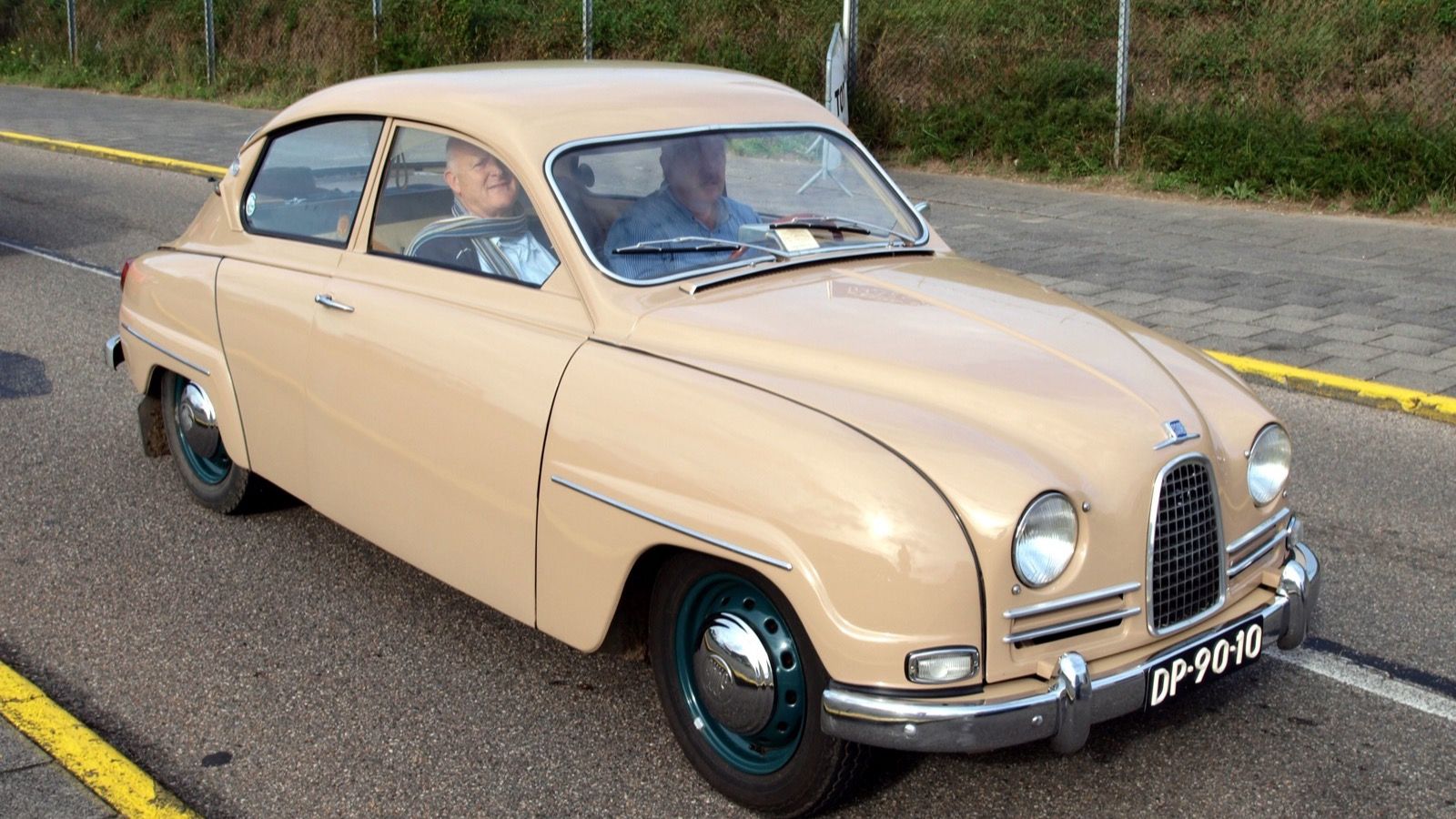
1960 Photo: “1960 Saab 96 pic1.JPG” by Alf van Beem / Wikimedia Commons — CC0 1.0. Cropped to 16:9.
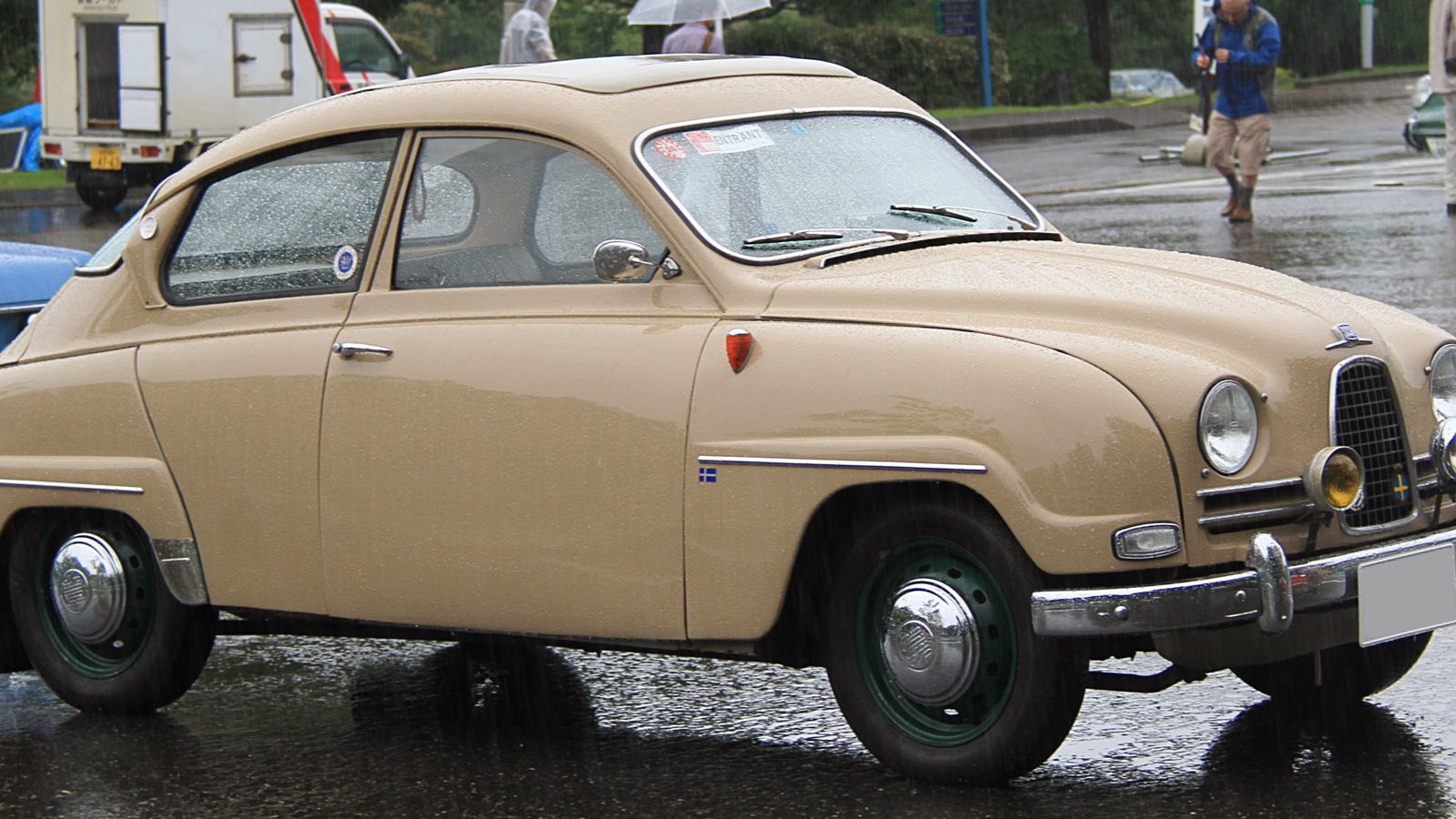
1961 Photo: “1961 Saab 96.jpg” by TTTNIS / Wikimedia Commons — CC0 1.0. Cropped to 16:9.
1962 Photo: “Saab 96 1962.jpg” by Sicnag / Wikimedia Commons, licensed under CC BY 2.0. Cropped to 16:9.
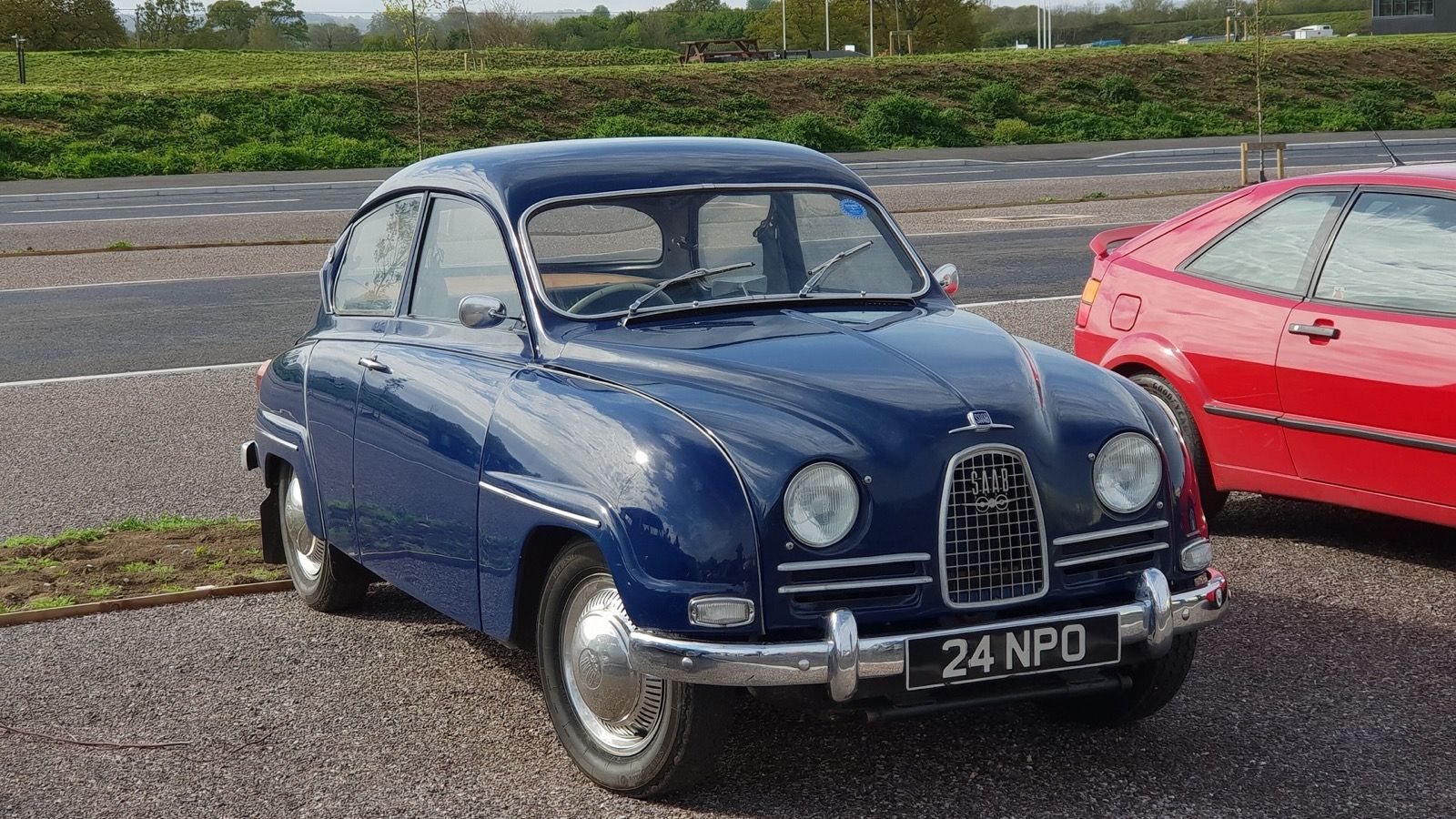
1964 Photo: “SAAB 96 (1964) (51168892329).jpg” by Andrew Bone from Weymouth, England / Wikimedia Commons, licensed under CC BY 2.0. Cropped to 16:9.
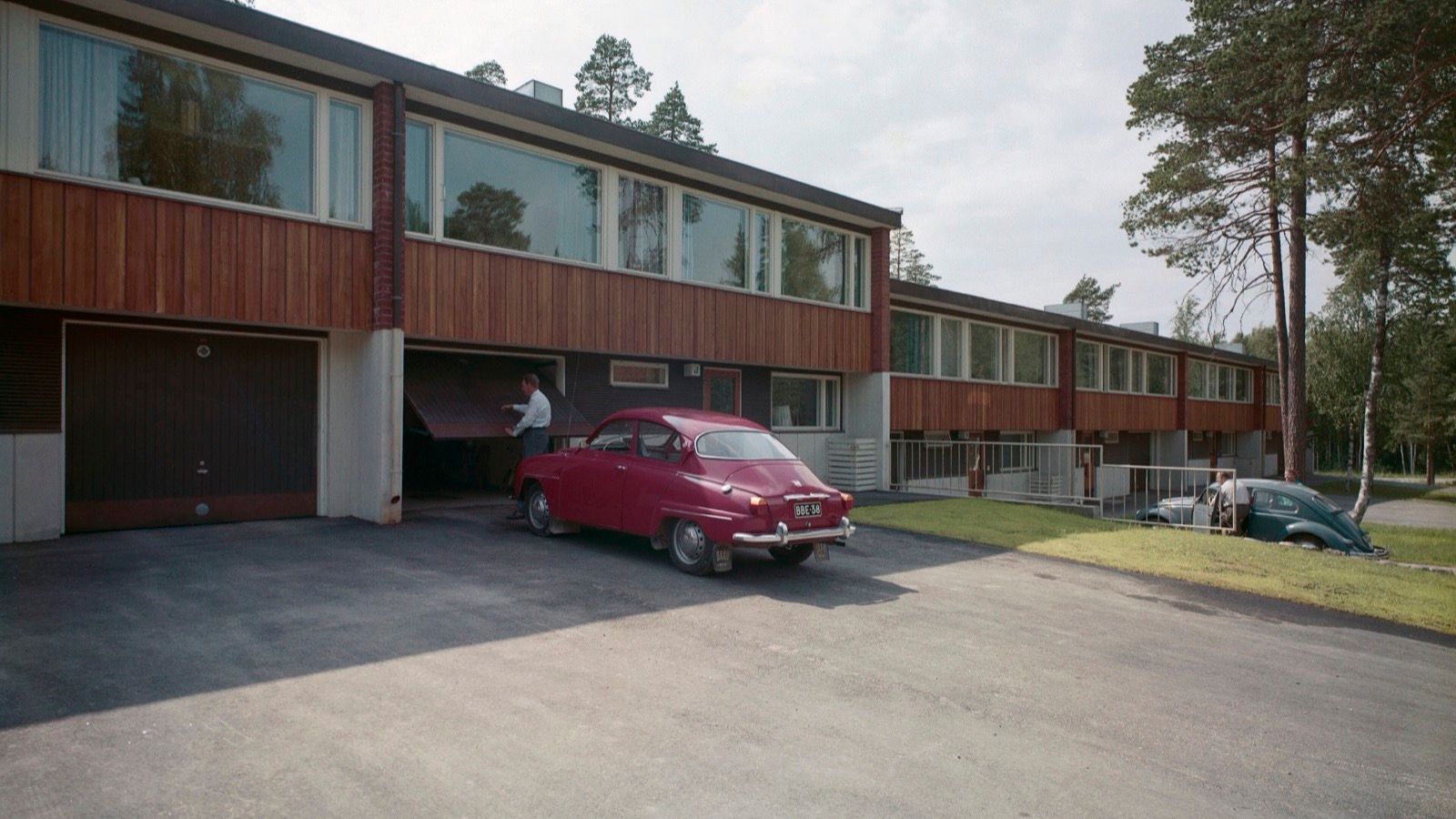
1966 Photo: “Roter Saab 96 vor der Garage eines Reihenhauses in Helsinki (1966).jpg” by Foto Roos / Wikimedia Commons, licensed under CC BY-SA 4.0. Cropped to 16:9.
V4 era · Ford Taunus V4
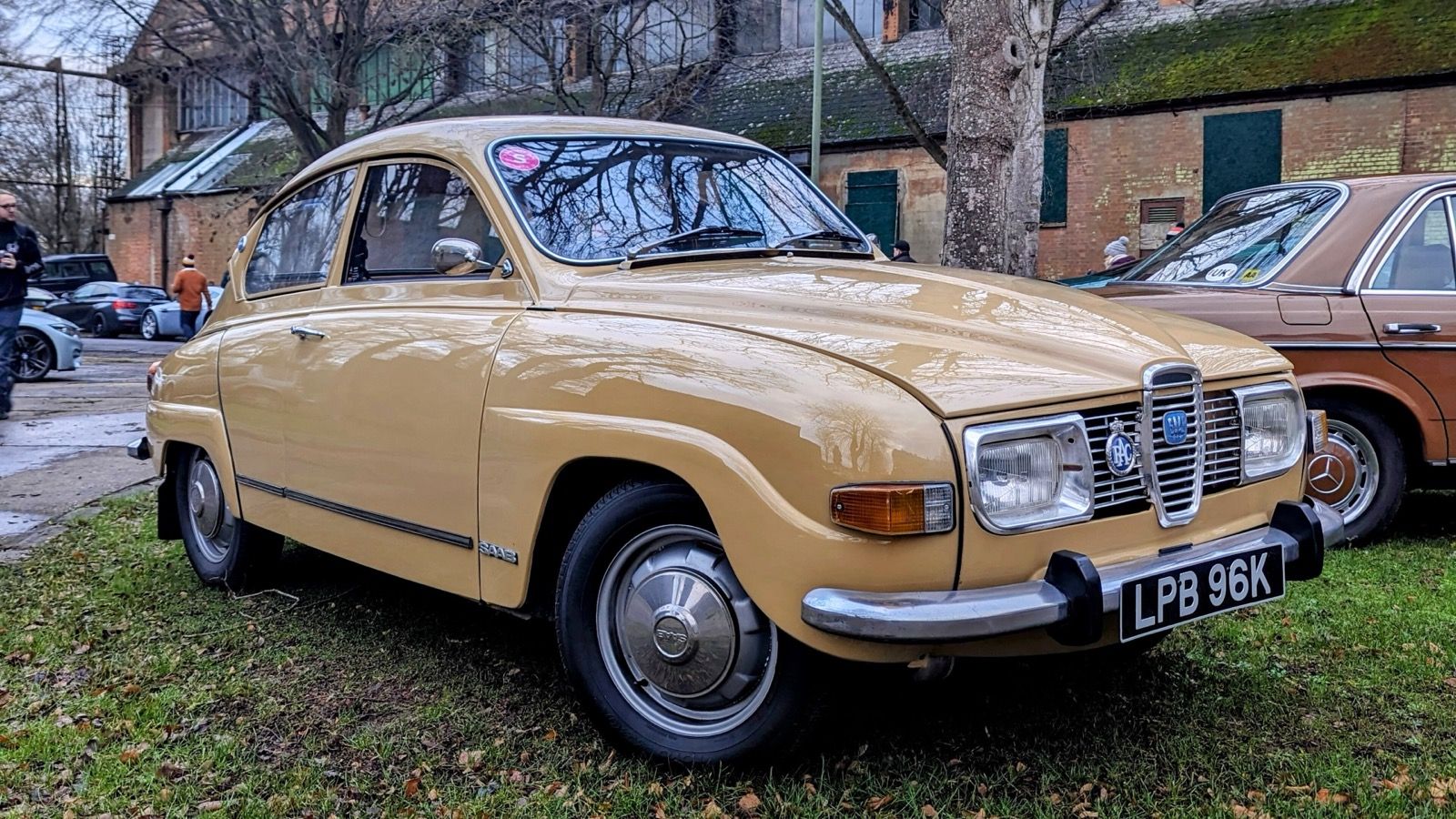
Photo: “1972 Saab 96 V4.jpg” by Calreyn88 / Wikimedia Commons, licensed under CC BY 4.0. Cropped to 16:9.
Ford Taunus 1,498 cc V4 four-stroke replaced the two-stroke from 1967, extending production a further 13 years until the 96's retirement.
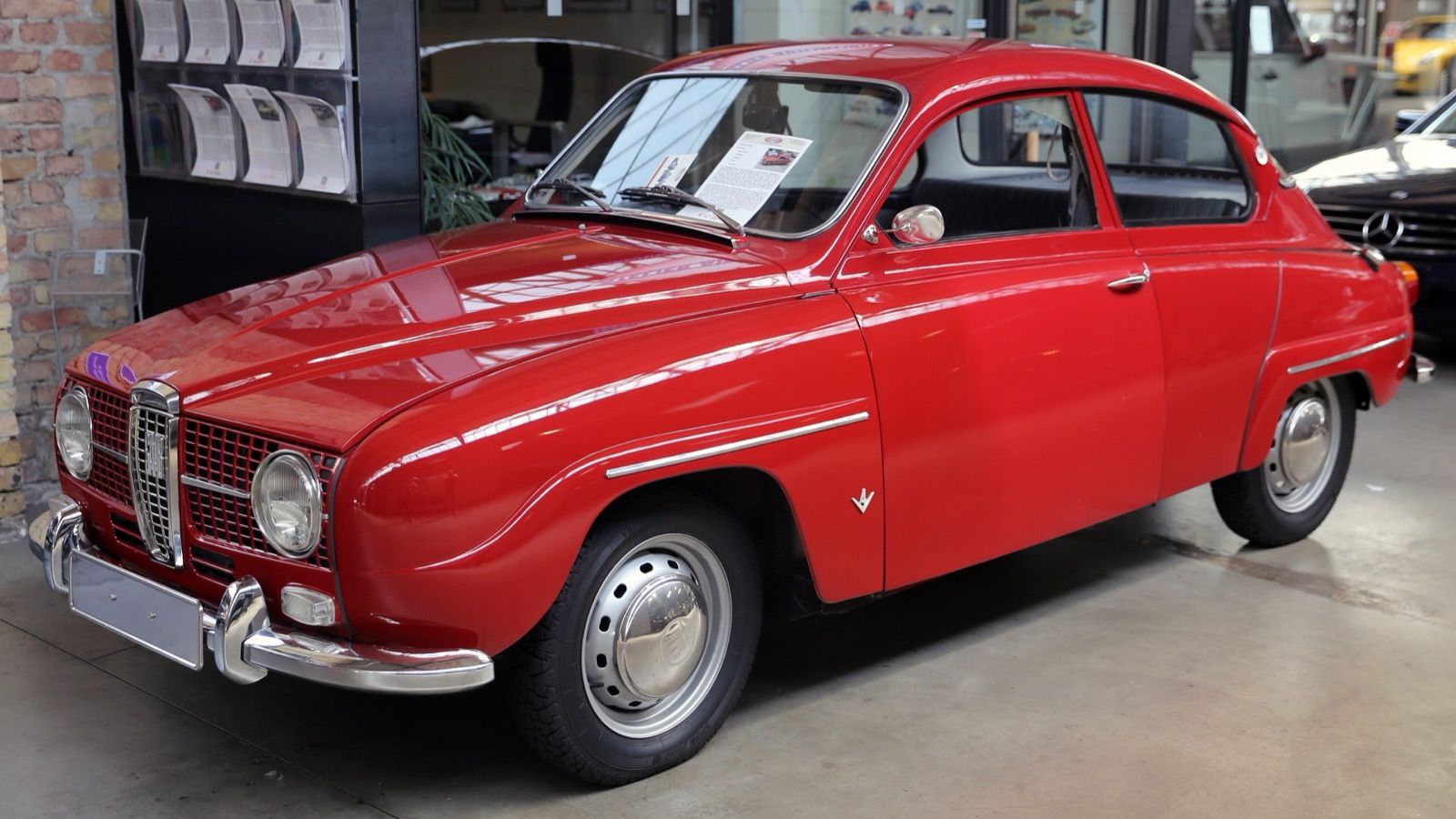
1967 Photo: “1967 Saab 96 V4 at Classic Remise, front left.jpg” by Mr.choppers / Wikimedia Commons, licensed under CC BY-SA 3.0. Cropped to 16:9.
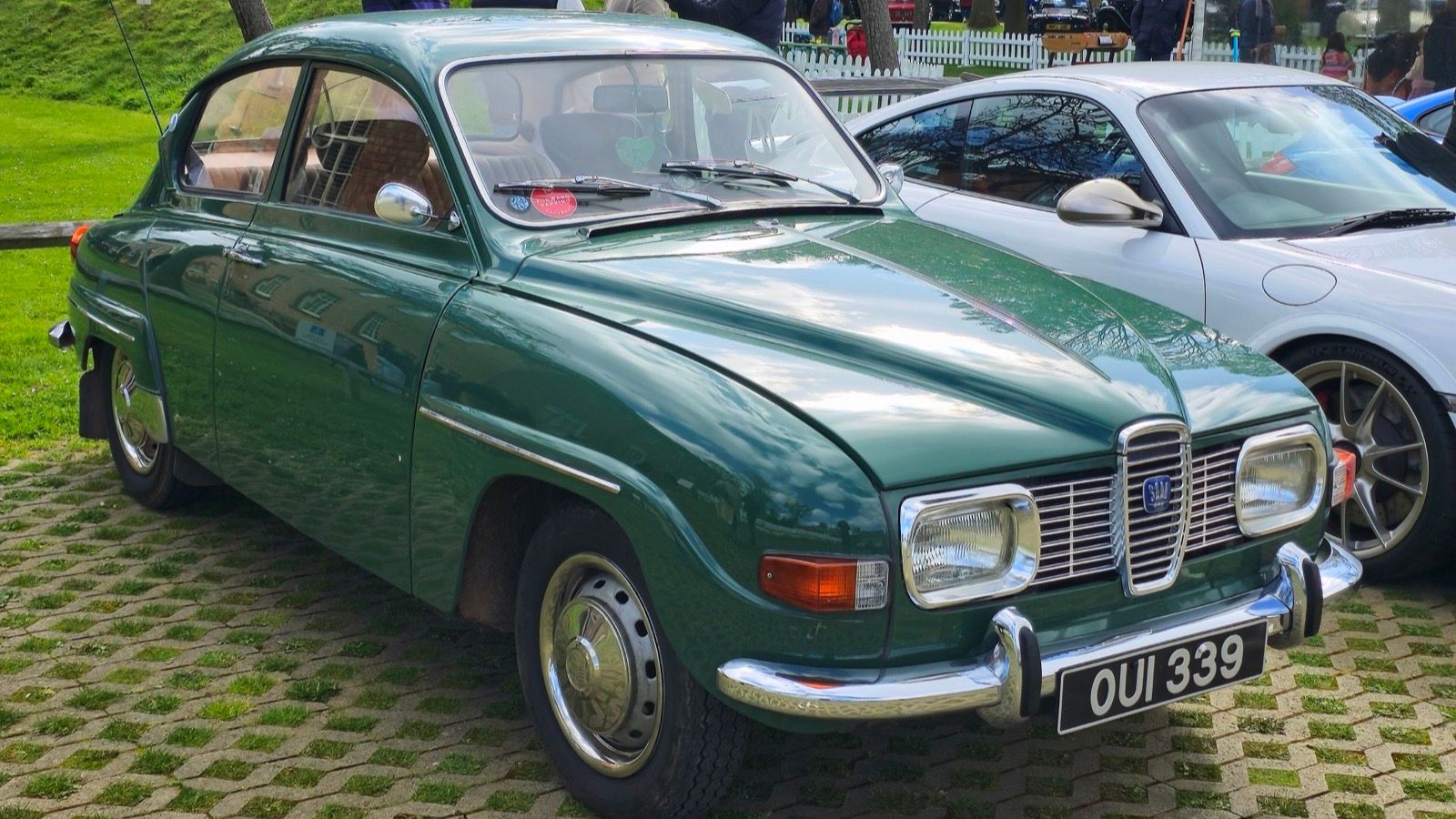
1970 Photo: “1970 Saab 96.jpg” by Calreyn88 / Wikimedia Commons, licensed under CC BY-SA 4.0. Cropped to 16:9.
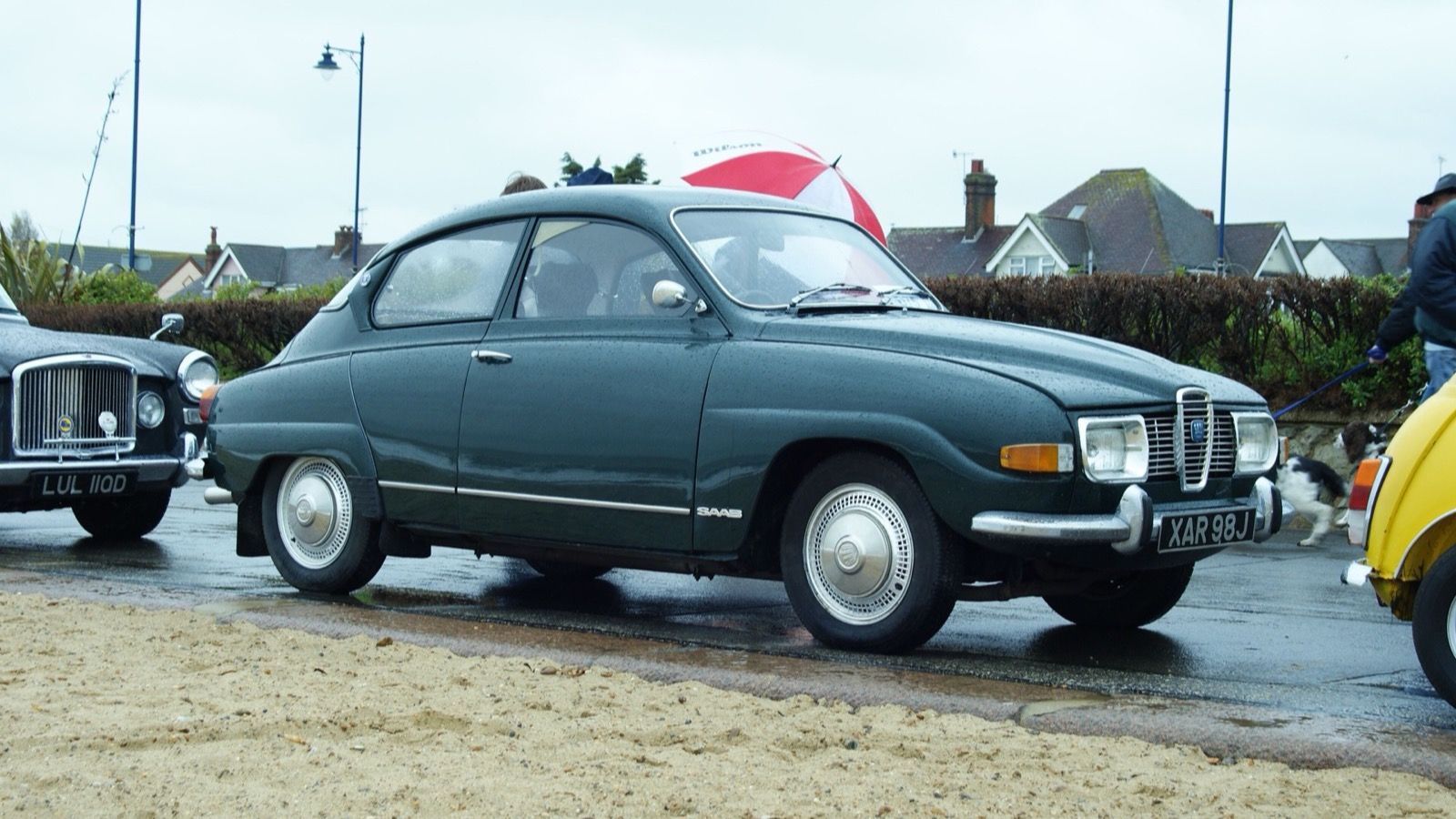
1971 Photo: “1971 Saab 96 V4 XAR98J, Felixstowe.jpg” by Chris Sampson / Wikimedia Commons, licensed under CC BY 2.0. Cropped to 16:9.
1972 Photo: “1972 Saab 96 V4.jpg” by Calreyn88 / Wikimedia Commons, licensed under CC BY 4.0. Cropped to 16:9.
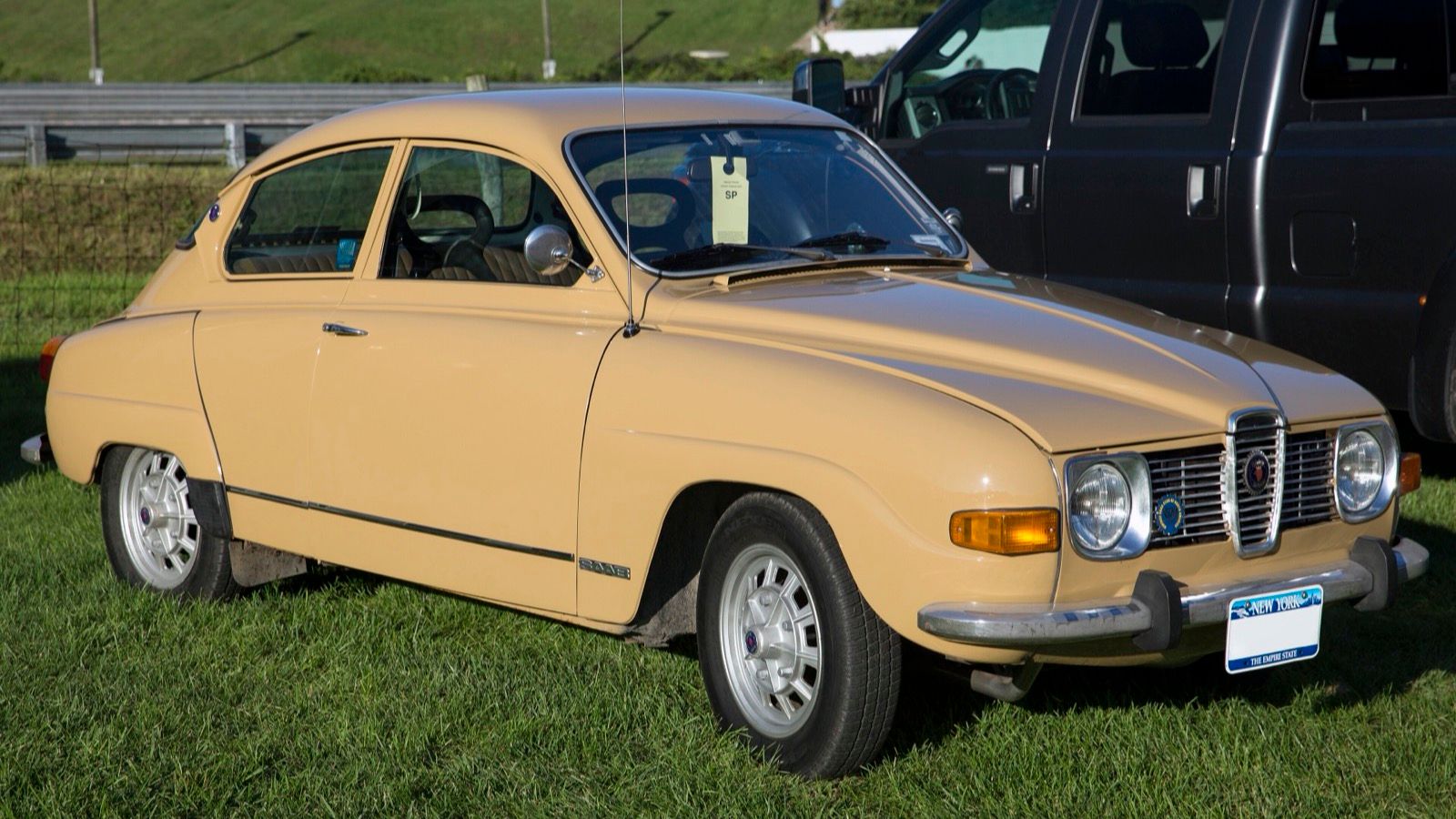
1973 Photo: “1973 Saab 96 (federalized), front right at Lime Rock.jpg” by Mr.choppers / Wikimedia Commons, licensed under CC BY-SA 3.0. Cropped to 16:9.
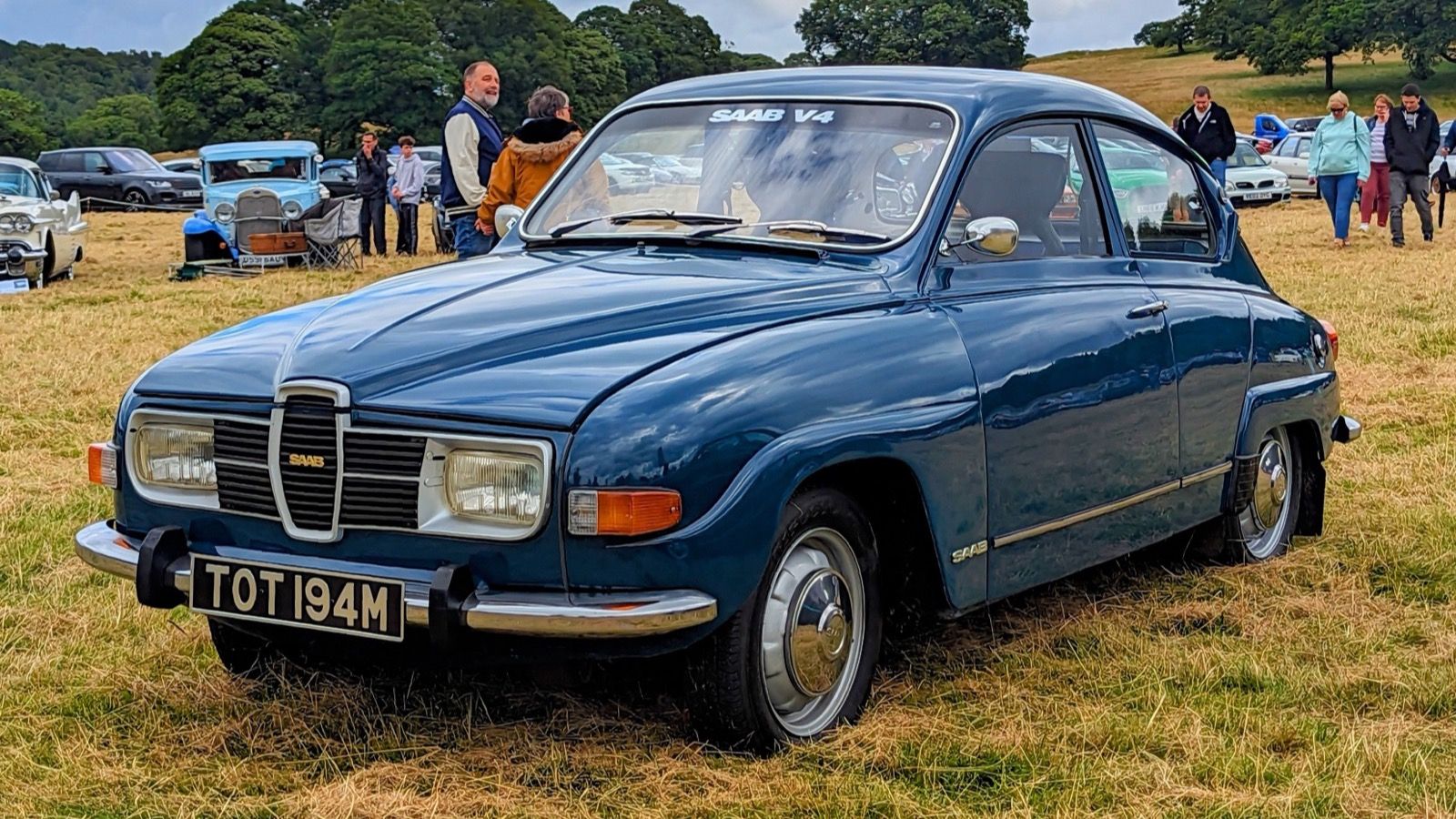
1974 Photo: “1974 Saab 96 V4.jpg” by Calreyn88 / Wikimedia Commons, licensed under CC BY-SA 4.0. Cropped to 16:9.
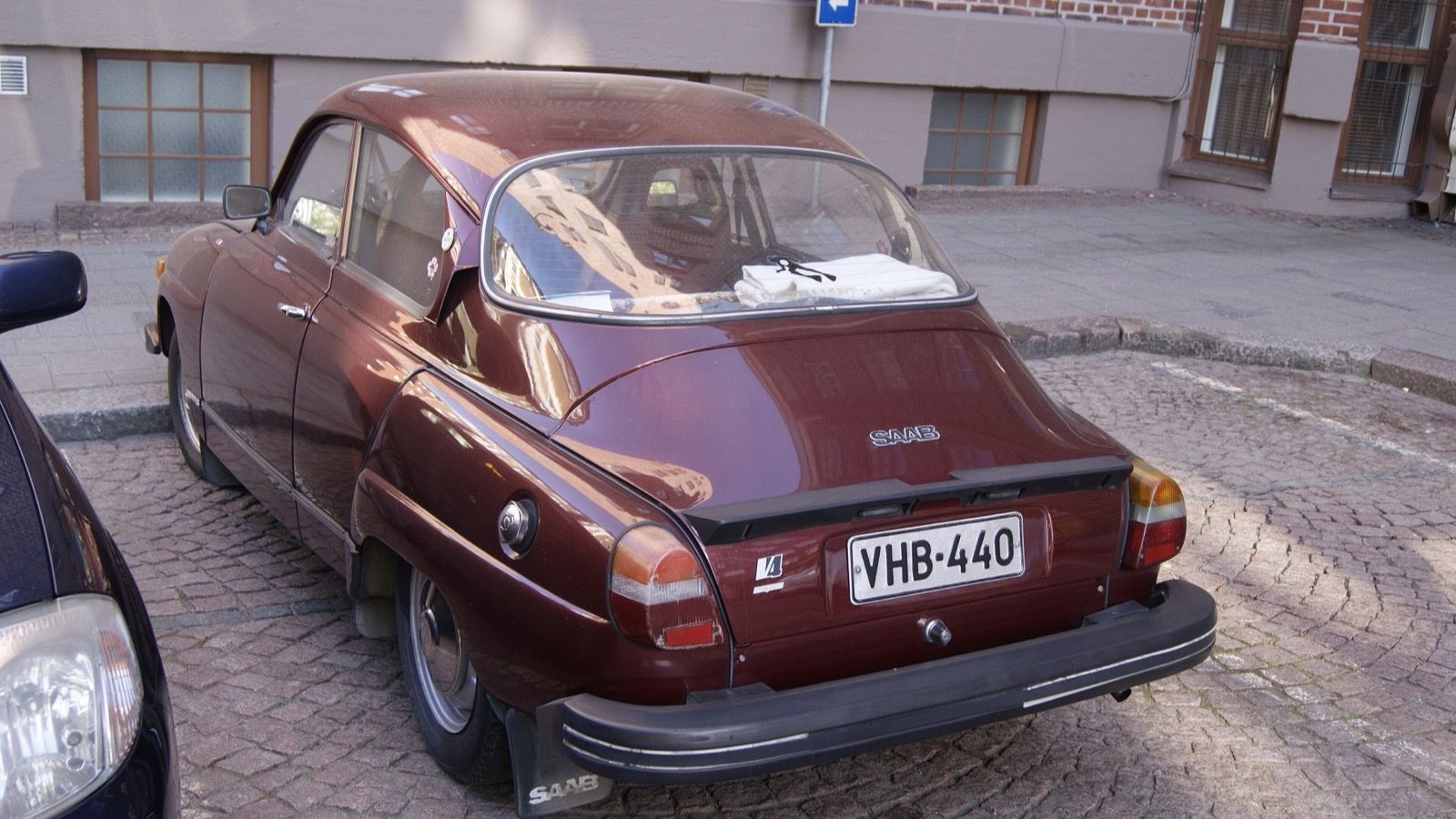
1977 Photo: “1977 Saab 96 V4 (Helsinki, Finland) (1).jpg” by Dogs.barking.duster.rolling / Wikimedia Commons, licensed under CC BY-SA 4.0. Cropped to 16:9.
Body styles
- Three-door fastback sedan
- Station wagon (95 variant)
Notable special editions & performance variants
Monte Carlo 850
Homologation and rally-sales variant with the 850 cc triple-carb two-stroke; driven by Erik Carlsson to consecutive Monte Carlo Rally wins in 1962 and 1963.
96 V4
Replaced the two-stroke with a 1,498 cc Ford Taunus V4 four-stroke from 1967, keeping the 96 competitive and extending production another 13 years.
Related models
Collect the nameplate
Find a scale model of the Saab 96
Search Amazon across available years, colors, and scales. Exact releases vary, so confirm the listing before ordering.