
Puma GTB History
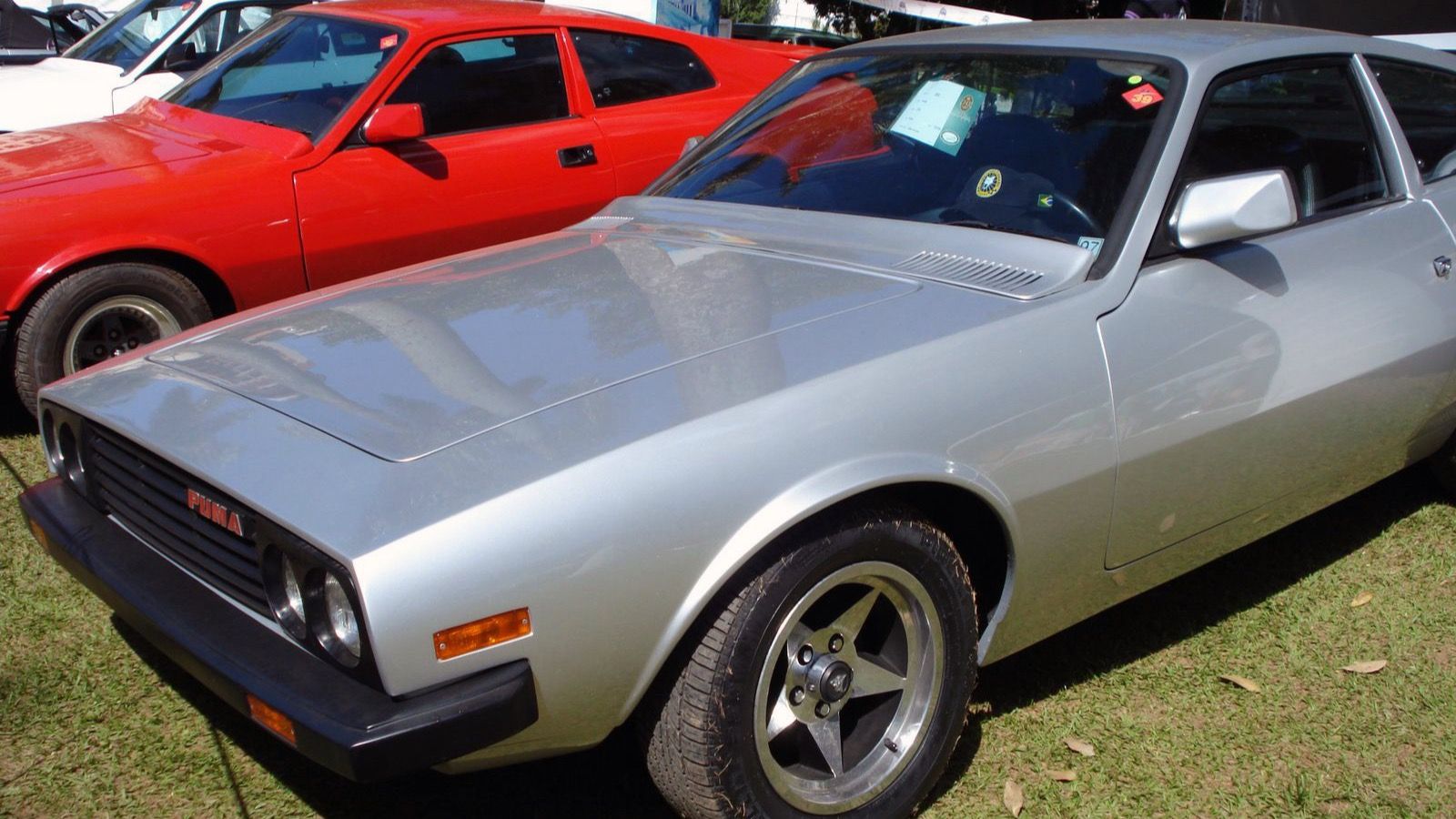
Brazil's most expensive car through the 1970s and early 1980s — a fiberglass Chevrolet Opala-powered 2+2 coupe.
Photo: “Puma GTB S2 front.jpg” by Renzo Maia ; cropped and adjusted by uploader Mr.choppers / Wikimedia Commons, licensed under CC BY 3.0. Cropped to 16:9.
History
Launched in 1973 under the name Gran Turismo Brazil, the GTB was a fundamentally different Puma: instead of VW mechanicals it used components from the Brazilian Chevrolet Opala, with a 4.1-litre inline-six making approximately 168–171 hp — far more than any VW-based Puma. A fiberglass body gave it exotic presence with a practical 2+2 cabin featuring leather seats, power windows, and air conditioning. It held the distinction of being Brazil's most expensive production car from 1973 to 1984.
Four series were produced across the GTB's life. The S1 (approximately 1973–1978, 701 units) and S2 (approximately 1978–1983, 888 units) used variations of the Opala six-cylinder. The S3 (late 1983) ran on Brazilian sugarcane alcohol, and the S4 (1984) added a turbocharged engine. After Puma fell into bankruptcy in 1985, licensee Alfa Metais continued limited GTB production until approximately 1987. Total GTB production across all series was 1,589 vehicles.
Generations
Series 1 · GTB S1
Original Chevrolet Opala 4.1 L six-powered flagship; 701 units (sources vary on the exact S1/S2 changeover, generally placed ~1977–1978).
Series 2 · GTB S2
Photo: “Puma GTB S2 front.jpg” by Renzo Maia ; cropped and adjusted by uploader Mr.choppers / Wikimedia Commons, licensed under CC BY 3.0. Cropped to 16:9.
Updated Opala six-cylinder introduced ~1978, 888 units — the best-selling GTB series.
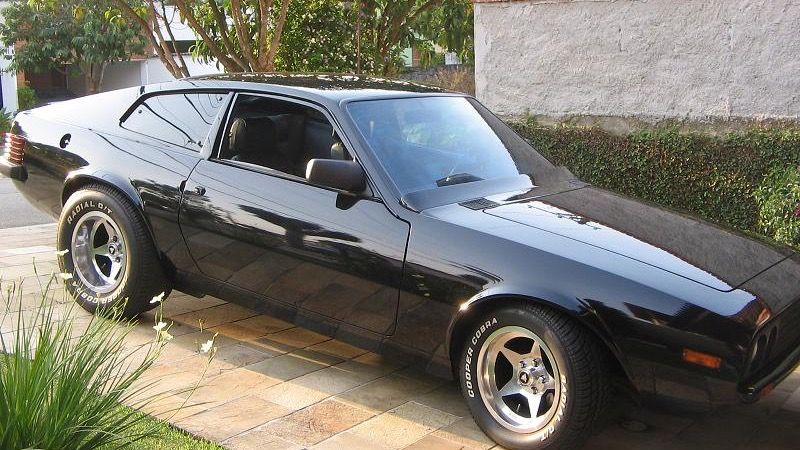
1980 Photo: “1980 Puma GTB S2 in black.jpg” by Alexraymond at English Wikipedia / Wikimedia Commons — Public domain. Cropped to 16:9.
Series 3 / 4 · GTB S3 / S4
S3 ran on sugarcane alcohol; S4 added turbocharging — final factory-built GTBs before the 1985 bankruptcy.
Body styles
- Coupe
Notable special editions & performance variants
GTB S4 Turbo
Turbocharged variant of the Opala six — the most powerful factory GTB, produced in very small numbers before Puma's bankruptcy.
Related models
Collect the nameplate
Find a scale model of the Puma GTB
Search Amazon across available years, colors, and scales. Exact releases vary, so confirm the listing before ordering.