
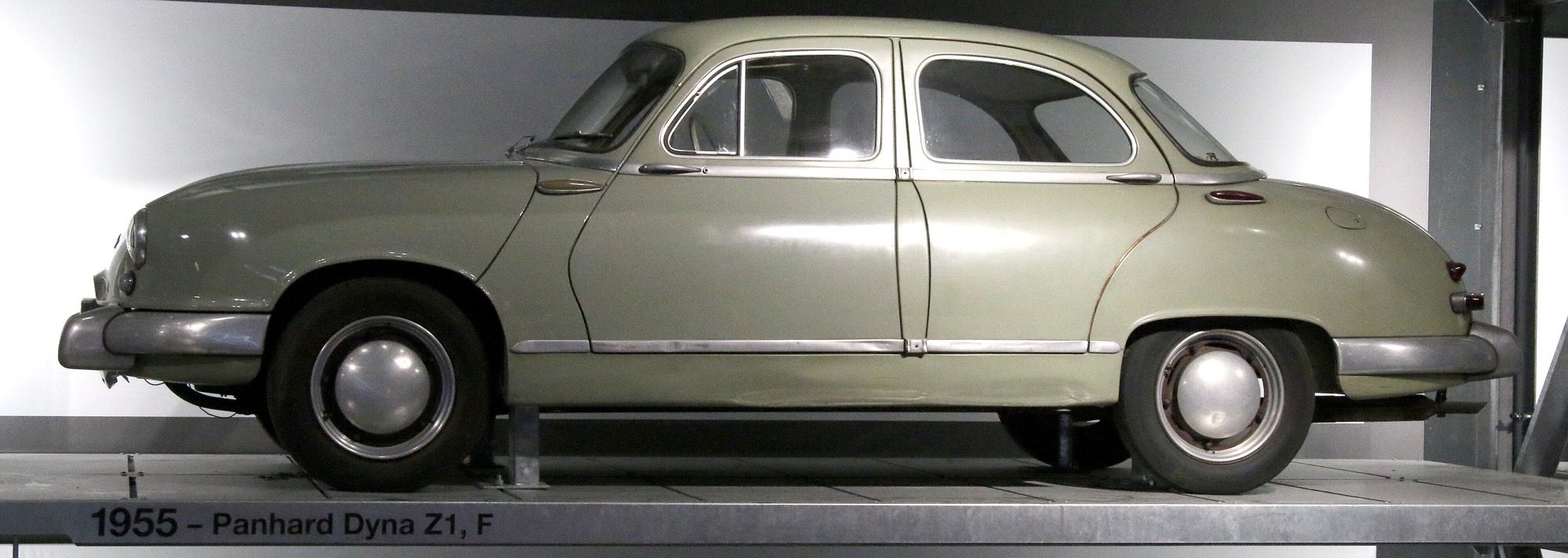
Panhard Dyna Z History
Panhard's aerodynamic masterpiece of the 1950s — a drag coefficient of 0.26, top speed over 80 mph, and 46 mpg from an 851 cc flat-twin.
Photo: “1955 Panhard Dyna Z1.jpg” by kitmasterbloke / Wikimedia Commons, licensed under CC BY 2.0
History
Presented to the press in June 1953 and entering production for 1954, the Dyna Z was a radical step forward in aerodynamic design. Styled by André Jouan under the direction of Louis Bionier — Panhard's design chief and a longtime aerodynamics advocate — its curvaceous, almost blobby saloon body achieved a drag coefficient of 0.26, a figure that most mainstream manufacturers would not approach for another three decades.
The 851 cc air-cooled flat-twin engine produced 42 hp, which combined with the car's low drag and light weight (roughly 710–850 kg) to deliver a genuine top speed above 80 mph (130 km/h) and fuel economy of around 46 mpg — extraordinary for 1954. The roomy interior seated six passengers despite the car's compact footprint. Early Dyna Z bodies retained aluminum panels; an all-steel body became standard from August 1956 as production scaled.
The Dyna Z sold approximately 140,000 units over its six-year run and cemented Panhard's postwar identity as the aerodynamically adventurous French alternative to the Citroën 2CV. It was replaced in 1959 by the Panhard PL 17, which carried forward the same platform and engine philosophy.
Generations
First series · Aluminum-body Z
Photo: “1955 Panhard Dyna Z1.jpg” by kitmasterbloke / Wikimedia Commons, licensed under CC BY 2.0
Original aluminum-and-Duralinox bodyshell; 851 cc flat-twin; drag coefficient 0.26.
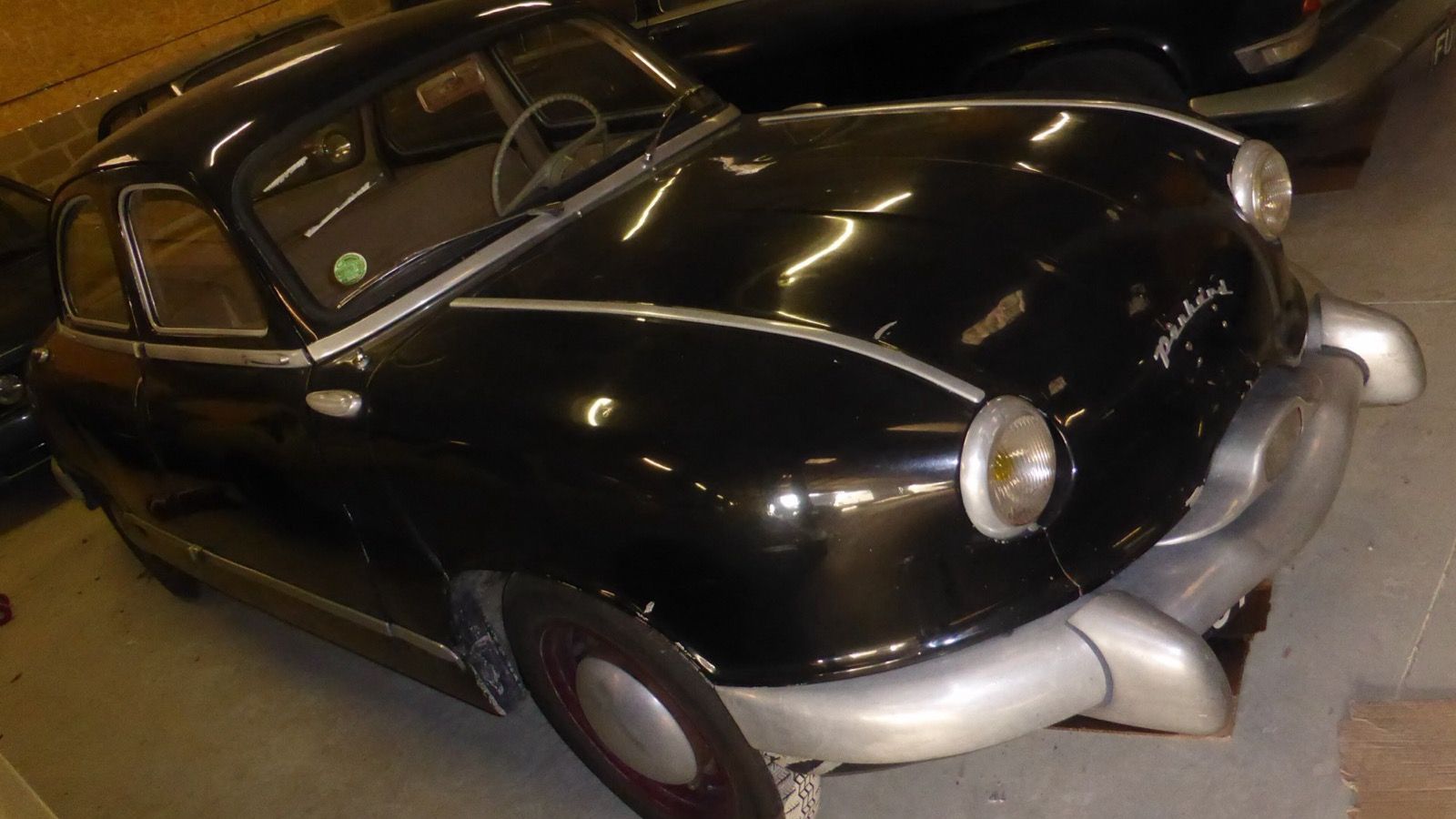
1954 Photo: “Panhard Dyna Z1 (1954) (37885052531).jpg” by Andrew Bone from Weymouth, England / Wikimedia Commons, licensed under CC BY 2.0. Cropped to 16:9.
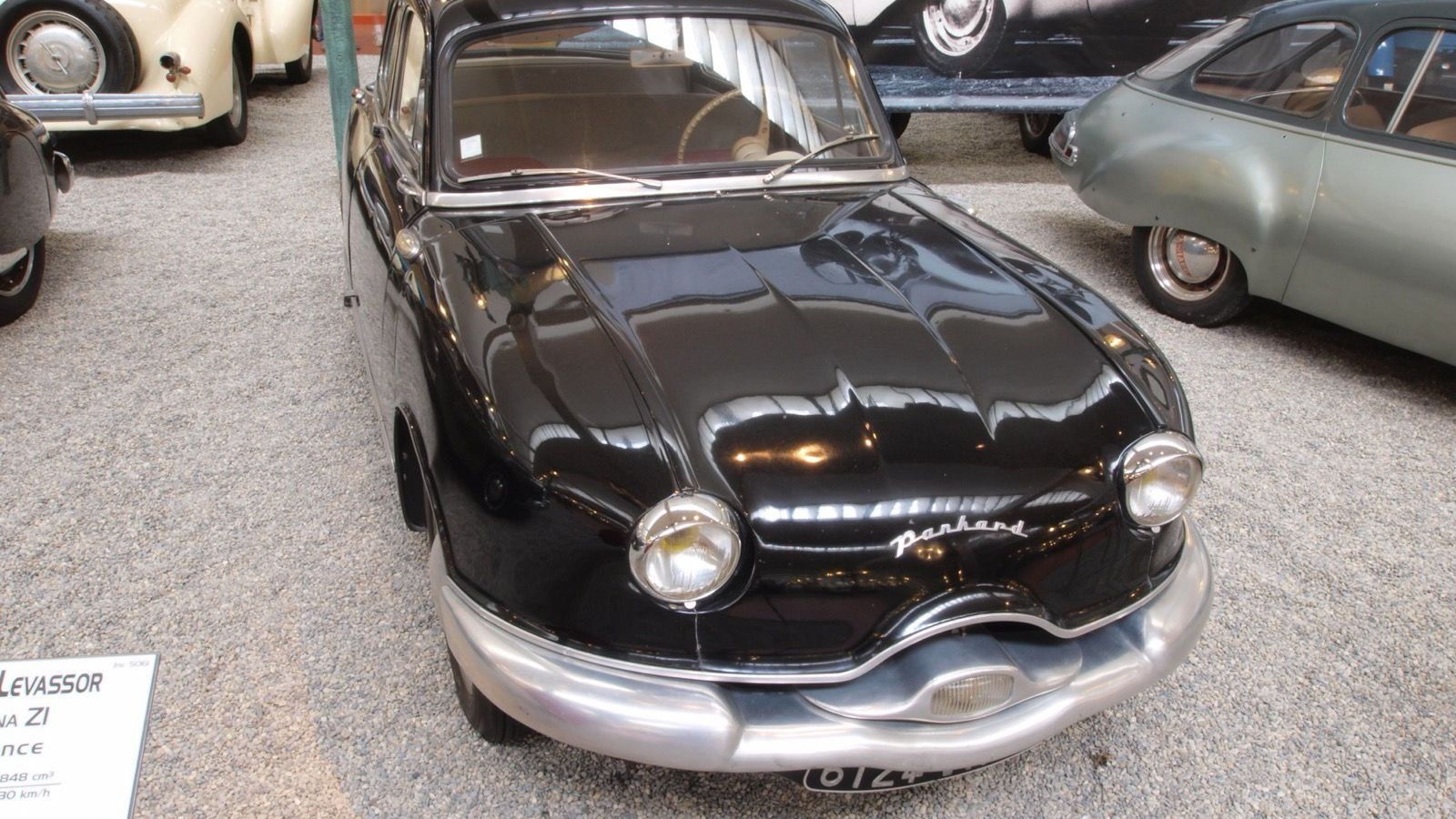
1956 Photo: “Panhard-Levassor Dyna ZI (1956) pic1.JPG” by AlfvanBeem / Wikimedia Commons — CC0 1.0. Cropped to 16:9.
Second series · All-steel Z
All-steel body adopted from August 1956 for production scalability; mechanical specification unchanged.
Body styles
- Saloon
- Cabriolet
- Van
Related models
Collect the nameplate
Find a scale model of the Panhard Dyna Z
Search Amazon across available years, colors, and scales. Exact releases vary, so confirm the listing before ordering.