
OSCA MT4 History
The Maserati brothers' first OSCA, a 1.1-litre twin-cam barchetta sports racer that scored an overall victory at the 1954 12 Hours of Sebring.
Photo: “File:Osca MT4 1350 (1949) (52128108537).jpg” by Charles from Port Chester, New York / Wikimedia Commons, licensed under CC BY 2.0. Cropped to 16:9.
History
The MT4 (Maserati Tipo 4) was OSCA's founding model, debuting competitively in 1948. Its all-aluminium twin-overhead-cam four-cylinder started life at 1,092 cc producing around 72 PS and grew progressively: 1,342 cc by 1949, 1,453 cc by 1953, and a 1,491 cc 'Tipo Nuovo' specification in 1954 that pushed peak power to roughly 125 PS. OSCA supplied chassis only; Italian coachbuilders — Morelli, Vignale, and Pietro Frua among them — clothed each car in individual barchetta, berlinetta, or spider bodywork.
The MT4's definitive moment came on 7 March 1954 at the 12 Hours of Sebring, where Stirling Moss and Bill Lloyd, running for the Briggs Cunningham team, defeated a field that included factory Lancia D24s (driven by Fangio, Ascari, and Taruffi), C-Type Jaguars, and 4.5-litre Ferraris. Averaging 72 mph over 873 miles, the 1,452 cc OSCA became the smallest-displacement car ever to win the race outright — a record that still stands. The car also collected a class win at the 1953 24 Hours of Le Mans and a class win at the 1951 Mille Miglia.
Between 1948 and 1956, between 72 and 79 chassis were built, though many continued to race into the mid-1960s. Over its competitive lifespan the MT4 accumulated 92 outright wins, 109 class wins, 9 pole positions, and 194 podiums. A twin-spark variant introduced in 1955 was designated MT4 TN (Tipo Nuovo or '1500 TN').
Generations
First generation · 1100 / 1350
Photo: “File:Osca MT4 1350 (1949) (52128108537).jpg” by Charles from Port Chester, New York / Wikimedia Commons, licensed under CC BY 2.0. Cropped to 16:9.
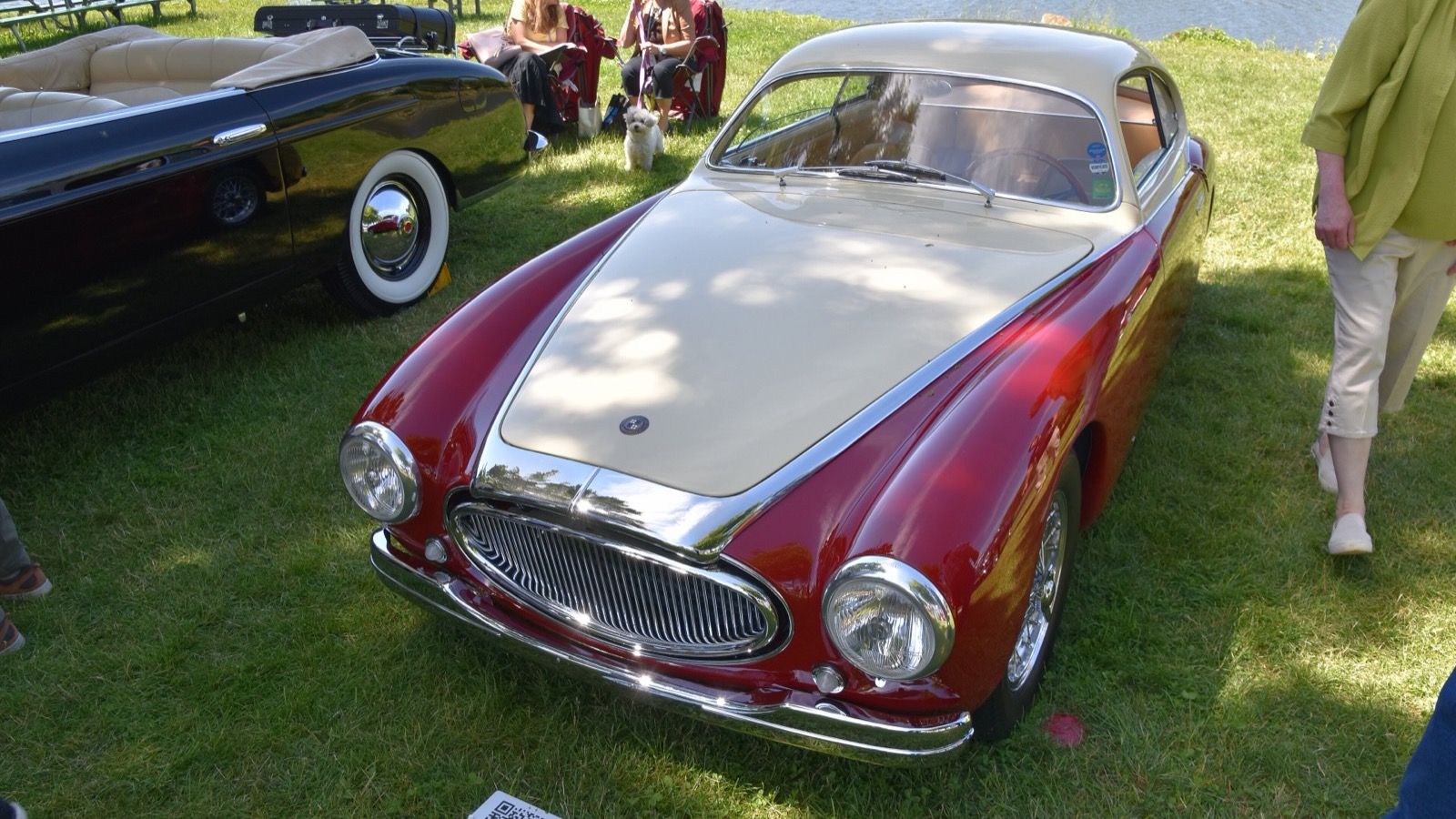
Original 1,092 cc SOHC then DOHC four-cylinder; engine grew to 1,342 cc in 1949. Raced in OSCA's early years at the Mille Miglia and European events.
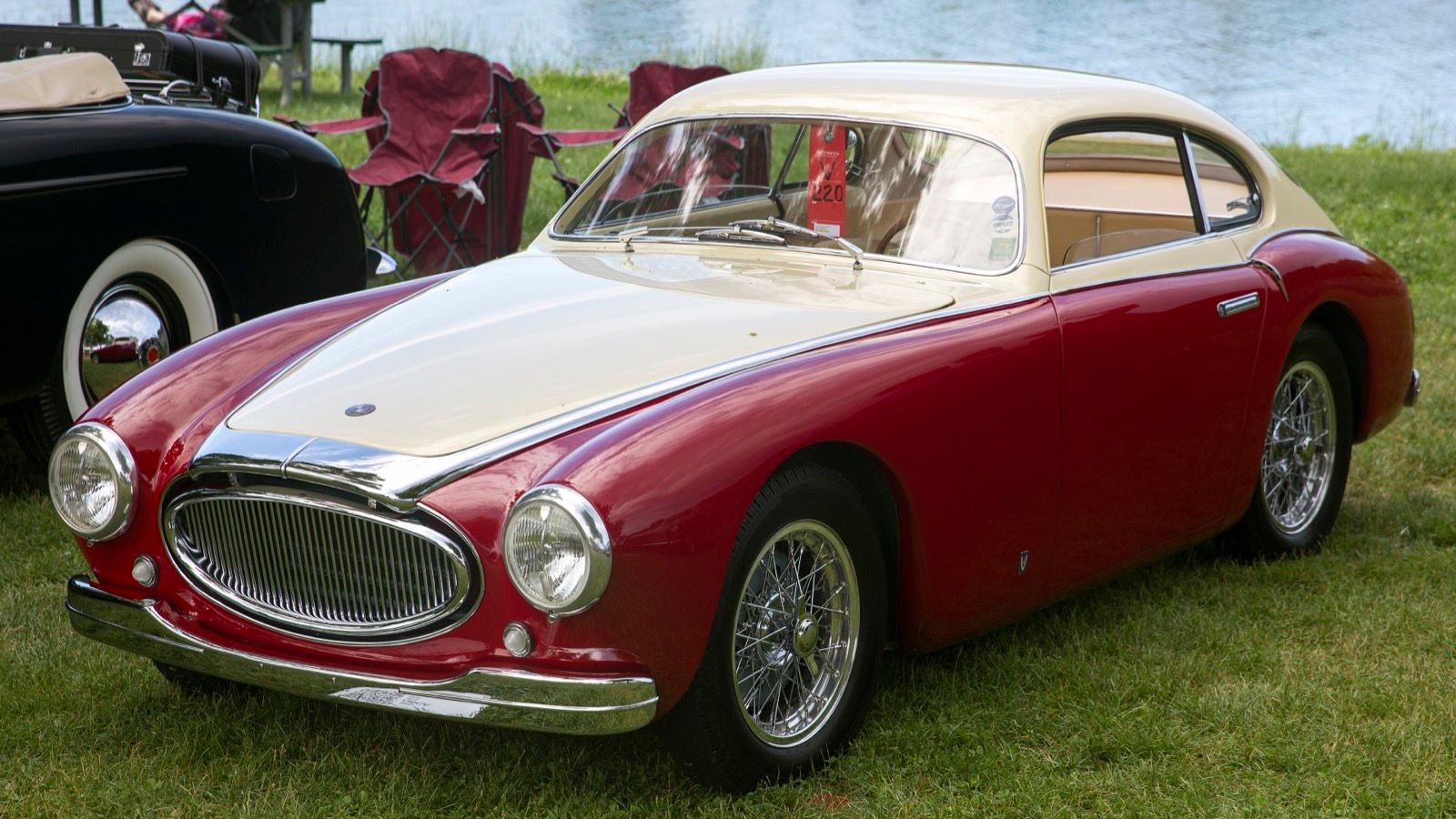
1949 Photo: “File:1949 OSCA MT4 1350 Vignale Berlinetta at Greenwich 2022, front left.jpg” by Mr.choppers / Wikimedia Commons, licensed under CC BY-SA 3.0. Cropped to 16:9.
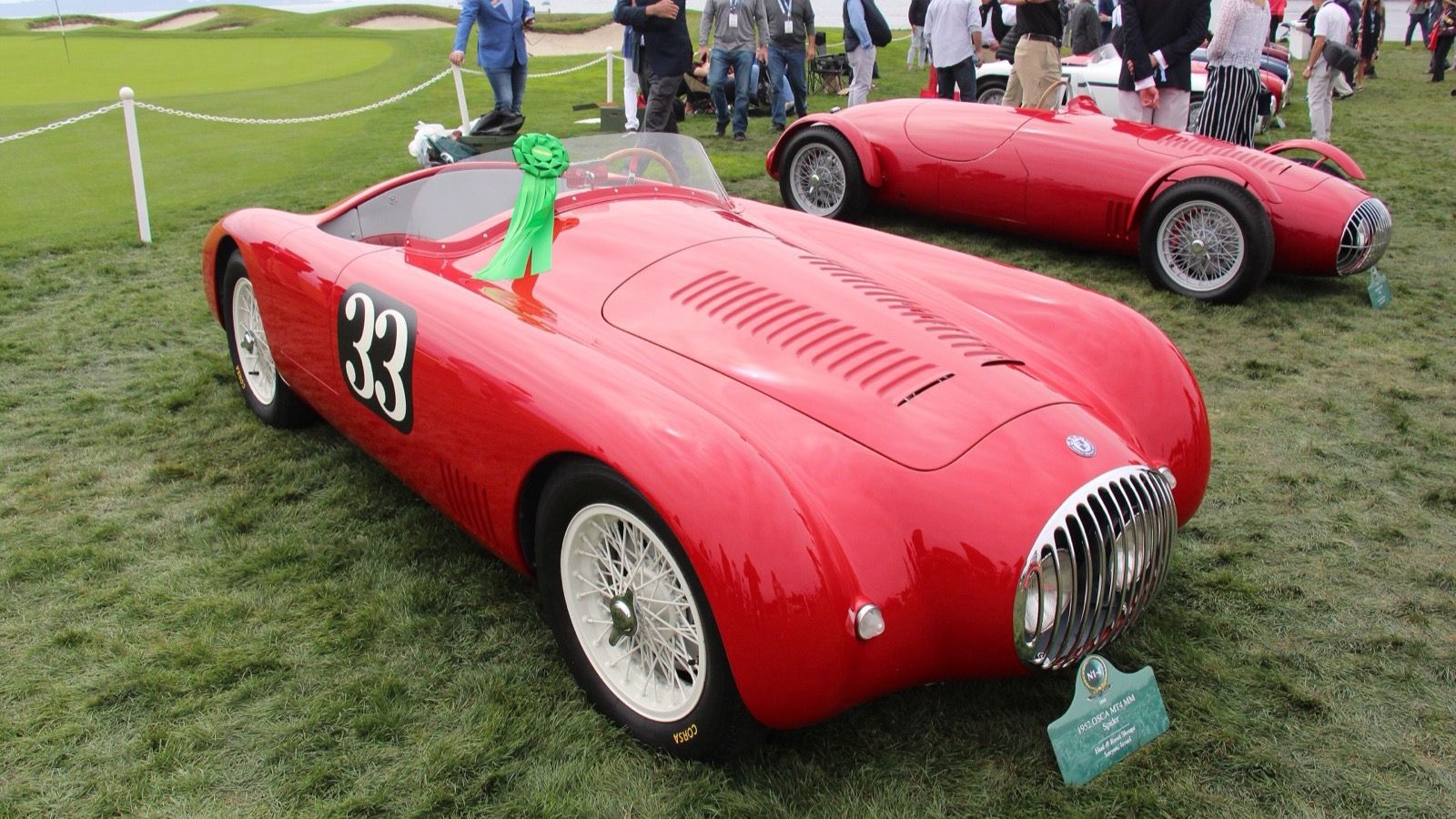
1952 Photo: “File:1952 OSCA MT4 MM Spyder (29792709867).jpg” by Sicnag / Wikimedia Commons, licensed under CC BY 2.0. Cropped to 16:9.
Second generation · 1500 / 1500 TN
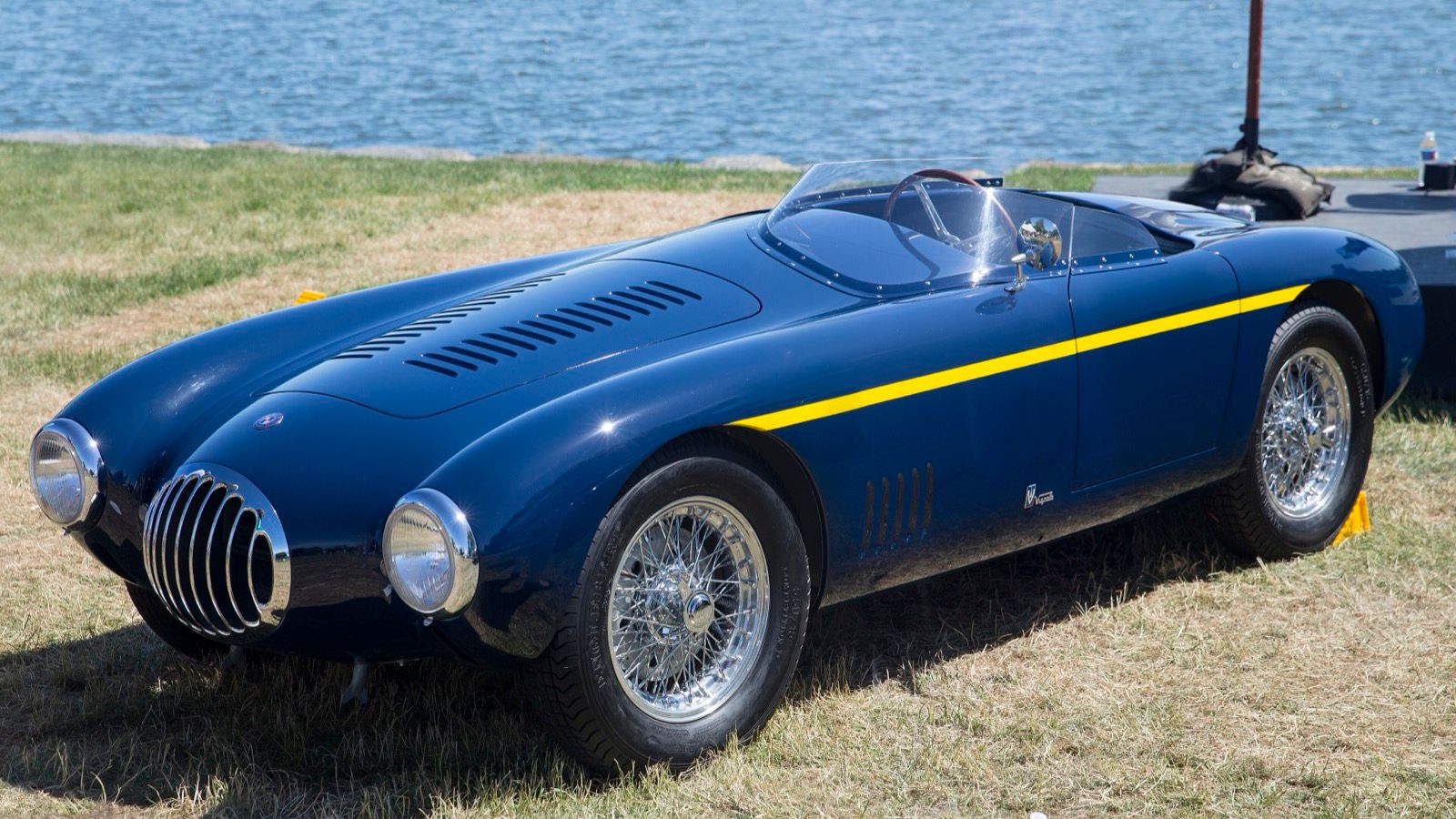
Photo: “File:1954 OSCA MT4 1500 Vignale Spider, front left.jpg” by Mr.choppers / Wikimedia Commons, licensed under CC BY-SA 3.0. Cropped to 16:9.
Enlarged to 1,453–1,492 cc; twin-spark 'Tipo Nuovo' from 1955 producing ~125 PS. This specification won Sebring 1954 overall.
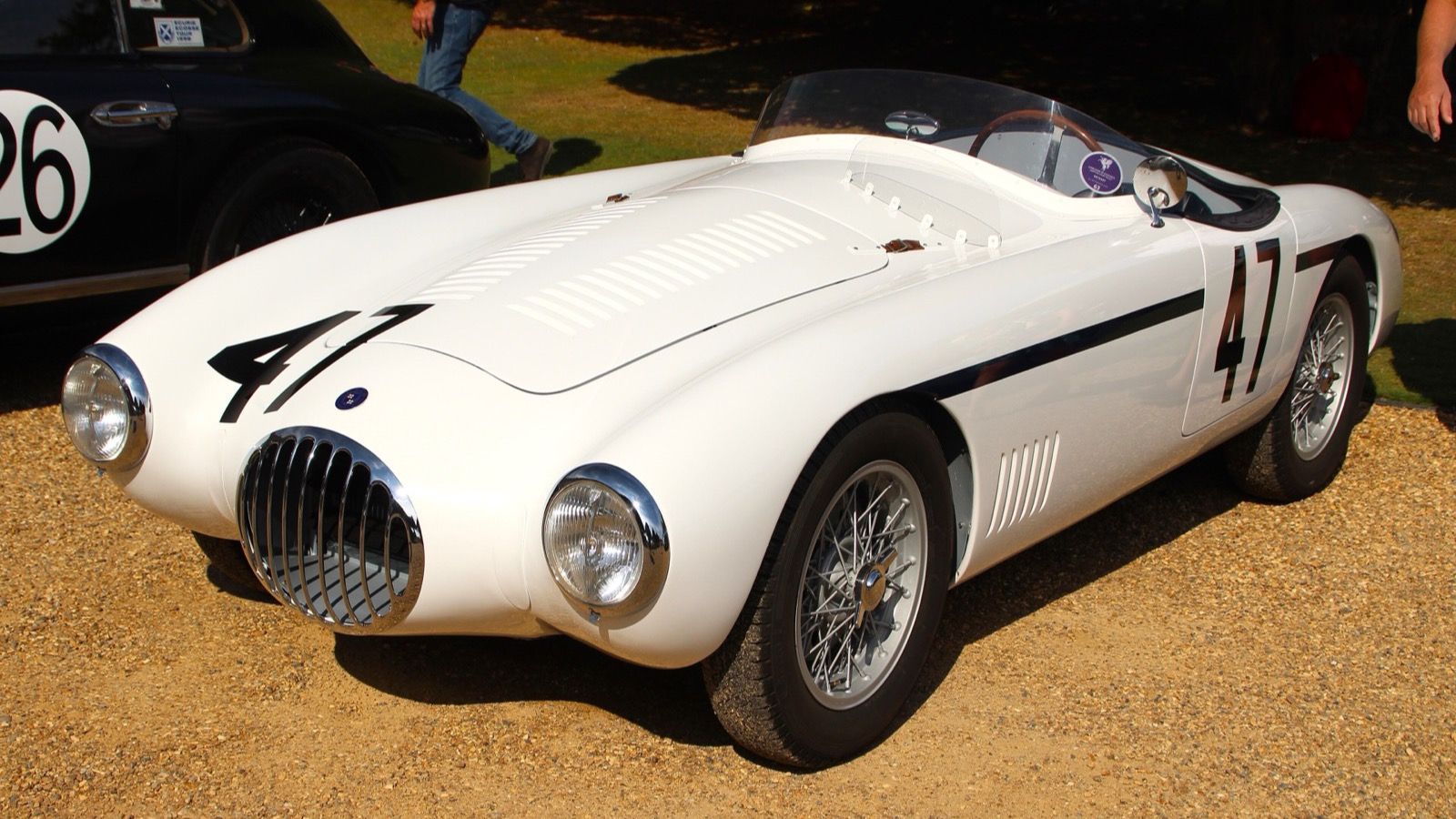
1953 Photo: “File:1953 OSCA MT4 Barchetta.jpg” by MrWalkr / Wikimedia Commons, licensed under CC BY-SA 4.0. Cropped to 16:9.
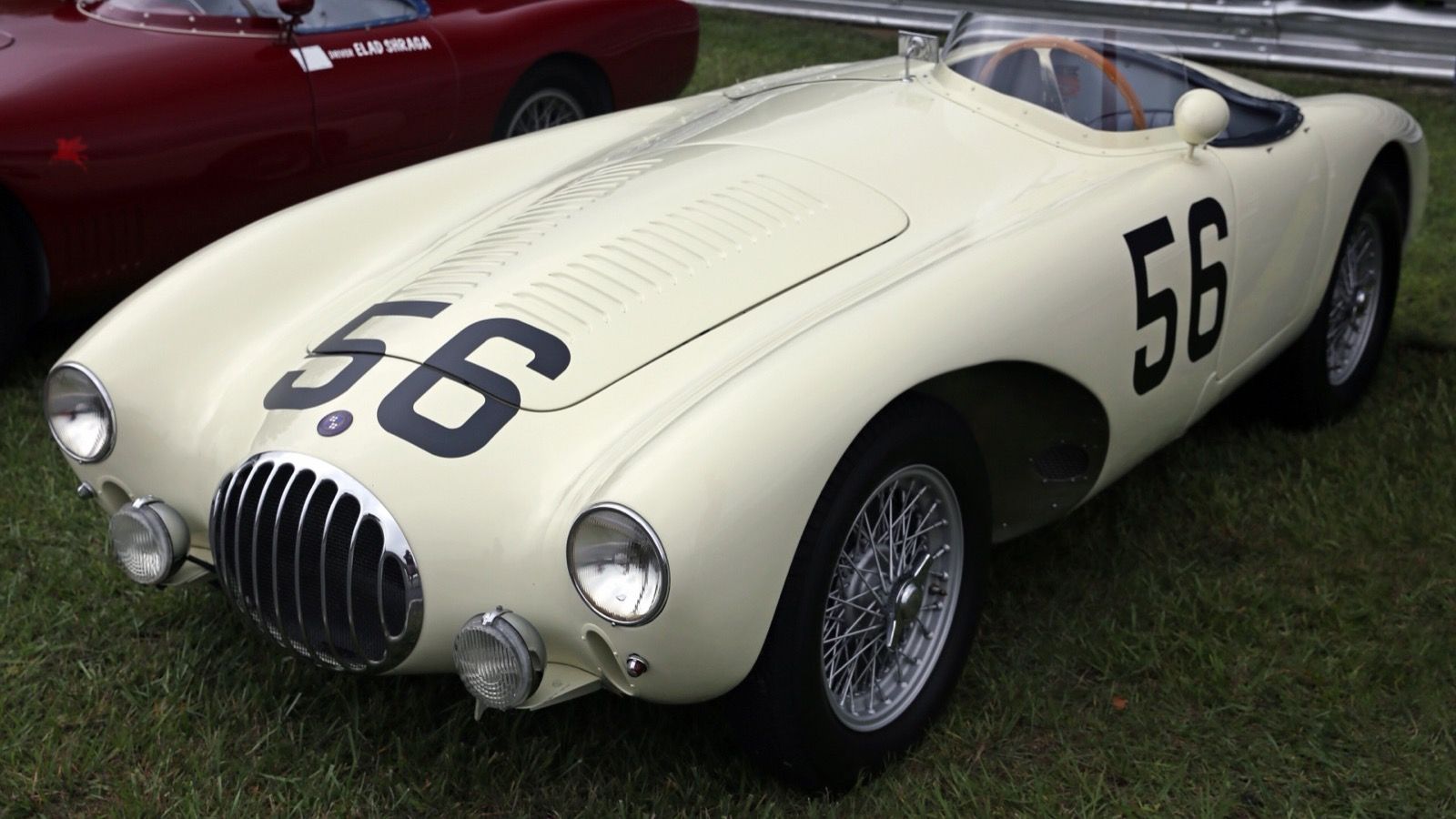
1954 Photo: “File:1954 O.S.C.A. MT4 1500, ex-Moss and Cunningham.jpg” by Mr.choppers / Wikimedia Commons, licensed under CC BY-SA 3.0. Cropped to 16:9.
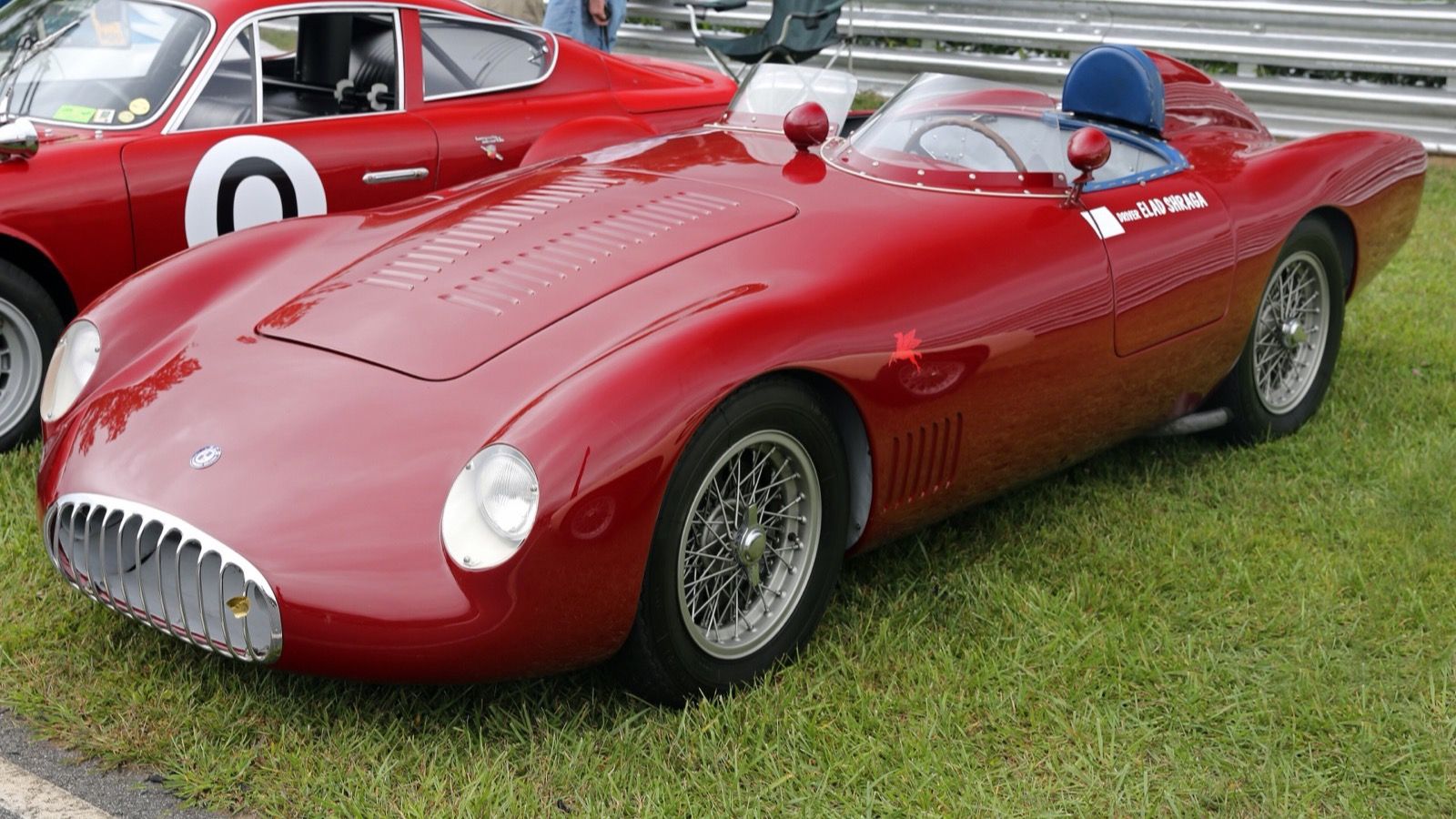
1955 Photo: “File:1955 O.S.C.A. MT4-TN (Tipo Nuovo) at Lime Rock.jpg” by Mr.choppers / Wikimedia Commons, licensed under CC BY-SA 3.0. Cropped to 16:9.
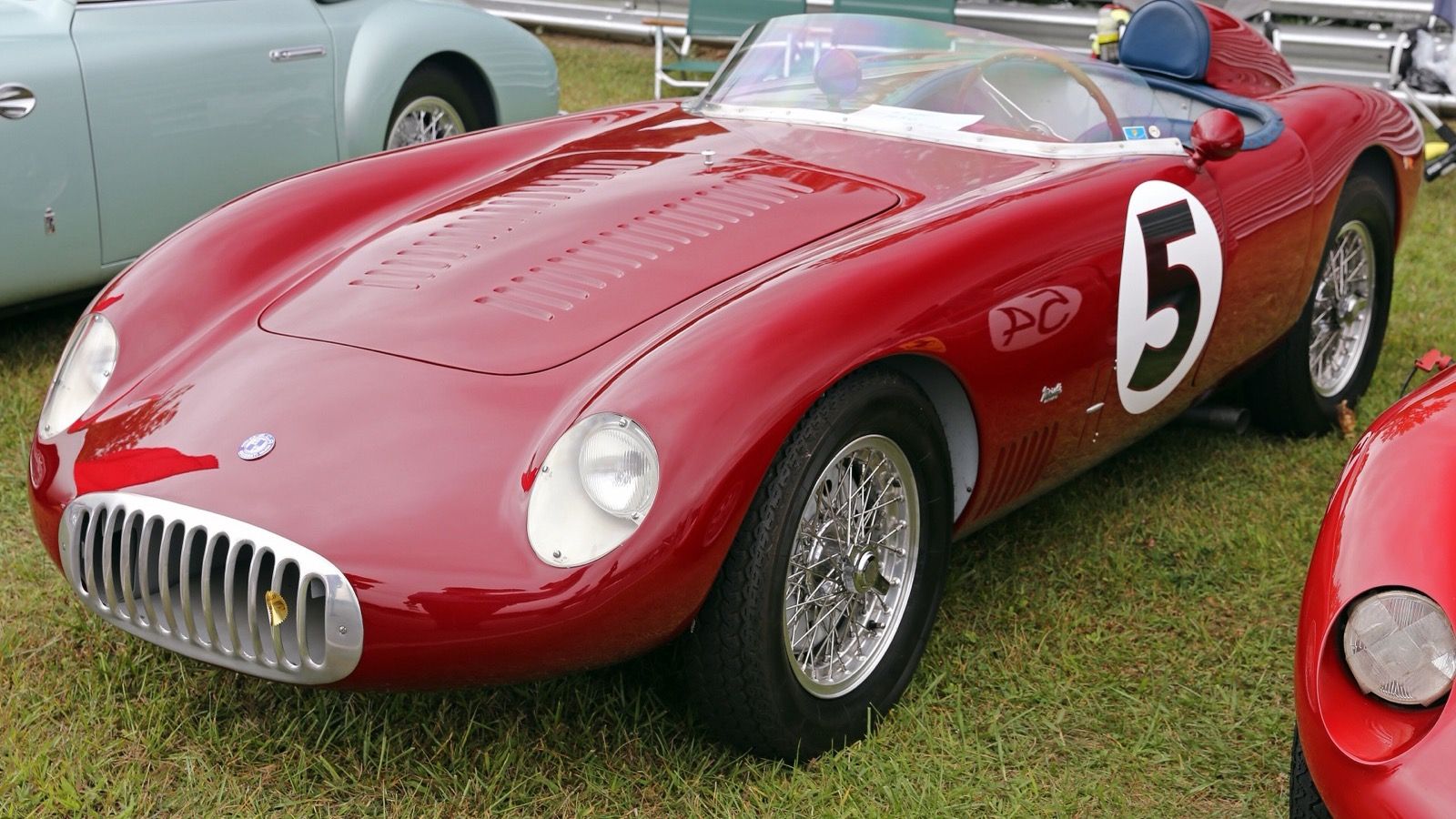
1956 Photo: “File:1956 O.S.C.A. MT4-TN (Tipo Nuovo), Lime Rock.jpg” by Mr.choppers / Wikimedia Commons, licensed under CC BY-SA 3.0. Cropped to 16:9.
Body styles
- Barchetta roadster
- Berlinetta coupe
- Spider
Related models
Collect the nameplate
Find a scale model of the OSCA MT4
Search Amazon across available years, colors, and scales. Exact releases vary, so confirm the listing before ordering.