
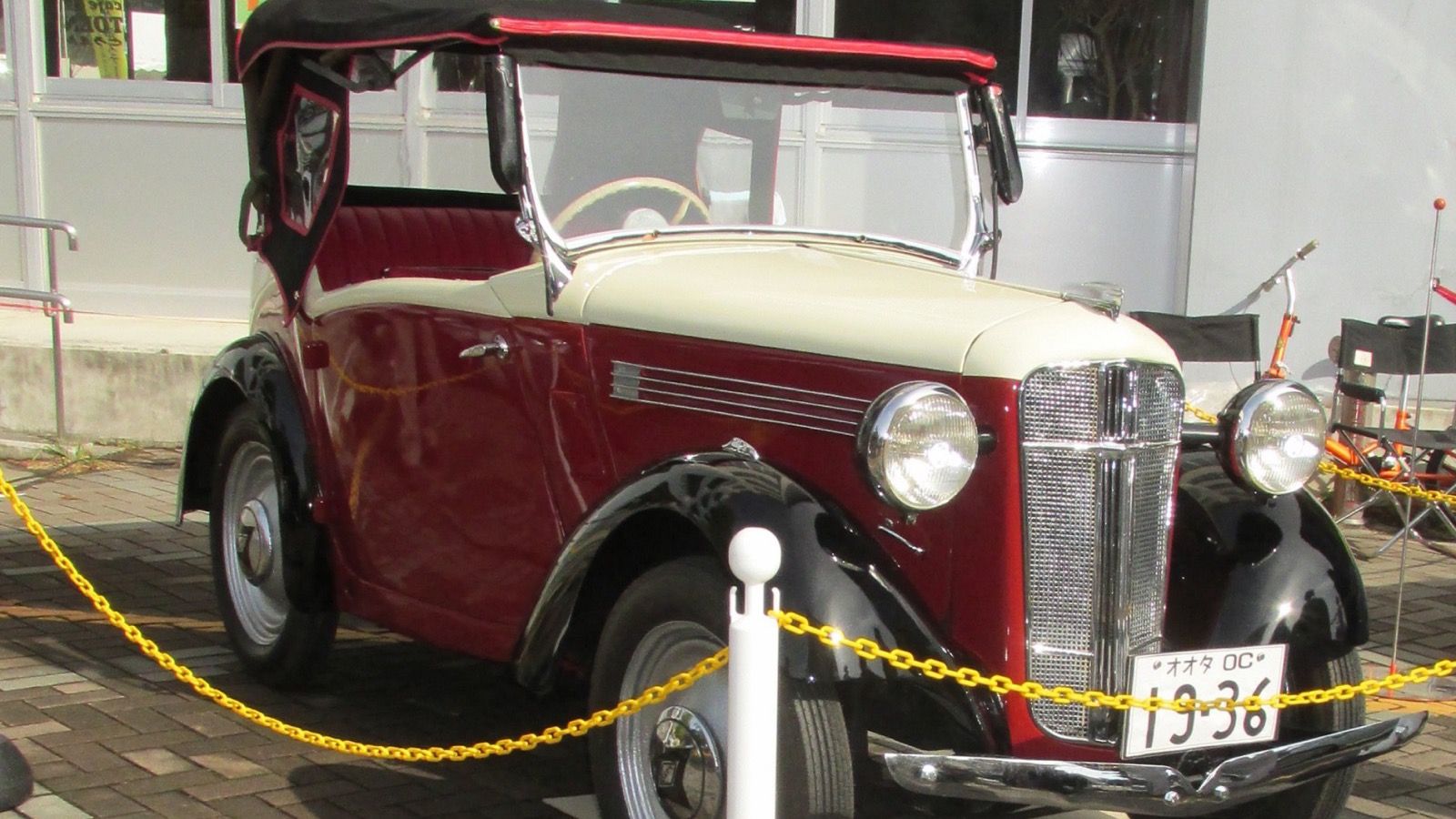
Ohta 7 (Type N-7) History
Ohta's first production car — a 736 cc four-cylinder light car offered in five body styles, one of the largest Japanese automobile lines of the 1930s.
Photo: “1936 Ohta Type OC Phaeton.jpg” by NEXT-EXIT / Wikimedia Commons — Public domain. Cropped to 16:9.
History
After more than a decade of building engine parts and recovering from the devastation of the 1923 Great Kantō Earthquake, Sukeo Ōta finally put his company's first production car on sale in 1934. The Ohta 7 — also catalogued as the Type N-7 — was powered by a 736 cc side-valve four-cylinder engine and offered in an unusually wide range of five body styles, from open tourers to light trucks, giving it appeal to both private buyers and small businesses.
With Mitsui Group investment in 1935 enabling factory expansion and a proper sales network, the Ohta 7 helped make Ōhta Jidōsha one of the largest automobile manufacturers in Japan during the mid-1930s. The 1936 racing-car variant scored success at the Tamagawa Speedway, giving the brand an unexpected performance pedigree.
Production was curtailed in late 1937 when the Japanese military attached Ohta to the Tachikawa aircraft company and redirected factory capacity to aero-engine parts and fire-pump engines. Fewer than 700 of the subsequent Model OD light truck were completed before wartime production effectively ended civilian car manufacturing.
Generations
First generation · Ohta 7 / Type N-7
736 cc side-valve four-cylinder; five body styles; established Ohta as one of Japan's leading carmakers of the 1930s.
Second generation · Model OC / OD
Photo: “1936 Ohta Type OC Phaeton.jpg” by NEXT-EXIT / Wikimedia Commons — Public domain. Cropped to 16:9.
Updated sedan (Model OC, 1936) and sub-3.2 m urban delivery truck (Model OD, 1937–1939); production halted by wartime military requisition.
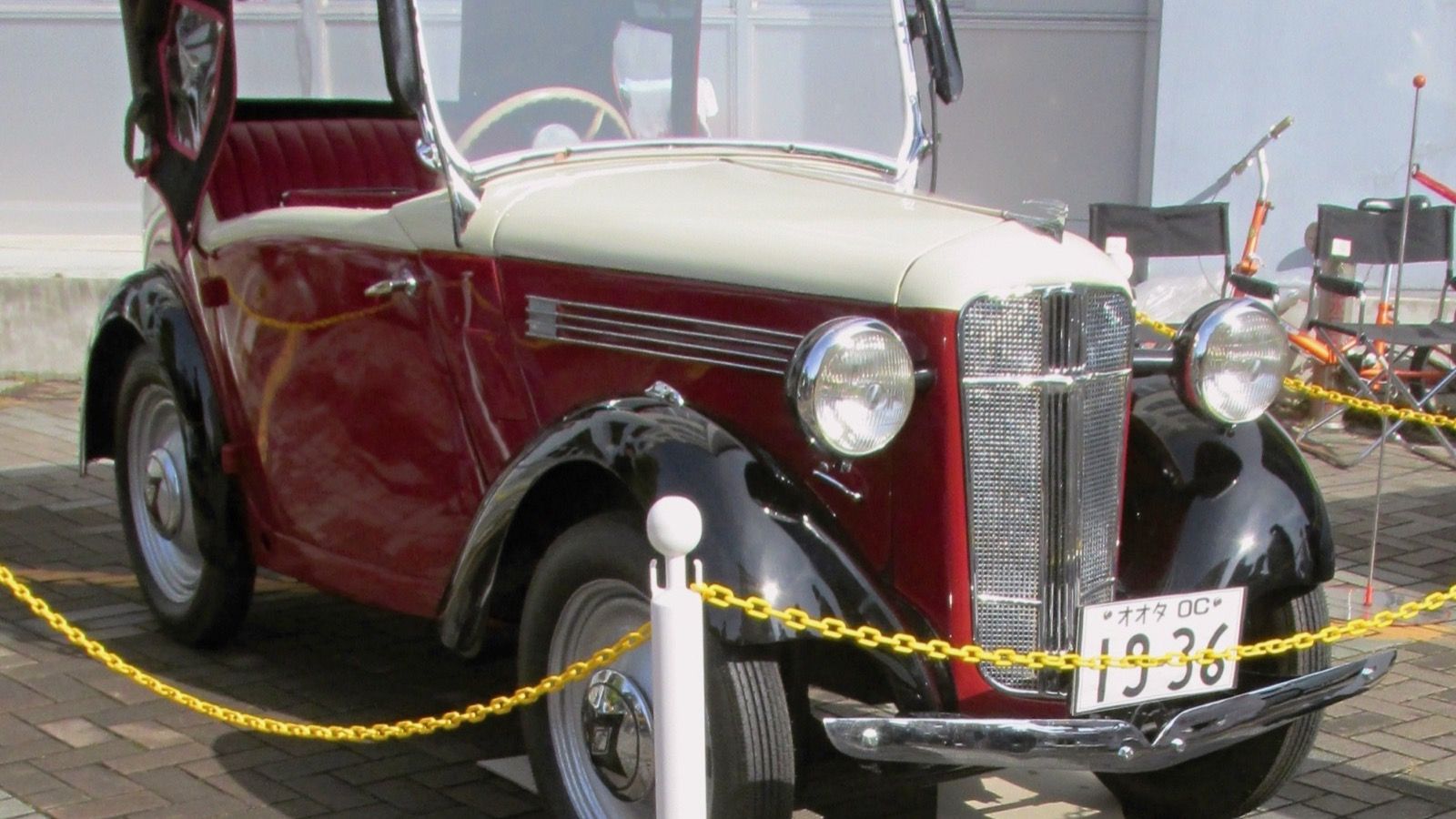
1936 Photo: “1936 Ohta Type OC Phaeton 2.jpg” by NEXT-EXIT / Wikimedia Commons, licensed under CC BY 3.0. Cropped to 16:9.
Body styles
- Sedan
- Tourer
- Truck
- Van
- Coupe
Related models
Collect the nameplate
Find a scale model of the Ohta 7 (Type N-7)
Search Amazon across available years, colors, and scales. Exact releases vary, so confirm the listing before ordering.