
Connected cabin technology history: navigation, media, and access
Dashboard technology moved from standalone hardware to connected software, bringing convenience, faster obsolescence and new privacy questions.
Answer first
The history of automotive navigation became the history of connected infotainment once maps, phones, accounts and vehicle controls converged on one screen.
Guidance moved onto the screen
Early in-car navigation used dead reckoning, map media or limited factory databases before satellite positioning and digital maps became practical. Connected traffic and cloud search later made map freshness as important as the display hardware.
Built-in navigation can retain destinations and account data, so ownership transfer requires more than removing a paired phone.
Infotainment absorbed vehicle controls
The history of car infotainment systems runs from radios and tape players through CD-based multimedia, touchscreens, smartphone projection and app ecosystems. As climate and vehicle settings moved into software, update support and interface usability became ownership concerns.
A large screen does not by itself mean newer underlying hardware, longer support or broader phone compatibility. Check the exact model year and software generation.
Keys became credentials
The history of keyless entry progresses from coded remote transmitters to passive proximity keys, phone-based digital keys and account-managed sharing. Convenience also creates transfer and theft risks.
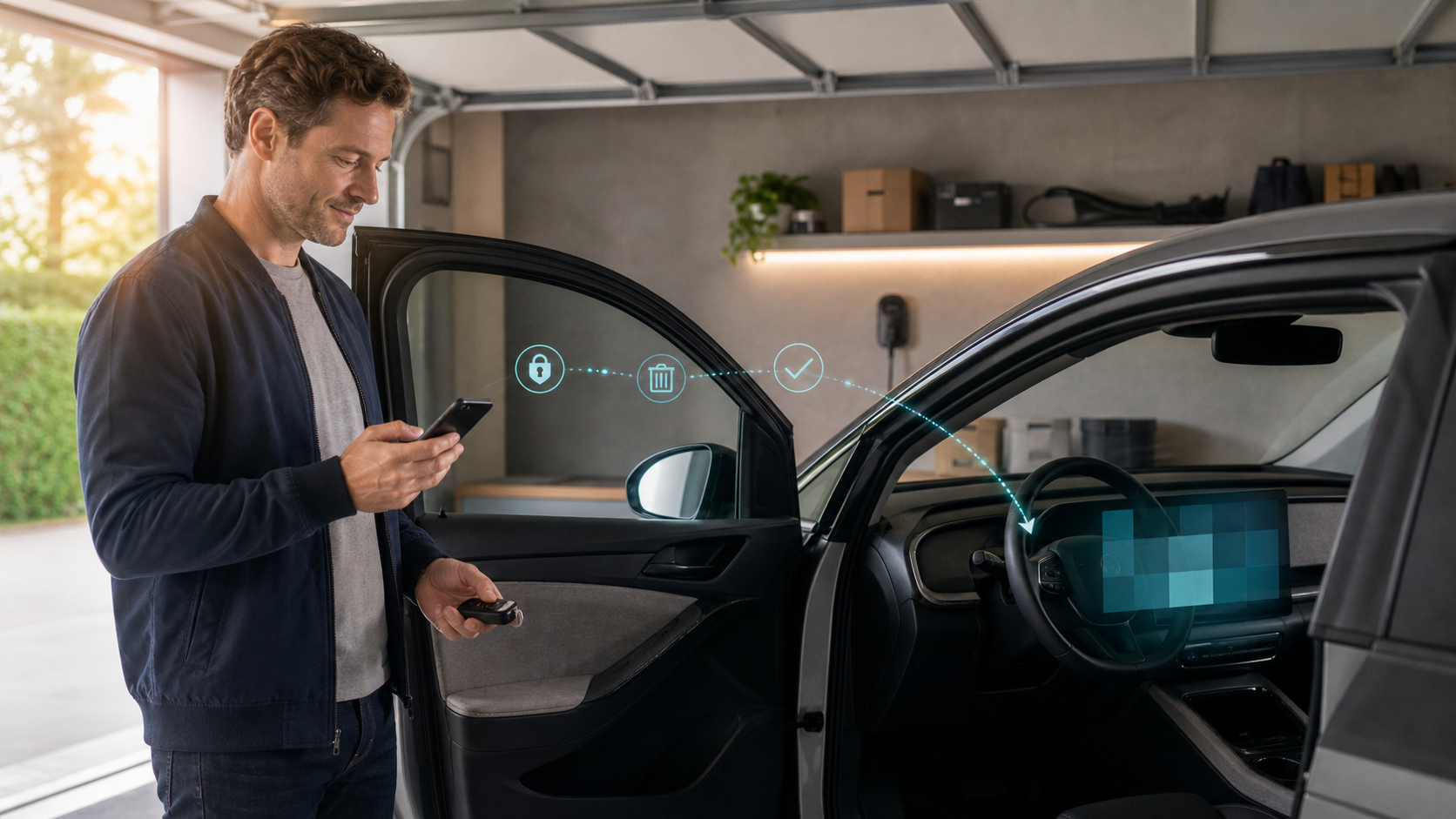
When selling, revoke digital keys in both the car and the cloud account, remove trusted devices and confirm that remote access has transferred.
Evidence ledger
Primary sources
Time-sensitive claims were checked against the sources below on August 15, 2026. The linked source controls.
- Federal Trade CommissionConnected cars and consumer data
- NHTSACybersecurity best practices for modern vehicles