
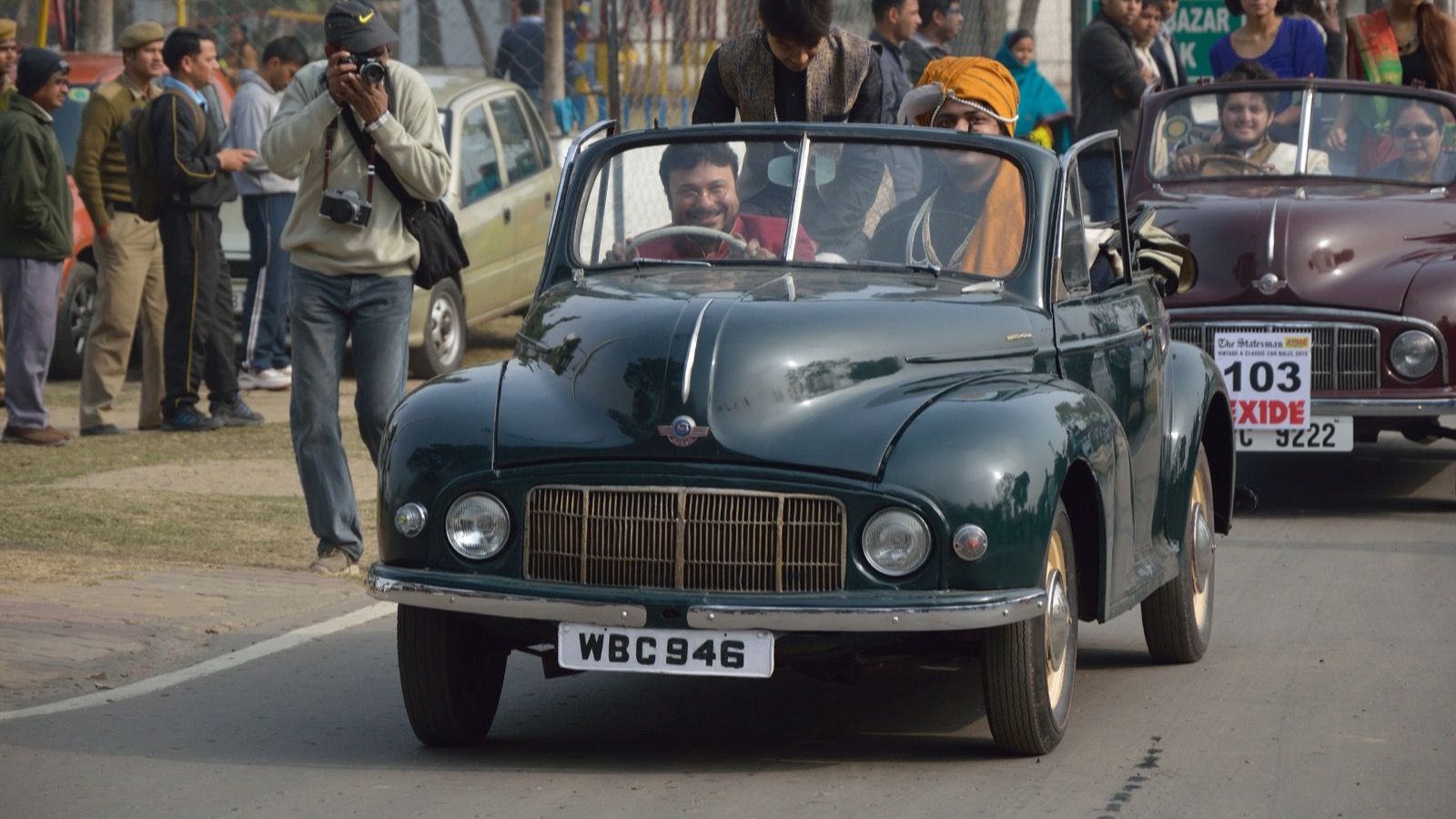
Morris Minor History
Alec Issigonis's much-loved post-war small car — the first British car to sell a million, built 1948–1971 across three series.
Photo: “Morris - Minor - 1949 - 7 hp - 4 cyl - WBC 946 - Kolkata 2015-01-11 4051.JPG” by Biswarup Ganguly / Wikimedia Commons, licensed under CC BY 3.0. Cropped to 16:9.
History
Designed by Alec Issigonis and launched at the 1948 Earls Court Motor Show, the Morris Minor was an advanced small car for its day — unitary construction, rack-and-pinion steering, torsion-bar independent front suspension and well-judged handling — that became one of Britain's best-loved cars. Over 1.6 million were built across its 23-year life.
It came in three main series: the side-valve Series MM (1948–1953), the overhead-valve Series II (1952–1956) with the Austin A-Series engine after the BMC merger, and the long-running Minor 1000 (1956–1971), the biggest seller of the three. In December 1960 the Minor became the first British car to pass one million units, marked by a run of 350 lilac 'Minor 1000000' (Minor Million) cars.
Bodies included two- and four-door saloons, a convertible tourer, the wood-framed Traveller estate (from 1953), and commercial vans and pick-ups. Issigonis's front-drive Mini and 1100 eventually displaced it, but the Minor stayed in production until 1971 and remains a fixture of British classic-car culture.
Generations
Series MM · MM
Photo: “Morris - Minor - 1949 - 7 hp - 4 cyl - WBC 946 - Kolkata 2015-01-11 4051.JPG” by Biswarup Ganguly / Wikimedia Commons, licensed under CC BY 3.0. Cropped to 16:9.
The original side-valve Minor; about 250,000 built. Low-headlamp early cars are the most distinctive.
1949 Photo: “Morris - Minor - 1949 - 7 hp - 4 cyl - WBC 946 - Kolkata 2015-01-11 4051.JPG” by Biswarup Ganguly / Wikimedia Commons, licensed under CC BY 3.0. Cropped to 16:9.
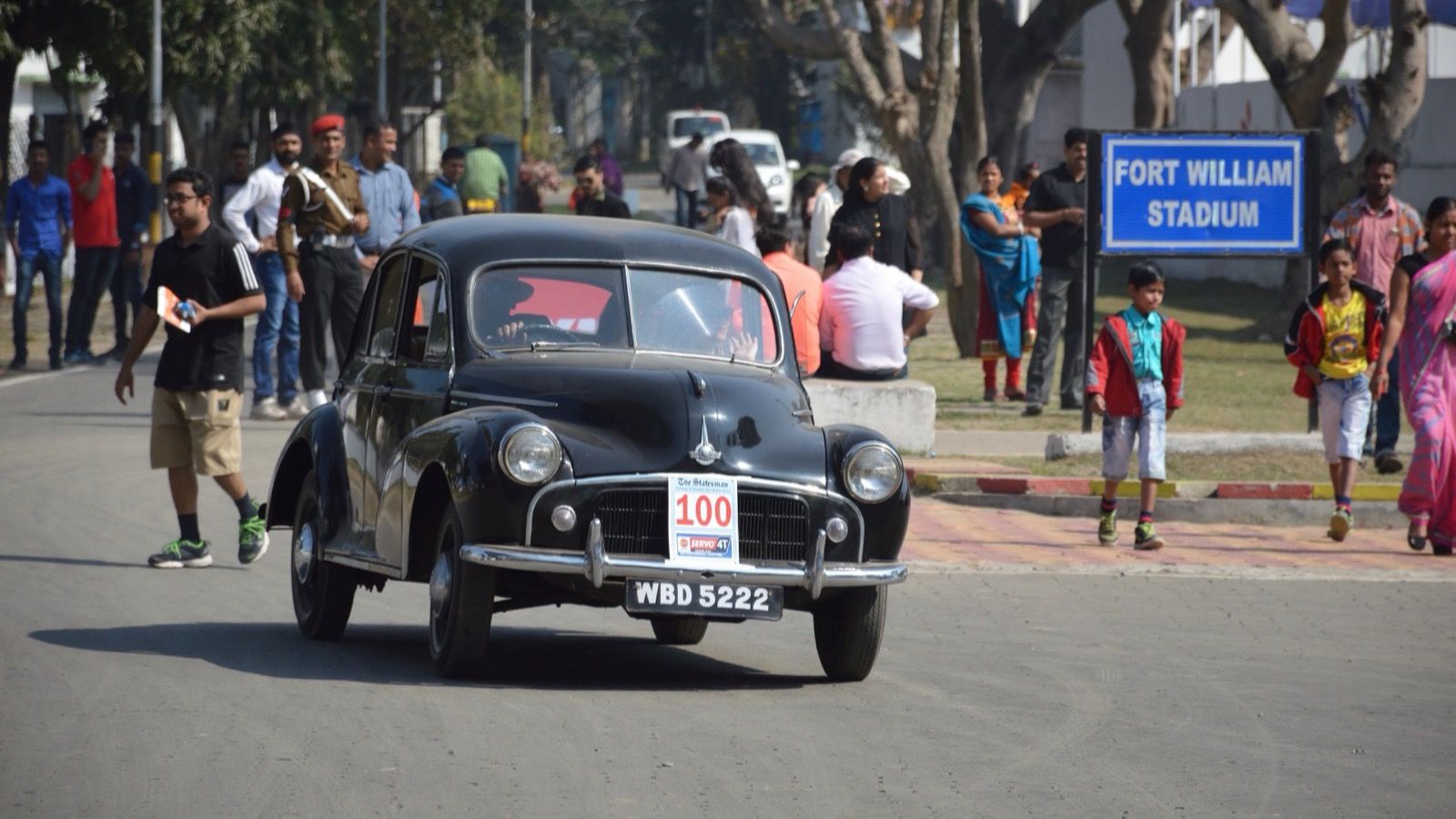
1950 Photo: “1950 Morris Minor - 4 cyl - WBD 5222 - Kolkata 2017-01-29 4673.JPG” by Biswarup Ganguly / Wikimedia Commons, licensed under CC BY 3.0. Cropped to 16:9.
Series II
Adopted the overhead-valve Austin A-Series engine after the BMC merger; about 270,000 built.
Minor 1000
Larger 948 cc then 1098 cc A-Series engine and a one-piece windscreen; the best-selling Minor, with roughly 847,000 built.
Body styles
- Two-door saloon
- Four-door saloon
- Convertible tourer
- Traveller estate
- Van
- Pick-up
Notable special editions & performance variants
Minor Million
A run of 350 lilac-painted, white-trimmed two-door saloons marking the Minor as the first British car to build one million units, badged 'Minor 1000000'.
Traveller
The estate version, with a structural ash-wood frame on the rear bodywork — a distinctive and now sought-after Minor variant.
Related models
Collect the nameplate
Find a scale model of the Morris Minor
Search Amazon across available years, colors, and scales. Exact releases vary, so confirm the listing before ordering.