
Marcos 1800 GT History
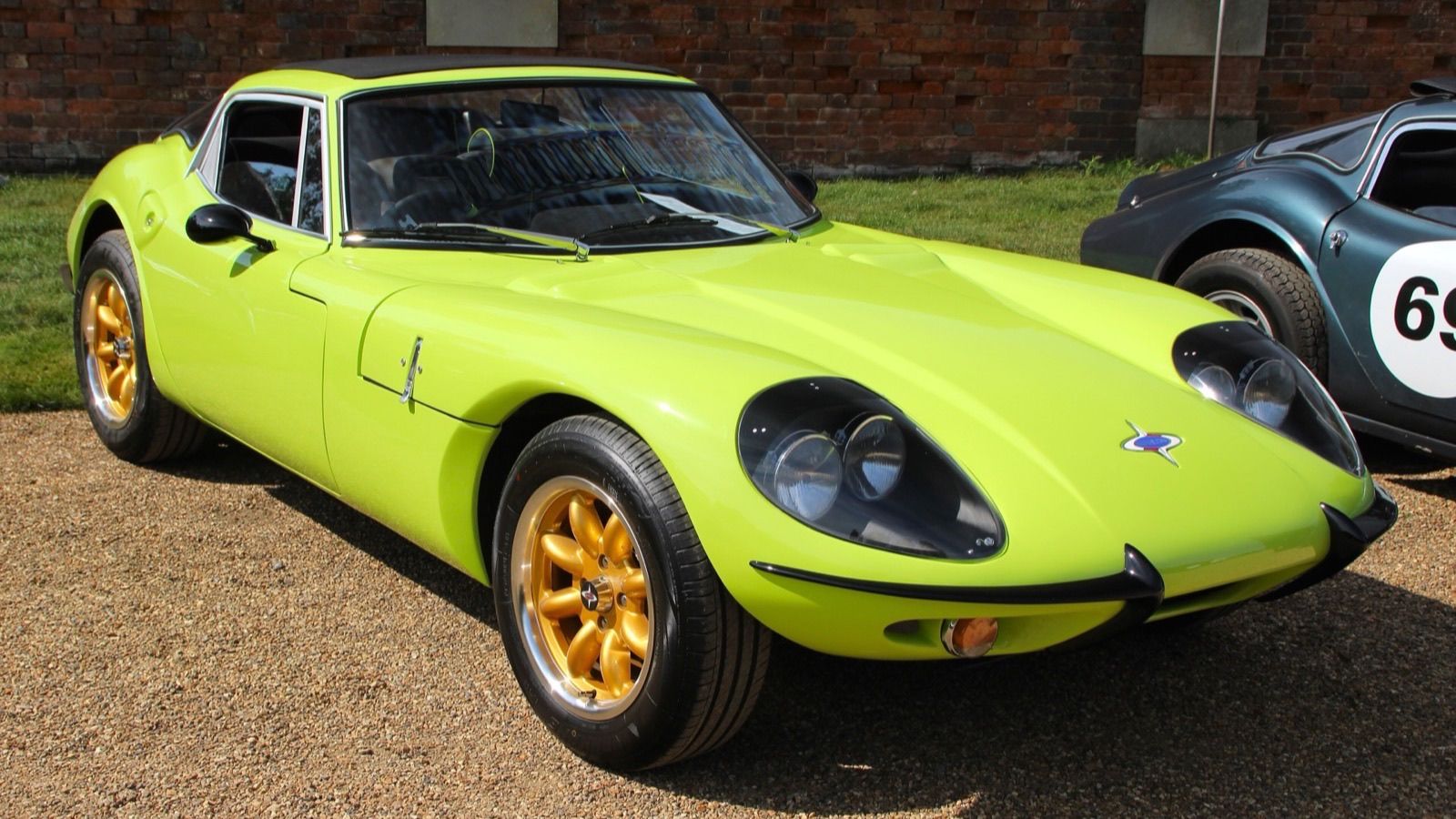
The car that defined Marcos — a very low, beautiful coupe by Dennis Adams, originally on a glued plywood chassis with a Volvo engine.
Photo: “1968 Marcos GT 1600 HCC23.jpg” by MrWalkr / Wikimedia Commons, licensed under CC BY-SA 4.0. Cropped to 16:9.
History
The Marcos 1800 GT, introduced in 1964, is the shape most associated with the marque: a dramatically low, glassfibre-bodied coupe styled by brothers Dennis and Peter Adams. Beneath the body sat Costin-derived engineering — a plywood monocoque chassis glued together from hundreds of separate wooden pieces, light and stiff but slow and costly to build.
The original cars used Volvo's cast-iron 1,778 cc B18 four-cylinder engine (hence '1800') with overdrive and a De Dion rear axle. The cabin was famously reclined, with the driver almost lying down and the pedal box — rather than the seat — adjusting for reach. Roughly 100 of the wooden-chassis 1800s were built (sources cite 99 or 106) before the expensive Volvo unit gave way in 1966 to the cheaper Ford Kent 1500.
Through the later 1960s the same Adams coupe carried a range of engines — the Ford 1500 and 1600 Crossflow fours, a 2-litre Ford V4, and later a 3-litre Ford Essex V6 and Volvo straight-six — as it evolved into the 'Marcos GT' family, with a cheaper steel chassis replacing the plywood monocoque from mid-1969. Financial trouble — tied to failed US exports and an expensive new Westbury factory — forced the original company to close in 1971. The design later returned in component form in the 1980s and grew into the Mantula.
Generations
Marcos GT (1964–1971) · Adams coupe
Photo: “1968 Marcos GT 1600 HCC23.jpg” by MrWalkr / Wikimedia Commons, licensed under CC BY-SA 4.0. Cropped to 16:9.
The Dennis Adams-styled low coupe — plywood monocoque with a Volvo B18 at launch, later Ford fours, a V4 and the 3-litre Essex V6 on a steel chassis.
1968 Photo: “1968 Marcos GT 1600 HCC23.jpg” by MrWalkr / Wikimedia Commons, licensed under CC BY-SA 4.0. Cropped to 16:9.
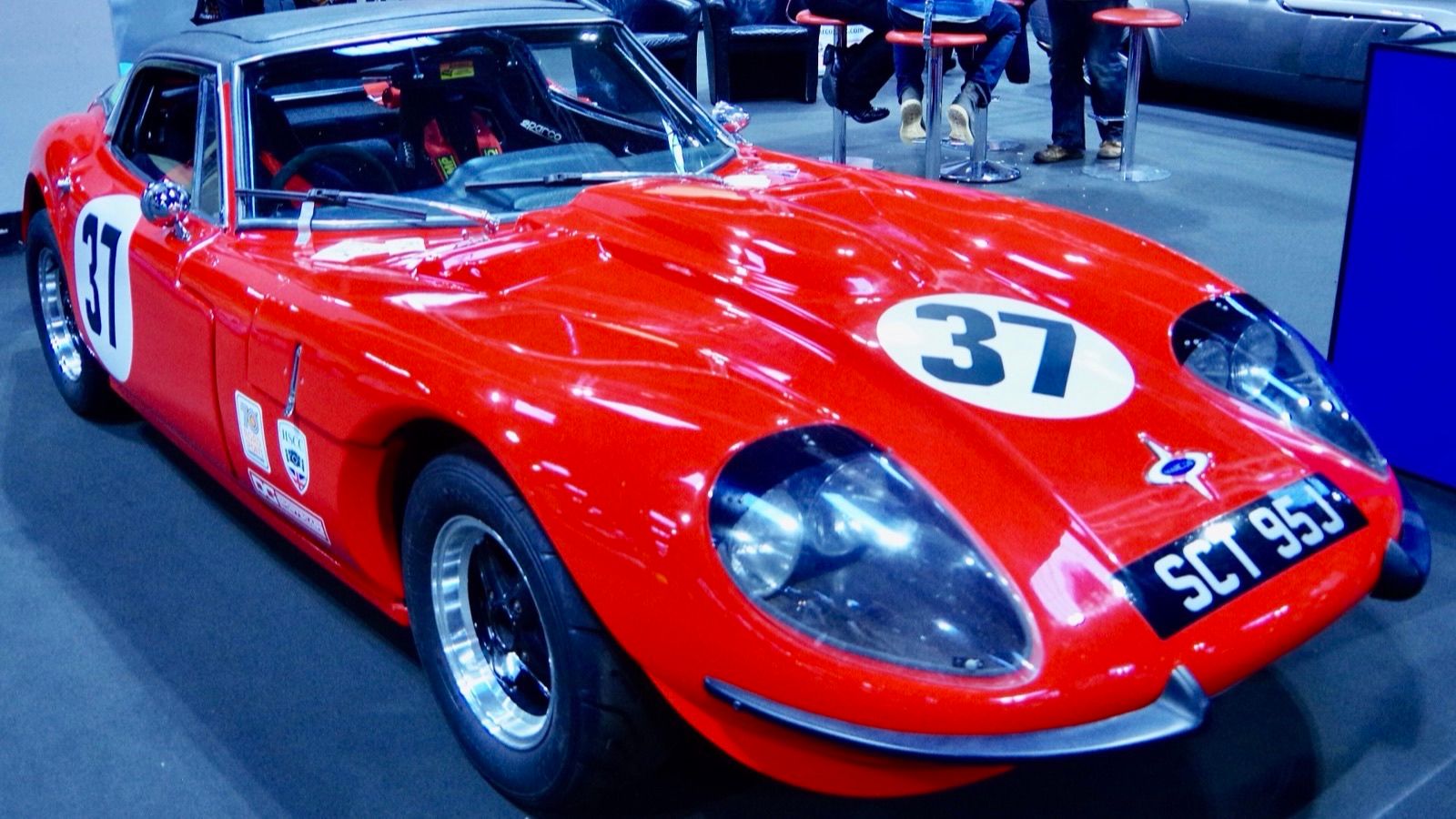
1970 Photo: “1970 Marcos GT (49379462638).jpg” by David Merrett from Daventry, England / Wikimedia Commons, licensed under CC BY 2.0. Cropped to 16:9.
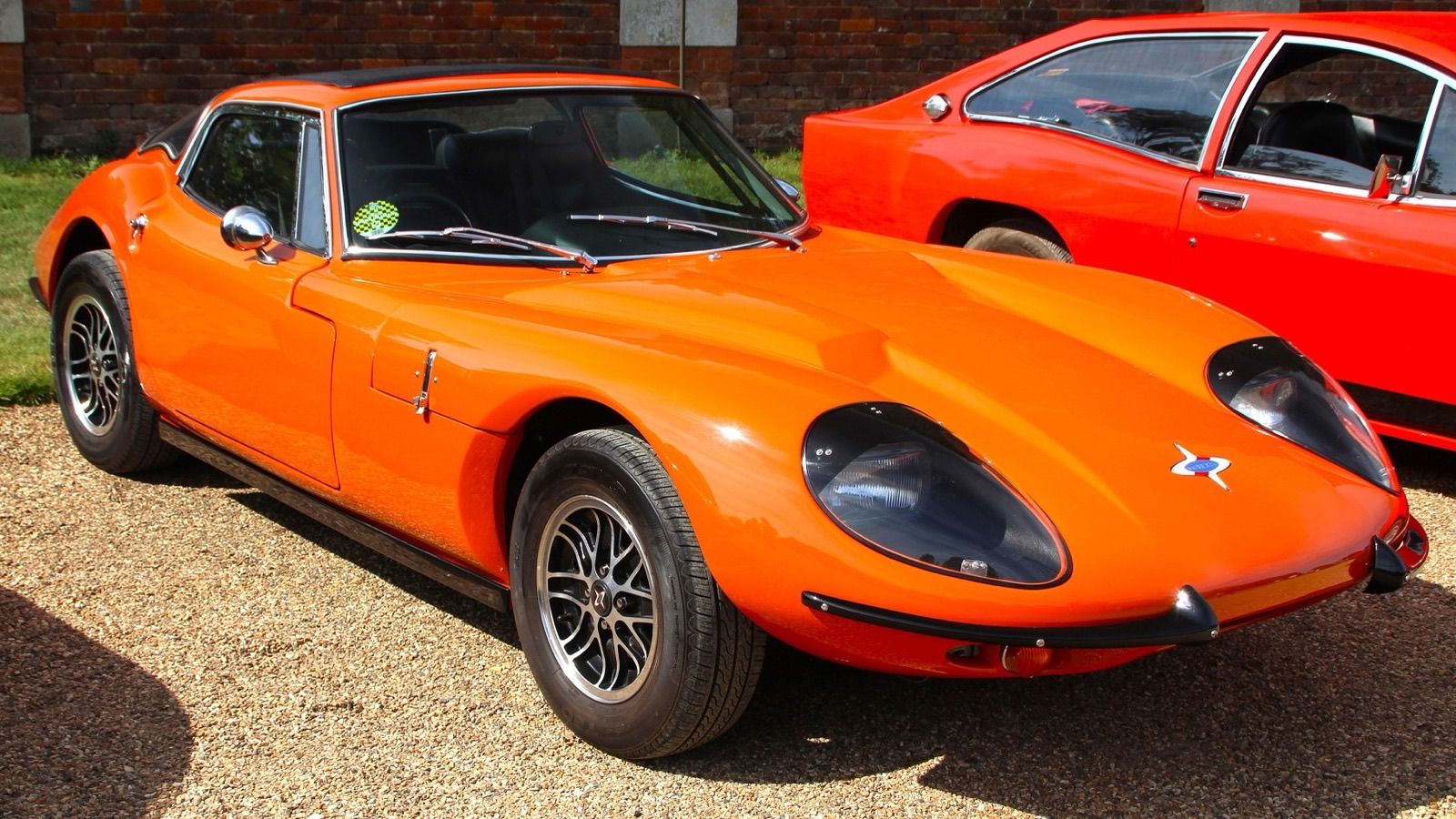
1971 Photo: “1971 Marcos GT 3000 HCC23.jpg” by MrWalkr / Wikimedia Commons, licensed under CC BY-SA 4.0. Cropped to 16:9.
Body styles
- Coupe
Related models
Collect the nameplate
Find a scale model of the Marcos 1800 GT
Search Amazon across available years, colors, and scales. Exact releases vary, so confirm the listing before ordering.