
Jaguar XJ History
Catalog record
Photography for this nameplate has not yet cleared the archive’s licensing and identity checks. The researched text below remains available while the page stays out of search and advertising inventory.
History
The XJ debuted in 1968 as the saloon that consolidated Jaguar's range into a single model line, personally championed by Sir William Lyons. Praised for its blend of ride, refinement, handling, and value, it became the definitive Jaguar and remained in production, across many generations, until 2019.
The original Series 1–3 (1968–1992) introduced the silky 5.3-litre V12 in the XJ12. The XJ40 (1986–1994) modernised the platform; the X300 (1994–1997) restored classic four-headlamp styling; and the X308 (1997–2003) brought Jaguar's AJ-V8. The X350 (2003–2009) switched to a lightweight all-aluminium body, and the final X351 (2010–2019) adopted a bold, modern shape before the nameplate was retired.
Generations
Series 1–3 · Series 1 / 2 / 3
The original XJ6/XJ12, home of the 5.3-litre V12; about 318,000 built across the three series. The Series 3 carried Pininfarina styling tweaks.
XJ40
A thoroughly modernised XJ with the new AJ6 six; the 6.0-litre V12 arrived for its final year.
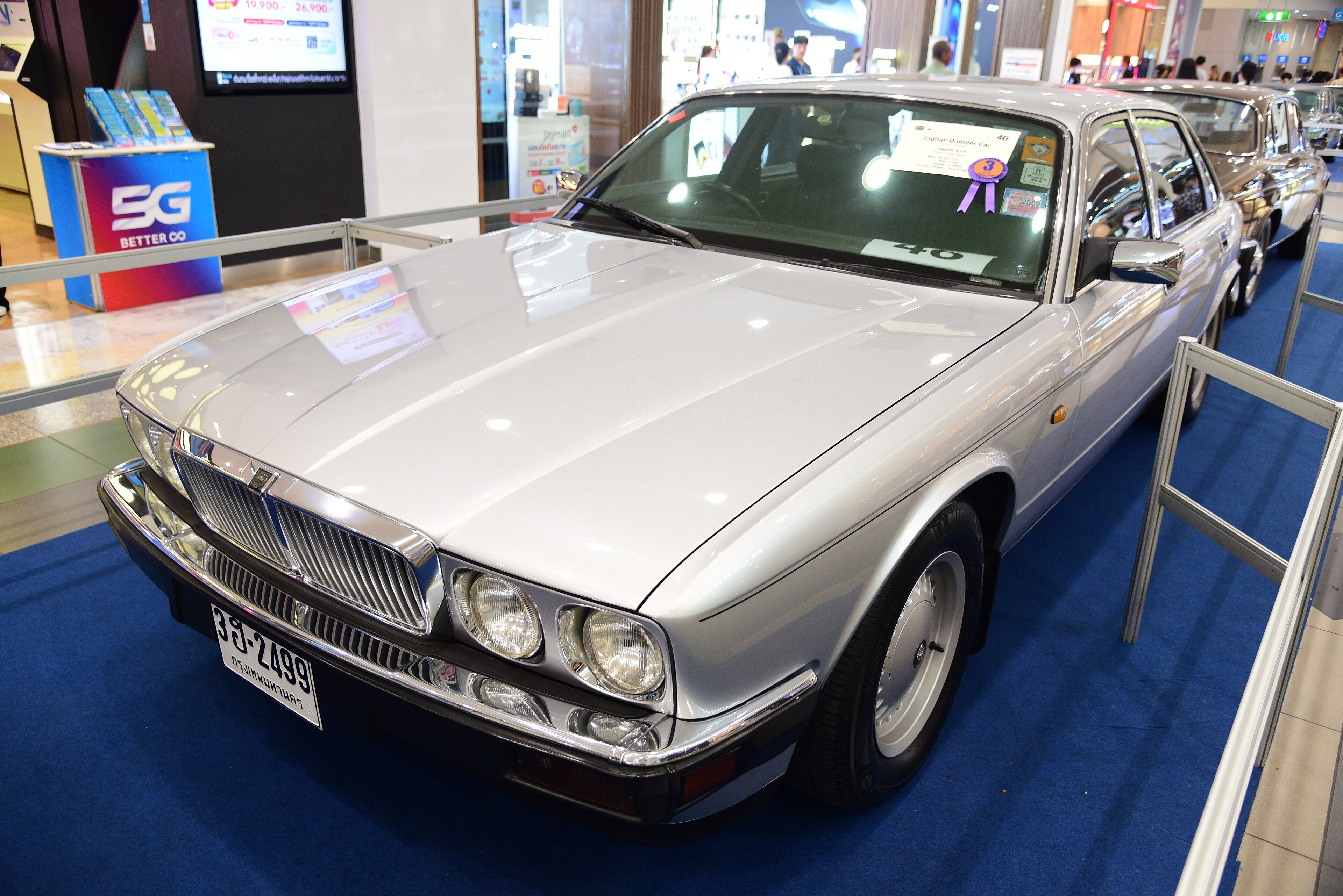
1992 Photo: “1992 Jaguar XJ6 Saloon.jpg” by Coolalabright / Wikimedia Commons, licensed under CC BY 4.0
X300
A Ford-era restyle that brought back the classic quad-headlamp face, with supercharged six-cylinder XJR models.
X308
Switched to Jaguar's AJ-V8 — the XJ6/XJ12 names giving way to XJ8, with a supercharged XJR.
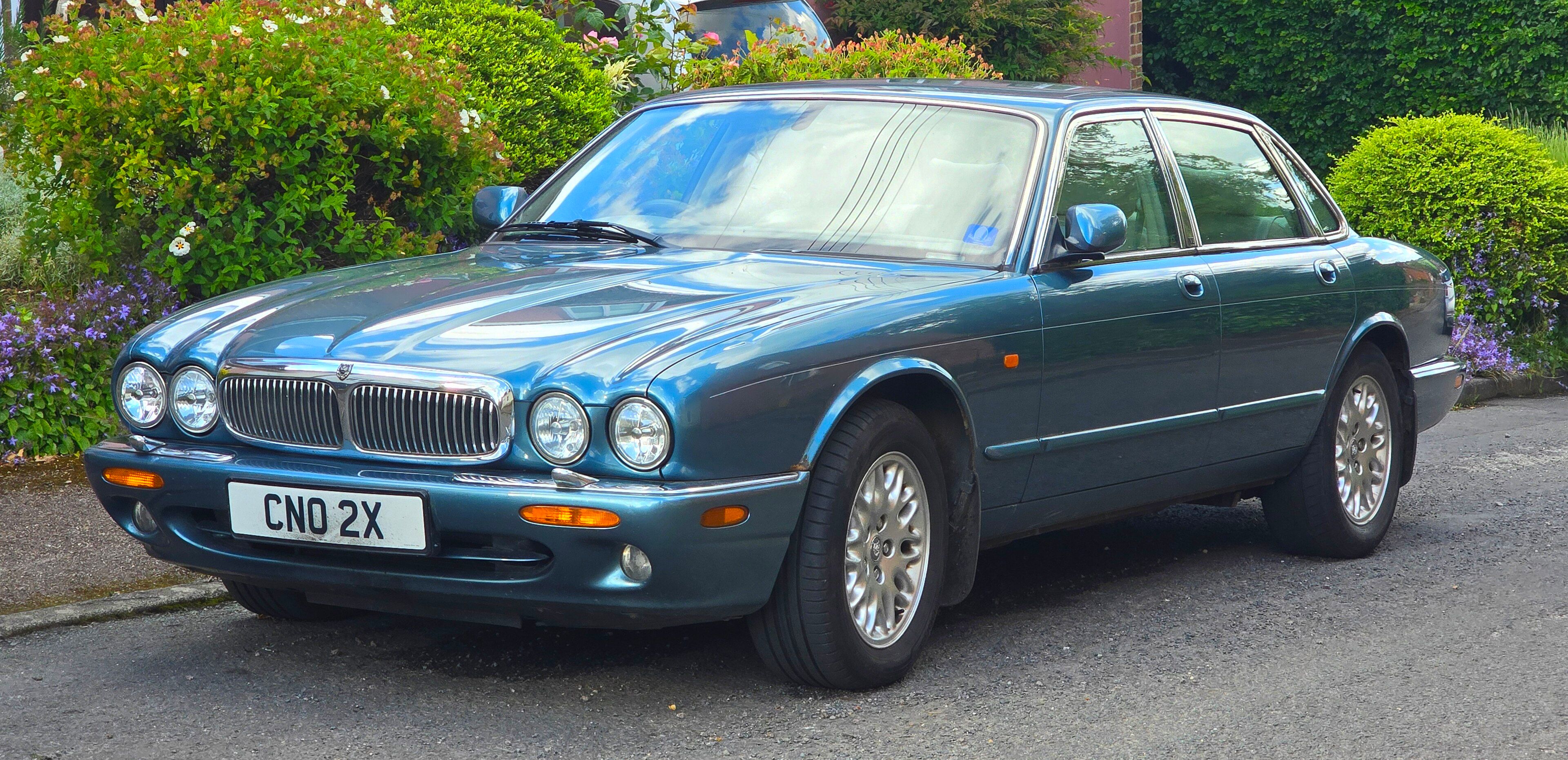
2000 Photo: “2000 Jaguar XJ Executive Auto.jpg” by Calreyn88 / Wikimedia Commons, licensed under CC BY-SA 4.0
X350 / X358 · X350
An all-aluminium monocoque made it lighter and roomier despite a larger body; classically styled.
X351
A dramatic, modern redesign that broke with the retro look; the last XJ, retired in 2019.
Body styles
- 4-door saloon
- Long-wheelbase saloon
Related models
Collect the nameplate
Find a scale model of the Jaguar XJ
Search Amazon across available years, colors, and scales. Exact releases vary, so confirm the listing before ordering.