
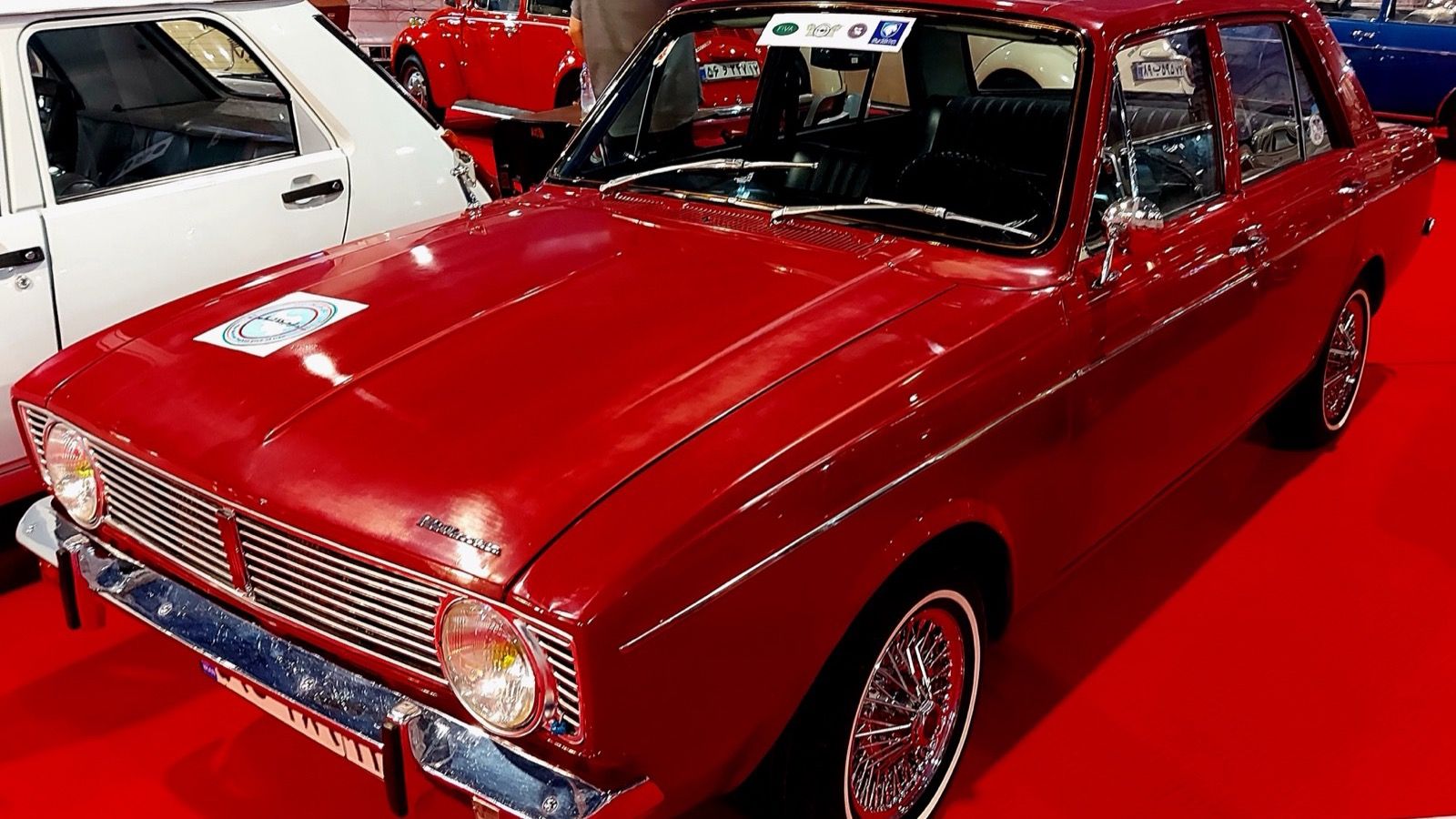
Iran Khodro Paykan History
Iran's most iconic car — a licensed Hillman Hunter that became the 'national car' of Iran, produced for nearly four decades.
Photo: “Paykan 01 2023-09-01.jpg” by قندون / Wikimedia Commons, licensed under CC BY-SA 4.0. Cropped to 16:9.
History
The Paykan (Persian for 'arrow') was introduced in May 1967 under the Iran National banner as a licensed version of the British Rootes Arrow — the Hillman Hunter — assembled initially from complete knock-down kits. It quickly became Iran's quintessential family car, affordable and simple to maintain, and grew into a symbol of national identity.
When Rootes was absorbed by Chrysler and then Peugeot, Iran Khodro secured the full production tooling; by the mid-1970s the Paykan was manufactured domestically, eventually with a Peugeot-licensed engine. Over two million saloons were built before sedan production ended in 2005, nearly three decades after the Hillman Hunter line itself closed in Britain. A pickup variant — the Paykan Bardo — continued in production until 2015.
Few cars anywhere have shaped a nation's automotive culture as profoundly as the Paykan shaped Iran's. Its extraordinary longevity stemmed from economic isolation during and after the Islamic Revolution, which made updating the line difficult; paradoxically, this made the Paykan ubiquitous well into the 21st century.
Generations
First generation (Hillman Hunter-derived) · Iran National / Paykan
Photo: “Paykan 01 2023-09-01.jpg” by قندون / Wikimedia Commons, licensed under CC BY-SA 4.0. Cropped to 16:9.
CKD assembly of the Rootes Arrow, later transitioning to full domestic manufacture; original saloon and estate variants.
Post-revolution production · Paykan (Peugeot engine era)
Continued under the Islamic Republic with Peugeot-sourced engine tooling; essentially the same body, progressively updated interior, until sedan production ended in 2005.
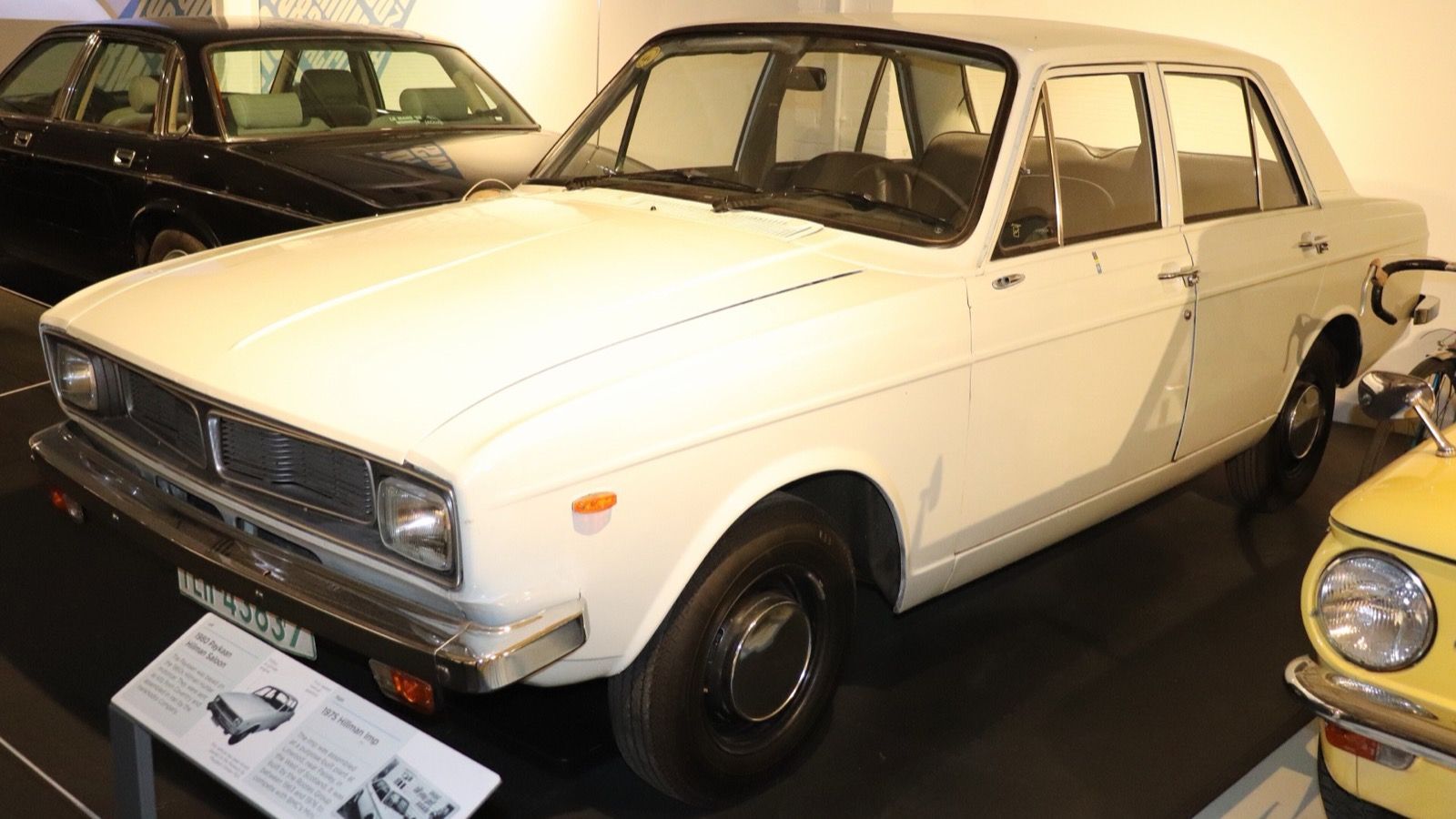
1980 Photo: “1980 Paykan (Hillman Hunter) 1.8.jpg” by Vauxford / Wikimedia Commons, licensed under CC BY-SA 4.0. Cropped to 16:9.
Body styles
- Sedan
- Pickup
Notable special editions & performance variants
Paykan Bardo (Pickup)
Long-running pickup variant of the Paykan platform; outlasted the sedan by nearly a decade.
Related models
Collect the nameplate
Find a scale model of the Iran Khodro Paykan
Search Amazon across available years, colors, and scales. Exact releases vary, so confirm the listing before ordering.