
Hudson Hornet History
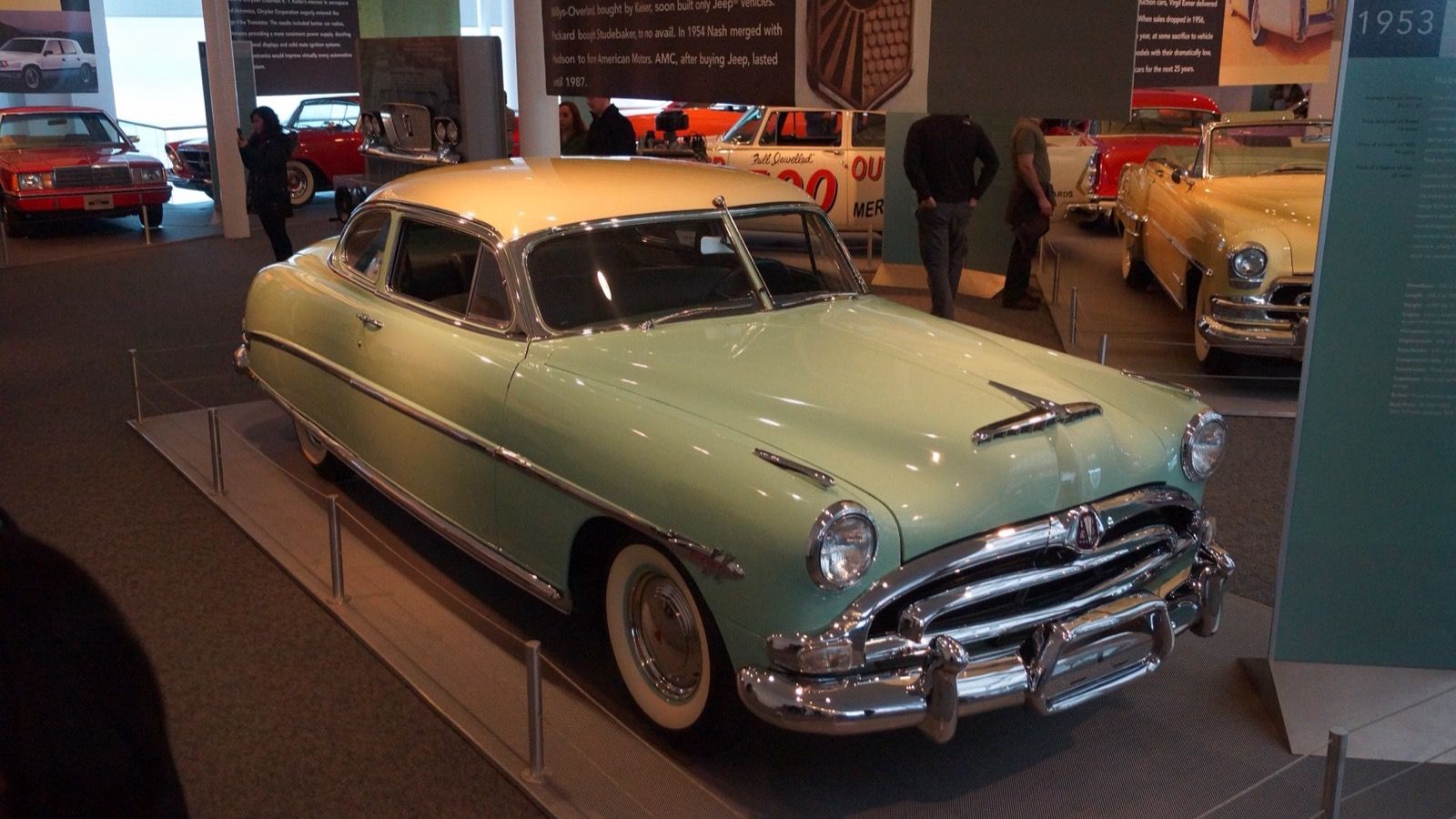
Hudson's famous 'step-down' performance car (1951–1957) — the 'Fabulous Hudson Hornet' that dominated early-1950s NASCAR.
Photo: “1953 Hudson Hornet (30933728344).jpg” by Greg Gjerdingen from Willmar, USA / Wikimedia Commons, licensed under CC BY 2.0. Cropped to 16:9.
History
Introduced for 1951, the Hornet was the top of Hudson's 'step-down' line, so called because its monocoque body dropped the floor between the chassis rails — letting passengers step down into the car. The low center of gravity gave the Hornet exceptional handling for its era, and under the hood sat a 308-cubic-inch flathead straight-six, the largest six in the American industry at the time.
With the dual-carburetor 'Twin H-Power' option, the over-built six made the Hornet a stock-car weapon. The 'Fabulous Hudson Hornet' dominated NASCAR Grand National racing: Hudsons won 27 of 34 races in 1952, 22 in 1953, and 17 in 1954, with drivers like Marshall Teague and Herb Thomas — a remarkable run for a low-volume independent against the Detroit giants.
After Hudson merged with Nash to form AMC in 1954, the original step-down Hornet ended; the name continued for 1955–1957 on a Nash-based body (the so-called 'Hash'), losing the platform that had made the car special. Hudson production ended on June 25, 1957, retiring the nameplate.
Generations
Step-down Hornet · Monobilt step-down
Photo: “1953 Hudson Hornet (30933728344).jpg” by Greg Gjerdingen from Willmar, USA / Wikimedia Commons, licensed under CC BY 2.0. Cropped to 16:9.
The original — Hudson's unit-body 'step-down' chassis with the 308 cu in six and Twin H-Power; the NASCAR-dominating 'Fabulous Hudson Hornet'.
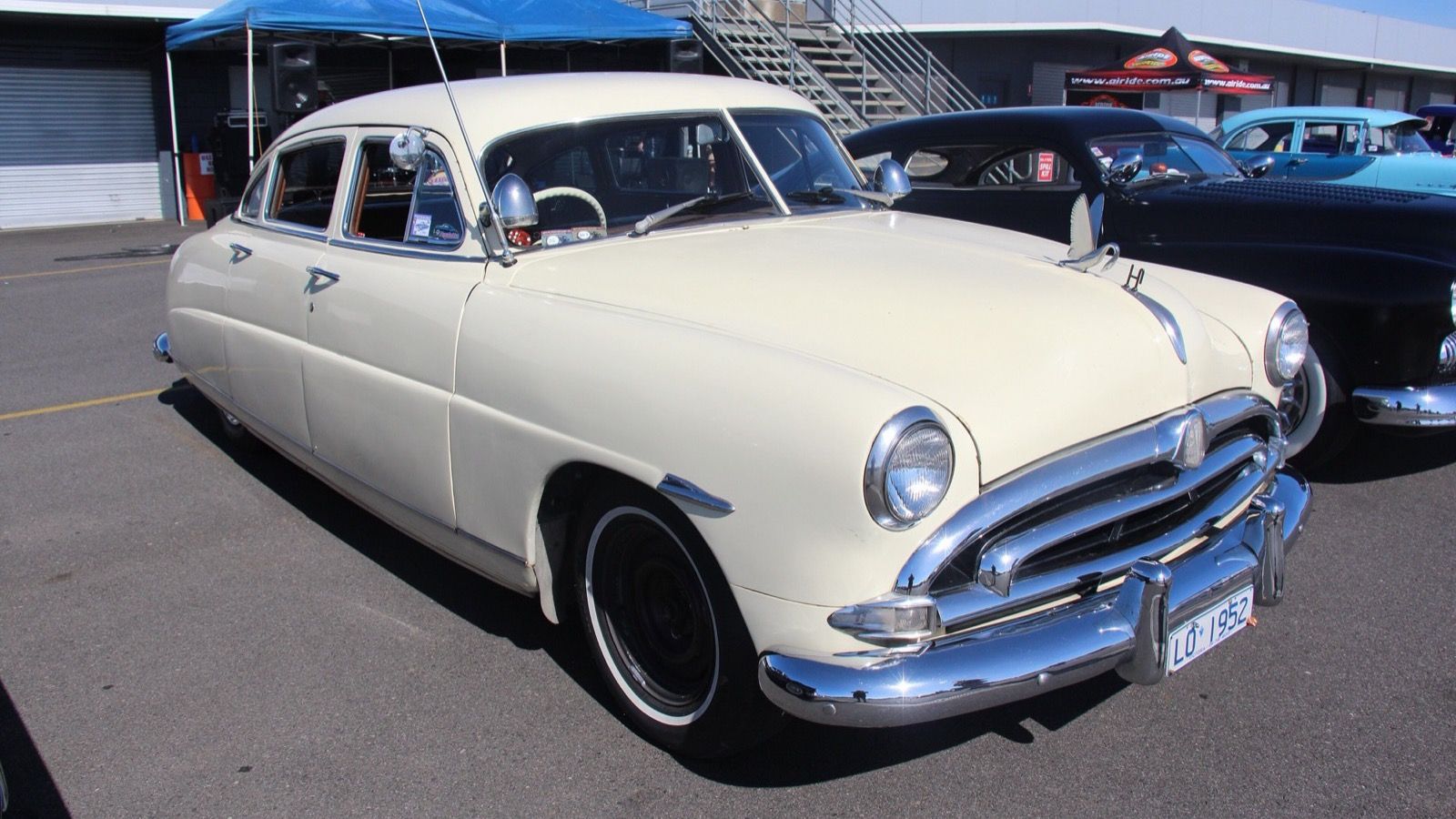
1952 Photo: “1952 Hudson Hornet Sedan (24273772482).jpg” by Sicnag / Wikimedia Commons, licensed under CC BY 2.0. Cropped to 16:9.
1953 Photo: “1953 Hudson Hornet (30933728344).jpg” by Greg Gjerdingen from Willmar, USA / Wikimedia Commons, licensed under CC BY 2.0. Cropped to 16:9.
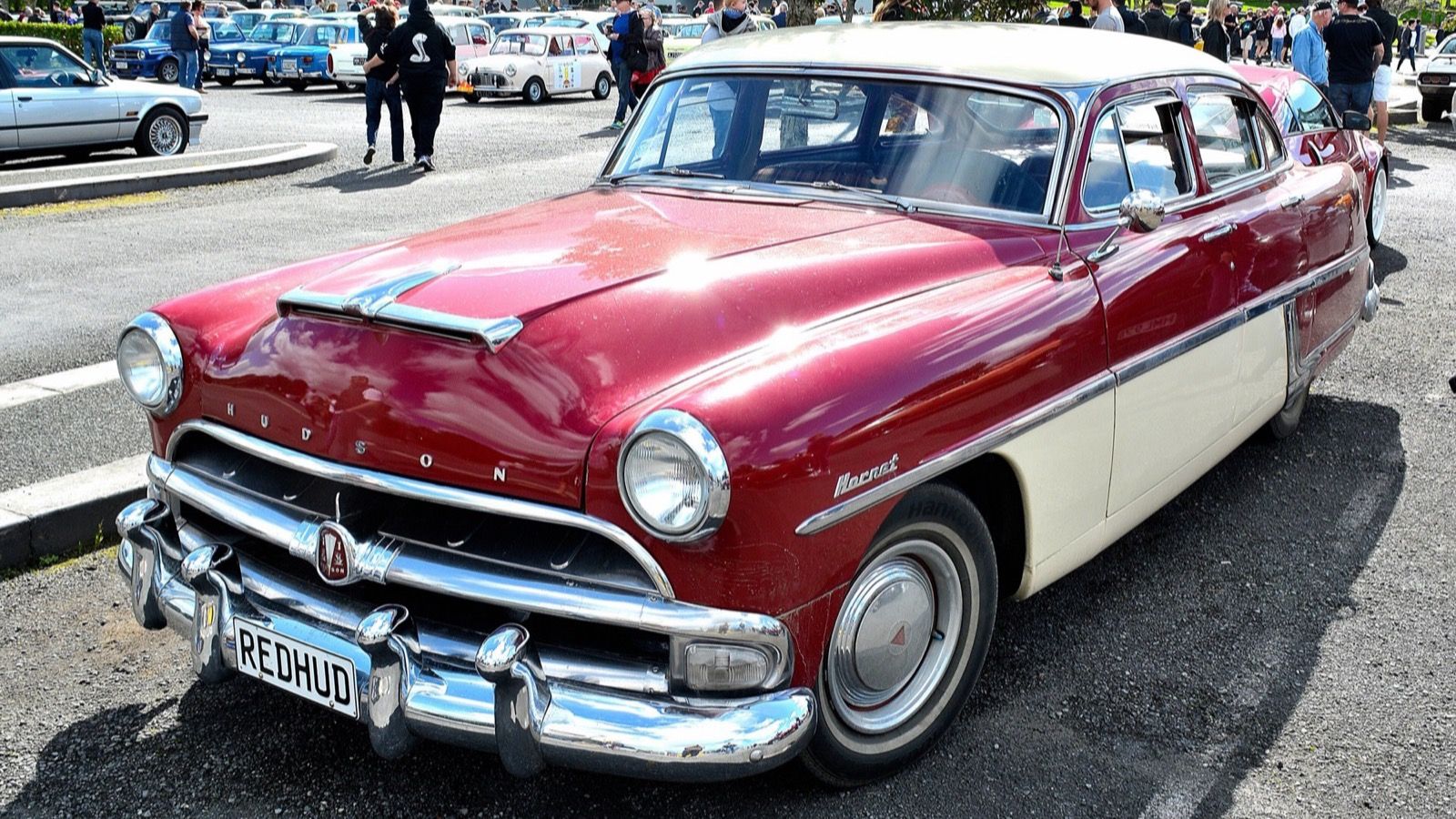
1954 Photo: “1954 Hudson Hornet (29318544611).jpg” by GPS 56 from New Zealand / Wikimedia Commons, licensed under CC BY 2.0. Cropped to 16:9.
Nash-based Hornet · AMC-era Hornet
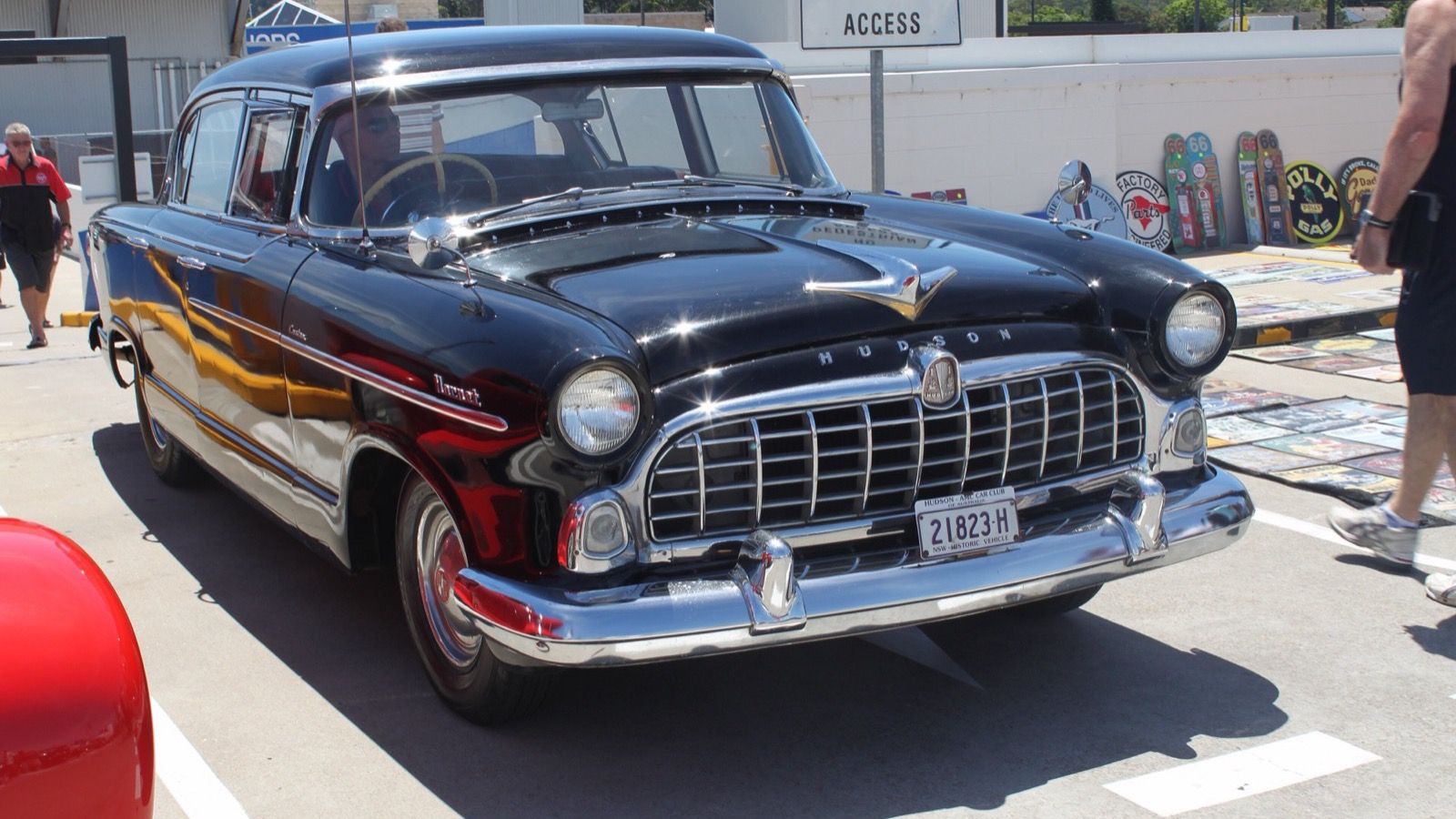
Photo: “1955 Hudson Hornet (16316705735).jpg” by Jeremy from Sydney, Australia / Wikimedia Commons, licensed under CC BY 2.0. Cropped to 16:9.
Post-merger Hornets built on the Nash body in Kenosha, Wisconsin; a Packard V8 was offered for 1955–1956 before the marque was retired after 1957.
1955 Photo: “1955 Hudson Hornet (16316705735).jpg” by Jeremy from Sydney, Australia / Wikimedia Commons, licensed under CC BY 2.0. Cropped to 16:9.
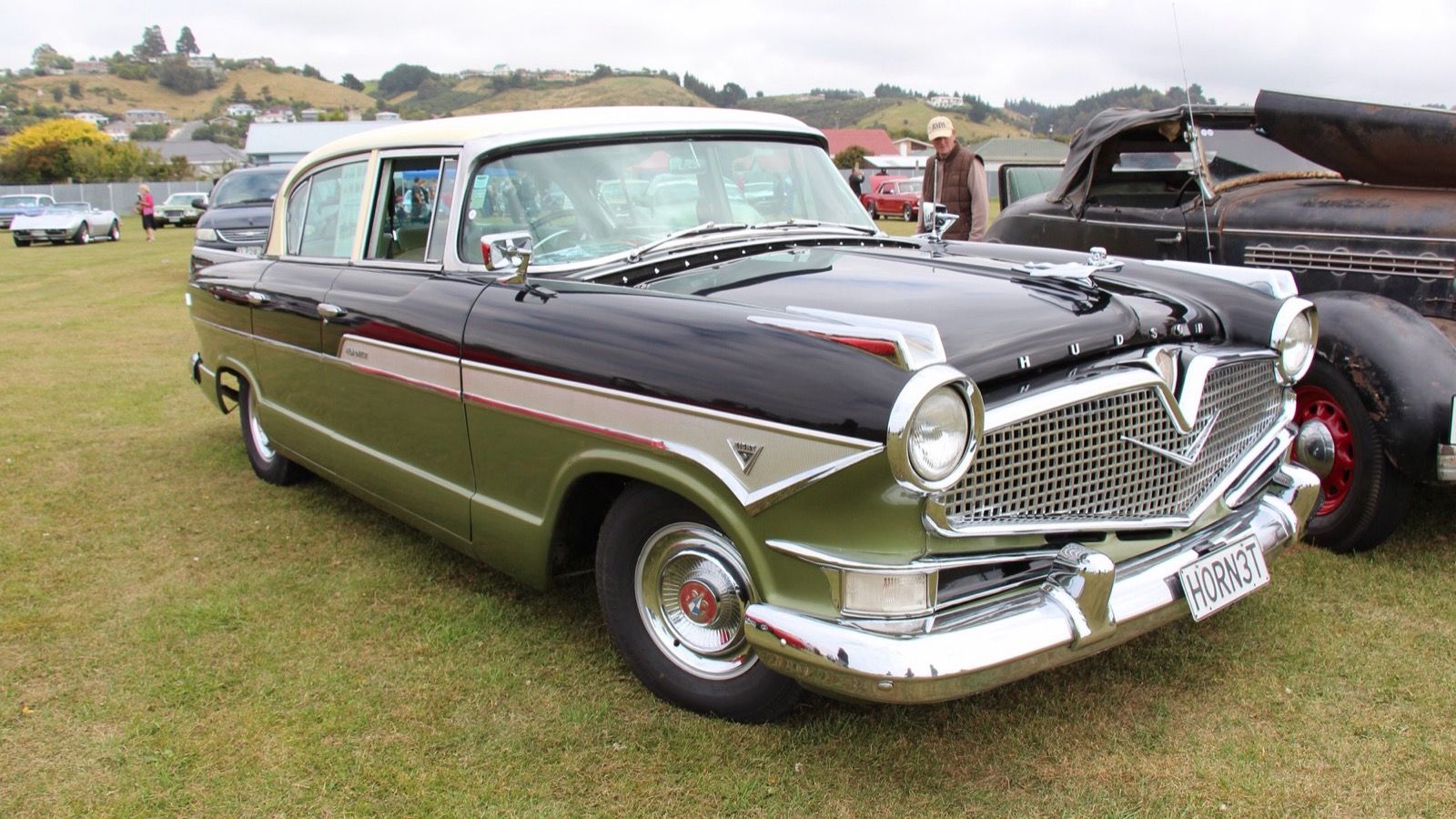
1957 Photo: “1957 Hudson Hornet V8 Sedan (12898268524).jpg” by Sicnag / Wikimedia Commons, licensed under CC BY 2.0. Cropped to 16:9.
Body styles
- Coupe
- Hardtop
- Sedan
- Convertible
- Brougham
Notable special editions & performance variants
Twin H-Power
Dual single-barrel Carter carburetor option on the 308 cu in six — the high-output setup behind the Hornet's racing success.
Hornet 7-X (racing)
The ultimate development of the step-down six — a 'severe usage' racing package (high-compression head, special camshaft and other race parts) sold not as a factory assembly-line engine but as hand-built, dealer- or race-shop-installed pieces (and crate engines), released in late 1952 and offered on a very limited basis. It pushed the 308 to over 210 hp.
Related models
Collect the nameplate
Find a scale model of the Hudson Hornet
Search Amazon across available years, colors, and scales. Exact releases vary, so confirm the listing before ordering.