
Gardner Series Eight History
Catalog record
Photography for this nameplate has not yet cleared the archive’s licensing and identity checks. The researched text below remains available while the page stays out of search and advertising inventory.
History
Gardner introduced straight-eight models for 1925, again sourcing engines from Lycoming. The entry Series 75 used a 226 cu in (3.7 L) L-head inline-eight rated at 65 bhp; the Series 80, on the same displacement, produced 70 bhp by 1927 with improved breathing. The prestigious Series 90 stepped up to a 298 cu in (4.9 L) L-head eight — 75 hp in 1927 and 84 hp in 1928 — and was distinguished by a notably rich interior: silver-finished hardware, silk window curtains, walnut woodwork, and mohair upholstery.
From 1926 through 1929 Gardner sold only straight-eight cars in the United States, staking its identity on refinement at a time when the inline-eight still conveyed prestige. The range at its widest spanned Series 75, 80, 85, 90, and 95 designations across open and closed body styles. The 1928 Series 8-80 Roadster — a low, rakish open car — is among the most collectible Gardners known to survive.
For 1930 and 1931 the top offering became the Series 150, powered by a Lycoming inline-eight producing 126 bhp — the most powerful engine Gardner ever installed. The Depression eliminated demand: the stock-market crash of late 1929 also killed planned distribution partnerships with Sears Roebuck and New Era Motors, depriving Gardner of the volume it needed to survive. The company had been unprofitable since 1927, and by mid-1931 automobile production had ceased.
Generations
Early eights · Series 75 / 80
Founding straight-eight range — 226 cu in Lycoming I8s in Series 75 (65 bhp) and 80 (70 bhp by 1927); Gardner's first eights.
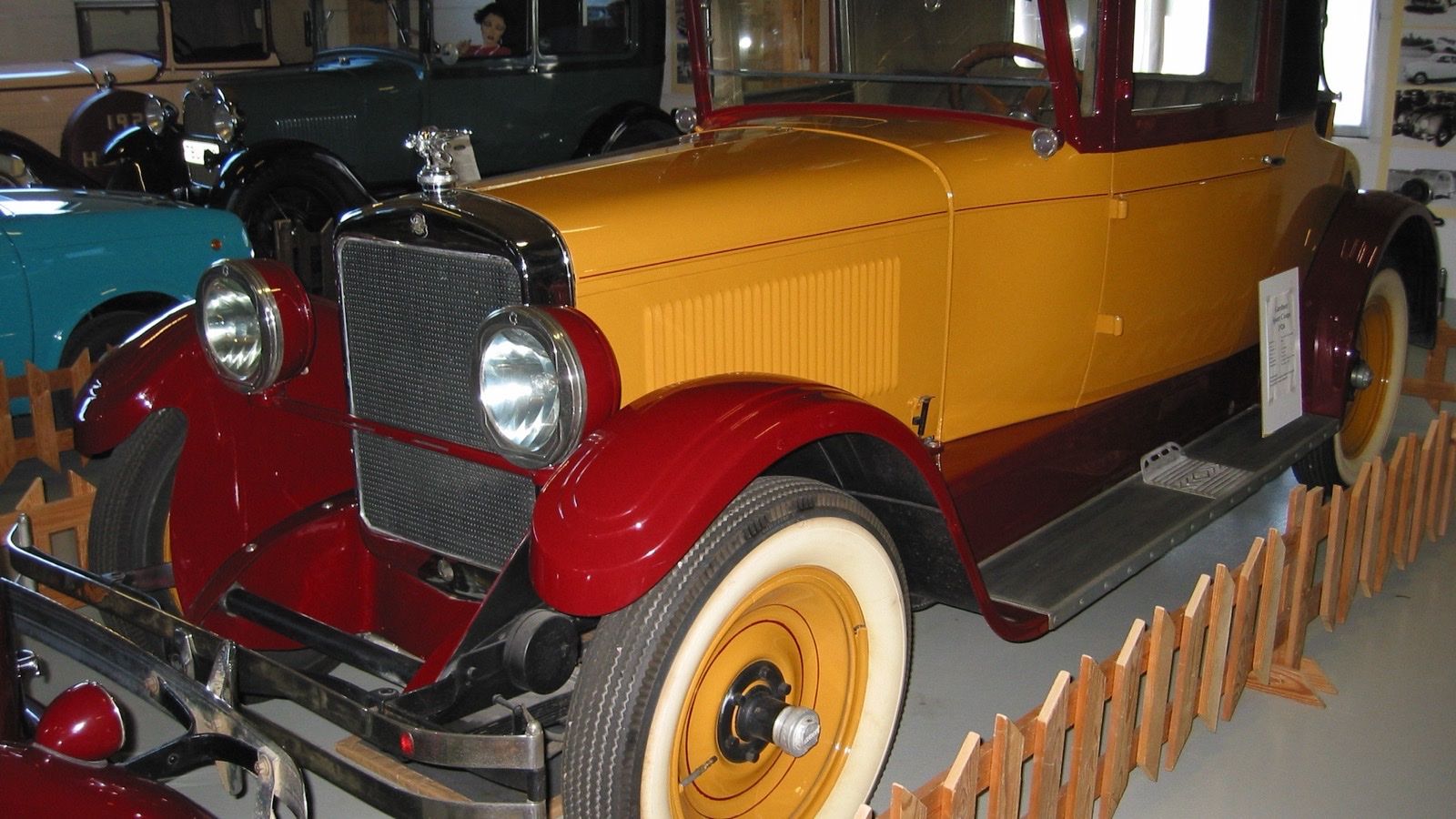
1926 Photo: “Gardner 1926.JPG” by Buch-t / Wikimedia Commons, licensed under CC BY-SA 3.0 de. Cropped to 16:9.
Prestige peak · Series 80 / 85 / 90 / 95
Eight-cylinders only; Series 90 reached 84 bhp with a luxurious interior; the 8-80 Roadster is today the most collectible surviving Gardner.
Final eights · Series 150
Gardner's most powerful car — 126 bhp Lycoming I8 — but the Depression destroyed demand; only 187 total vehicles left the plant in 1931.
Body styles
- Sedan
- Roadster
- Cabriolet
- Coupe
- Touring
Related models
Collect the nameplate
Find a scale model of the Gardner Series Eight
Search Amazon across available years, colors, and scales. Exact releases vary, so confirm the listing before ordering.